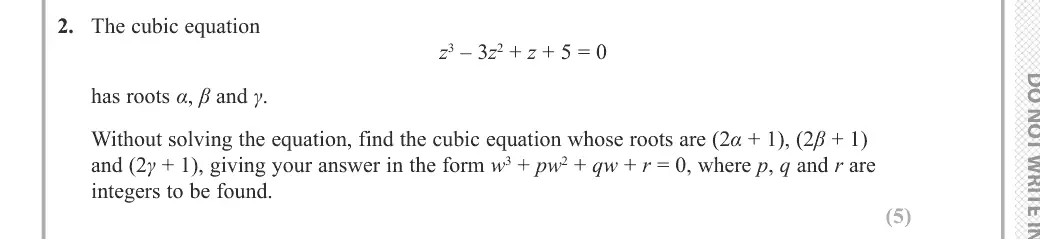
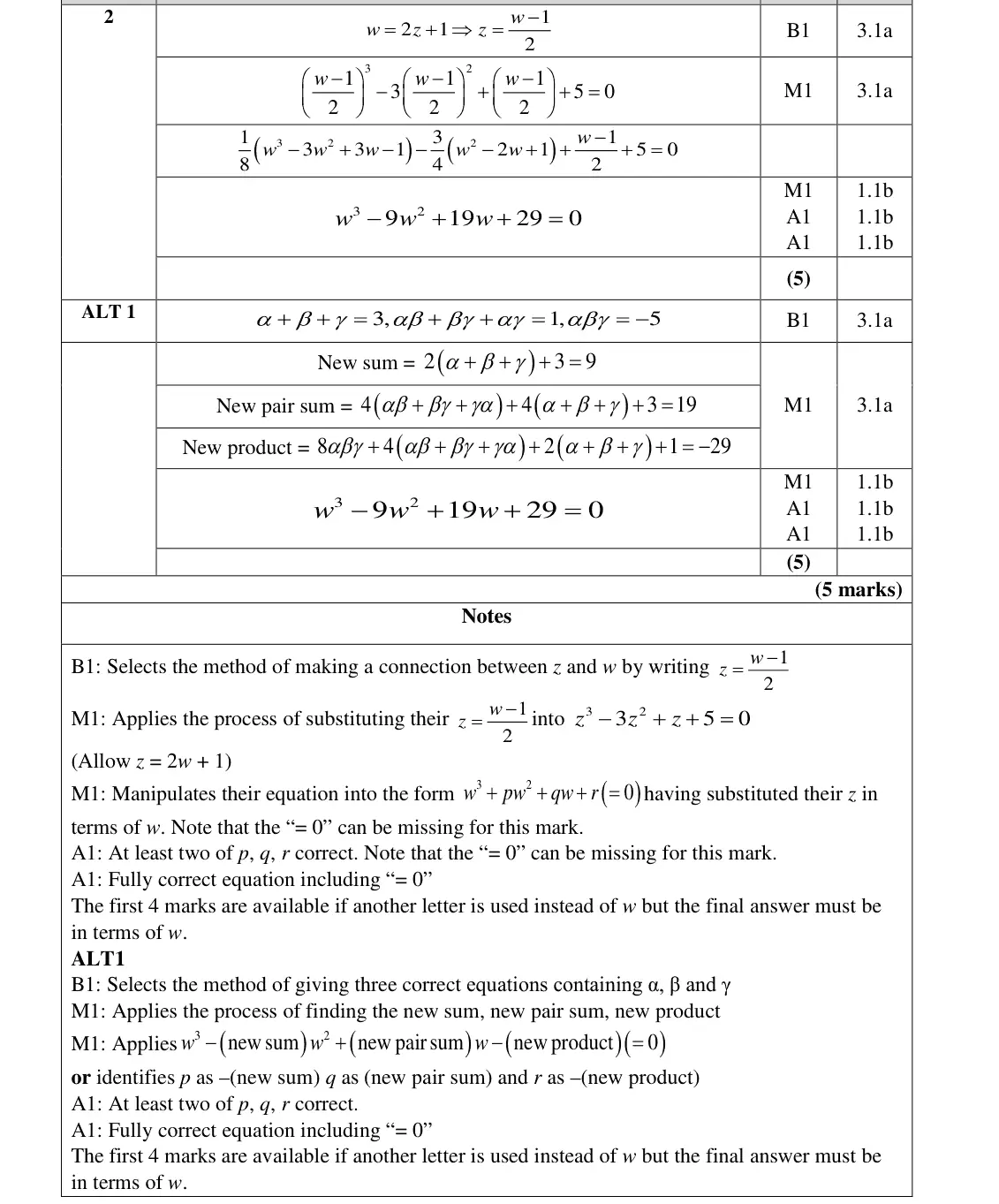
Examiner's comment
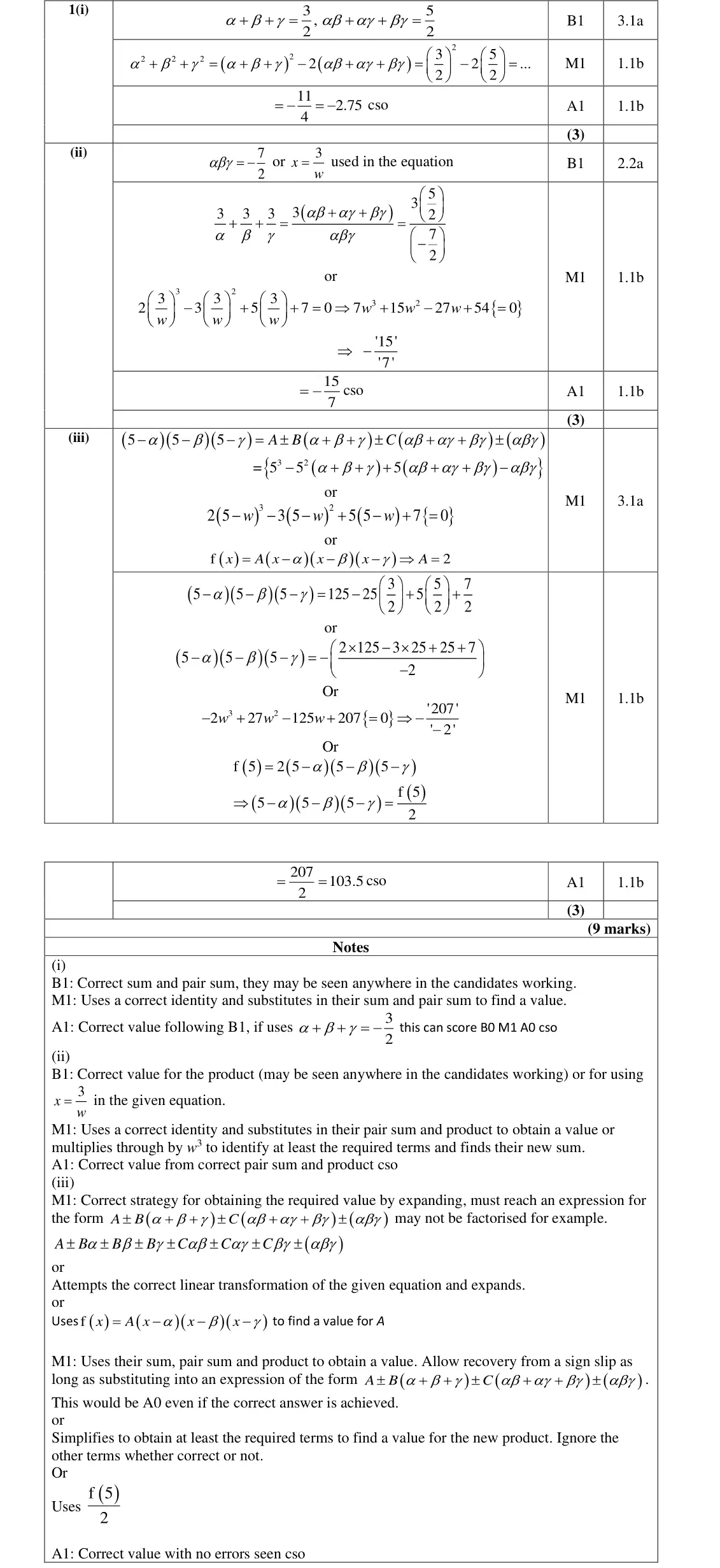
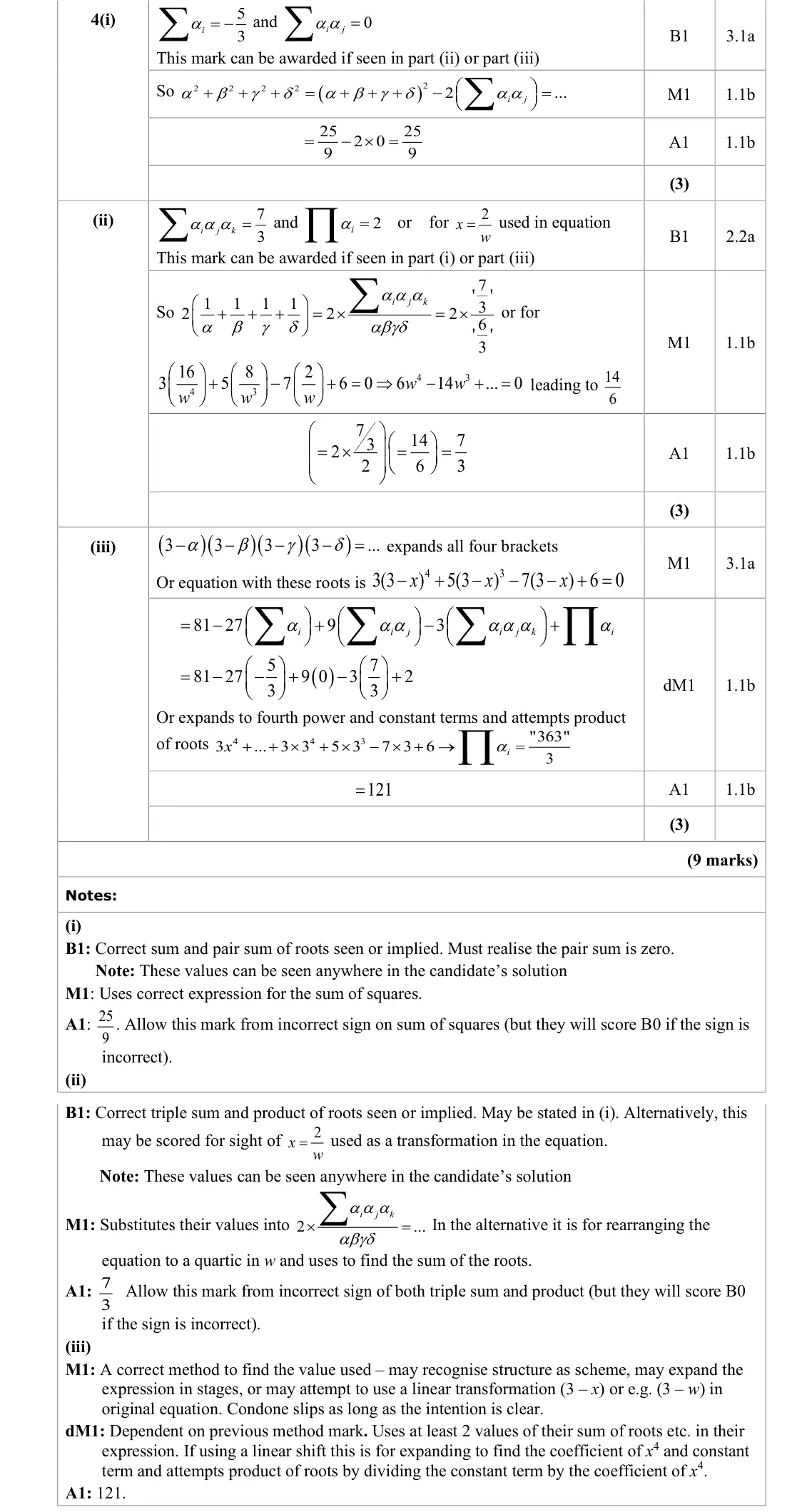
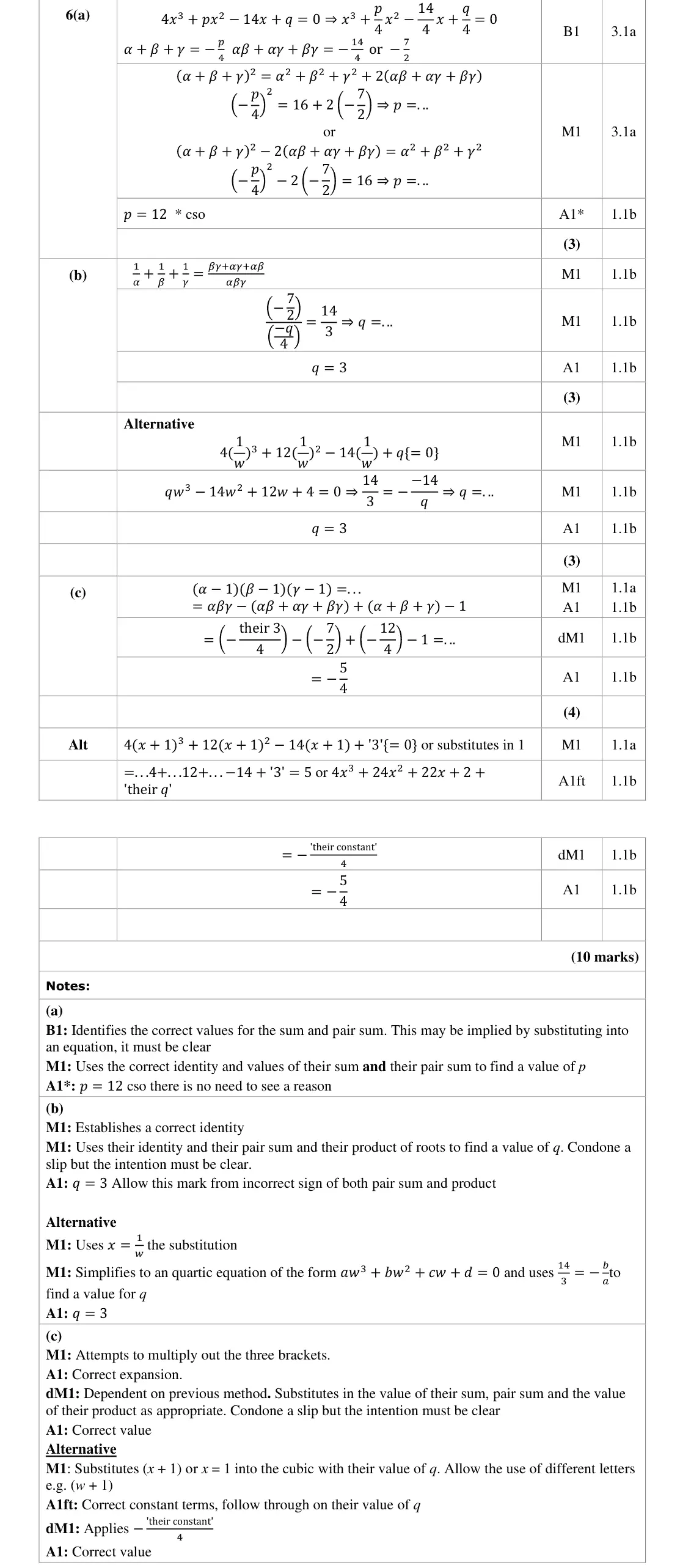
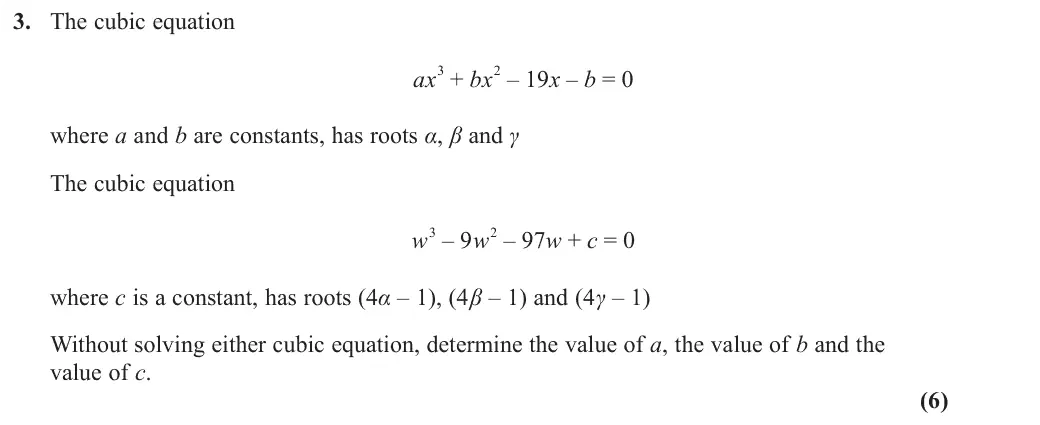
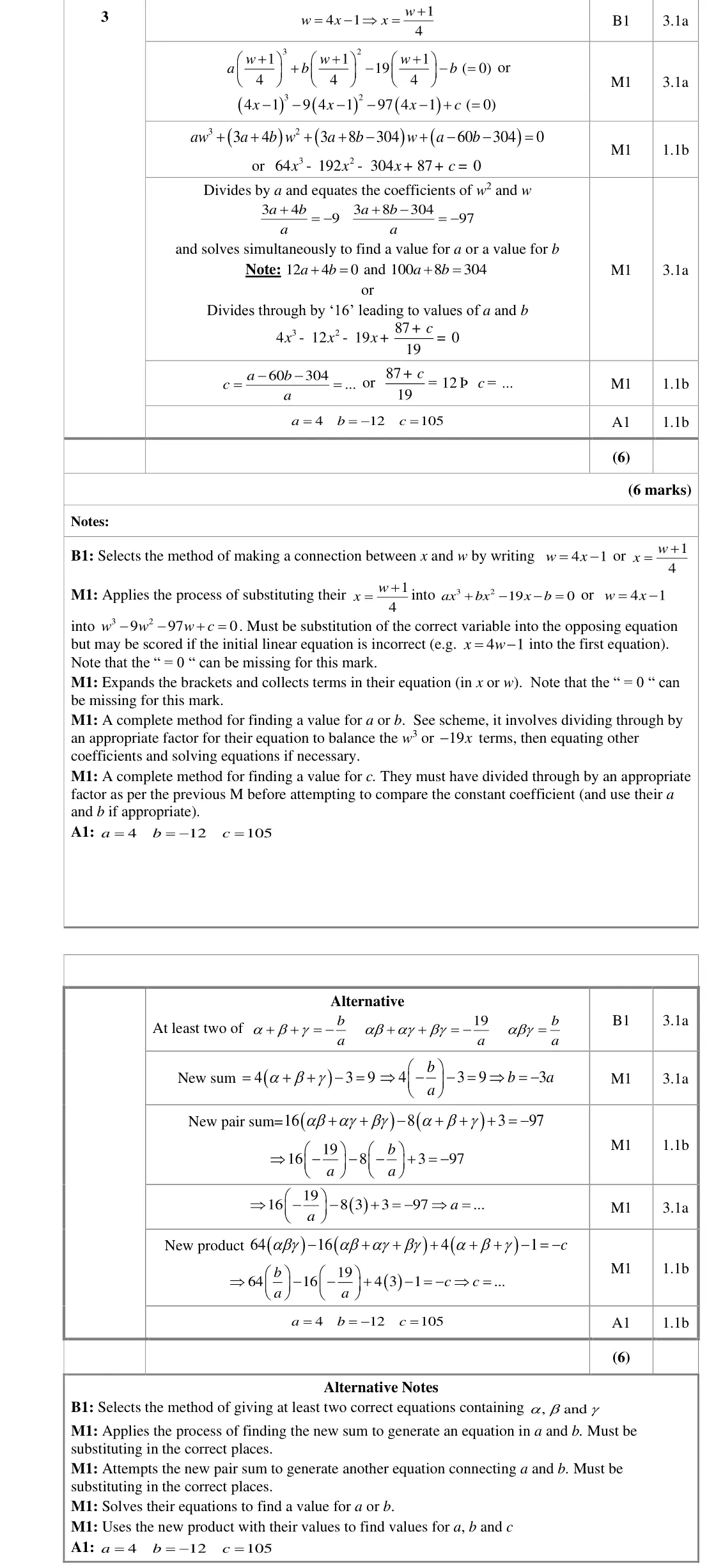
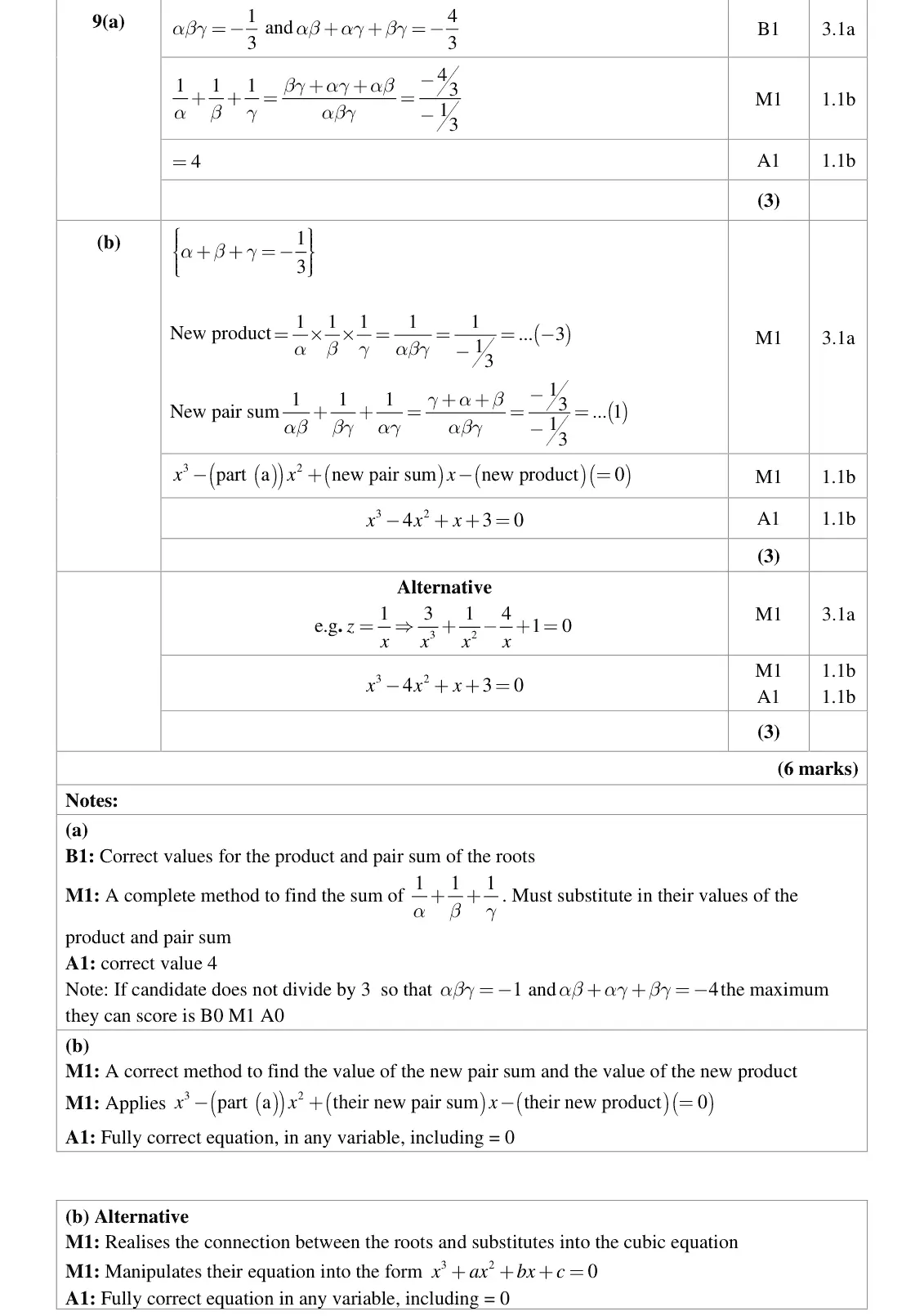
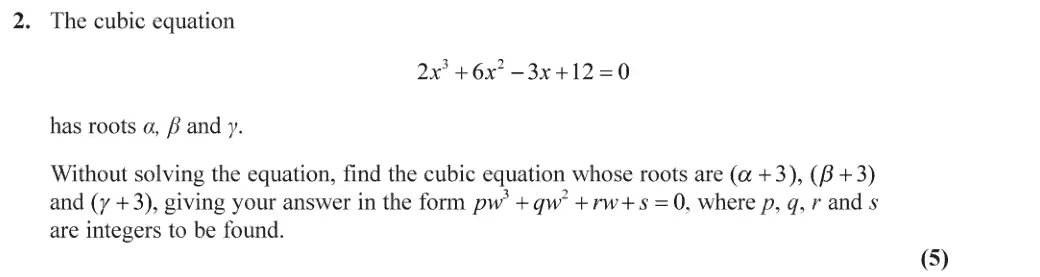
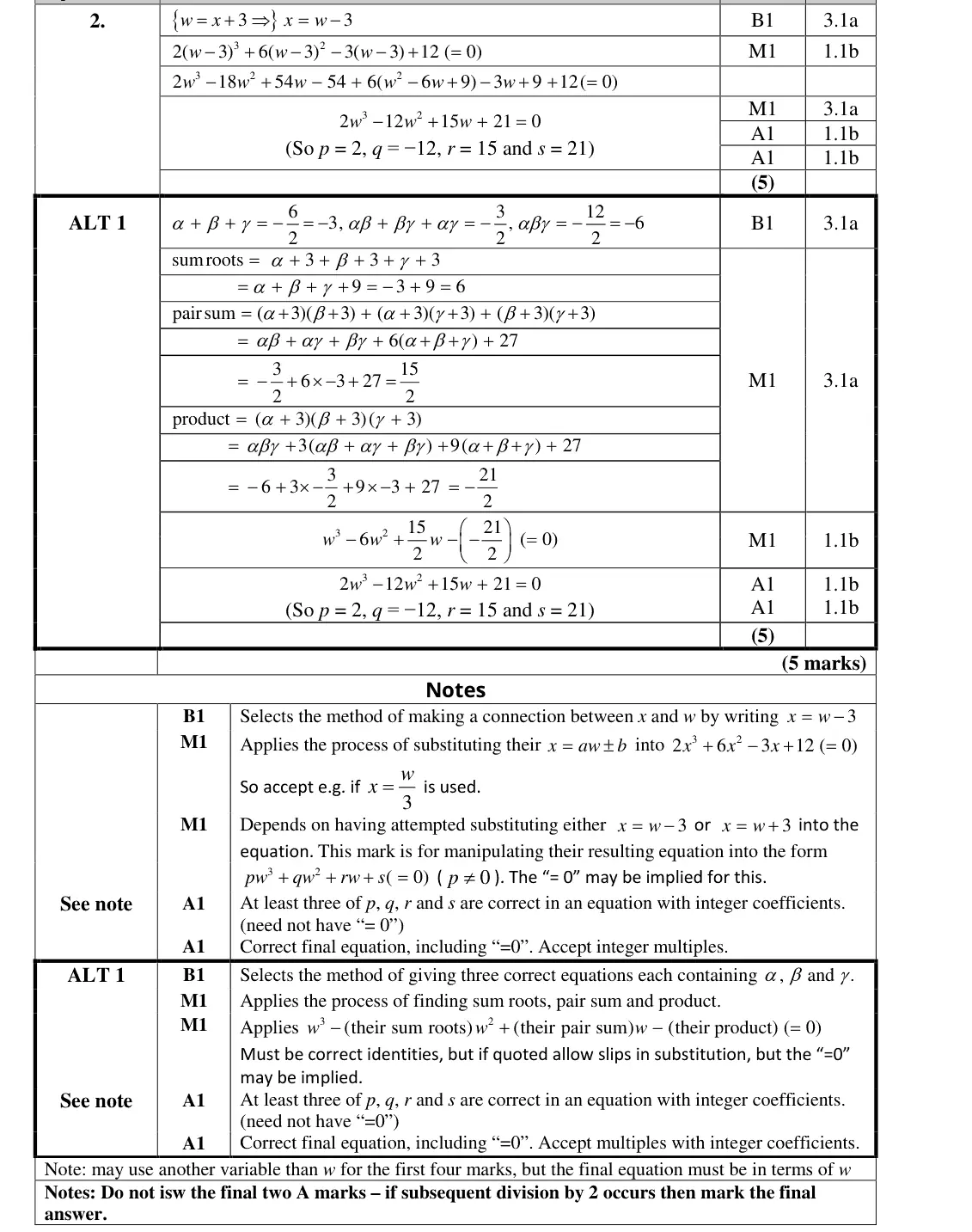
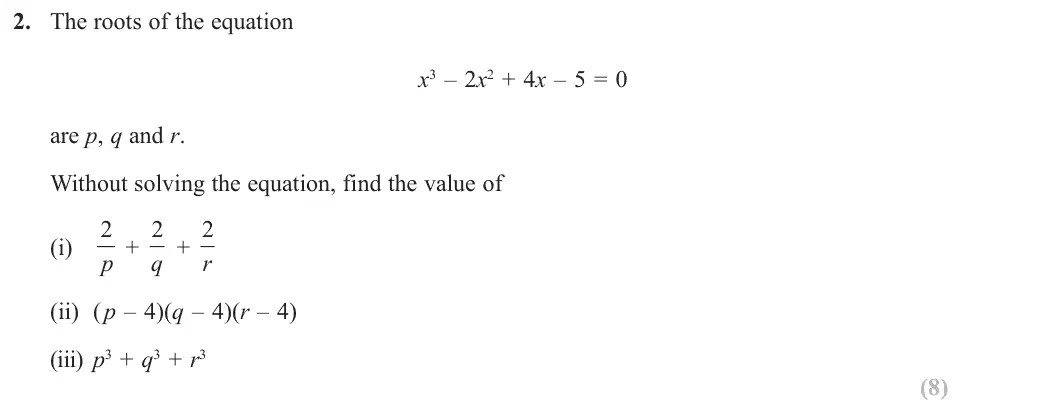
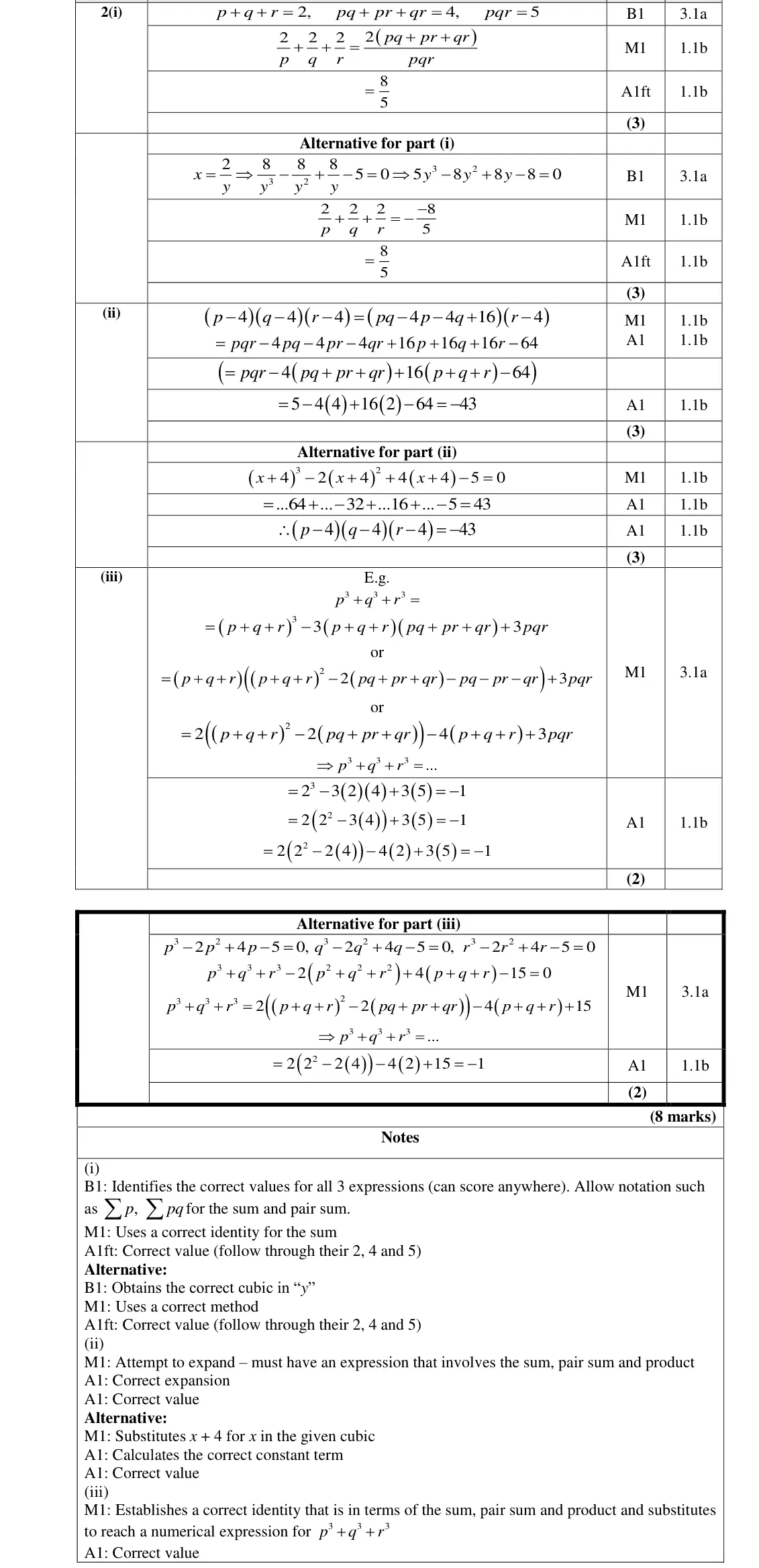
This question was generally well-answered and showed an improvement in previous years regarding candidates’ understanding of the methods. In part a) a significant majority of candidates reached the correct value following a correct identity and evaluation of the sum and pair sum. The most common error seen was for candidates to simply square their sum (rather than forming an identity as required), which lost them all marks (unless they used the correct pair sum in a later part, which many did), or losing the 3 coefficient of 2 on their pair sum term. It was pleasing to note that very few candidates used - 2 for the value of the sum. Again, part b) was answered well with the modal outcome being 3/3; again, the majority of candidates formed a correct identity (either writing the numerator as 3 x pair sum or writing the overall as 3 x (pair sum/products) with relatively similar frequency) and substituting in the correct values. There were occasional slips where candidates formed an incorrect identity (generally losing the 3), though some candidates showed weaker fundamentals in the algebraic manipulation, some resulting in 3 x sum / product and others ‘adding’ the denominators and attempting to use the reciprocal of their sum of roots in some capacity – a surprising error at this level. Finally, part c) was the more challenging part but again candidates did well, with a majority scoring either 2 or 3 marks here. Expanding the given identity to form an identity using all three of their values was by far the most common approach, and the majority scored at least two marks in this way (commonly making sign slips only to lose the A mark e.g. 193/2 being a common answer). Some candidates sadly, whilst attempting this approach, lost the product term entirely and unfortunately scored no marks whilst demonstrating a correct approach but without the requisite algebraic skills required at this level. Attempts using linear transformations were infrequently seen (only a handful in part b), with a few more in c) – again, often candidates scored only the one mark in part c) via this method, often simply failing to find their transformed functions product having correctly expanded the necessary terms (-2 and 207). Overall, this was a very accessible start to the paper with the vast majority of candidates able to achieve some marks, and a majority scoring very well.