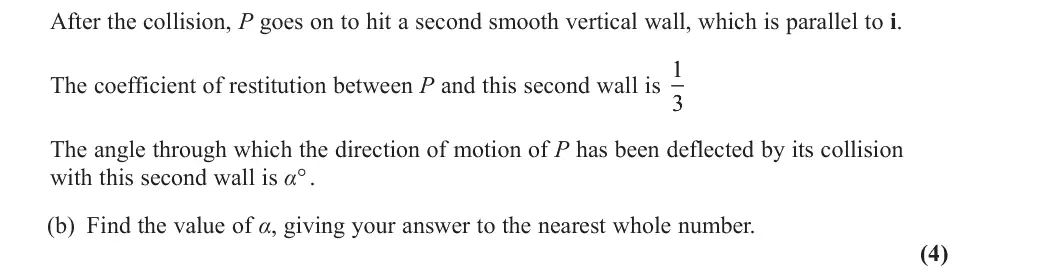
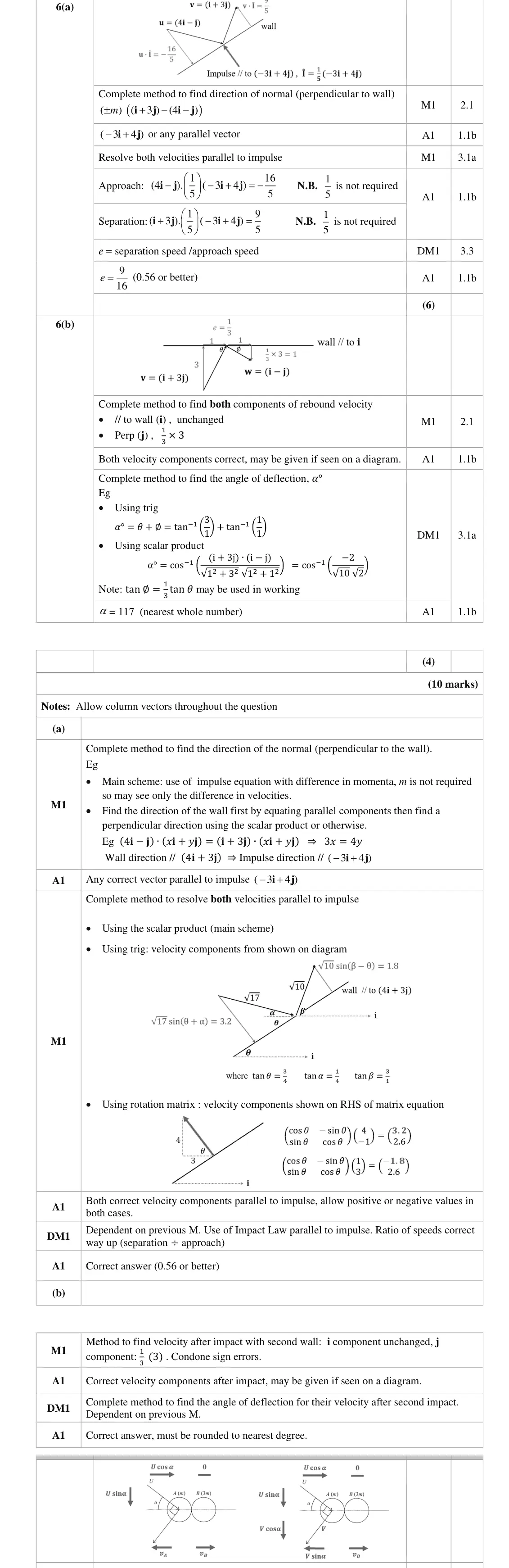
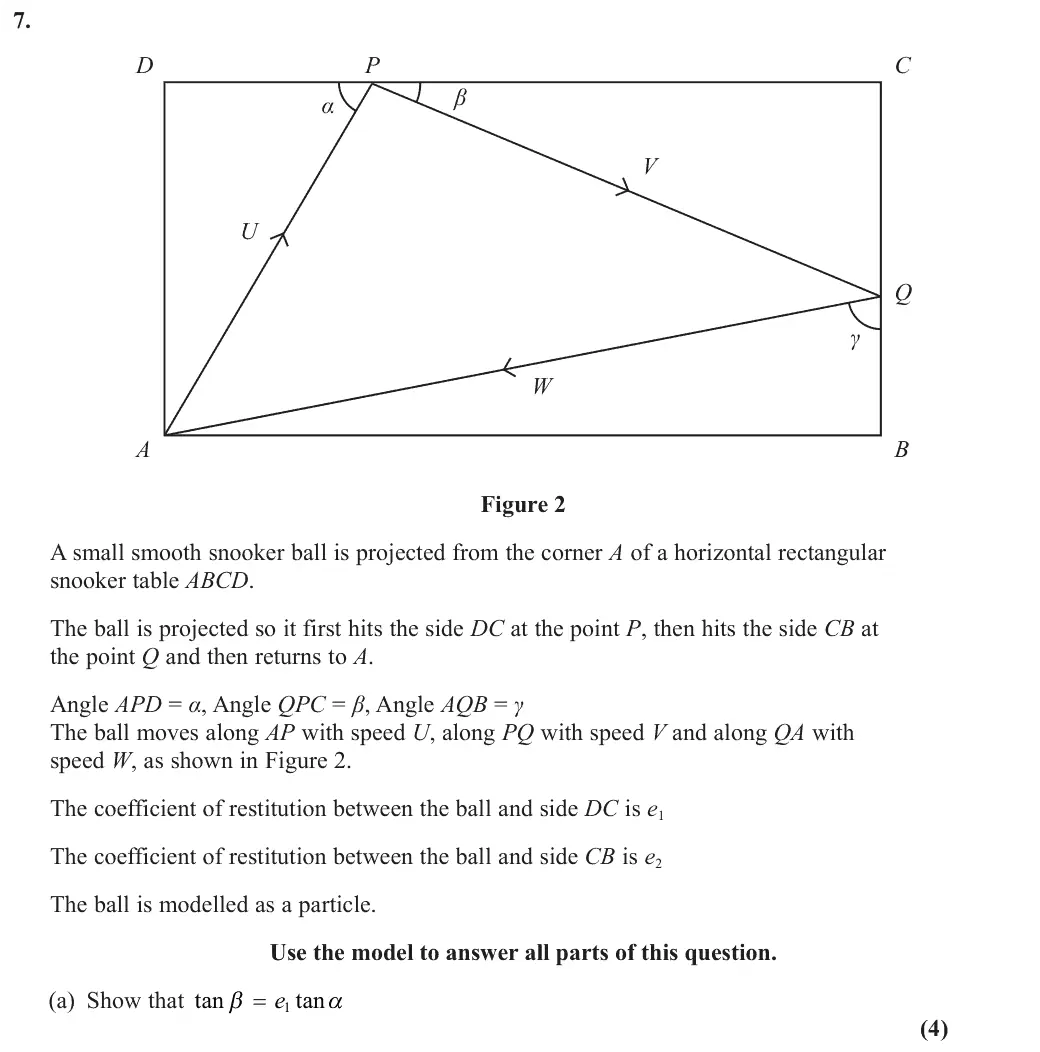
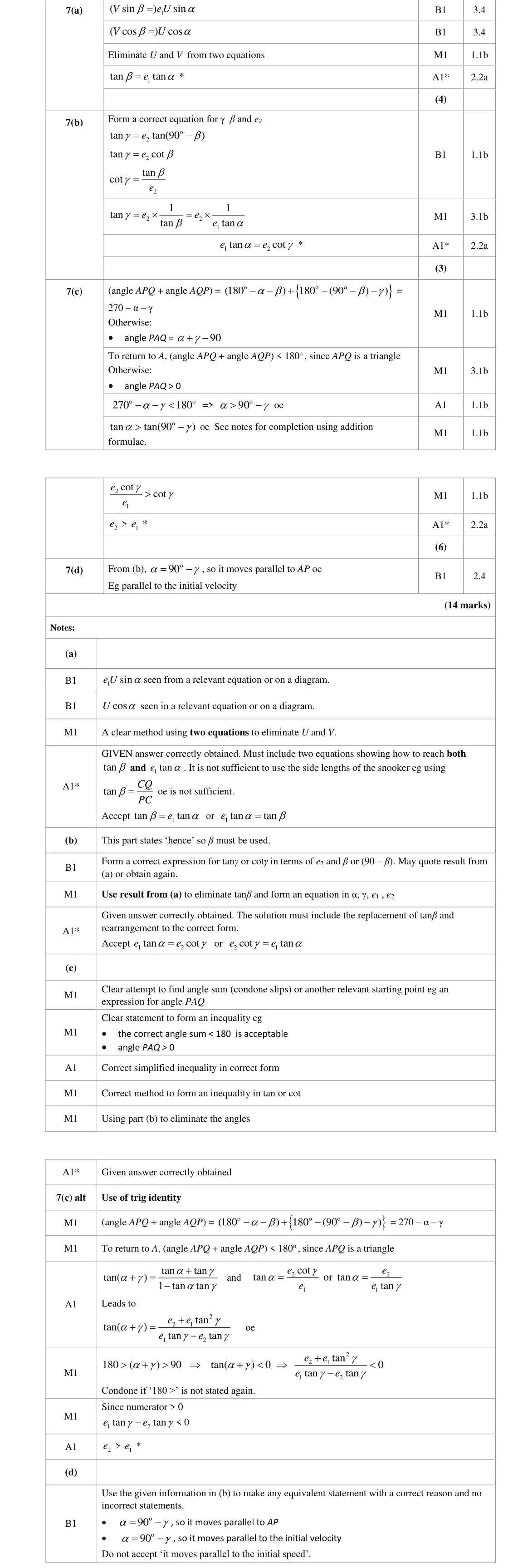
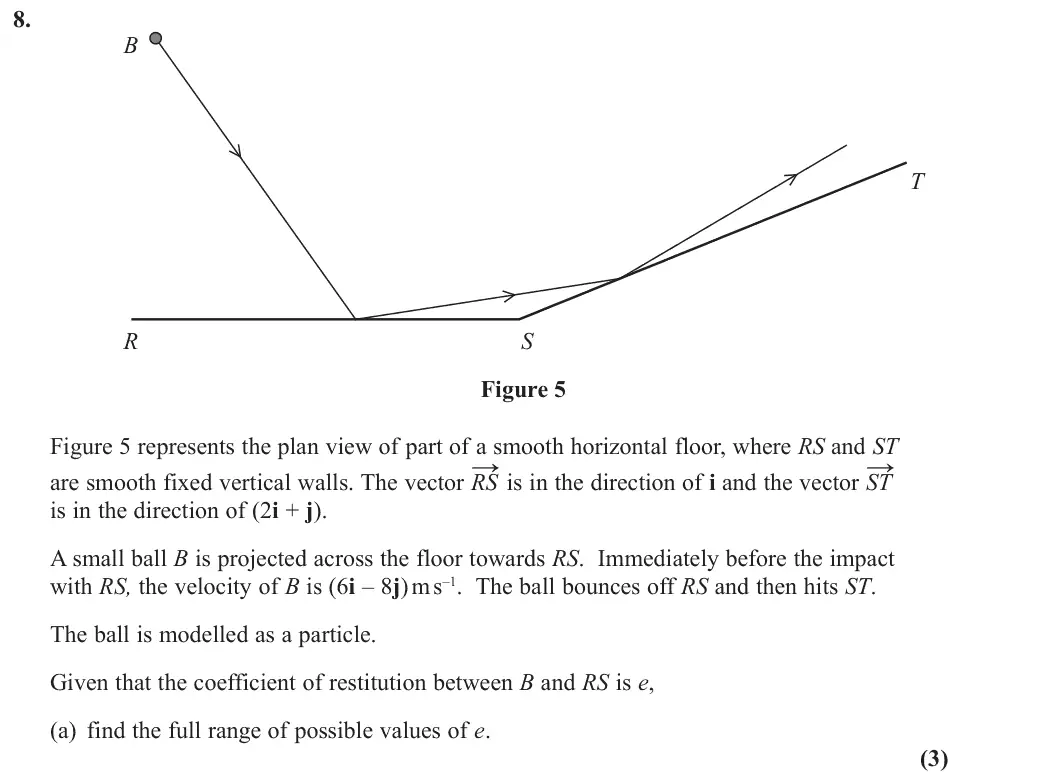
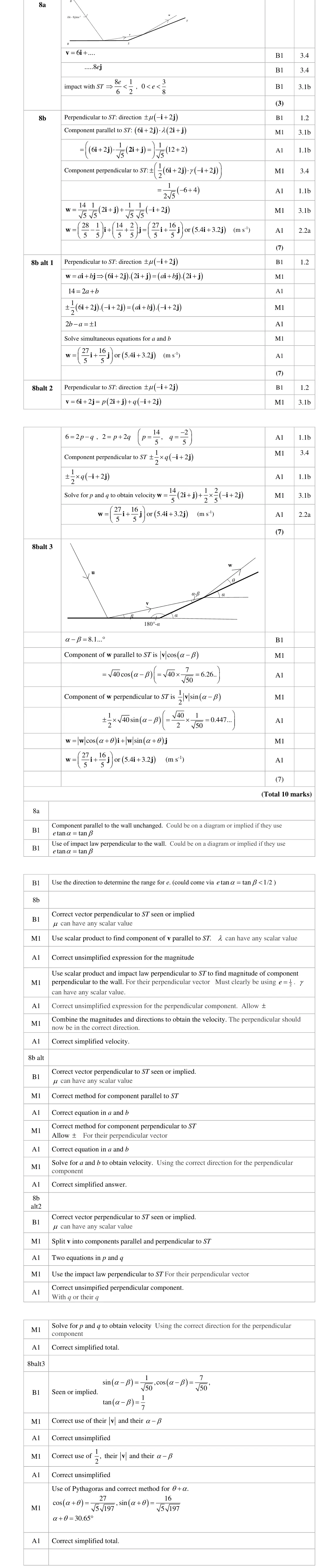
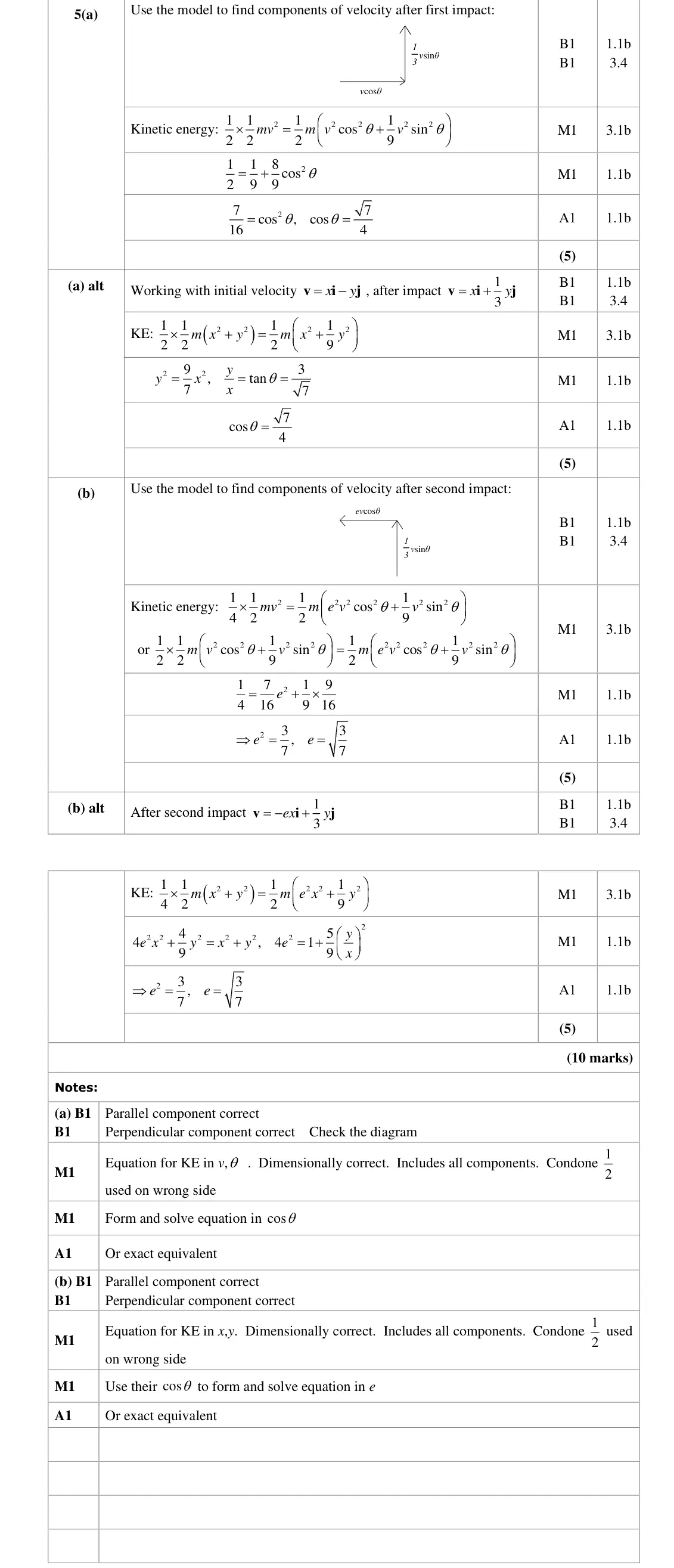
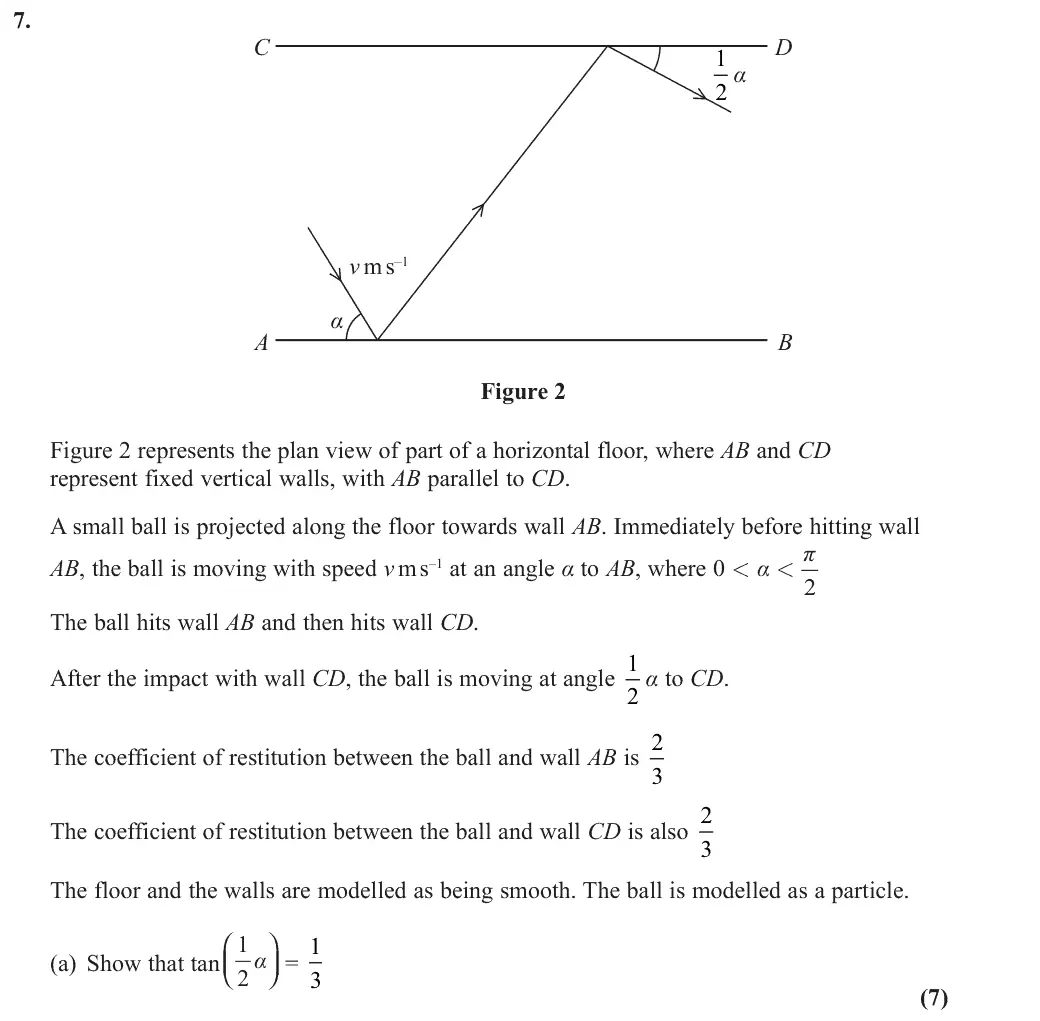
Mark scheme (whole question; this part is marked with the orange bar)

Examiner's comment
As expected, the final question on the paper brought with it a significant level of challenge to stretch the most able and there were several blank responses. The information was given in vector form and those who were confident working with vectors were far more successful. Those who insisted on changing all vectors to speeds and directions made the process far more complicated and often introduced sign errors or was working with unnecessarily complicated algebra. In part (b), it was very clear that many learners had prepared well for this topic as they immediately defined x y = + w i j. Efficient solutions used the first method in the mark scheme to set up two simultaneous equations that were solved in just a few neat lines. The second most successful approach used the second method in the mark scheme, identifying the impulse direction and using (3 4 ) ( 4 3 ) p q = + + - + w i j i j . Both sets of learners proceeded to find w and, whilst using column vectors in their working, remembered to give the final answer in terms of i and j. Those who attempted to use speeds and angles rarely progressed to a fully correct solution, making multiple re-starts before abandoning the question completely. Learners are reminded to present all of their workings clearly.
Key points from the mark scheme and examiner's report
- w = ai + bj: parallel to ST (3i + 4j) gives 3a + 4b = 17
- perpendicular (−4i + 3j) reversed and ×1/3 gives −4a + 3b = 2
- w = (43/25)i + (74/25)j
- i-j form required