Examiner's comment
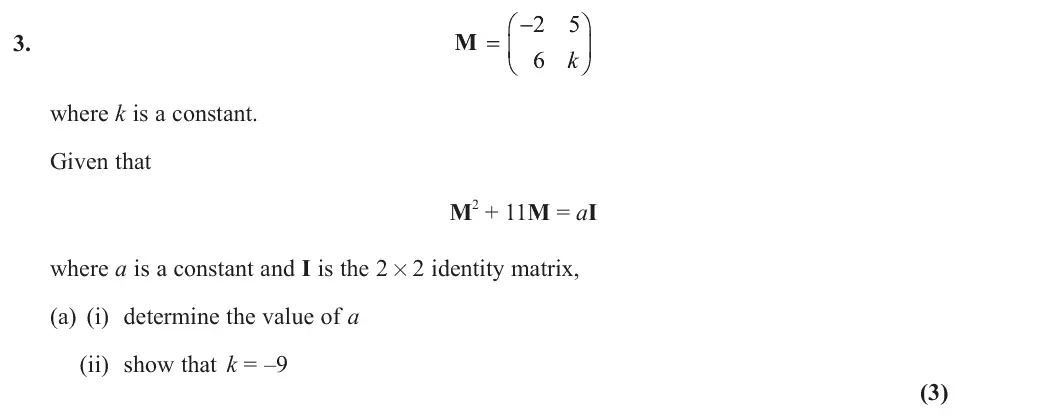
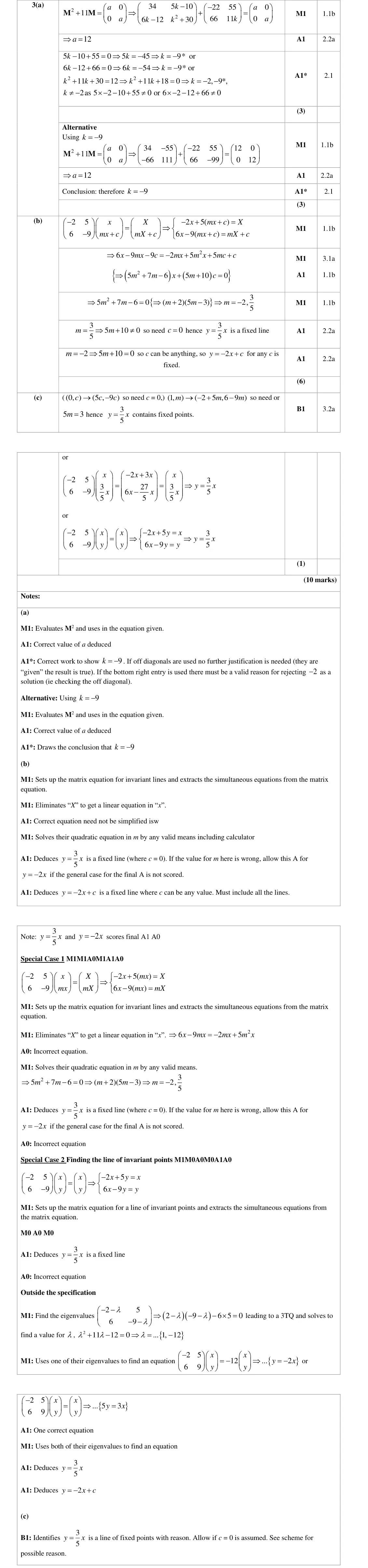
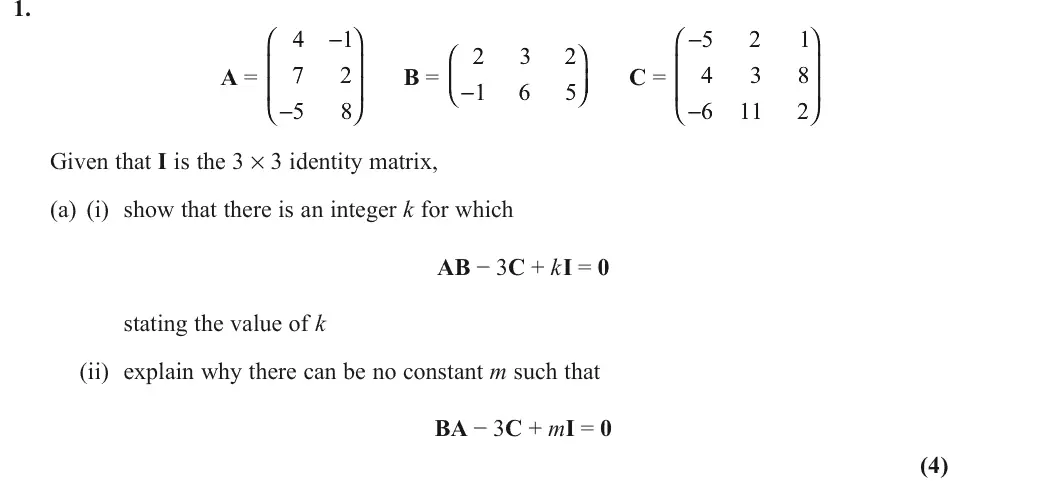
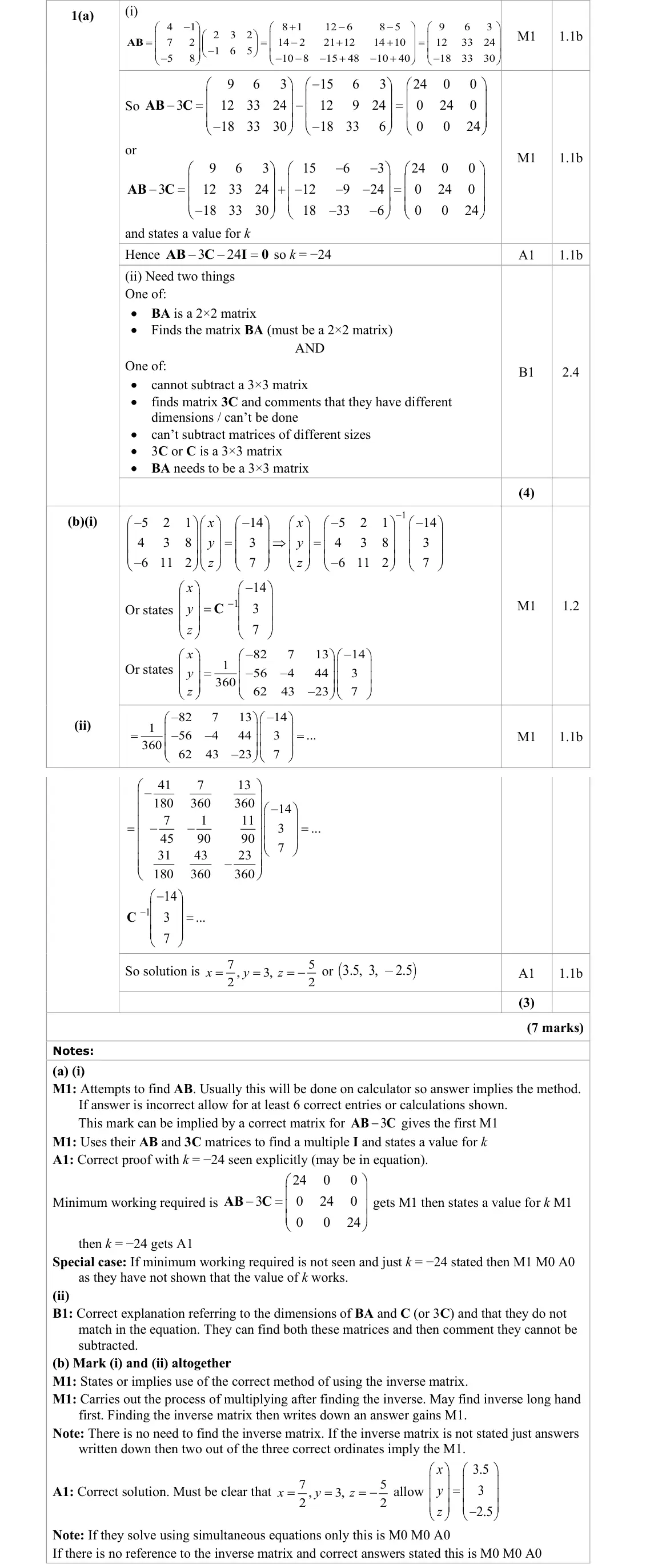
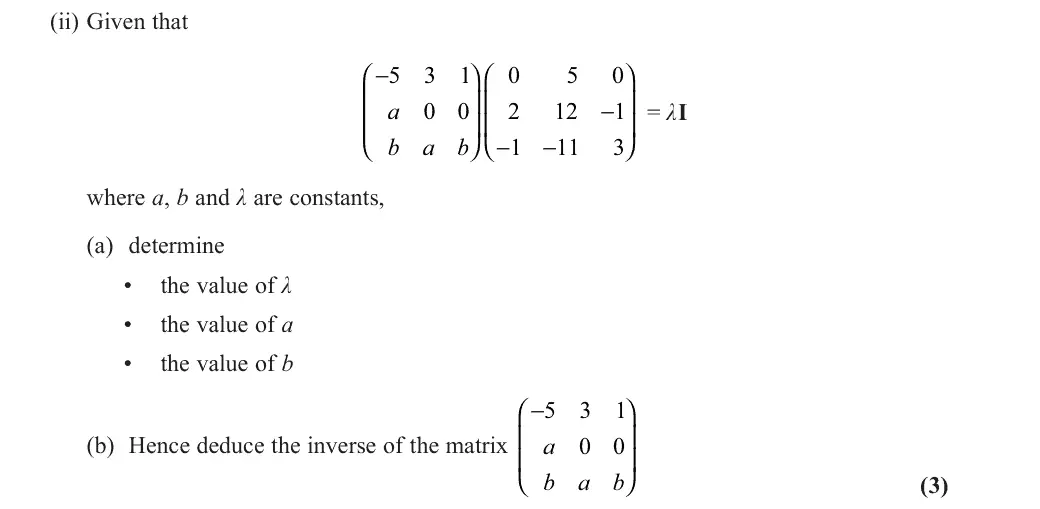
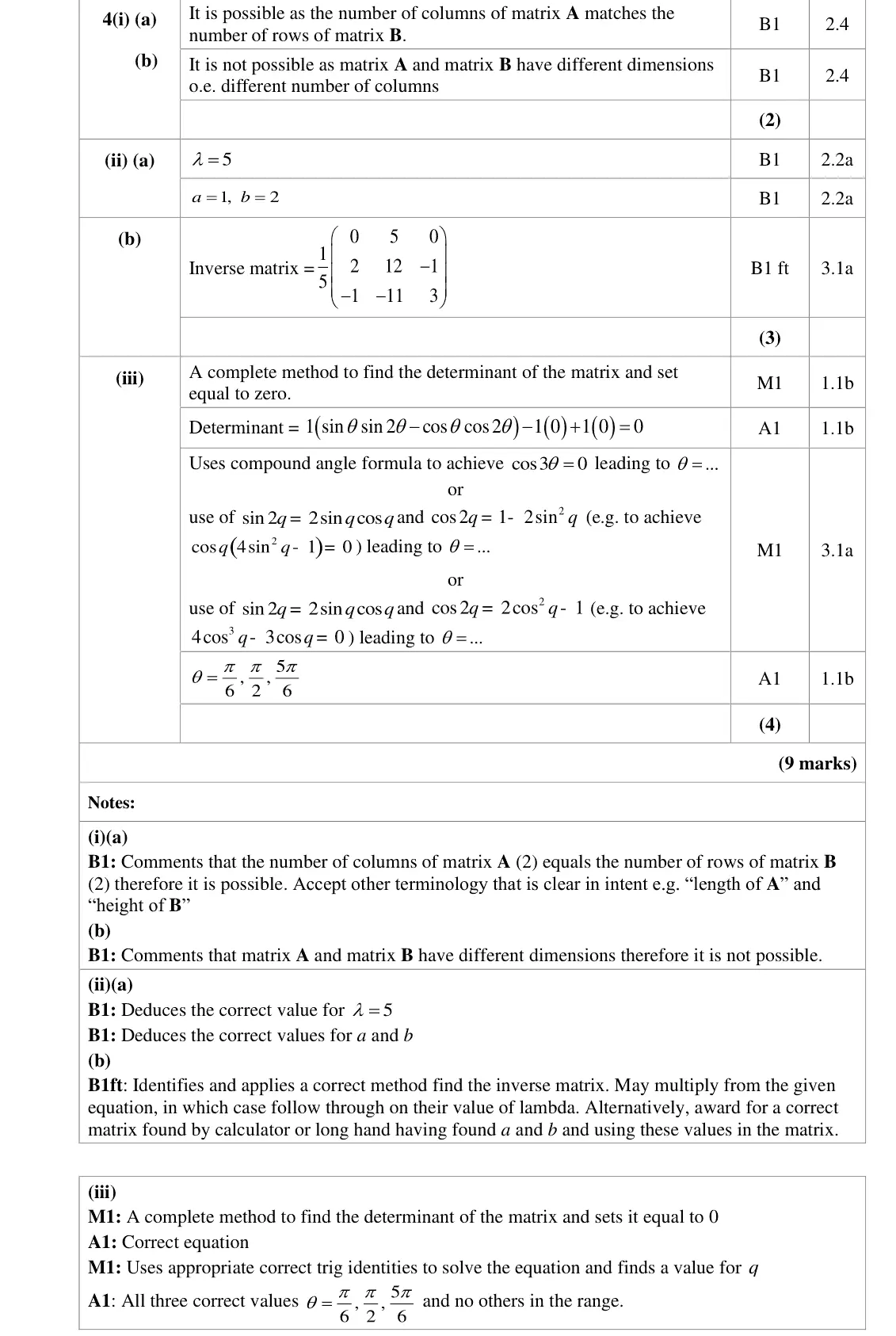
The overall performance on this question was better than the preceding questions, suggesting it is a more comfortable topic to students and could have appeared earlier in the paper, with the first 7 marks being score by over 50% of candidates, and only the final mark scored by fewer than 44%. (i) (i) An easy start to this question with the majority gaining at least one mark (over 70% scored the mark in (b)). A common error was to confuse rows with columns in their first statement meaning slightly fewer scored this mark (55%). (ii) There were several methods for finding the required values, mostly all successful with two thirds scoring the first two marks, and over 50% again scoring the third. Most obtained the correct inverse matrix, and there was a follow through on their λ. Some used their calculators with values for a and b, which was also fine, while there were also attempts at finding the inverse matrix from scratch, which seemed to be an awful lot of work for one mark! (iii) About two thirds of candidate successfully used a correct method to find the determinant and set it to 0. Many then did not realise that this reduced to cos3 theta = 0, and ended up using trigonometric identities for sin2 theta and cos2 theta to solve a more complicated equation. Very few gave all three possible values leading to the drop off noted above, commonly losing a value by dividing through by cos theta and not considering it could equal 0. Others just gave one value pi /6. These two marks were for solving a very straightforward trig equation which they should have been able to do in Maths A level