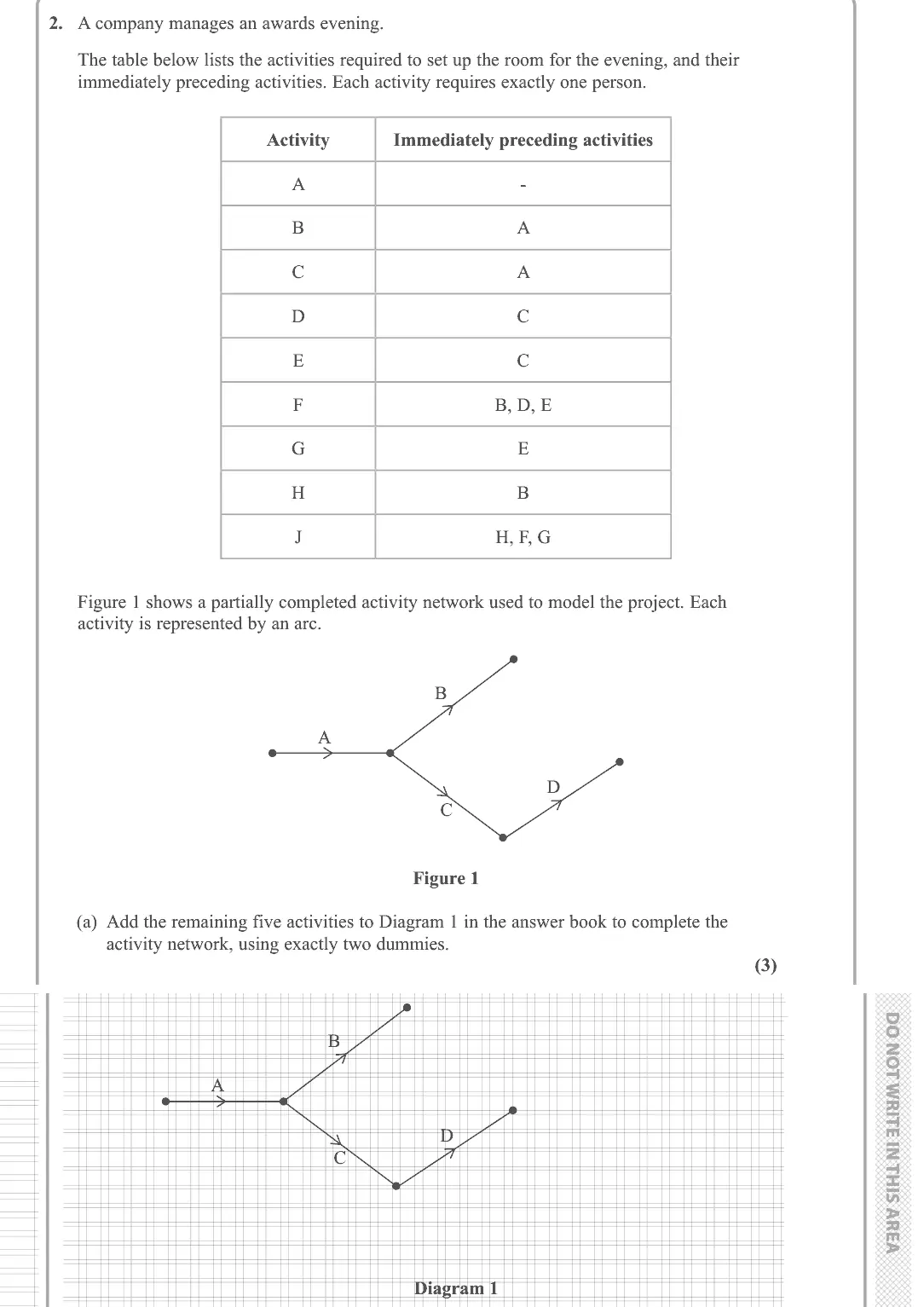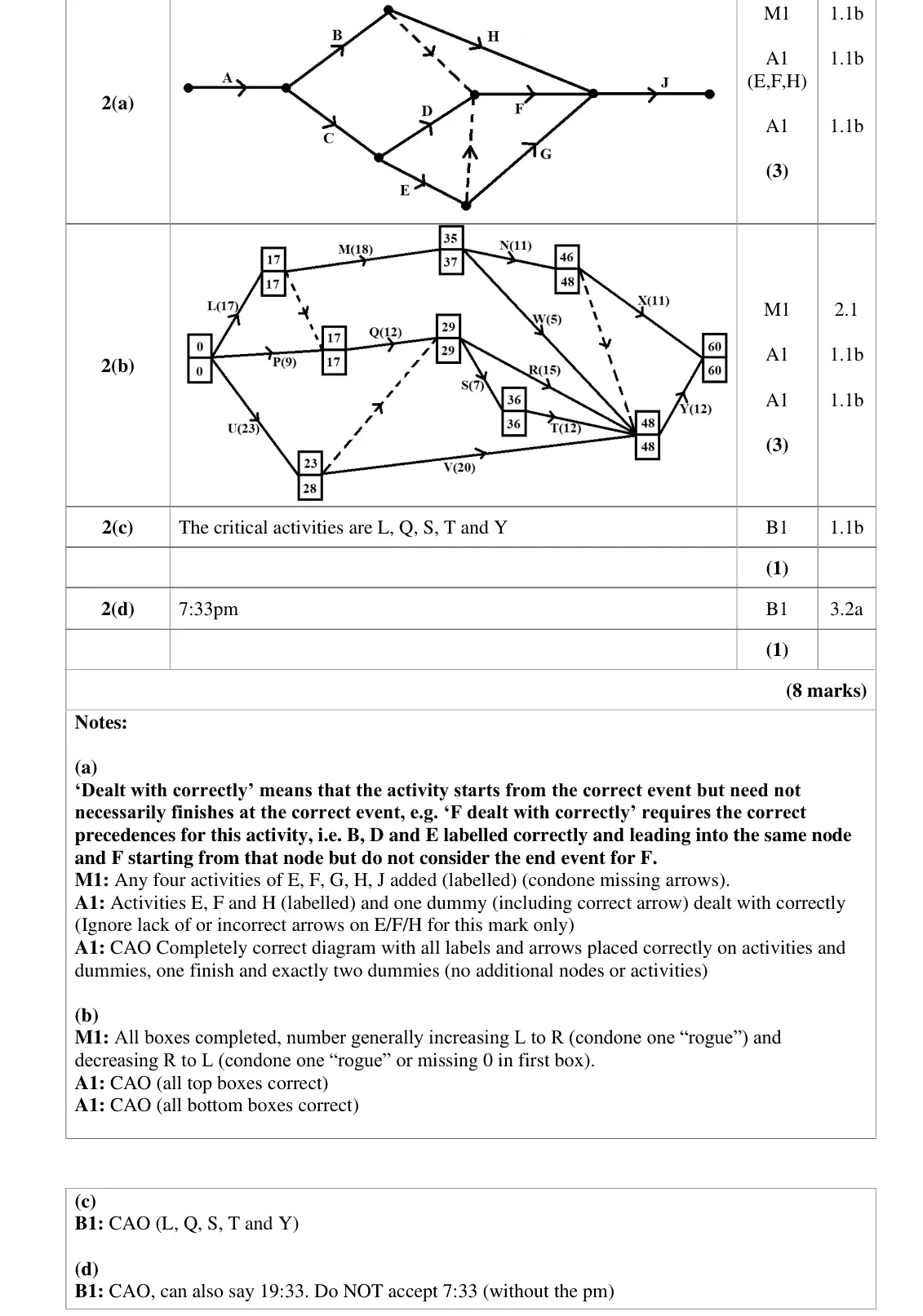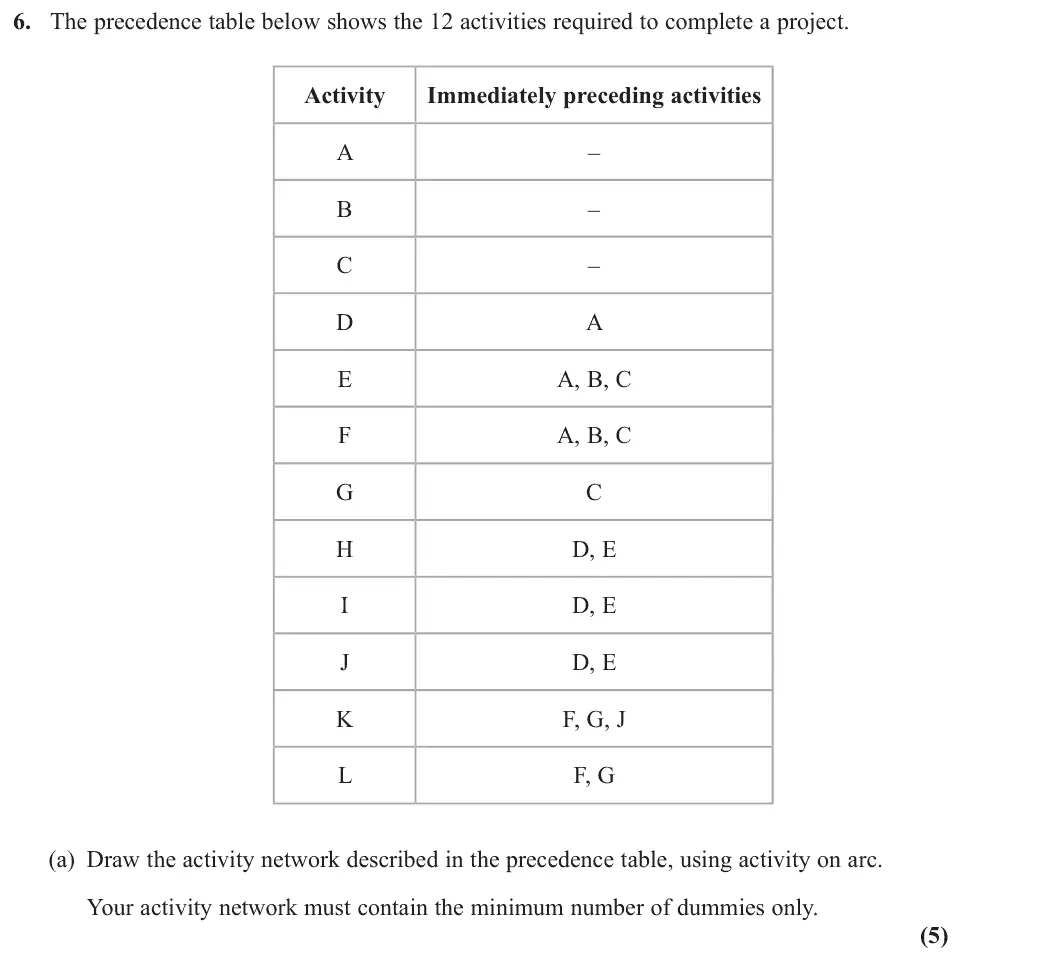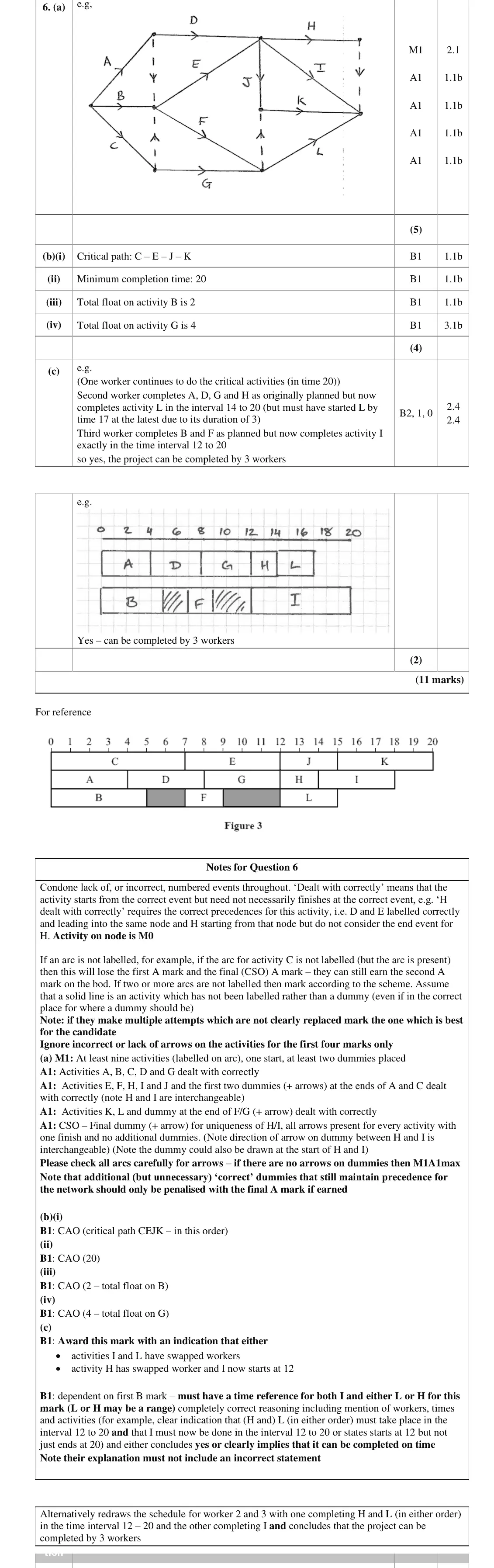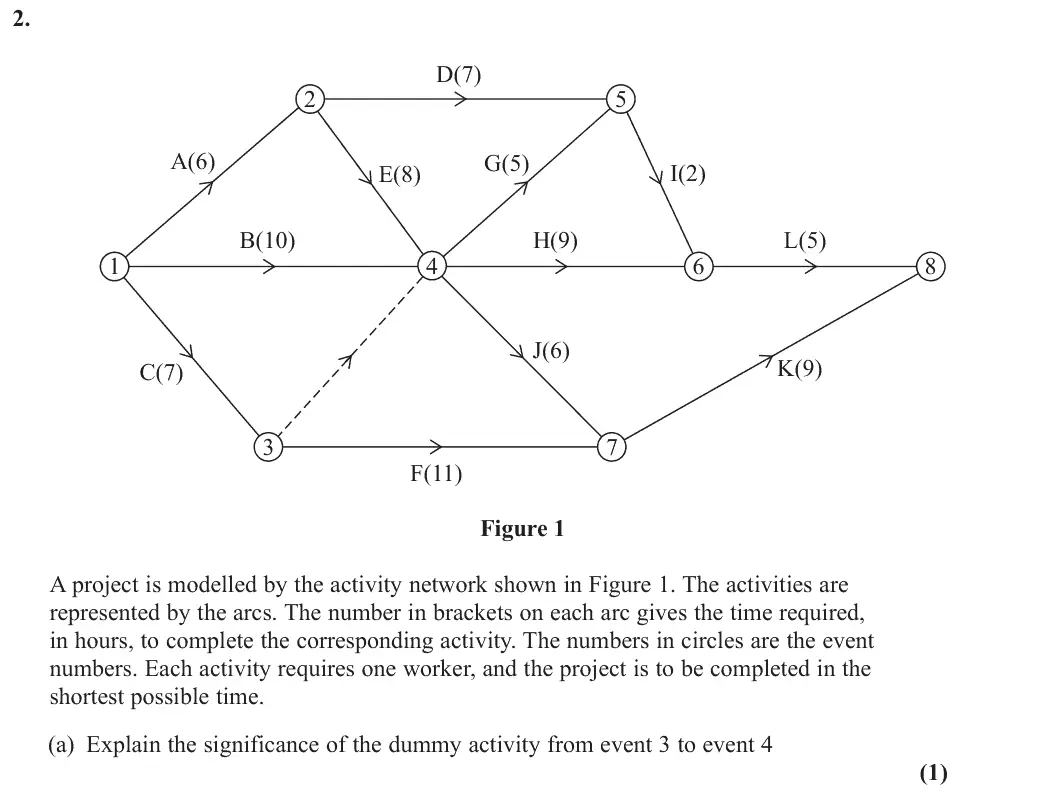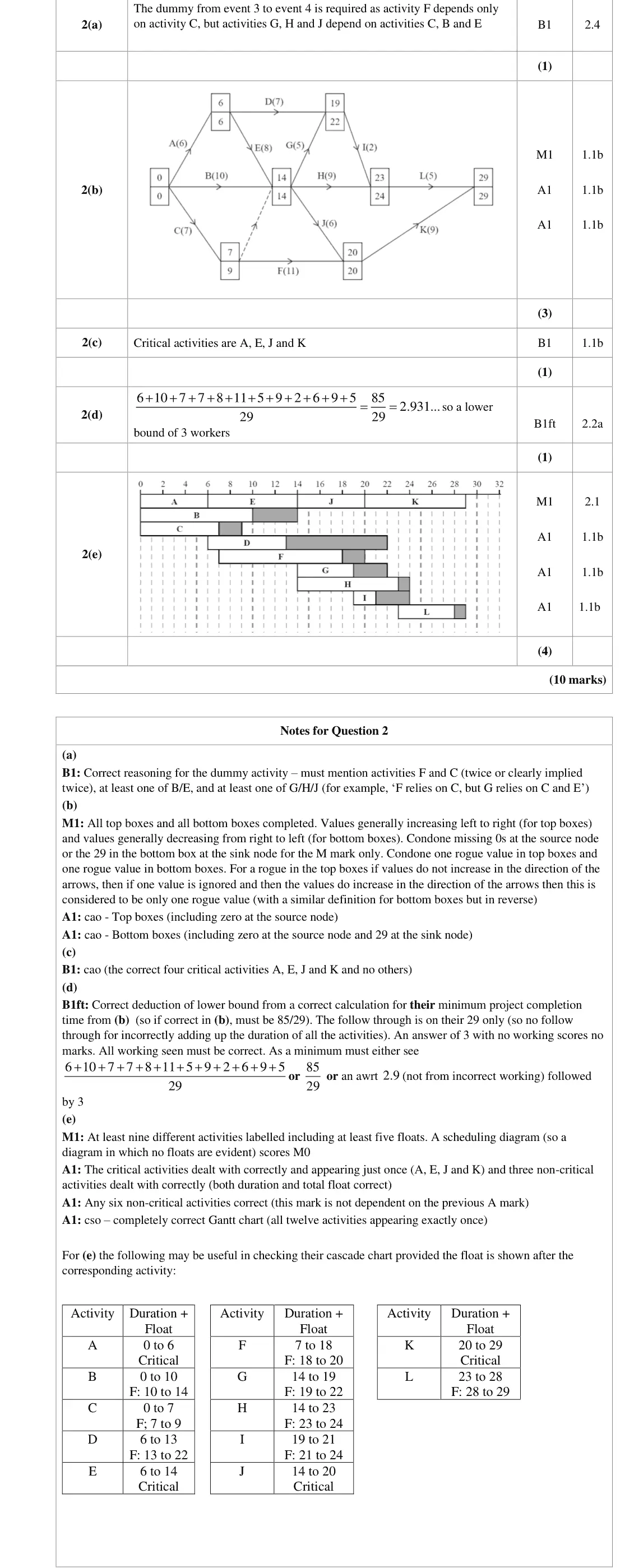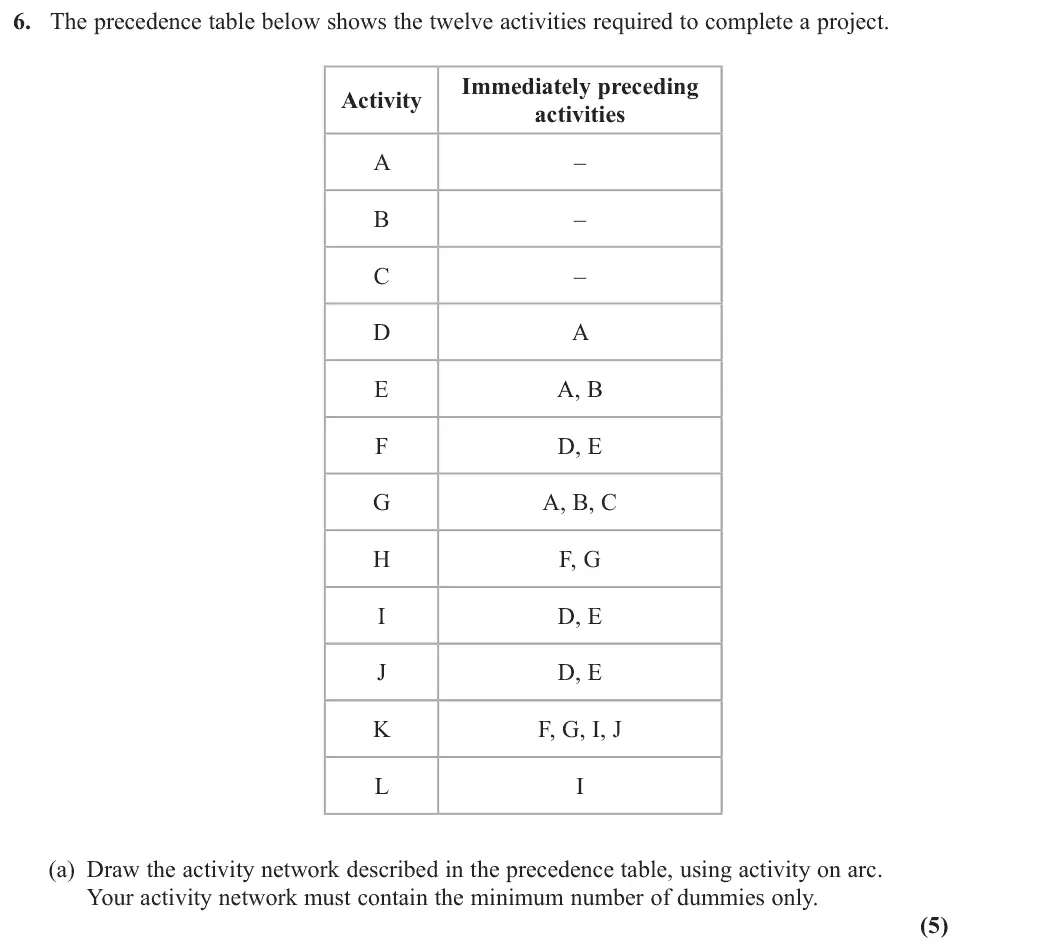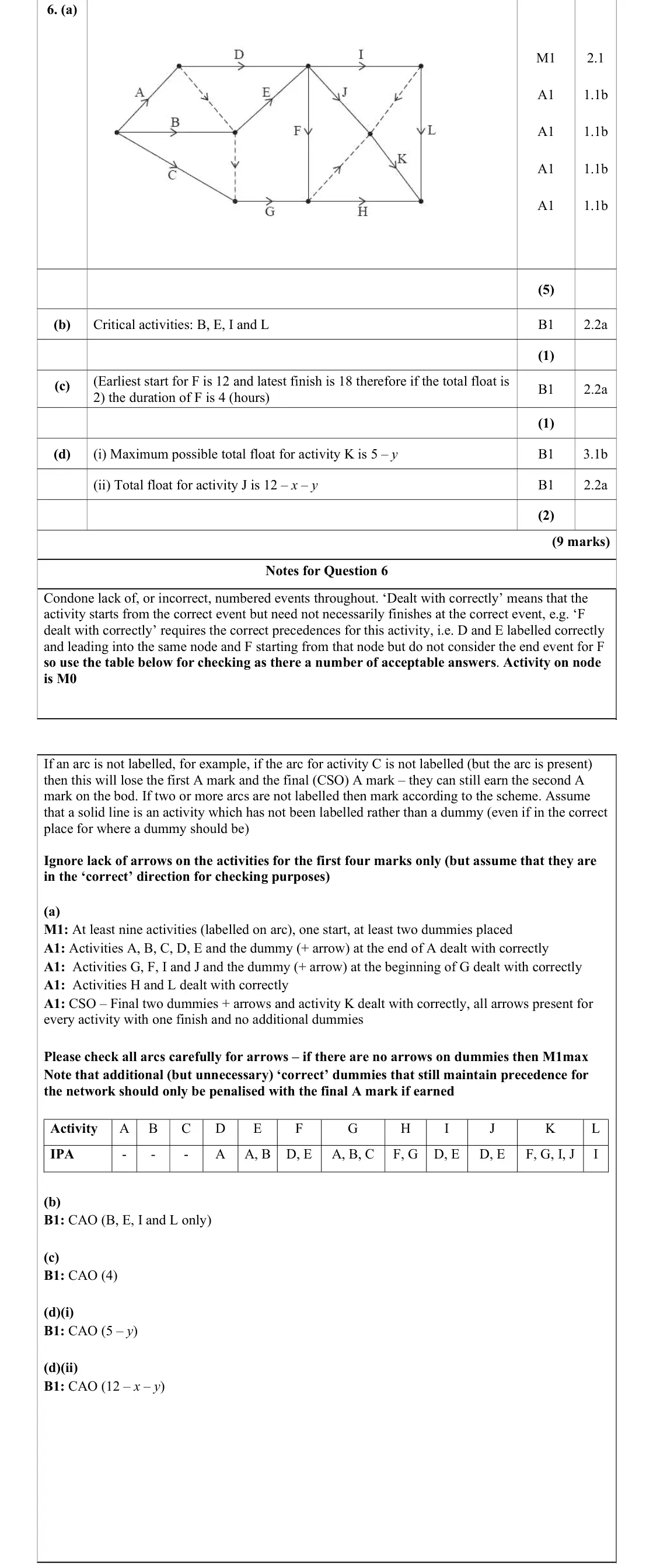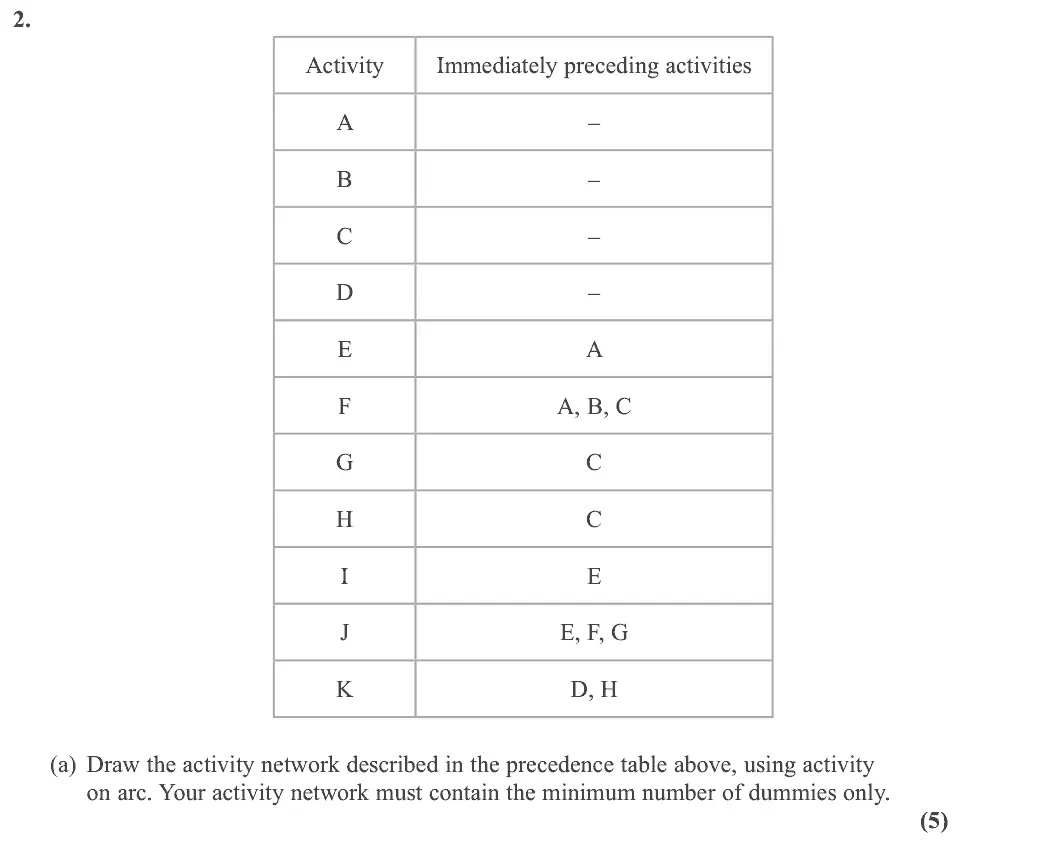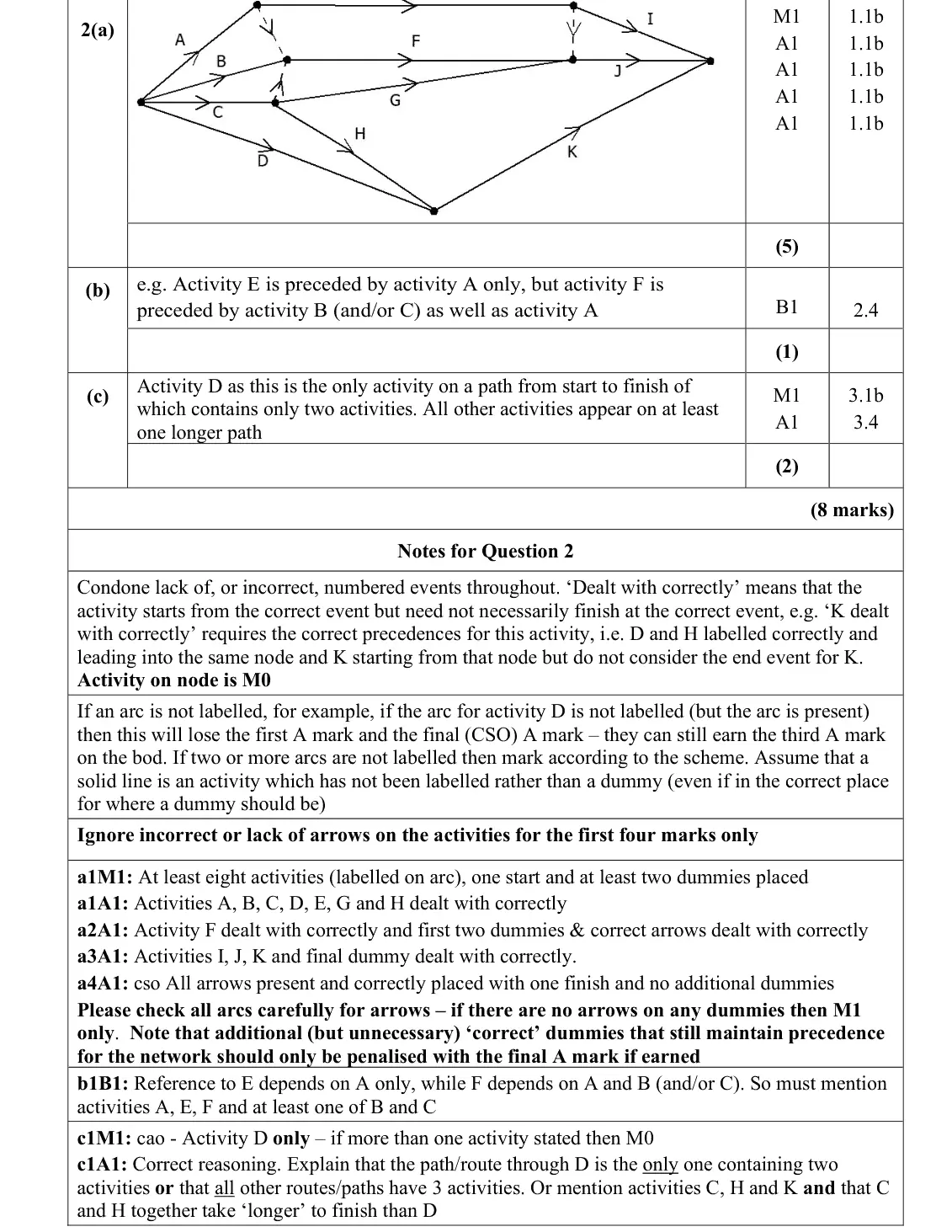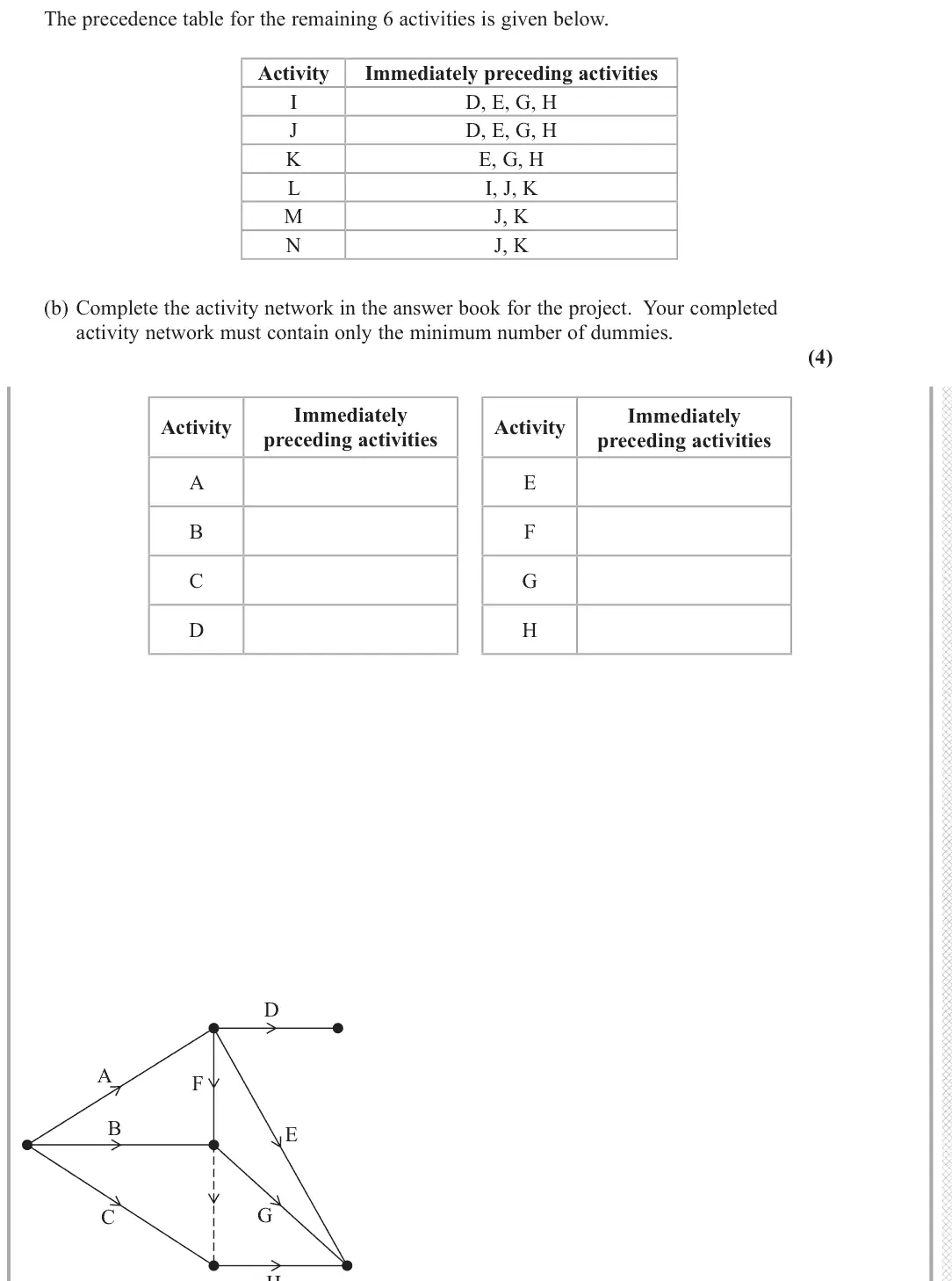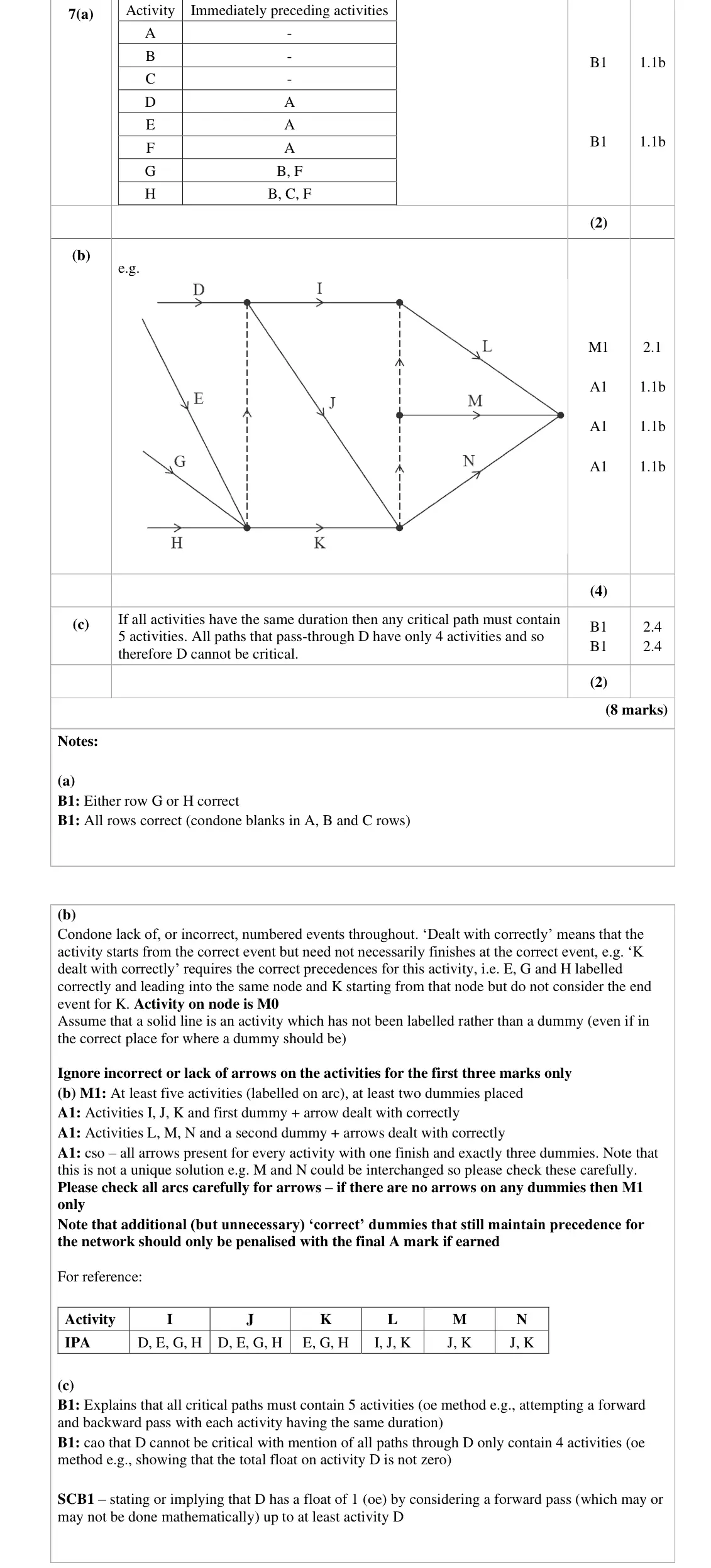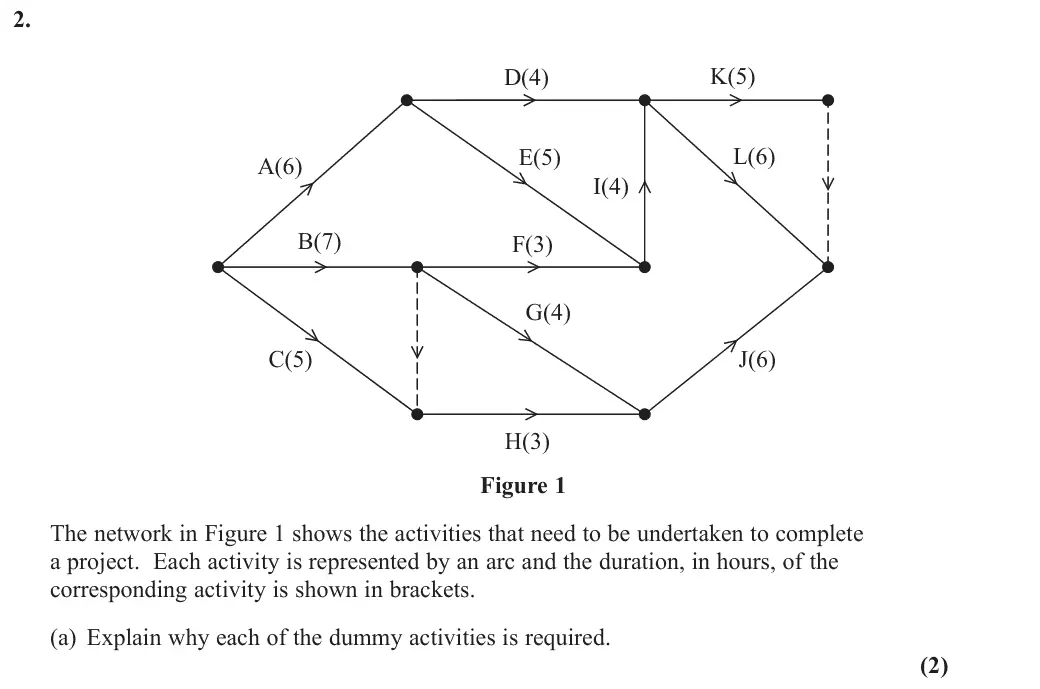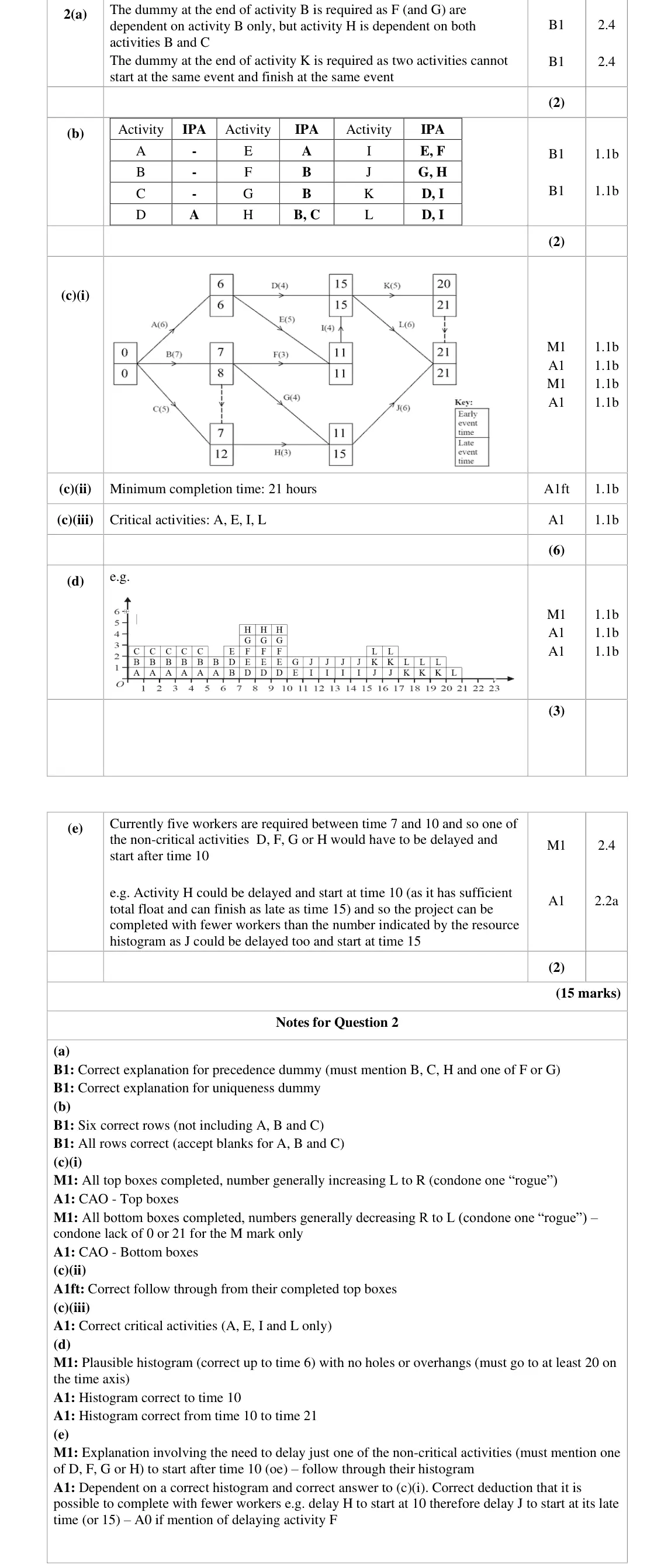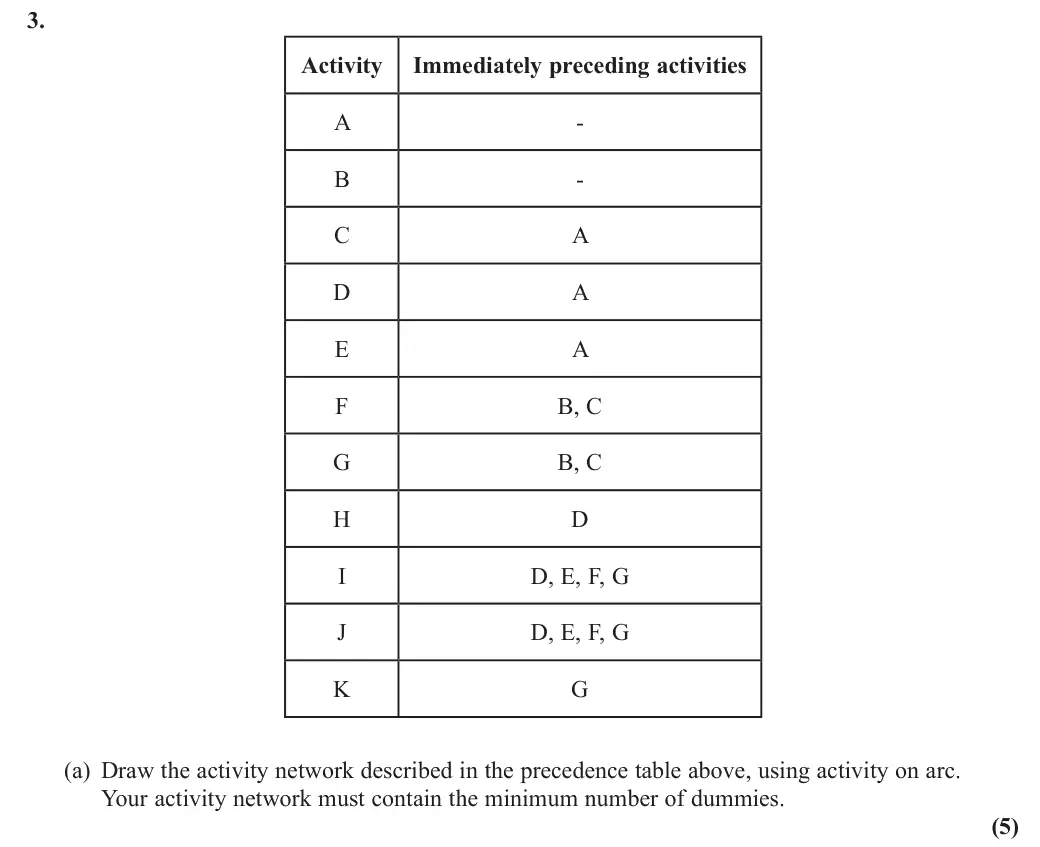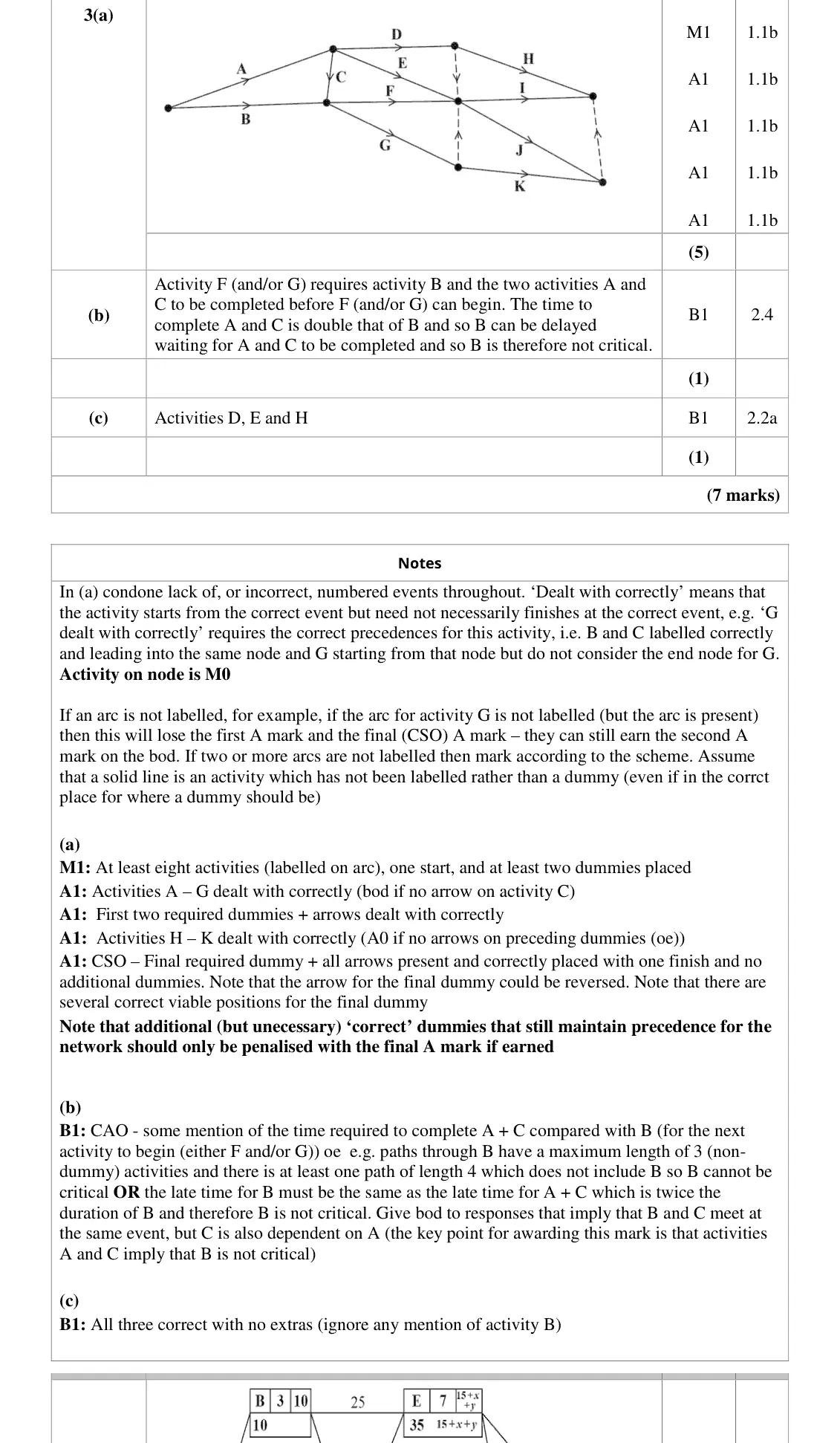
Mark scheme (whole question; this part is marked with the orange bar)
Examiner's comment
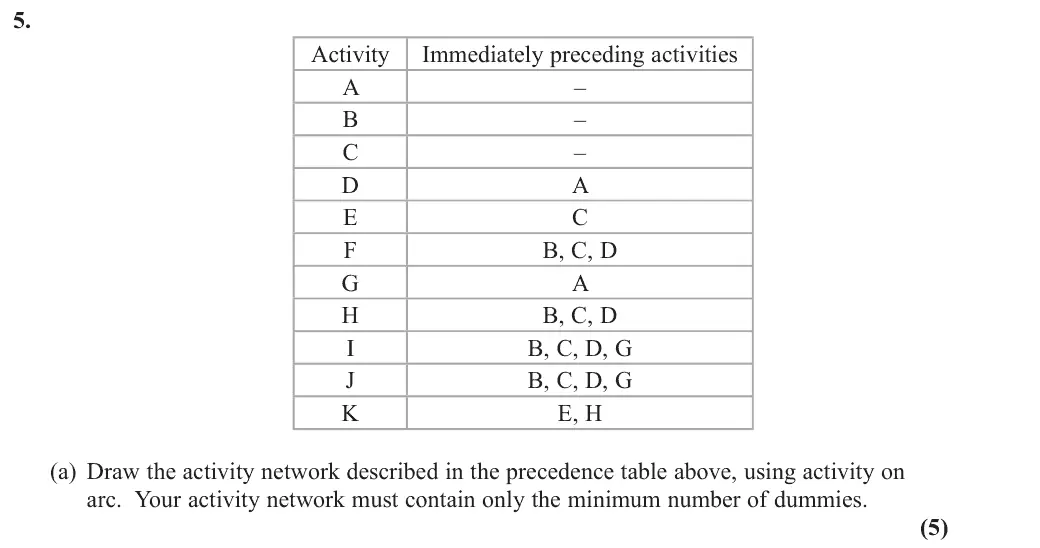
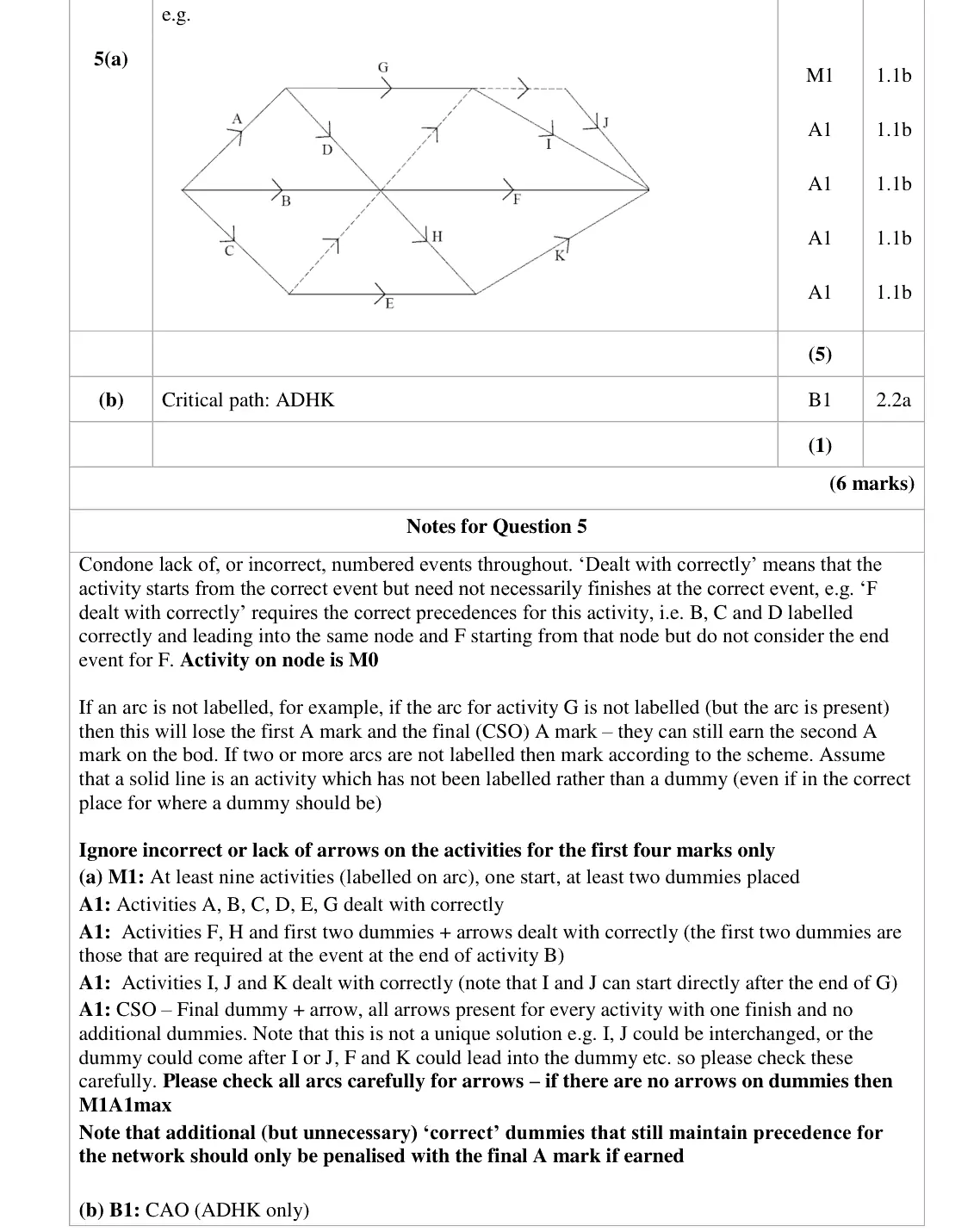
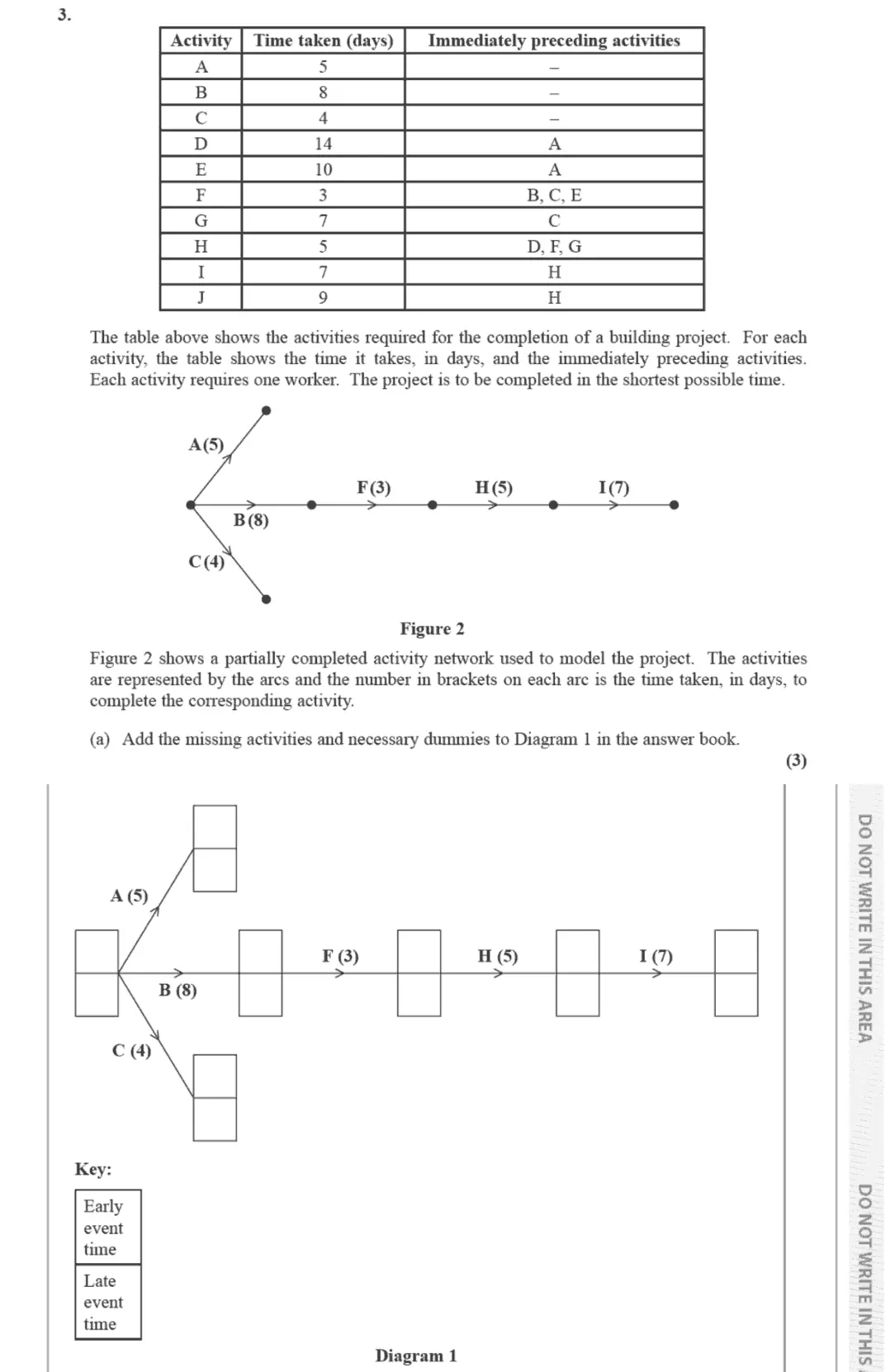
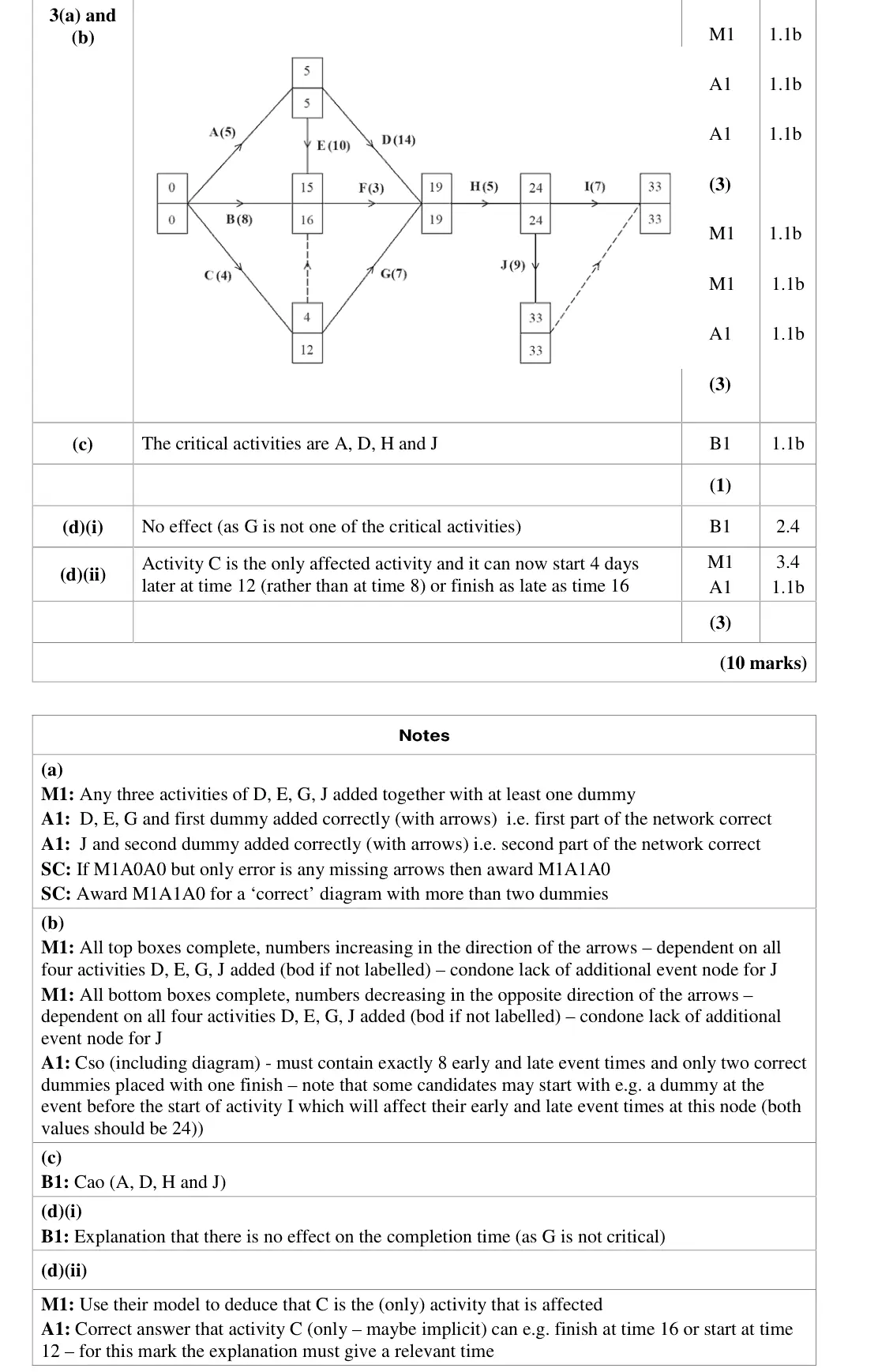
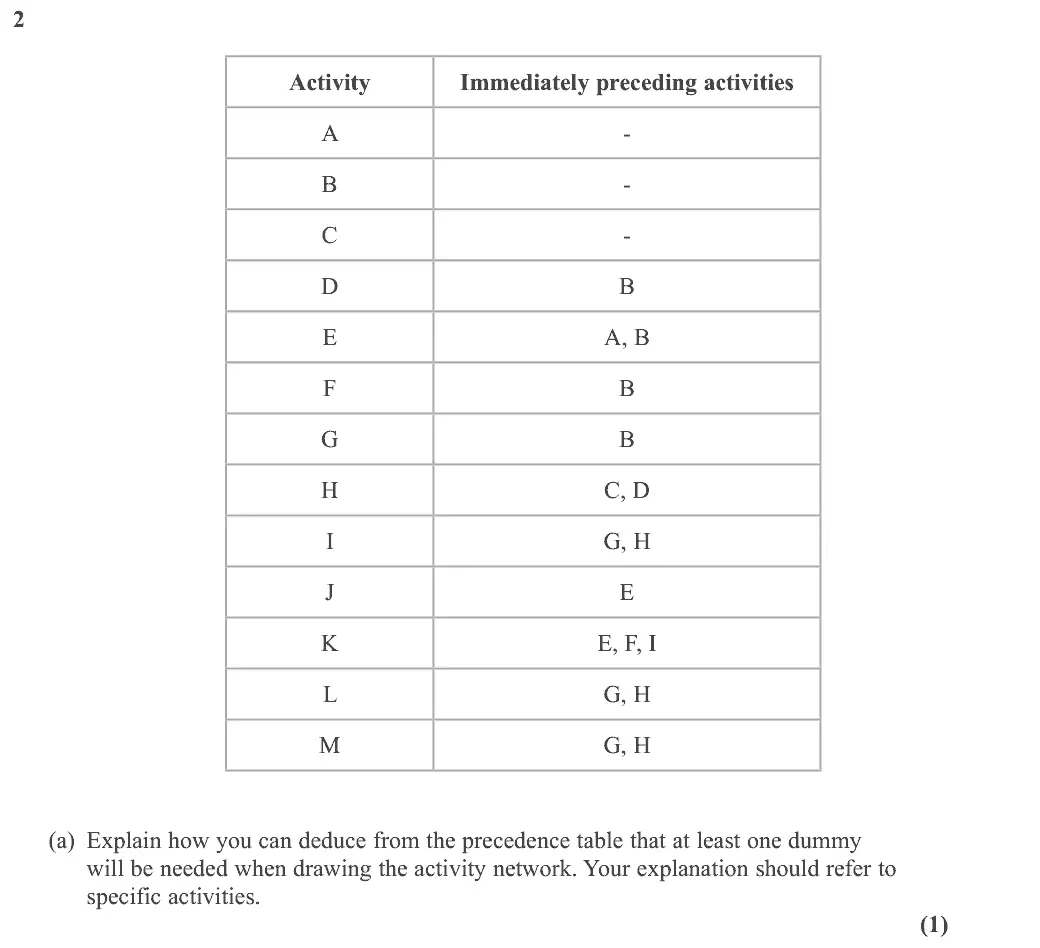
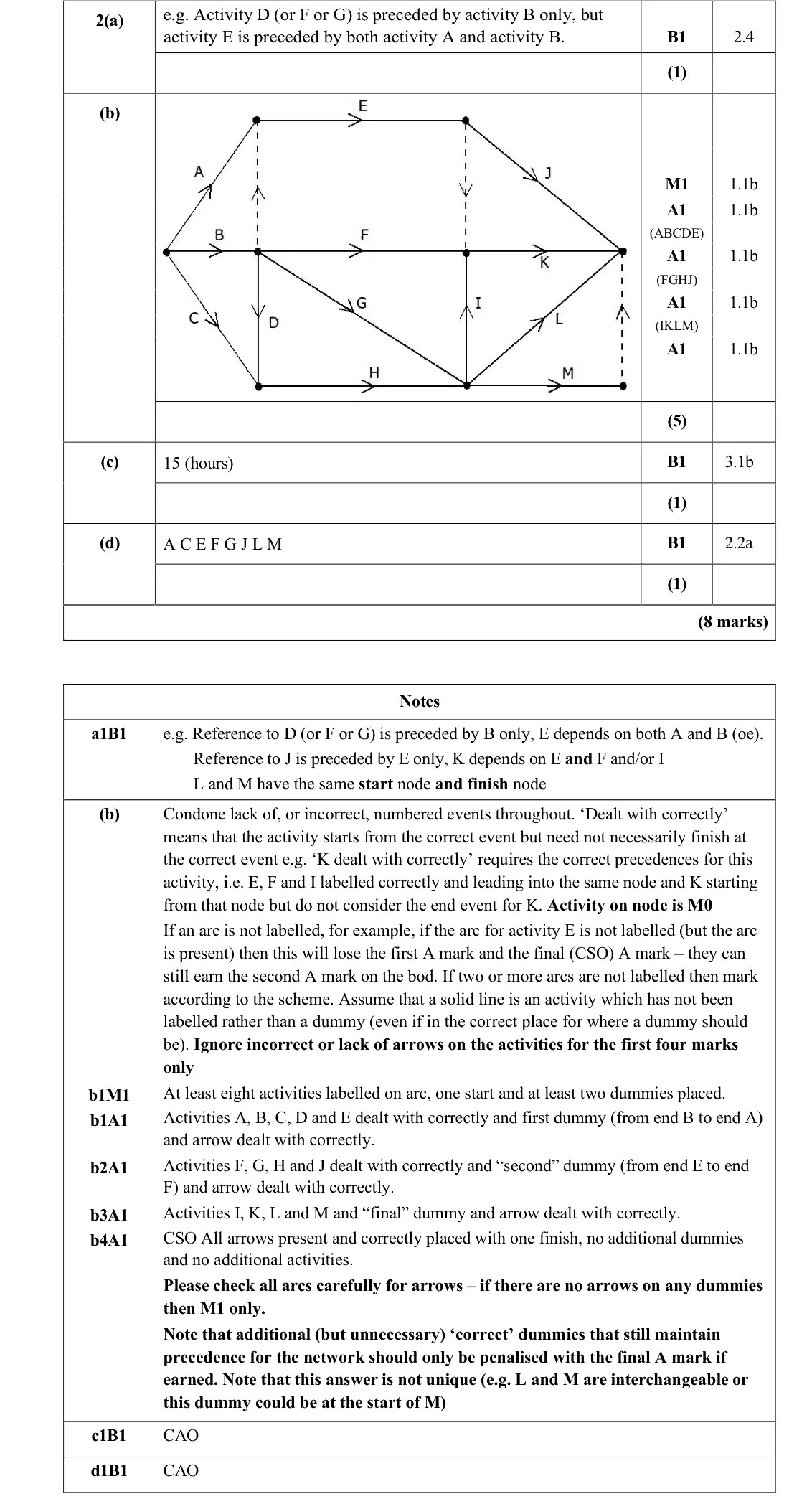
The first two parts of this question were very standard definitions and procedures and therefore very accessible to all learners, however the advanced understanding required for the final two parts were able to clearly discriminate between learners who could follow procedure and those at the higher end of the scoring scale who really understood it. Part a) was generally well answered with a majority of learners scoring this mark for a correct explanation. The most common non-scoring response was to only consider the dependency of E on A and B, which was not acceptable in the context of the whole network. Those attempting to use the unique argument sometimes failed to mention both the start and end notes, and a loss of the B mark in this question was often due to lack of accuracy rather than a wrong idea. Part b) was generally very well drawn overall, with a large number of responses scoring full marks. The most common error was to share the same start and end node for L and M, thus losing the last two marks, otherwise learners handled the network well (though some of the responses were not user-friendly to navigate. A small number of activity-on-node responses were attempted; learners should be aware that this scores no marks. A few did not have a single start node, which also scored no marks. Lack of arrows on the dummies caused some to gain only the M mark. A more common error tended to be either the lack of Activity J, or additional activities when the candidate’s lines were not long enough or they used additional dummies. Part c) was answered correctly on approximately half of the scripts. It was still well attempted, however a full range of multiples of 3 seen from 9 to 39 which demonstrated a lack of understanding of this particular application. Part d) was only answered correctly by the most able learners. Those that did get 15 generally found at least some of the non-critical activities, often listing only a small number of the required list. Those that first identified the critical path generally found the full set.
Key points from the mark scheme and examiner's report
- D (or F or G) depends on B only but E depends on A and B (or L and M share start and end events)
- must refer to specific activities
- E on A and B alone is not enough