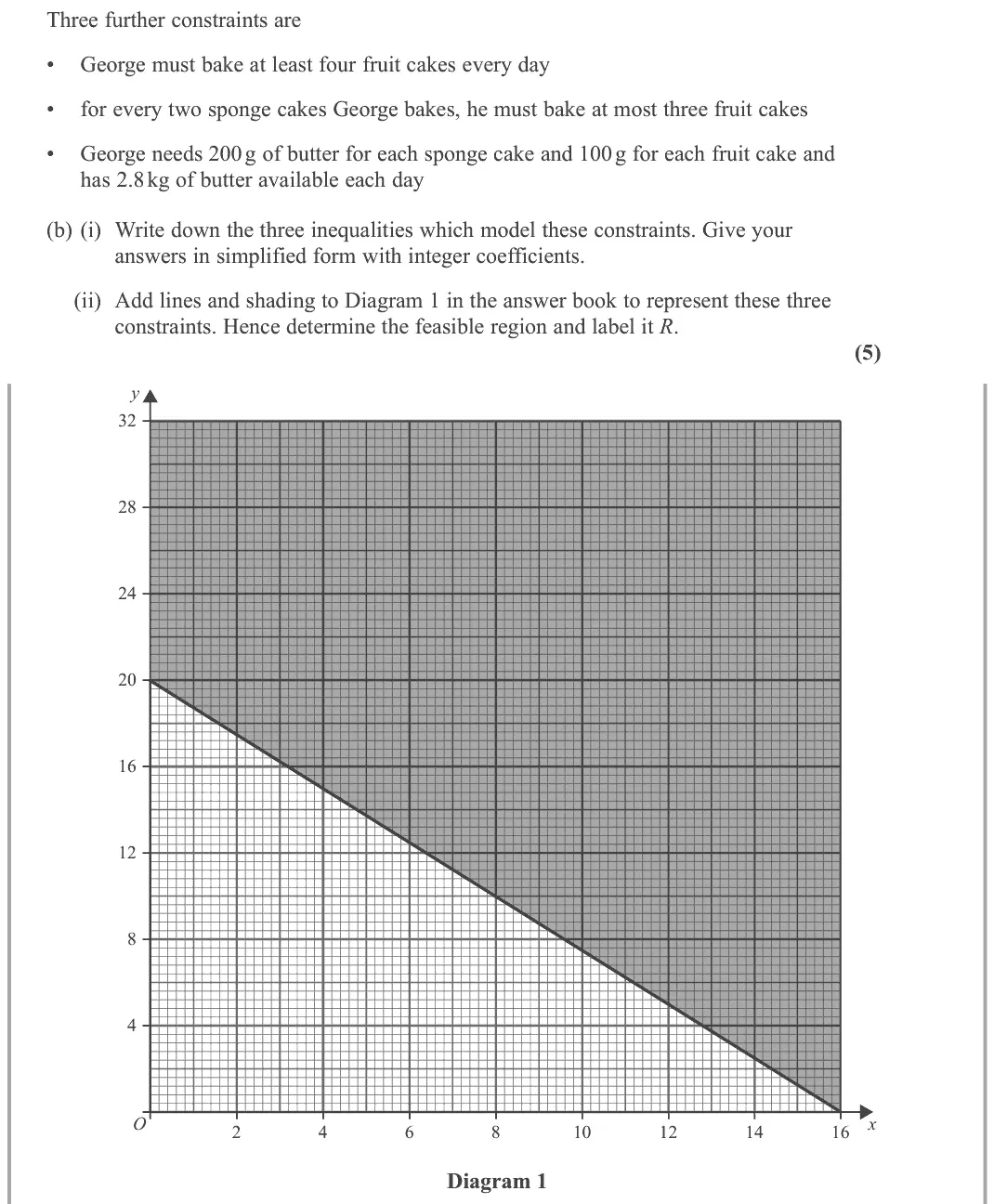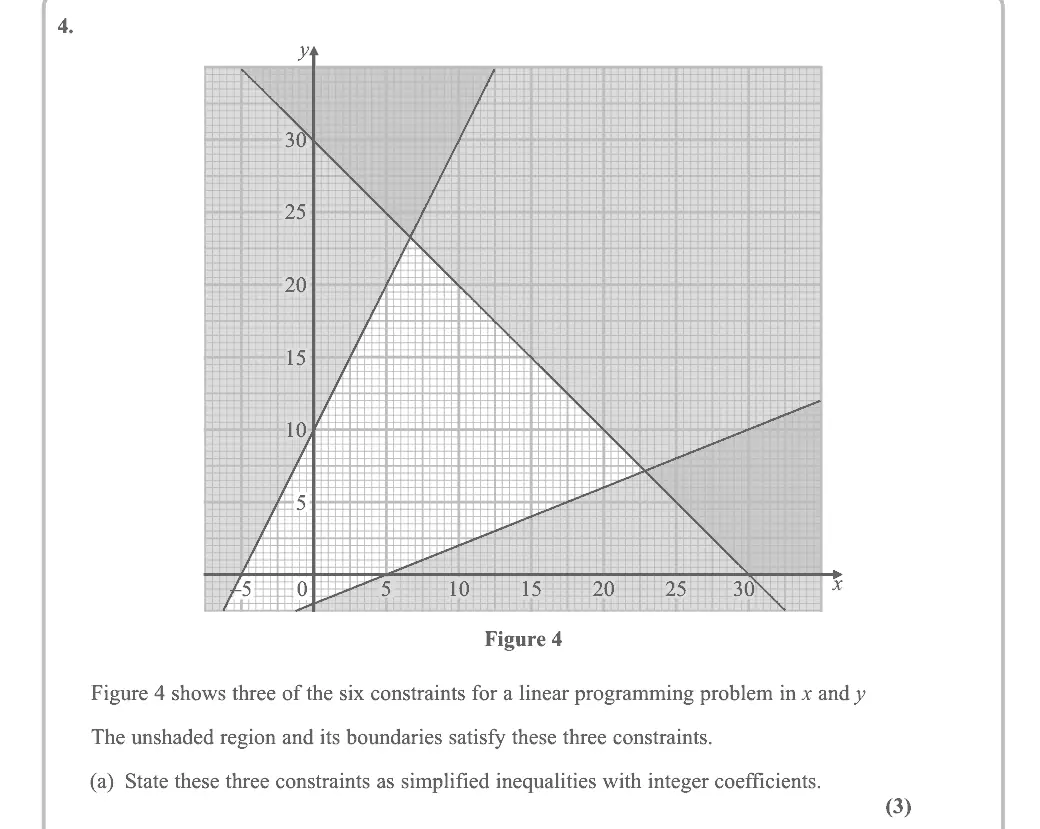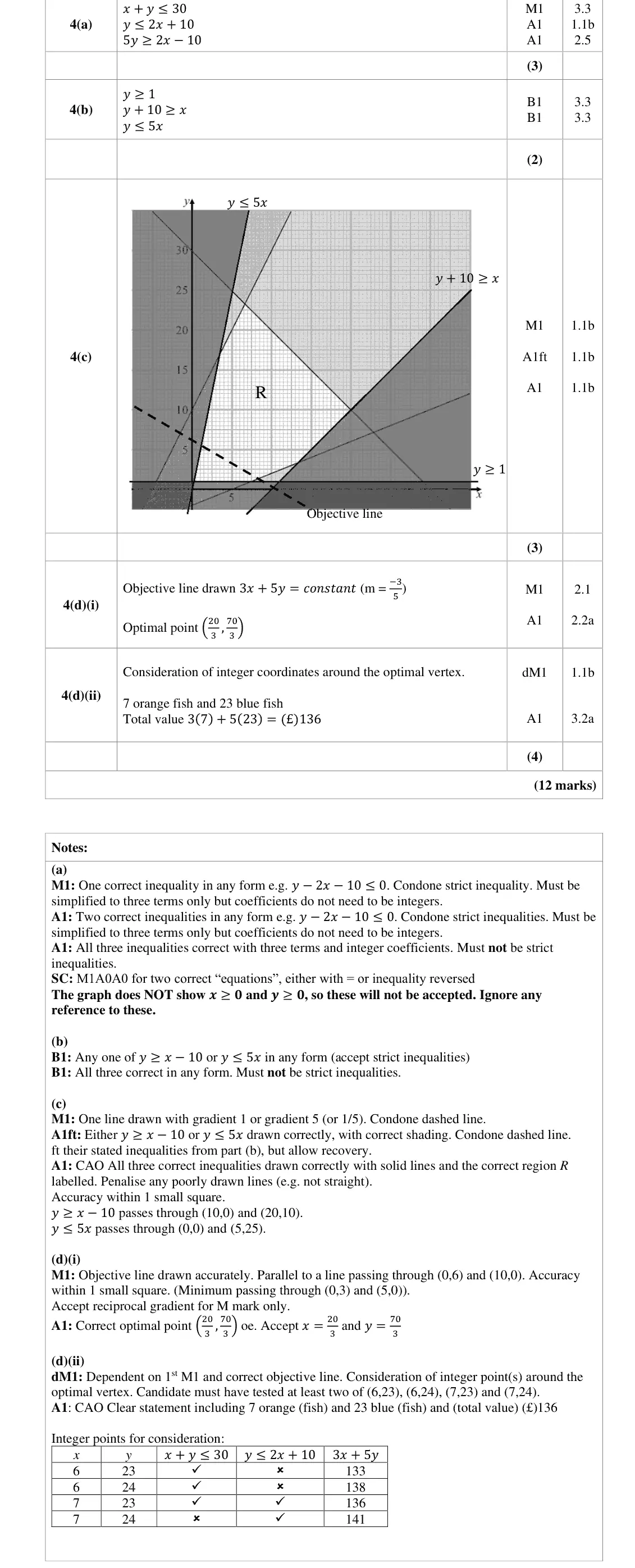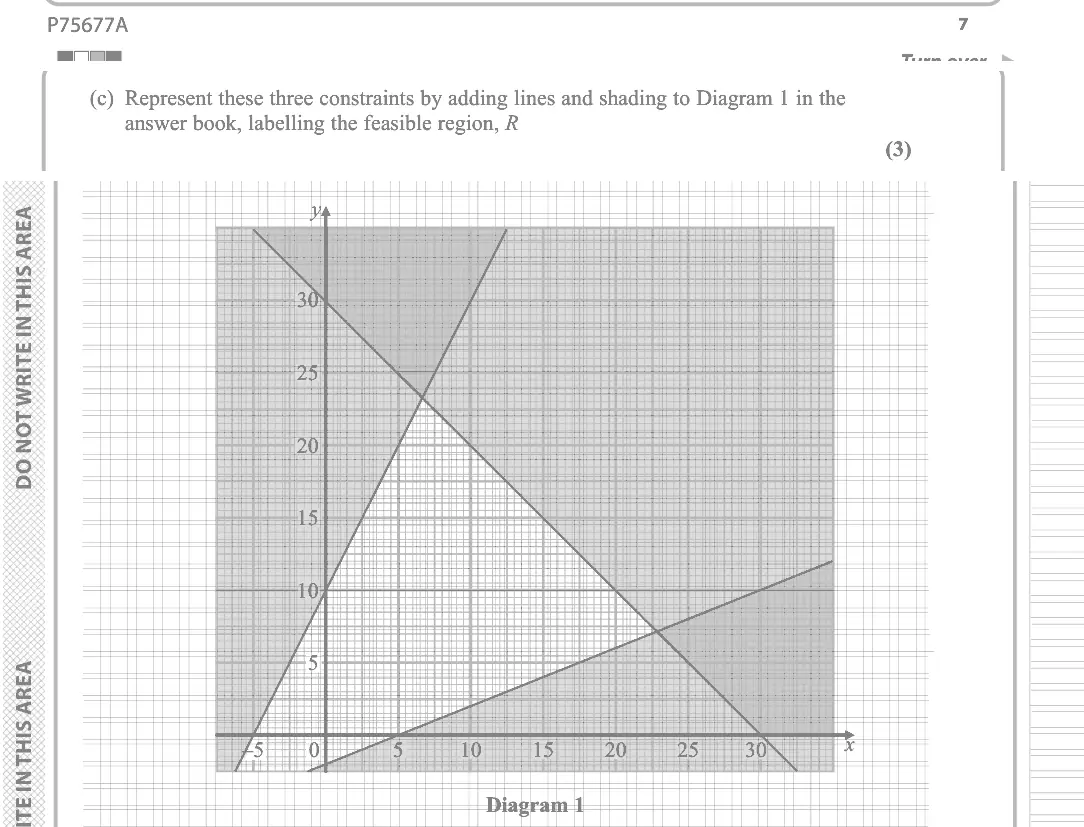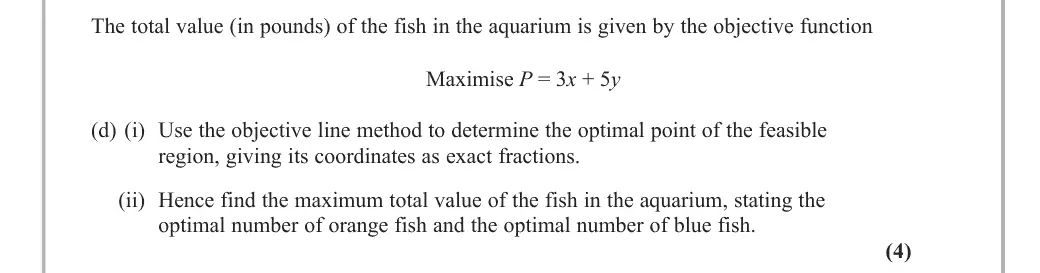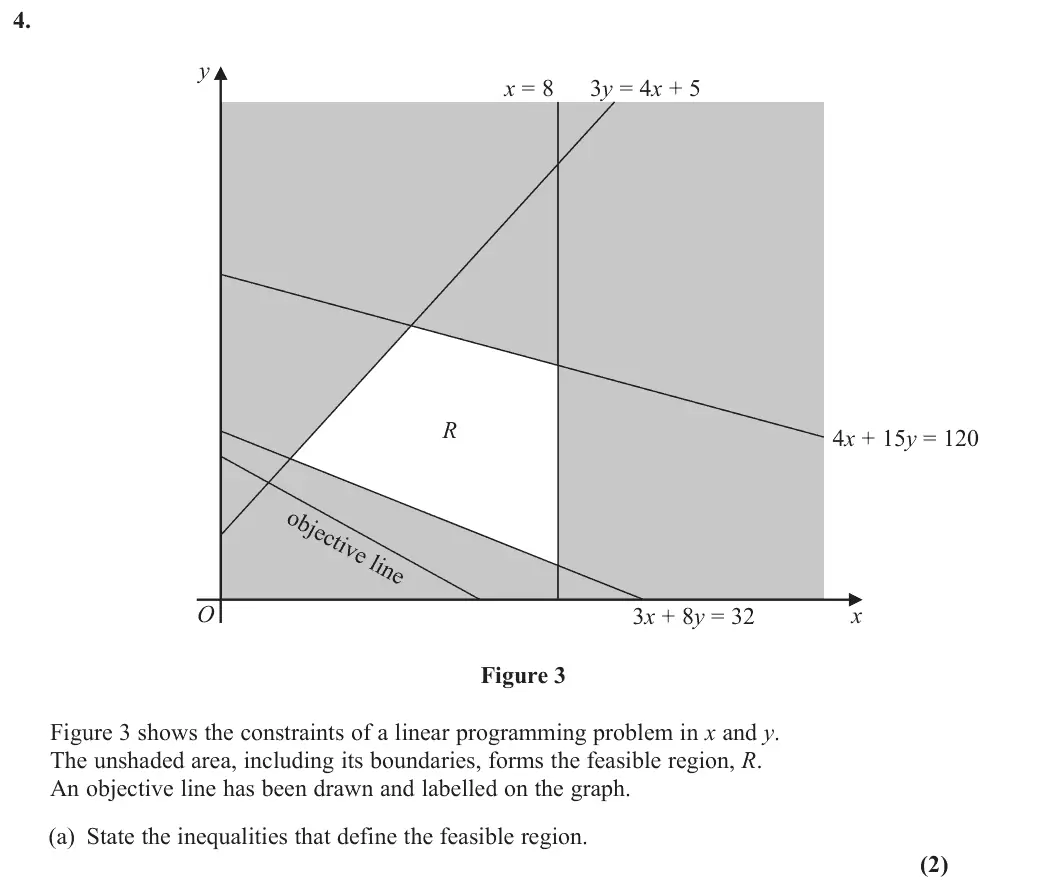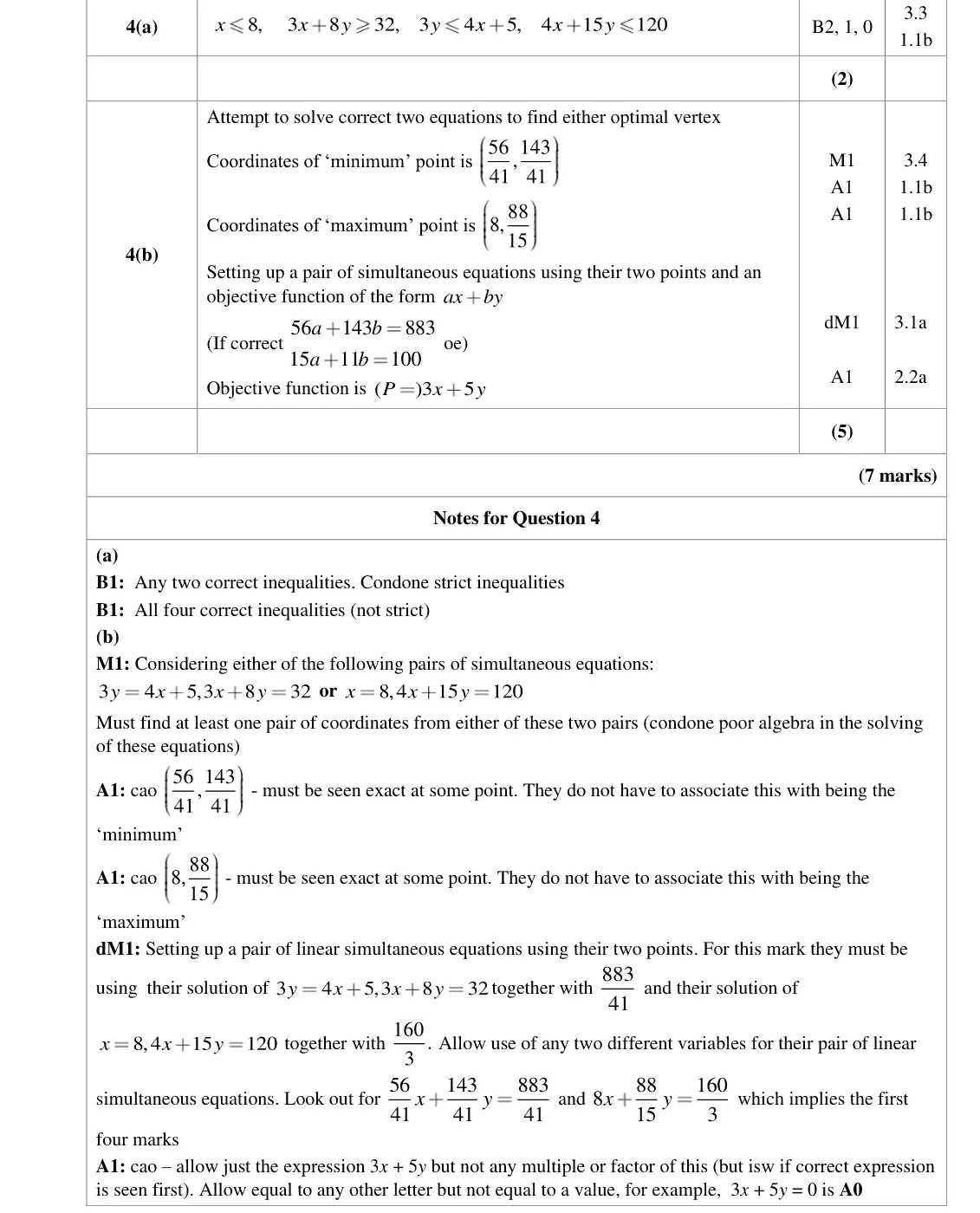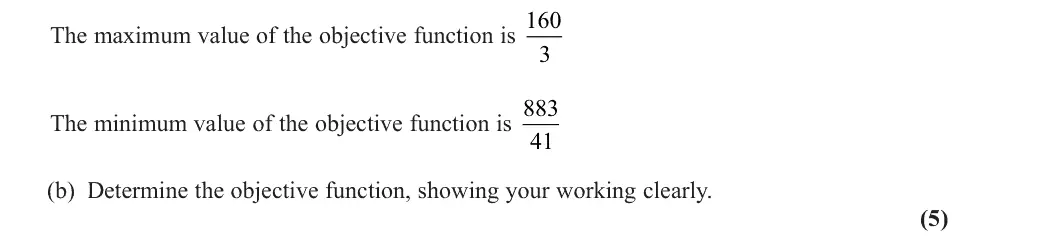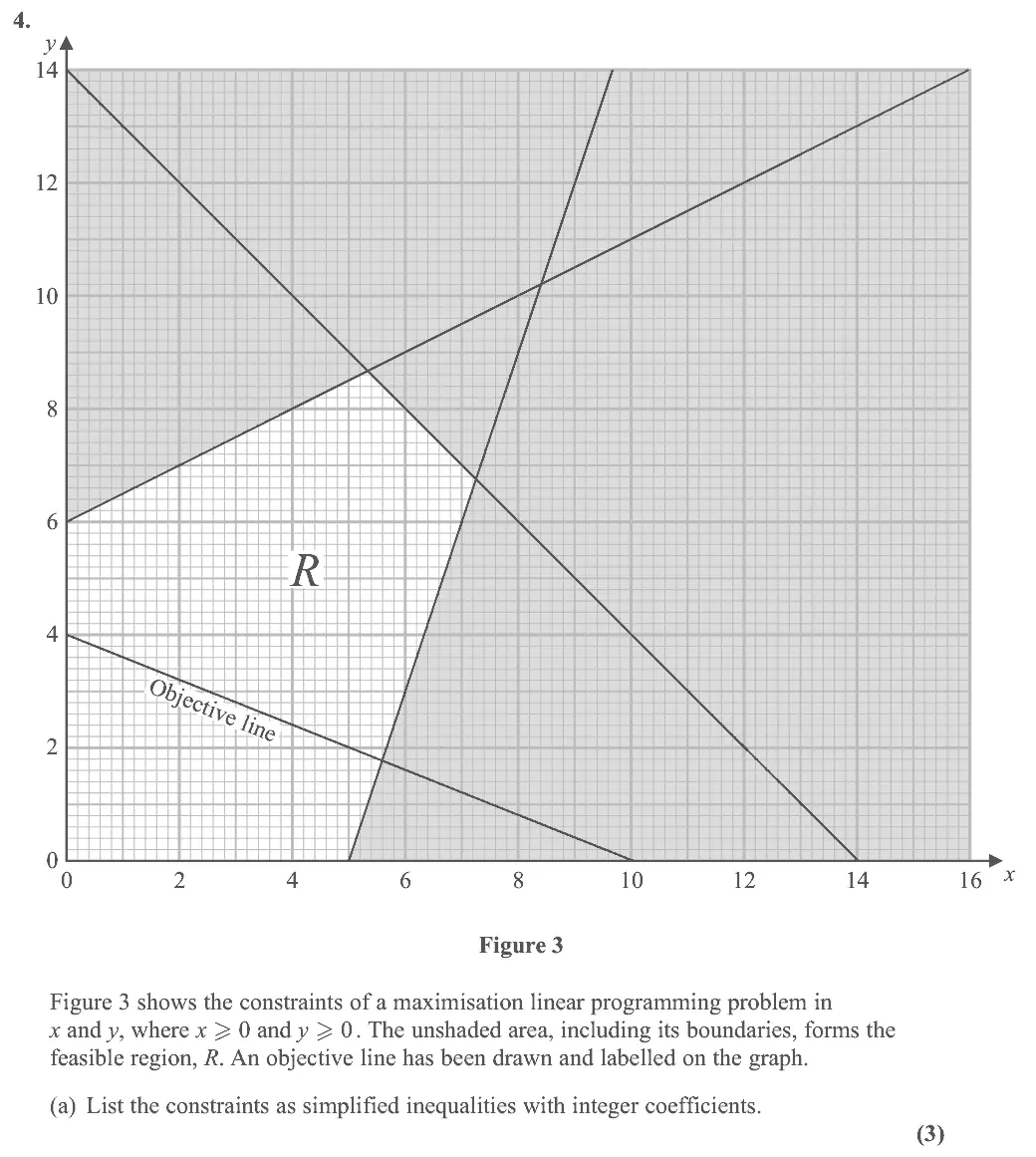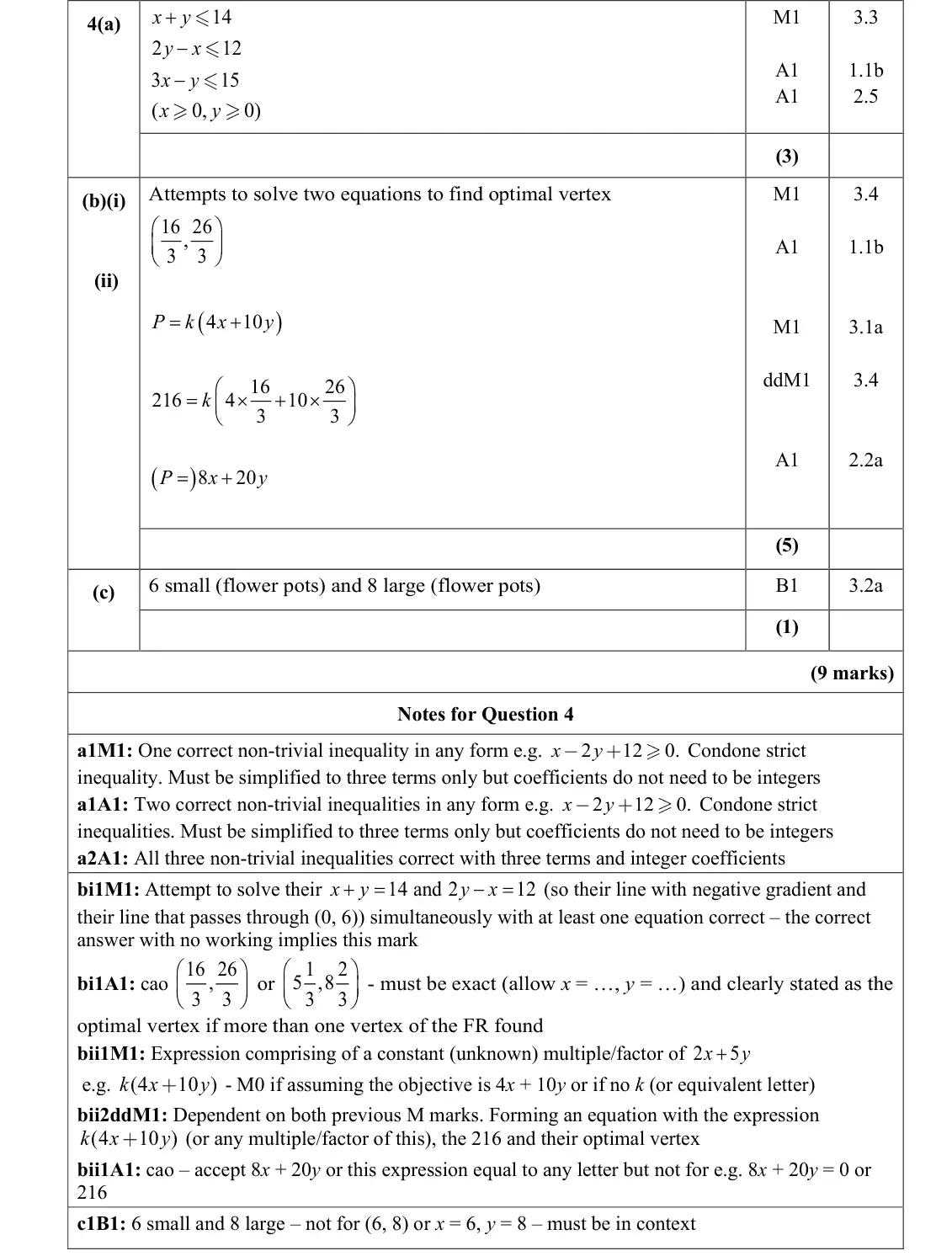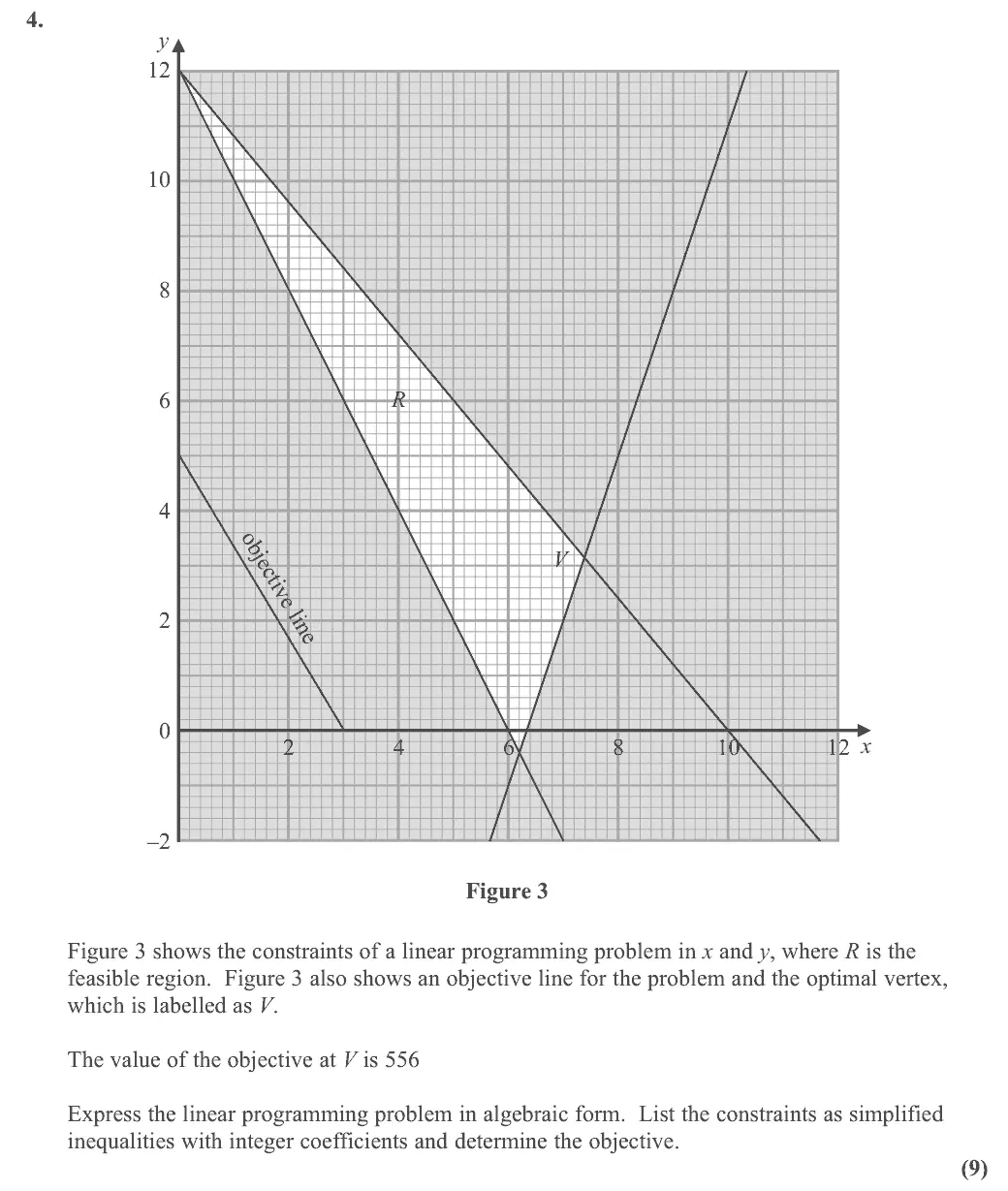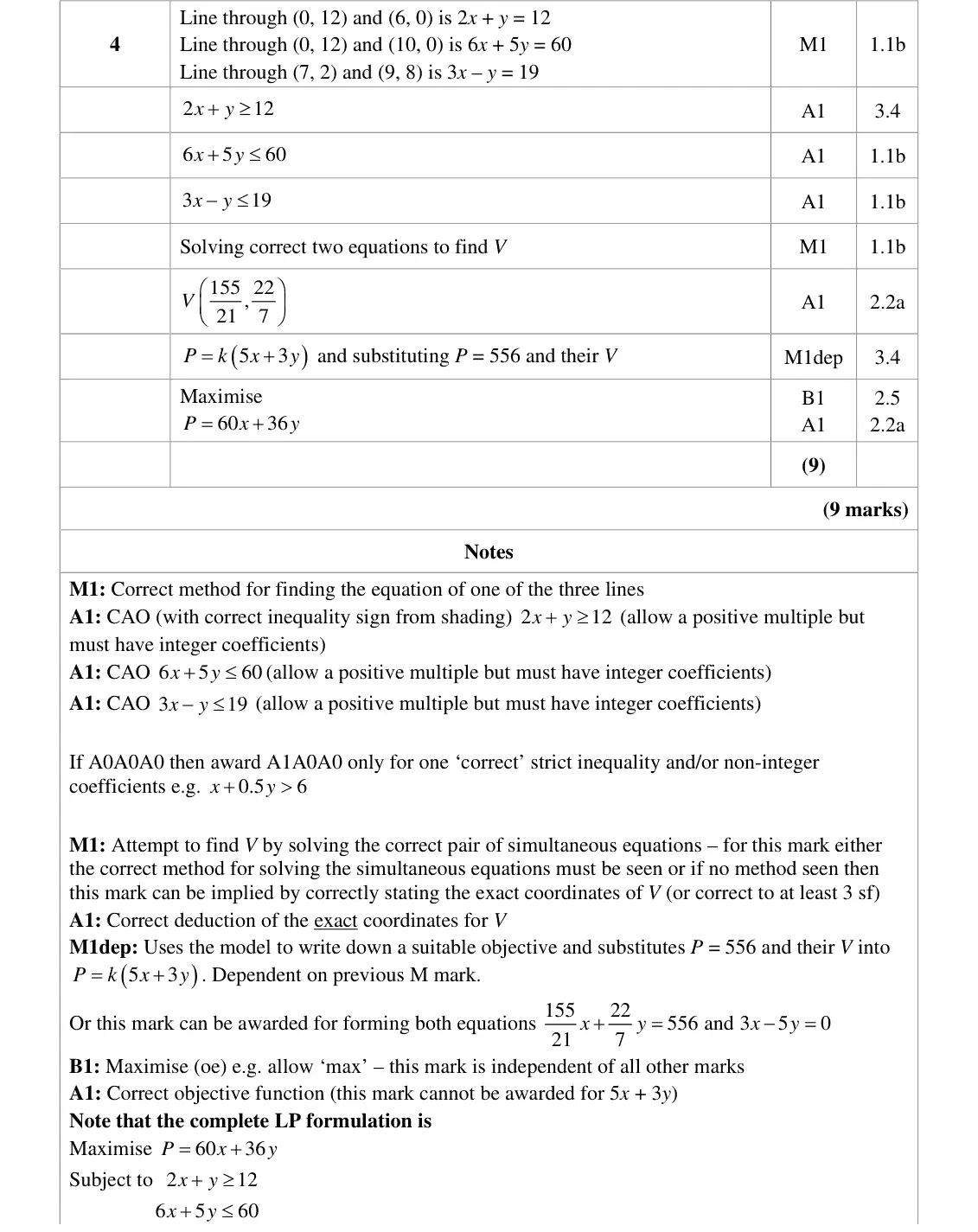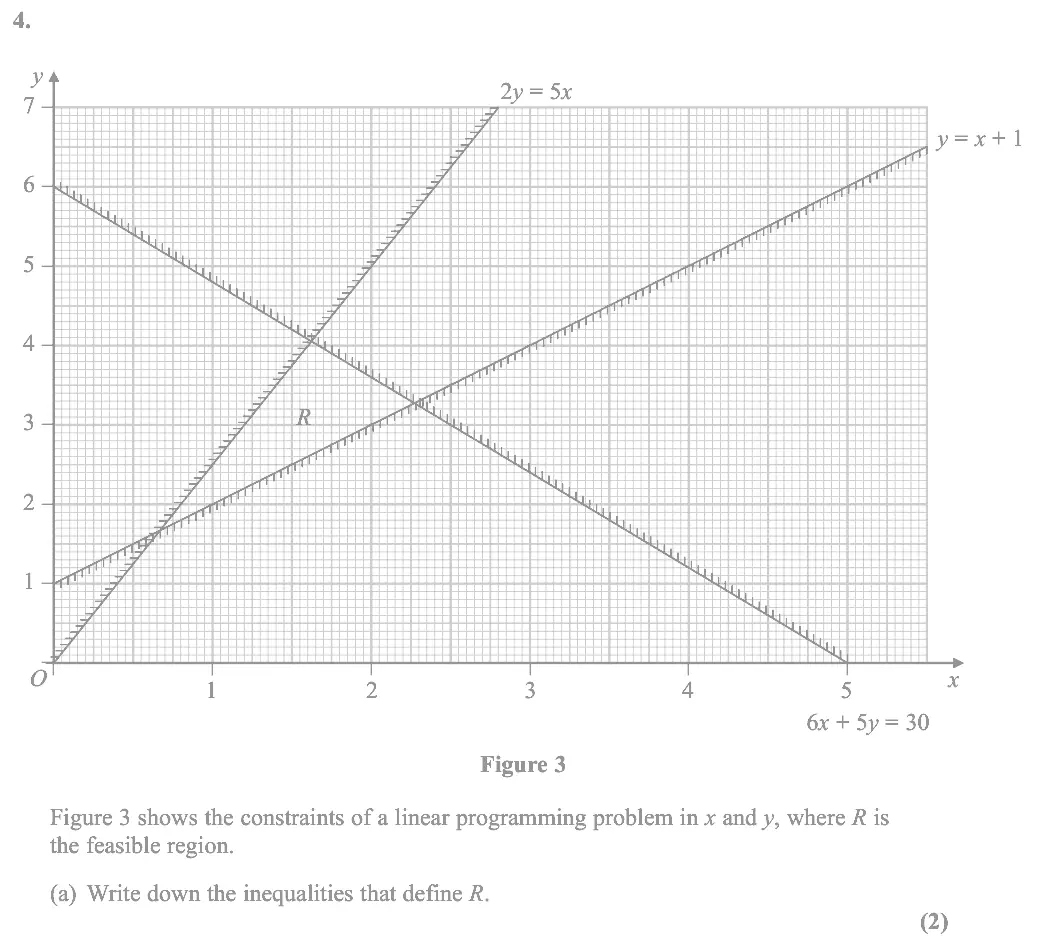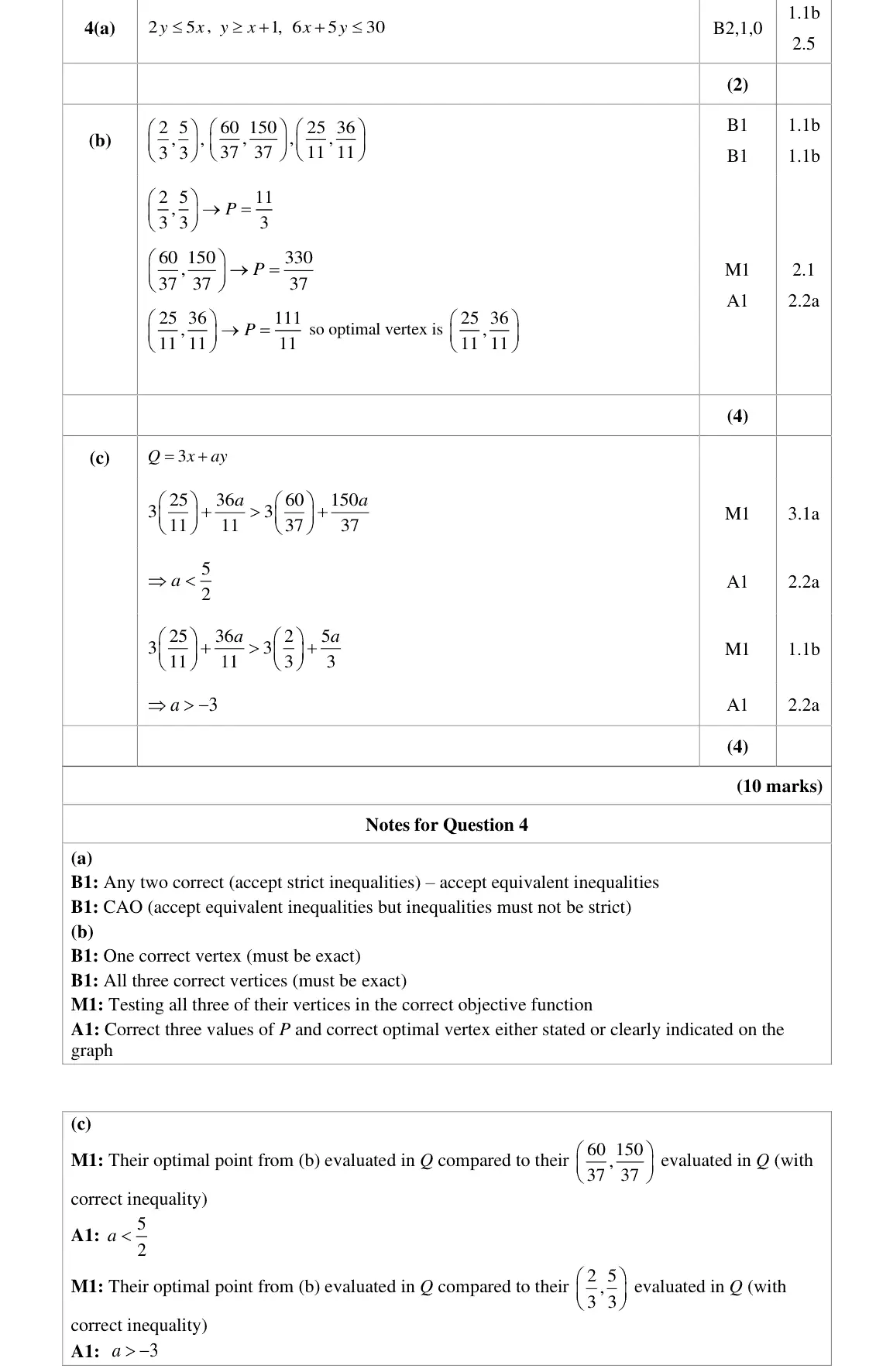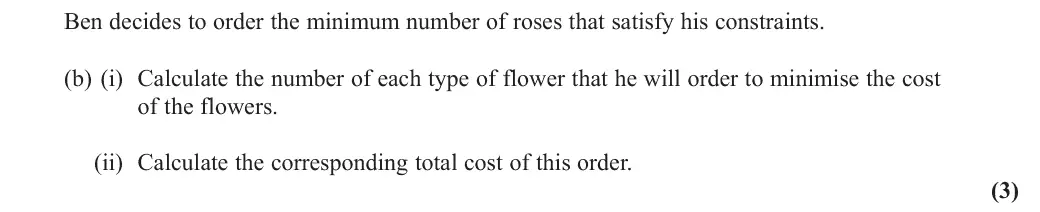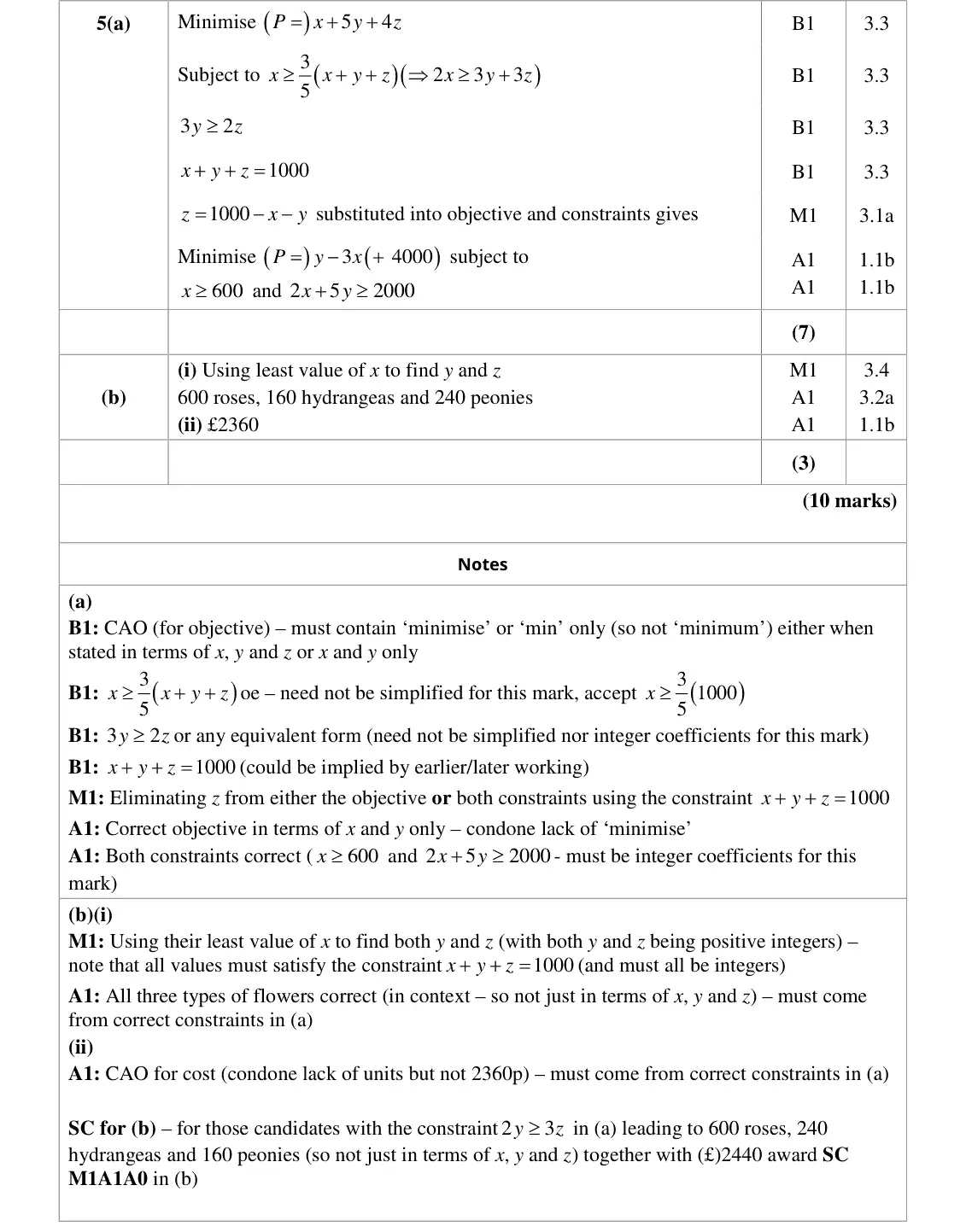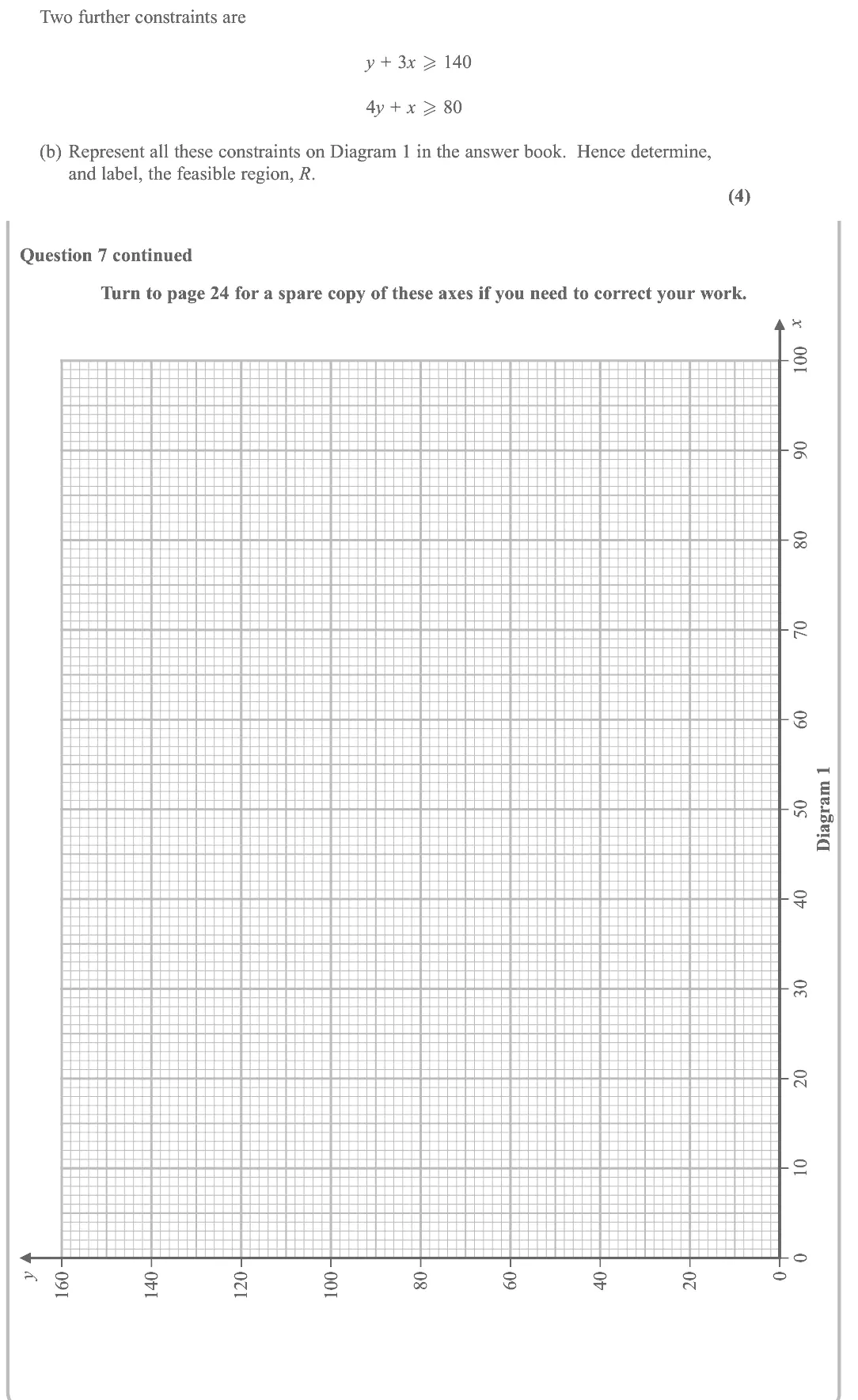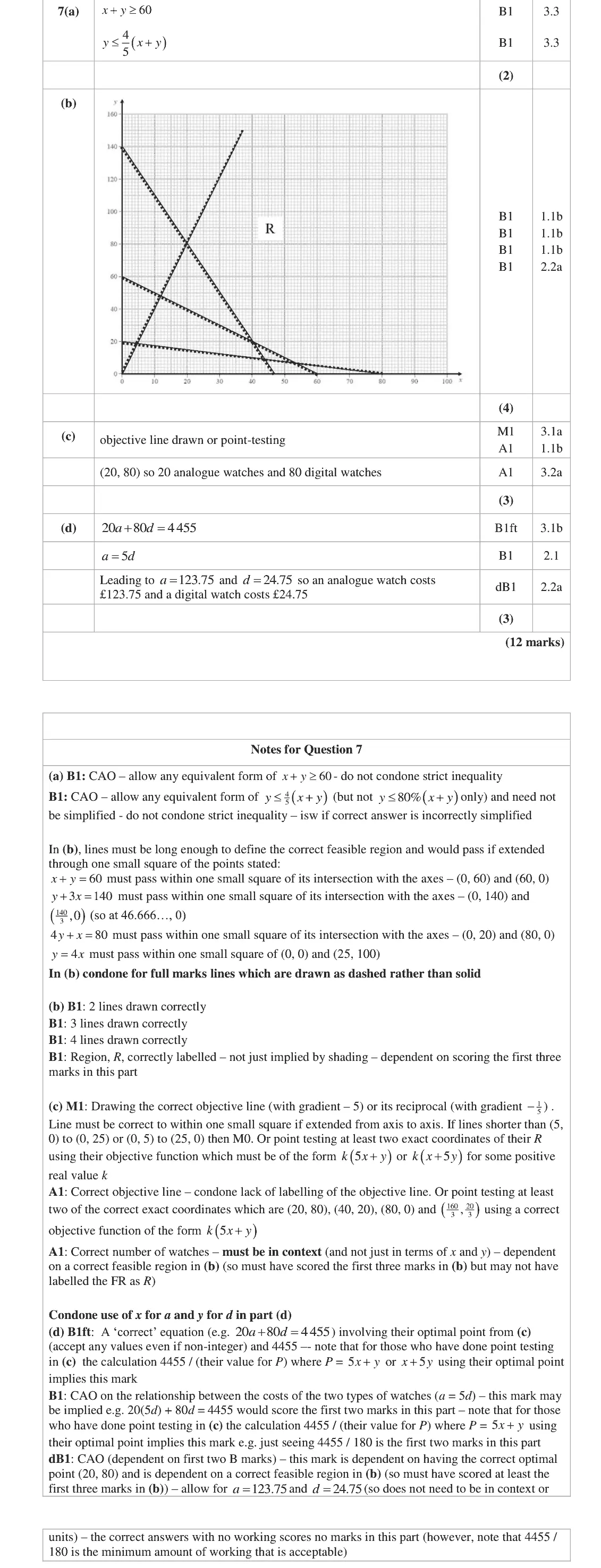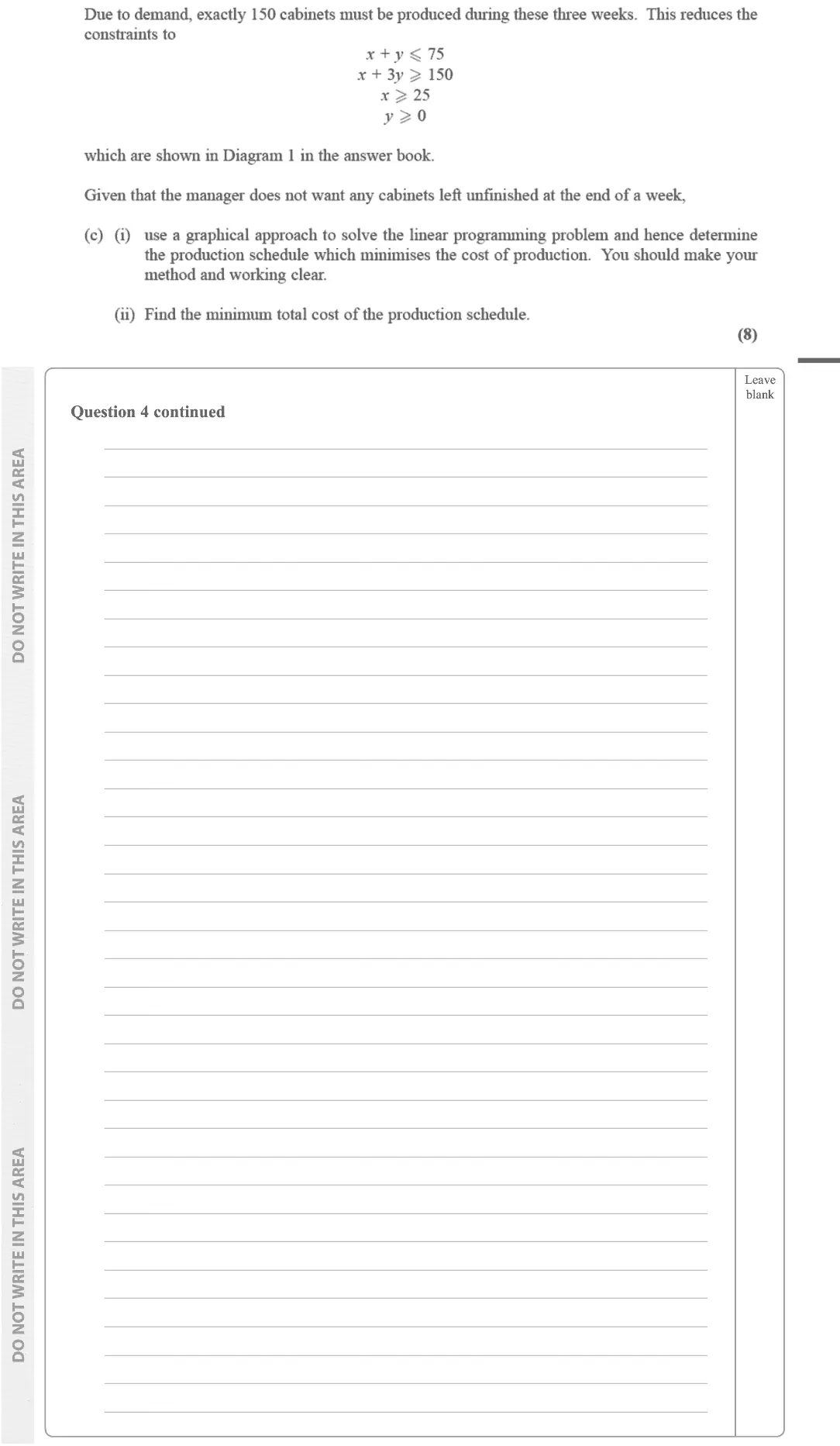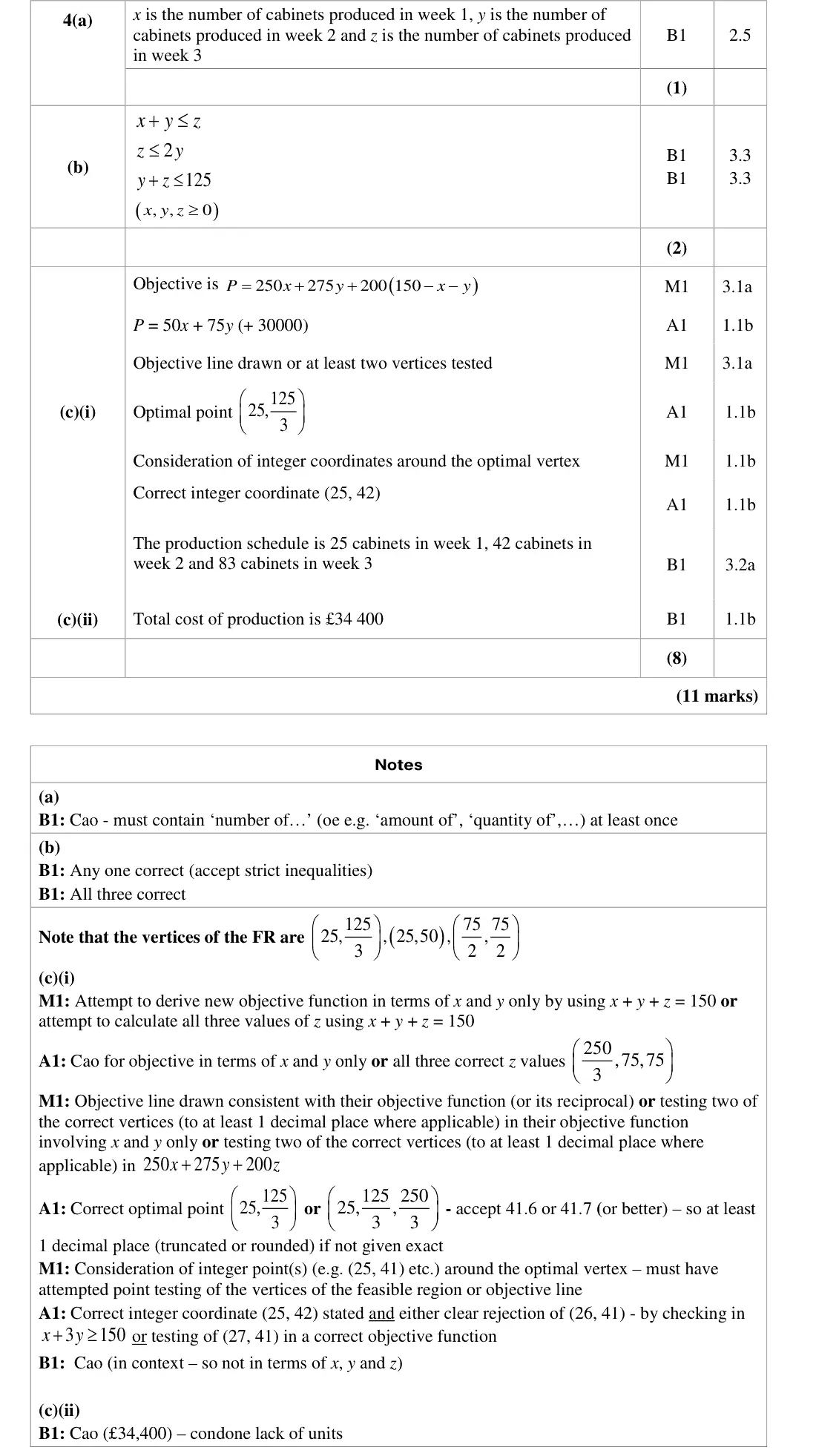
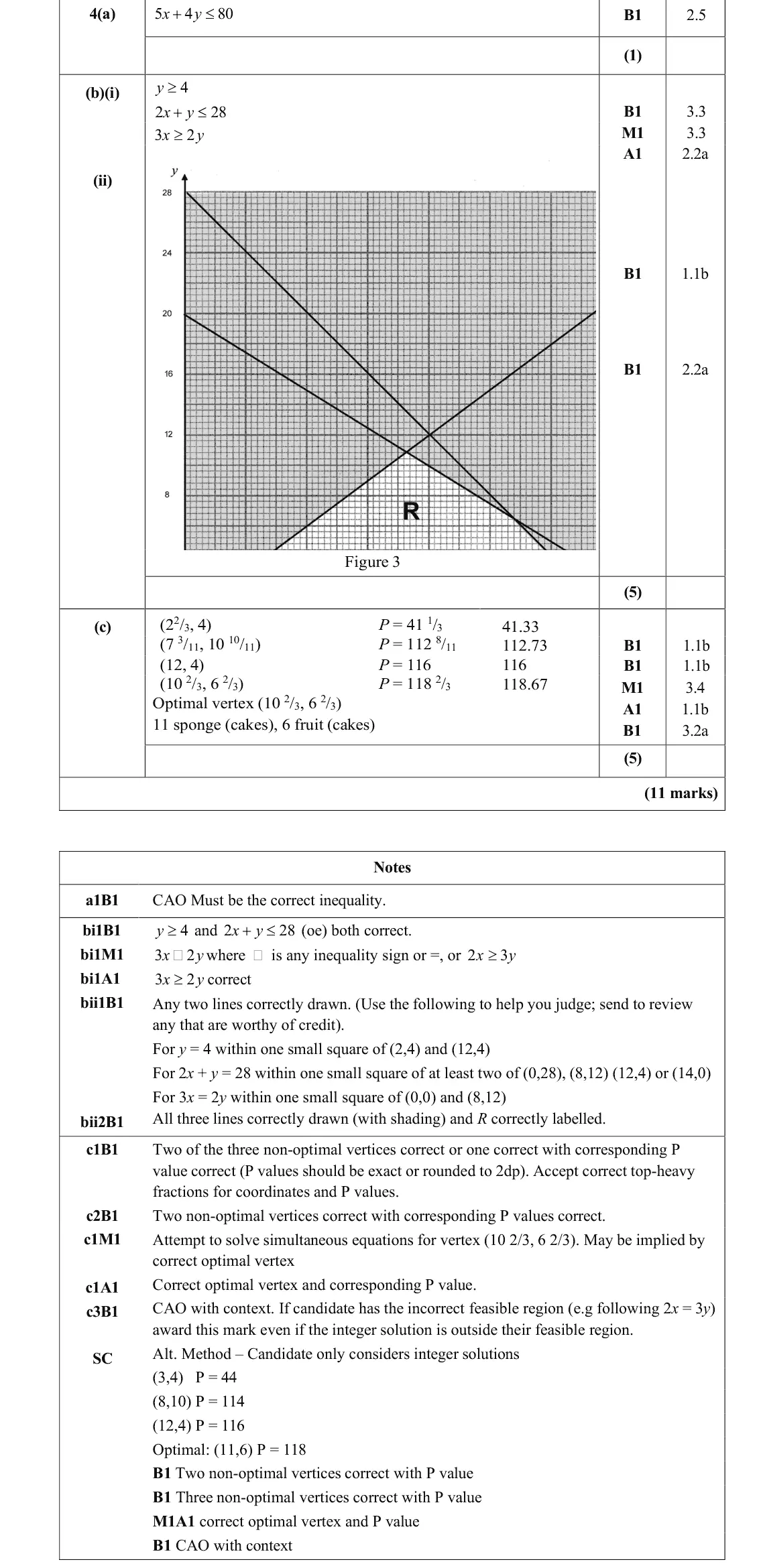
Mark scheme (whole question; this part is marked with the orange bar)
Examiner's comment
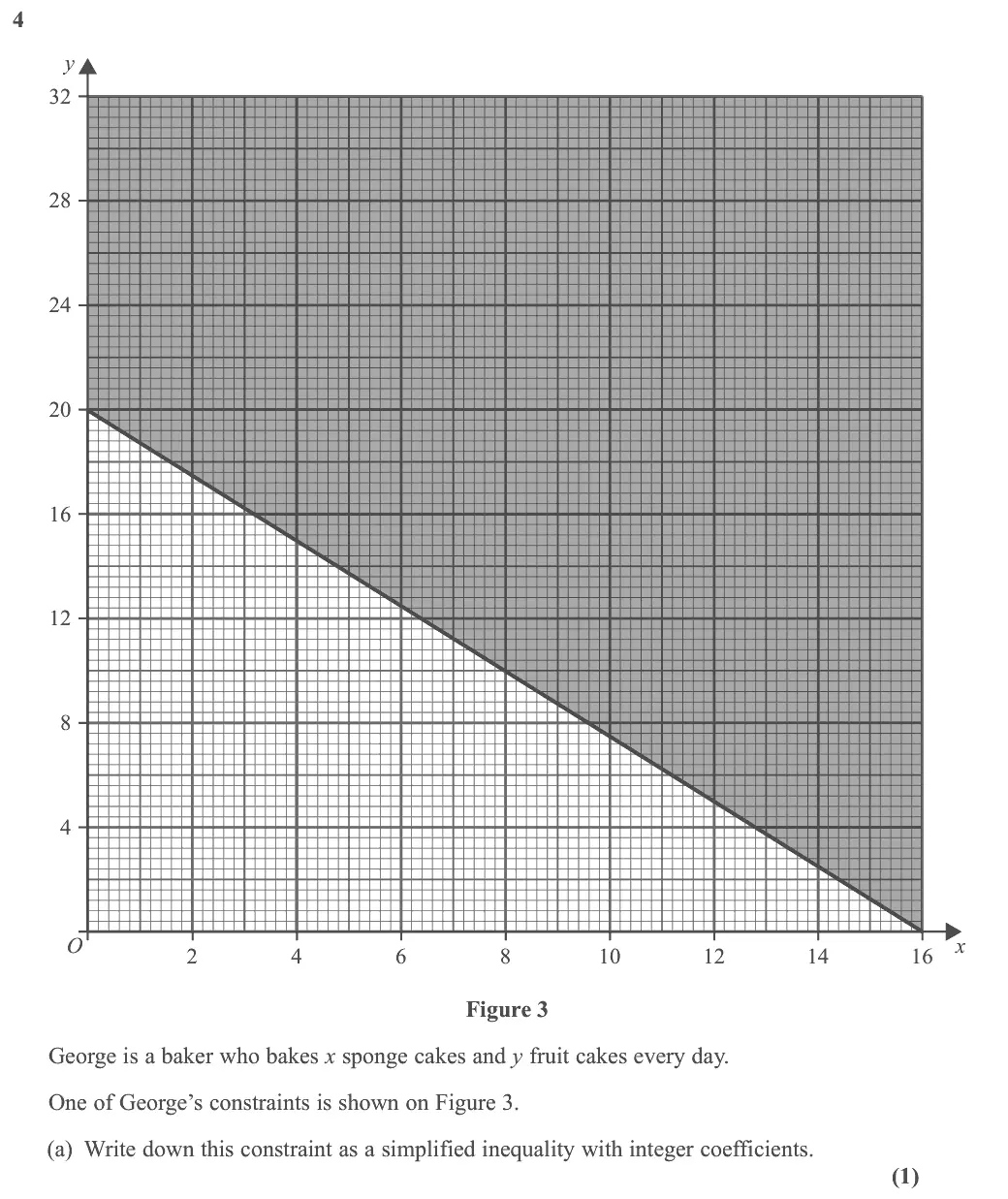
Once again, this question was accessible to the vast majority of responses and was well placed at the end of the paper with a range of marks being awarded. Full marks were seen, but not often. The question was still well attempted with no evidence that learners were running short of time. Part a) was generally completed well although some learners lost the mark by failing to find the integer coefficients or failing to multiply by 4 effectively ending up with a constant of 20 or 100. Part b) also provided marks for the majority of learners; most gained the first mark although although the 3x >= 2y inequality often caused the most issues and was therefore allocated two some used x instead of y for the first inequality. It was common to see errors of x >= 4 out of the three available marks for this part. Indeed, every combination of 3, x, 2, y and also scored the first B mark in bii) for drawing 2𝑥𝑥+ 𝑦𝑦 <= 28 and 𝑦𝑦 >= 4. However, direction of inequality was seen with reasonably even frequency. A large majority of learners unsurprisingly, the issues in finding the final constraint then led to further inaccuracies in drawing this constraint, and as such only a minority of learners scored the final B mark in b). A few also lost the final mark by failing to label their R. Part c) produced a range of responses with varying degrees of understanding as to the requirement. A significant number of learners did not follow the instruction to use vertex testing, and instead either used the objective line method or just focused on the optimal point and completed integer testing just around this point. If they had the correct optimal point then
Key points from the mark scheme and examiner's report
- line through (0, 20) and (16, 0): 5x + 4y ≤ 80
- constants 20 or 100 from failing to clear fractions