D2.6.1 Use of recurrence relations to model appropriate problems.

Section
D2.6 Recurrence relations
Level
AS & A level
Statement
Use of recurrence relations to model appropriate problems.
Since 2018
7 parts, 21 marks · topic pages: Recurrence relations (Decision 2)

Back to the checklist

June 2025 · Paper 4D (Decision 2) · Q7(c) 3 marks
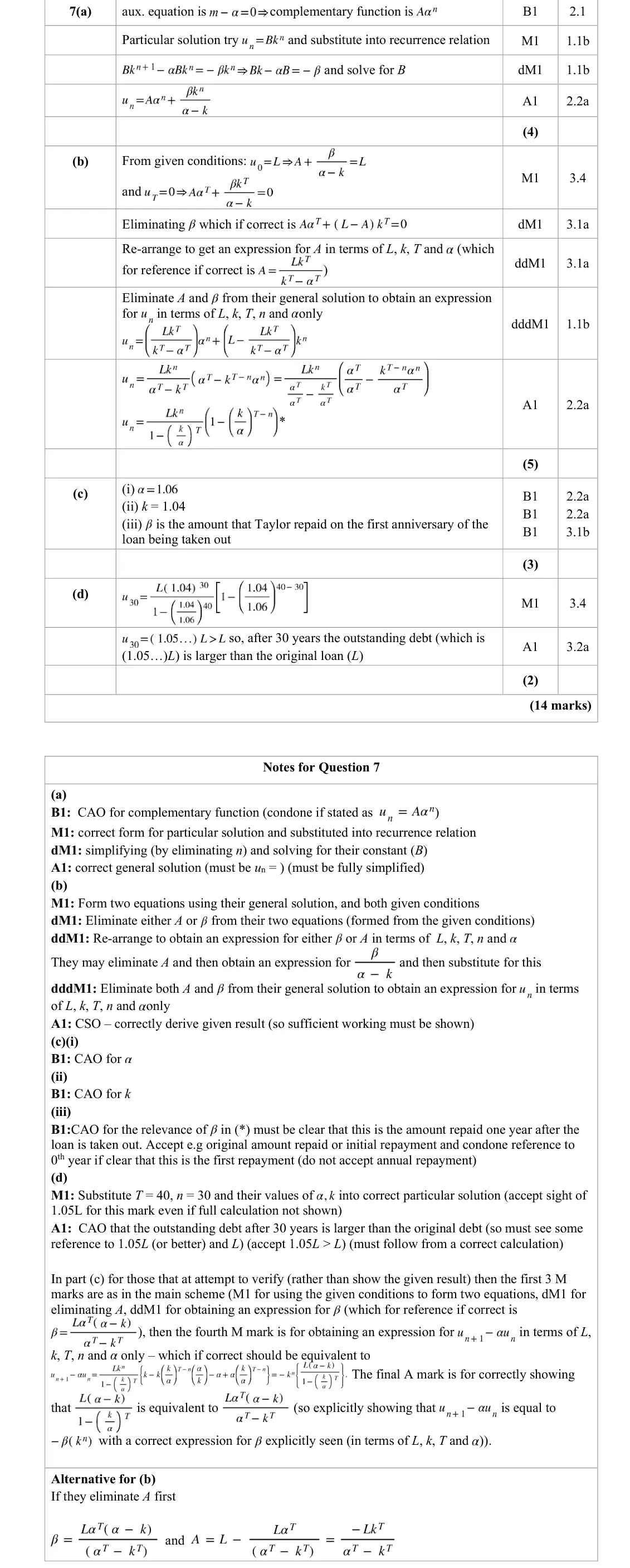
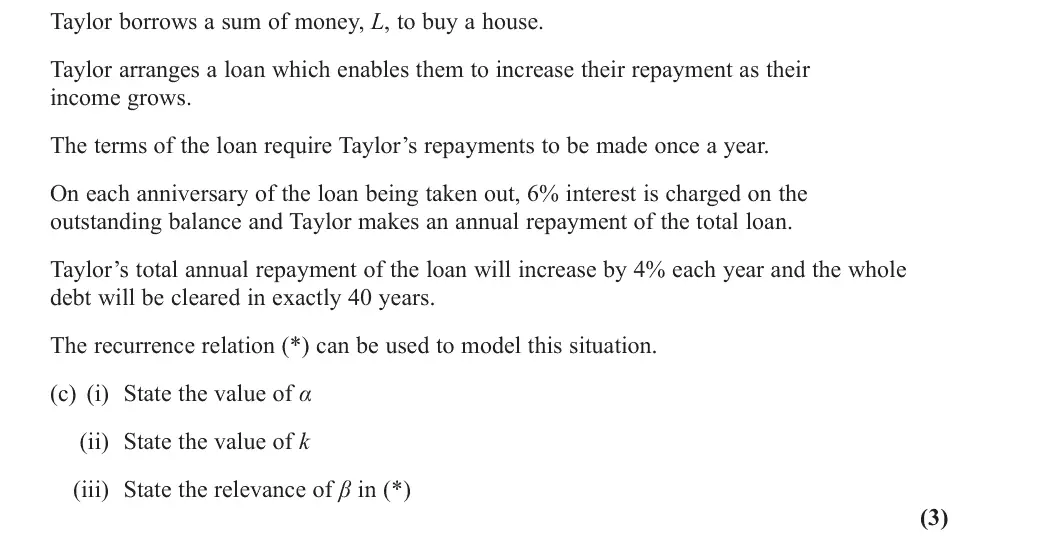
Taylor borrows a sum of money, L, to buy a house. Taylor arranges a loan which enables them to increase their repayment as their income grows. The terms of the loan require Taylor’s repayments to be made once a year. On each anniversary of the loan being taken out, 6% interest is charged on the outstanding balance and Taylor makes an annual repayment of the total loan. Taylor’s total annual repayment of the loan will increase by 4% each year and the whole debt will be cleared in exactly 40 years. The recurrence relation (*) can be used to model this situation. (c) (i) State the value of alpha (ii) State the value of k (iii) State the relevance of beta in (*) (3)
June 2024 · AS Paper 2 (Decision 2) · Q4(a) 1 mark
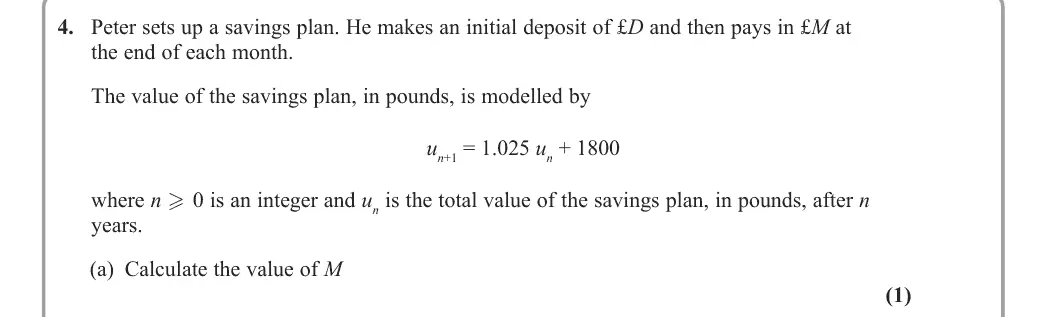
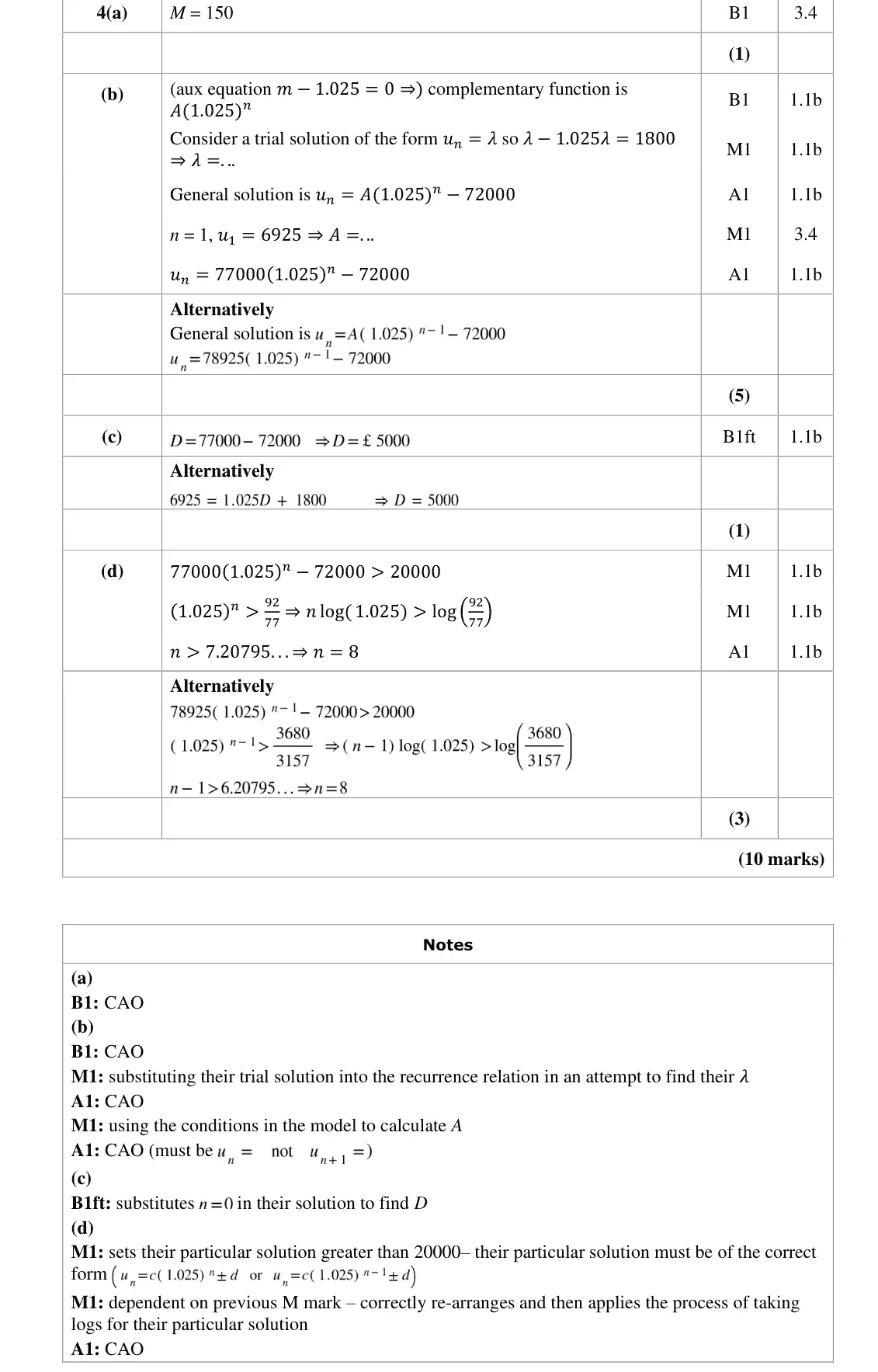
4. Peter sets up a savings plan. He makes an initial deposit of £D and then pays in £M at the end of each month. The value of the savings plan, in pounds, is modelled by un+1 = 1.025 un + 1800 where n 0 is an integer and un is the total value of the savings plan, in pounds, after n years. (a) Calculate the value of M (1)
June 2023 · Paper 4D (Decision 2) · Q7(a) 6 marks
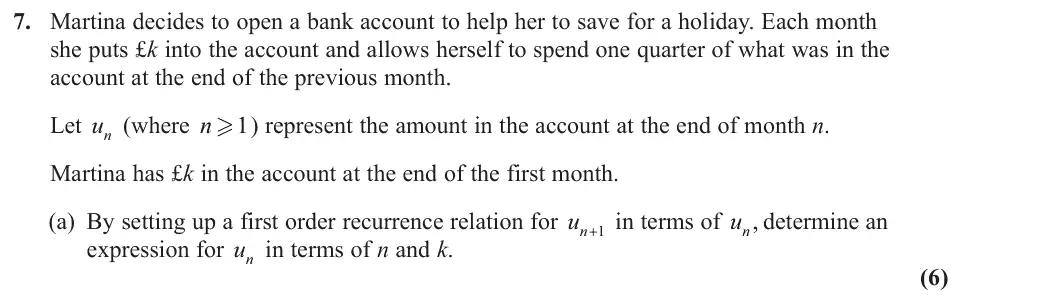
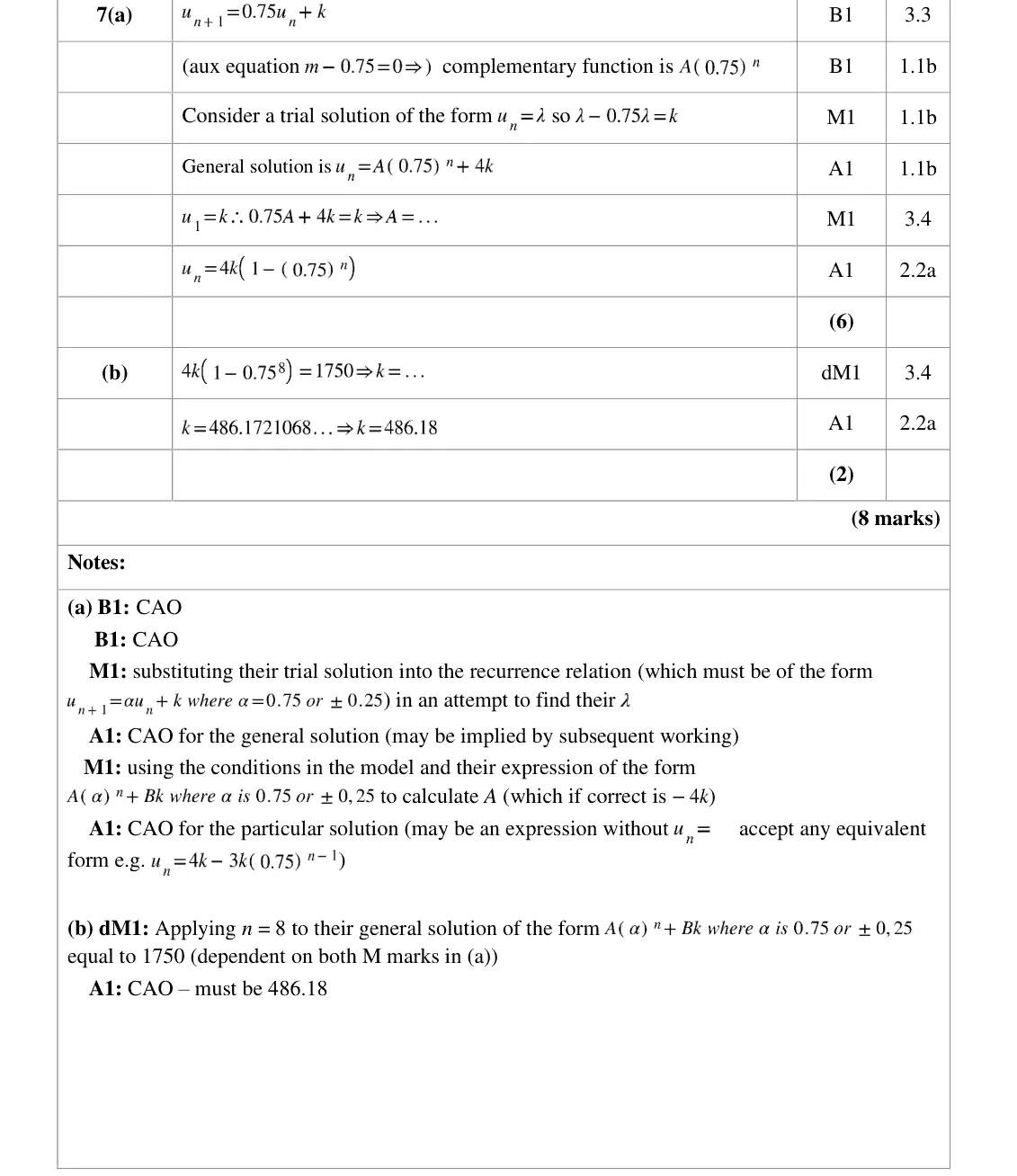
7. Martina decides to open a bank account to help her to save for a holiday. Each month she puts £k into the account and allows herself to spend one quarter of what was in the account at the end of the previous month. Let un (where n 1) represent the amount in the account at the end of month n. Martina has £k in the account at the end of the first month. (a) By setting up a first order recurrence relation for un+1 in terms of un, determine an expression for un in terms of n and k. (6)
June 2022 · Paper 4D (Decision 2) · Q8(a) 6 marks
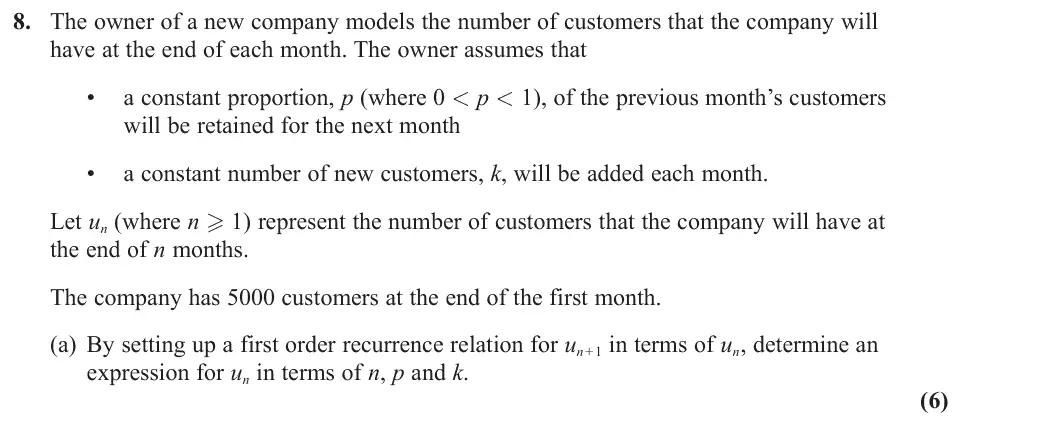
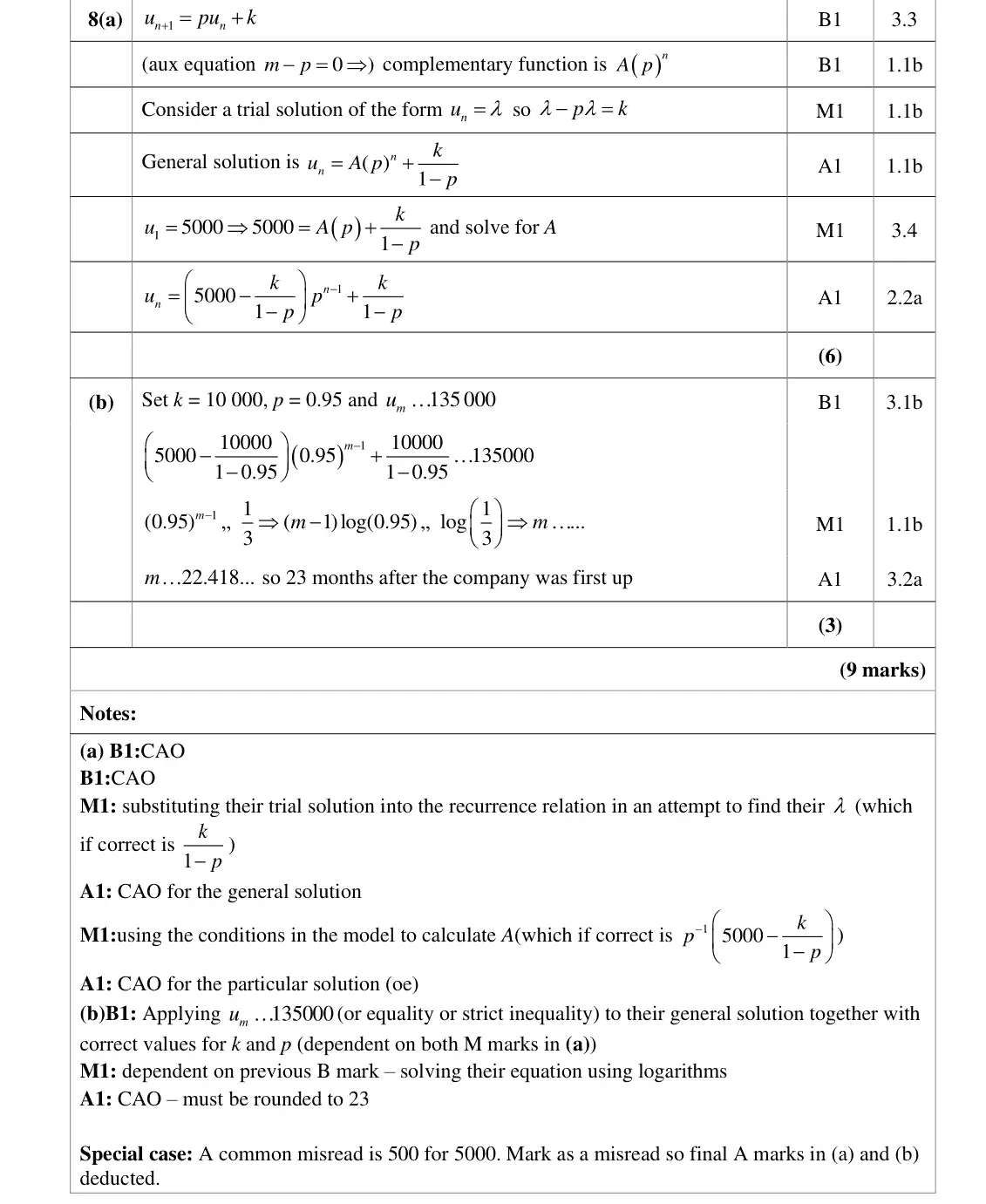
8. The owner of a new company models the number of customers that the company will have at the end of each month. The owner assumes that • a constant proportion, p (where 0 < p < 1), of the previous month’s customers will be retained for the next month • a constant number of new customers, k, will be added each month. Let un (where n 1) represent the number of customers that the company will have at the end of n months. The company has 5000 customers at the end of the first month. (a) By setting up a first order recurrence relation for un + 1 in terms of un, determine an expression for un in terms of n, p and k. (6)
Nov 2021 · Paper 4D (Decision 2) · Q4(a) 1 mark
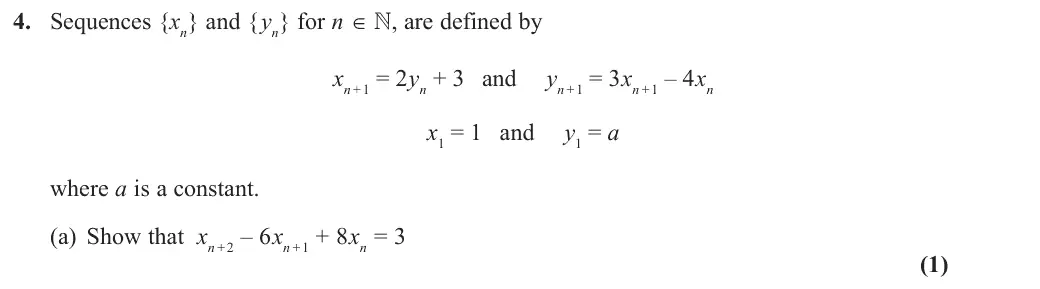
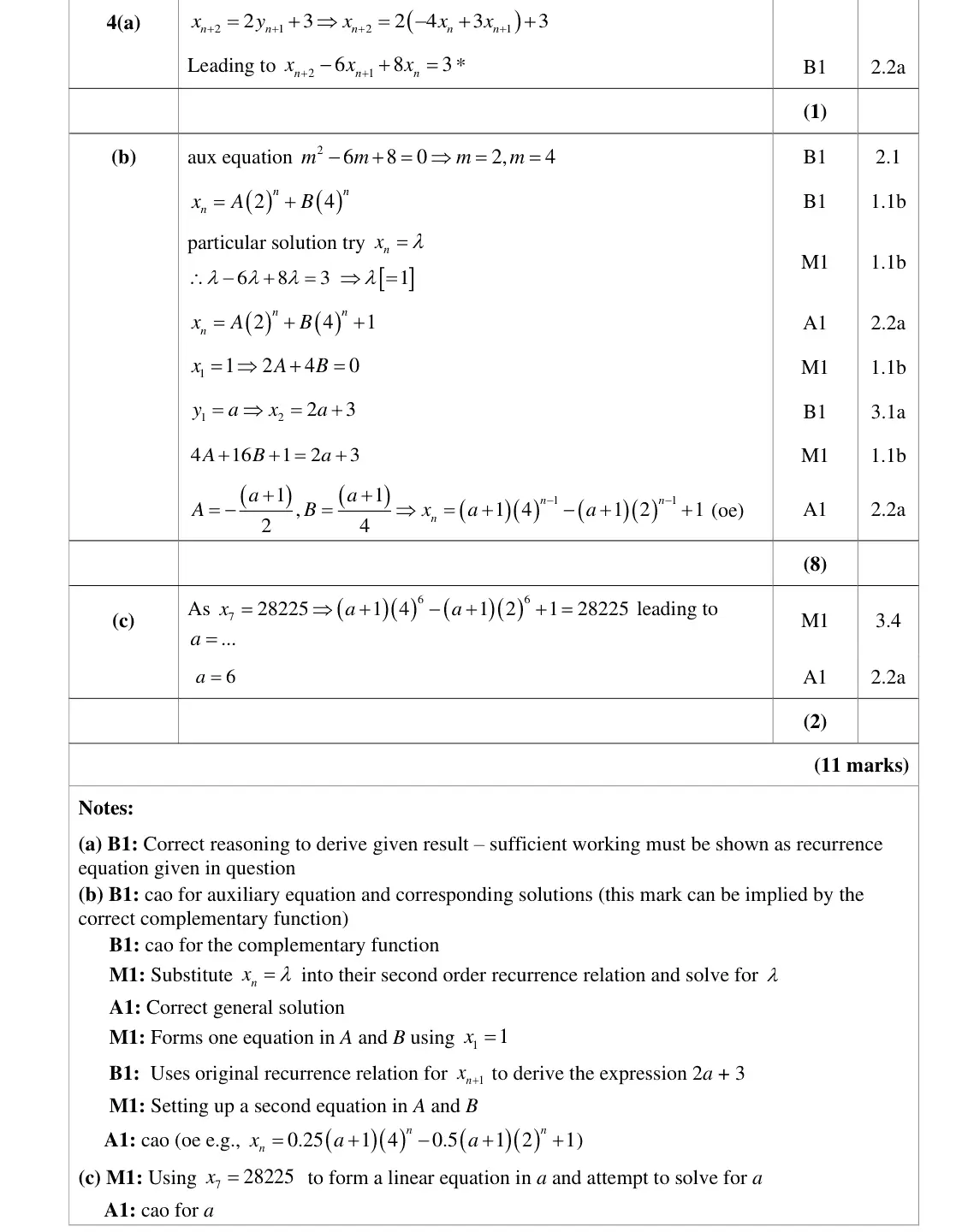
4. Sequences {xn} and {yn} for n ∈ , are defined by xn + 1 = 2yn + 3 and yn + 1 = 3xn + 1 – 4xn x1 = 1 and y1 = a where a is a constant. (a) Show that xn + 2 – 6xn + 1 + 8xn = 3 (1)
June 2019 · Paper 4D (Decision 2) · Q5(a) 2 marks
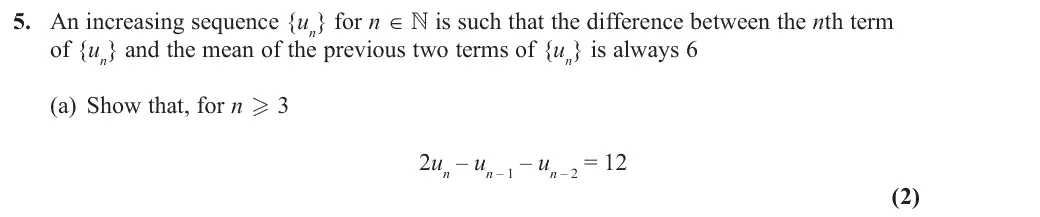
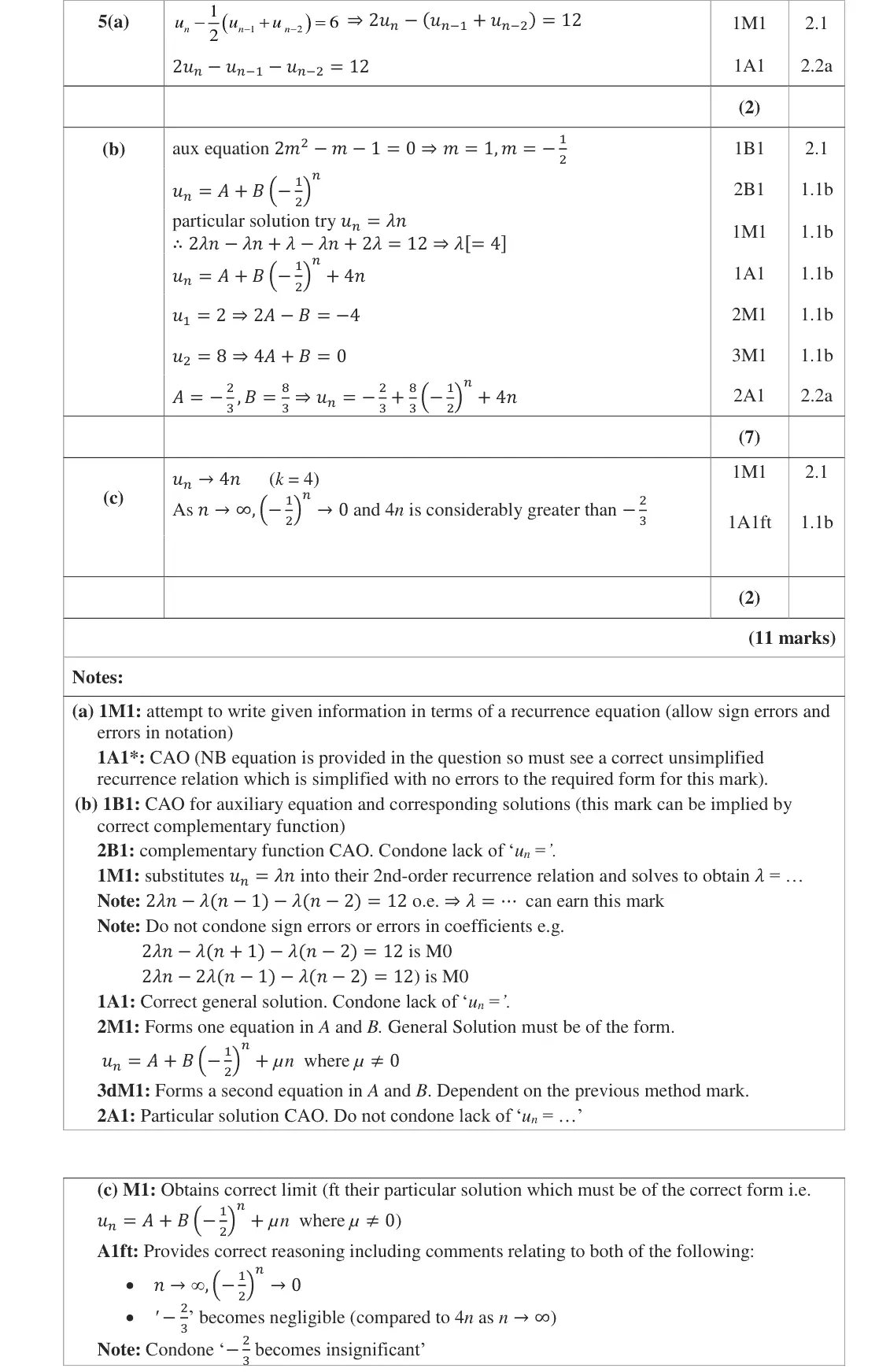
5. An increasing sequence {un} for n  ` is such that the difference between the nth term of {un} and the mean of the previous two terms of {un} is always 6 (a) Show that, for n . 3 2un – un – 1 – un – 2 = 12 (2)
June 2018 · AS Paper 2 (Decision 2) · Q4(a) 2 marks
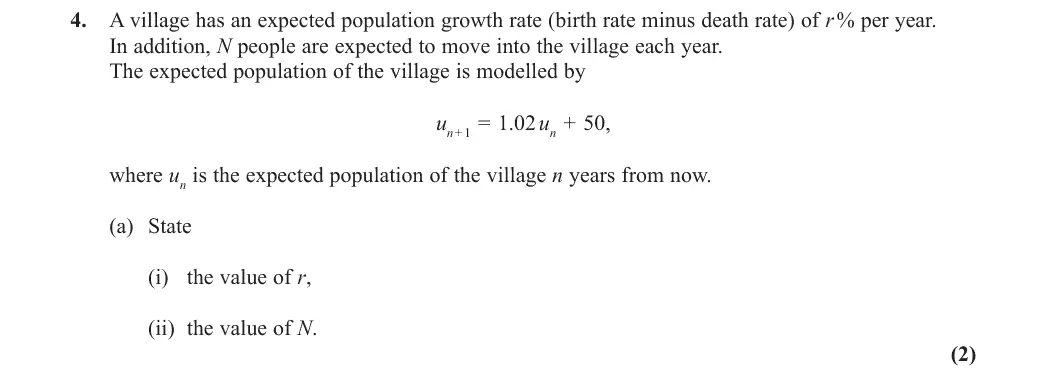
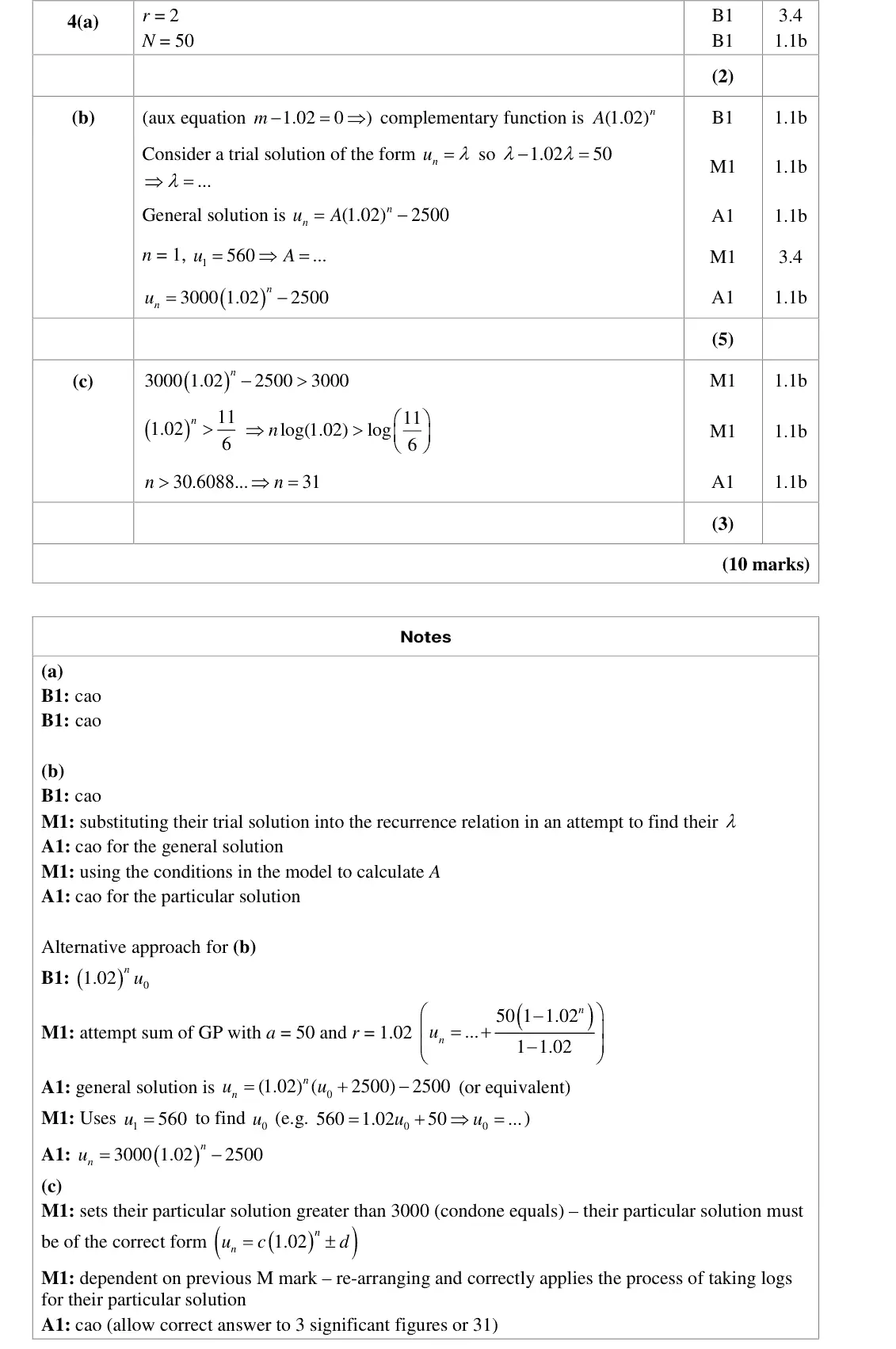
4. A village has an expected population growth rate (birth rate minus death rate) of r % per year. In addition, N people are expected to move into the village each year. The expected population of the village is modelled by un + 1 = 1.02 un + 50, where un is the expected population of the village n years from now. (a) State (i) the value of r, (ii) the value of N. (2)

Find an Edexcel Further Maths tutor

Stuck on this? Book a trial lesson with our Further Maths tutor.

Prefer email? Send an enquiry

If you are under 18, please include a parent's contact details. Enquiries go to enquiries@alevelfurthermathstutor.com and are deleted once handled.