D2.7.1 Use, construct and interpret decision trees.

Section
D2.7 Decision analysis
Level
A level only
Statement
Use, construct and interpret decision trees.
Guidance
Students should be familiar with the terms decision nodes, chance nodes and pay-offs.
Since 2018
7 parts, 35 marks · topic pages: Decision analysis: decision trees and expected values

Back to the checklist

June 2025 · Paper 4D (Decision 2) · Q1 3 marks
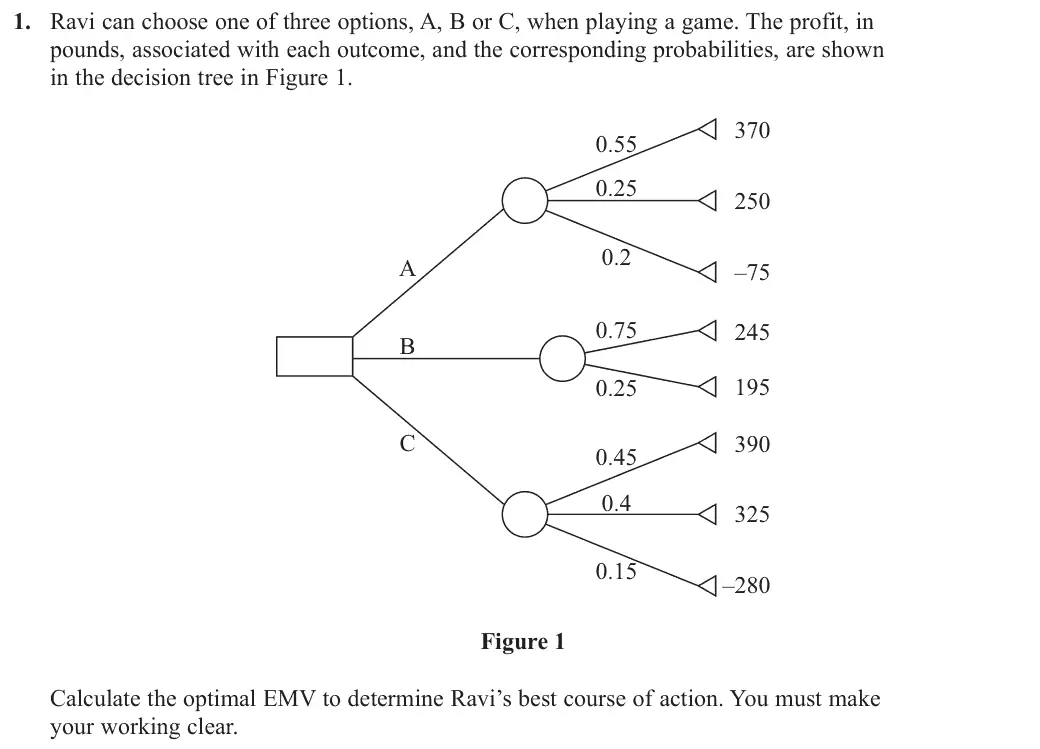
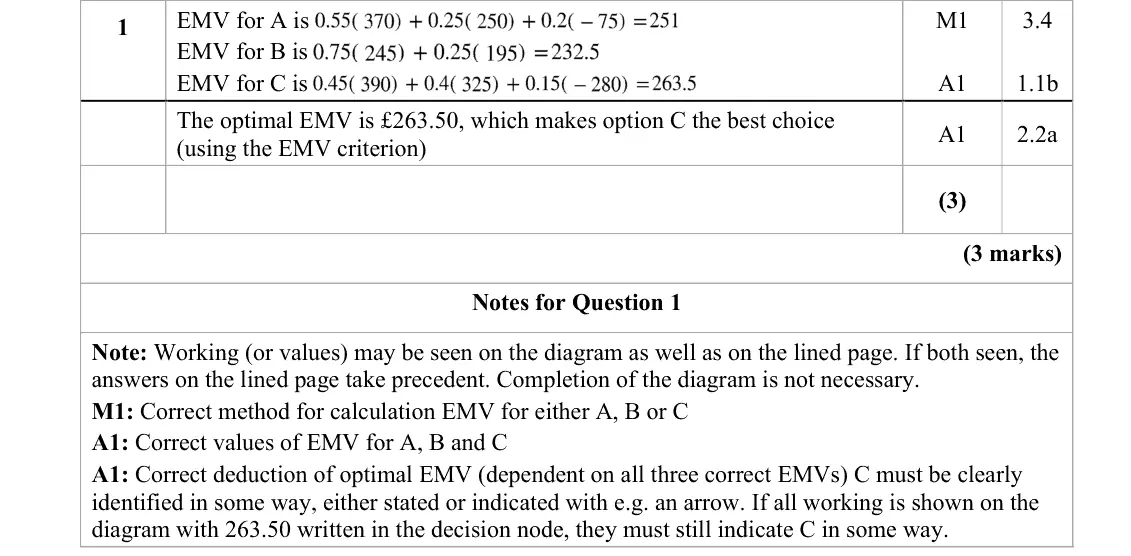
1. Ravi can choose one of three options, A, B or C, when playing a game. The profit, in pounds, associated with each outcome, and the corresponding probabilities, are shown in the decision tree in Figure 1. 0.55 0.25 0.2 A –75 0.75 B 0.25 C 0.45 0.4 0.15 –280 Figure 1 Calculate the optimal EMV to determine Ravi’s best course of action. You must make your working clear.
June 2024 · Paper 4D (Decision 2) · Q5(a) 6 marks
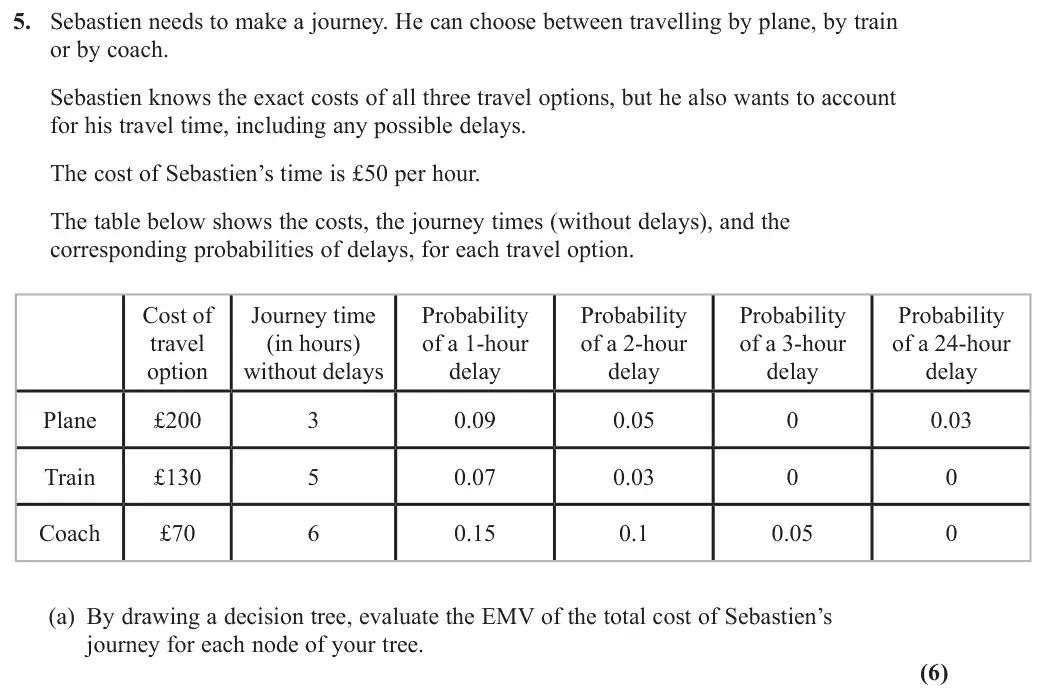
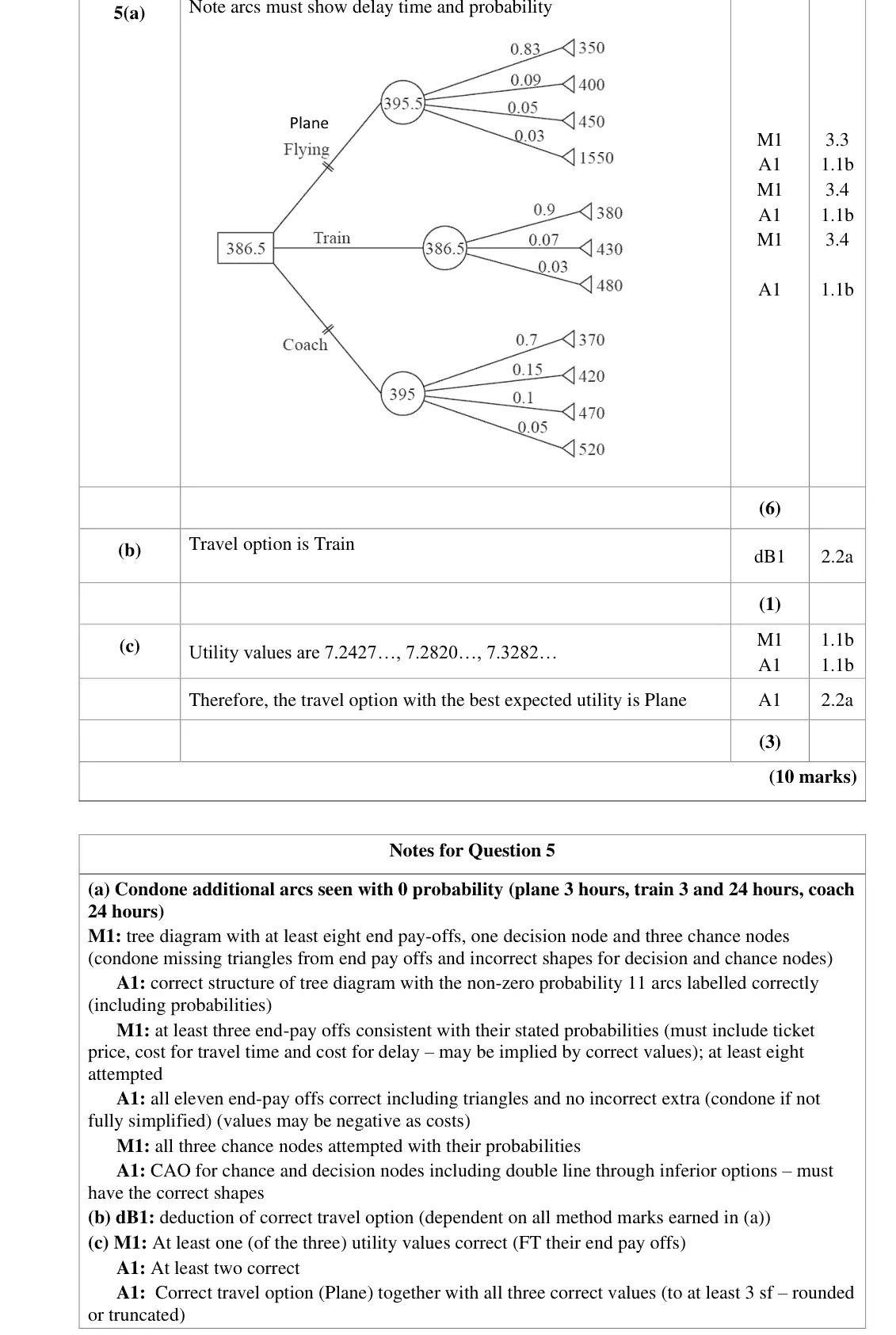
5. Sebastien needs to make a journey. He can choose between travelling by plane, by train or by coach. Sebastien knows the exact costs of all three travel options, but he also wants to account for his travel time, including any possible delays. The cost of Sebastien’s time is £50 per hour. The table below shows the costs, the journey times (without delays), and the corresponding probabilities of delays, for each travel option. Cost of Journey time Probability Probability Probability Probability travel (in hours) of a 1‑hour of a 2‑hour of a 3‑hour of a 24‑hour option without delays delay delay delay delay Plane £200 0.09 0.05 0.03 Train £130 0.07 0.03 Coach £70 0.15 0.1 0.05 (a) By drawing a decision tree, evaluate the EMV of the total cost of Sebastien’s journey for each node of your tree. (6)
June 2023 · Paper 4D (Decision 2) · Q2 5 marks
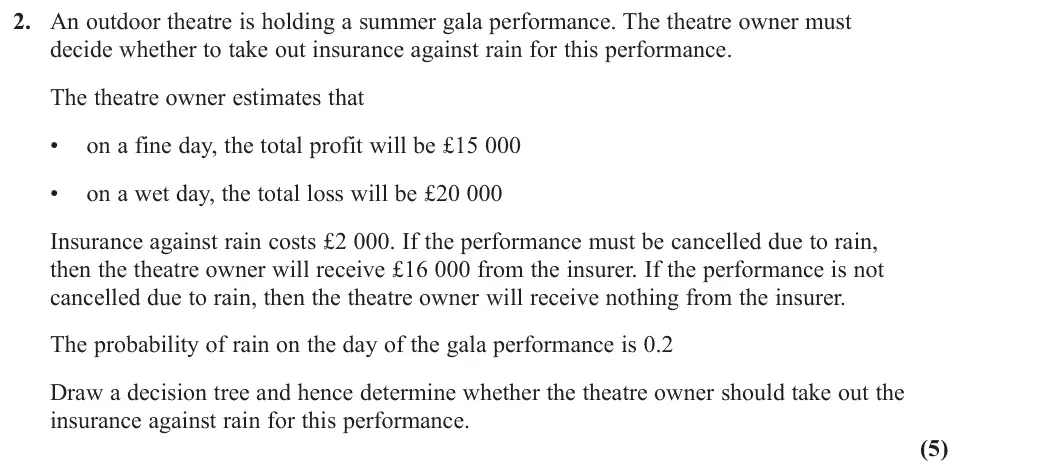
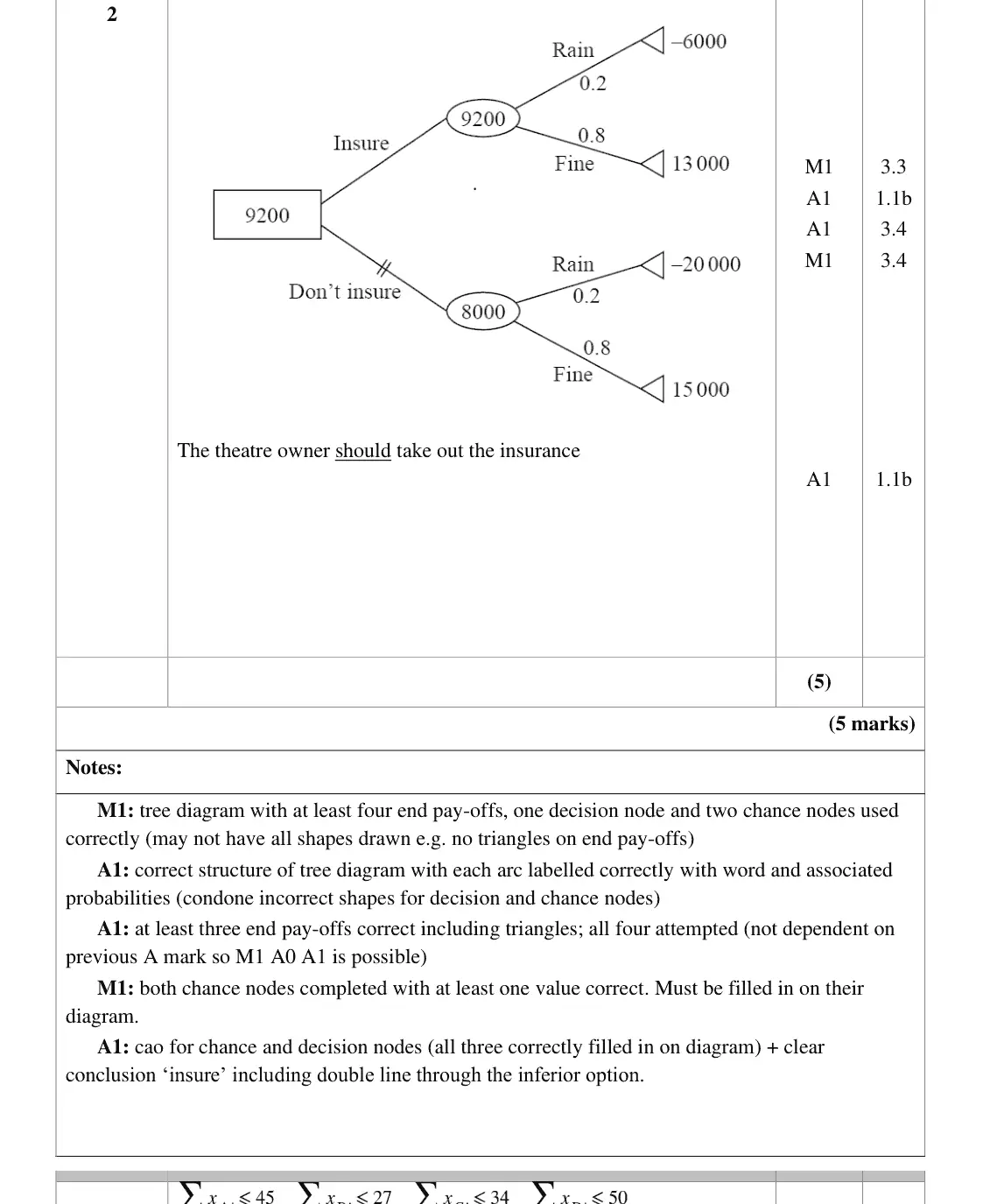
2. An outdoor theatre is holding a summer gala performance. The theatre owner must decide whether to take out insurance against rain for this performance. The theatre owner estimates that • on a fine day, the total profit will be £15 000 • on a wet day, the total loss will be £20 000 Insurance against rain costs £2 000. If the performance must be cancelled due to rain, then the theatre owner will receive £16 000 from the insurer. If the performance is not cancelled due to rain, then the theatre owner will receive nothing from the insurer. The probability of rain on the day of the gala performance is 0.2 Draw a decision tree and hence determine whether the theatre owner should take out the insurance against rain for this performance. (5)
June 2022 · Paper 4D (Decision 2) · Q3(a) 5 marks
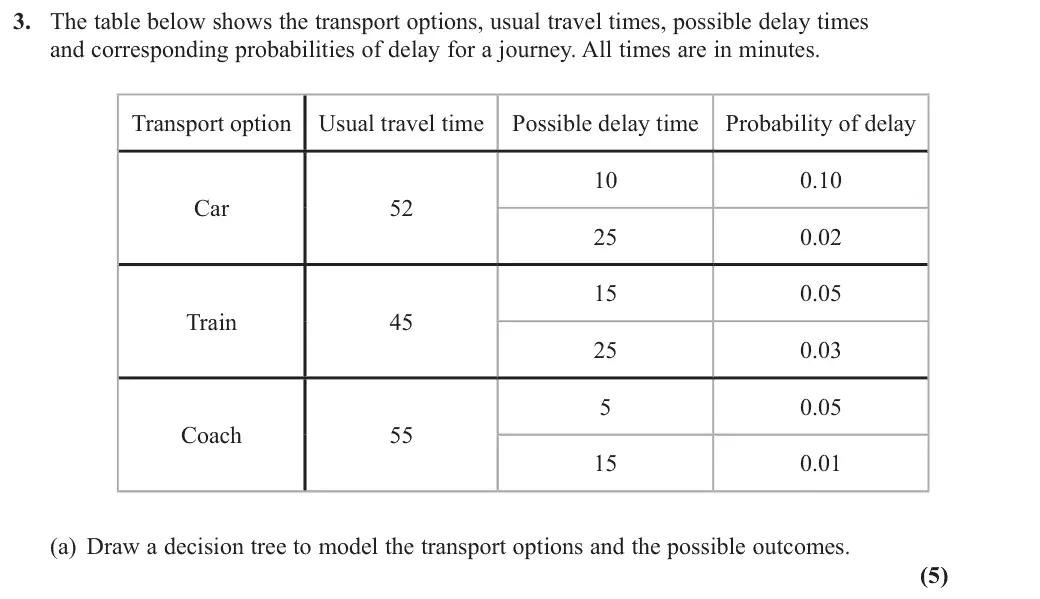
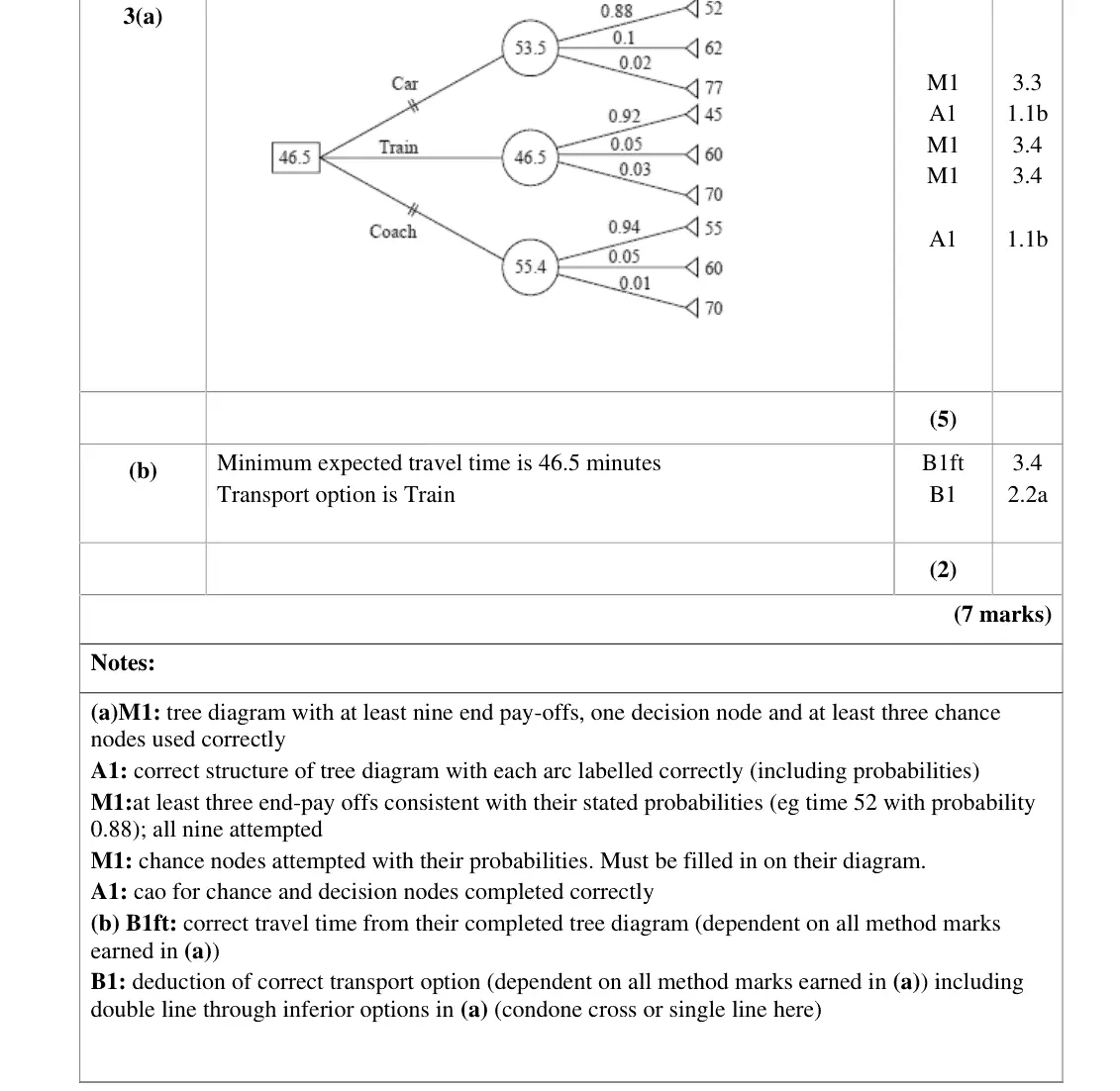
3. The table below shows the transport options, usual travel times, possible delay times and corresponding probabilities of delay for a journey. All times are in minutes. Transport option Usual travel time Possible delay time Probability of delay 0.10 Car 0.02 0.05 Train 0.03 0.05 Coach 0.01 (a) Draw a decision tree to model the transport options and the possible outcomes. (5)
Nov 2021 · Paper 4D (Decision 2) · Q2 7 marks
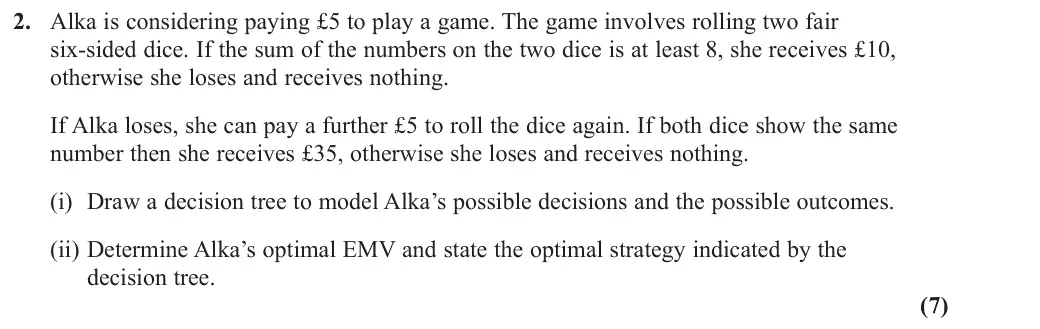
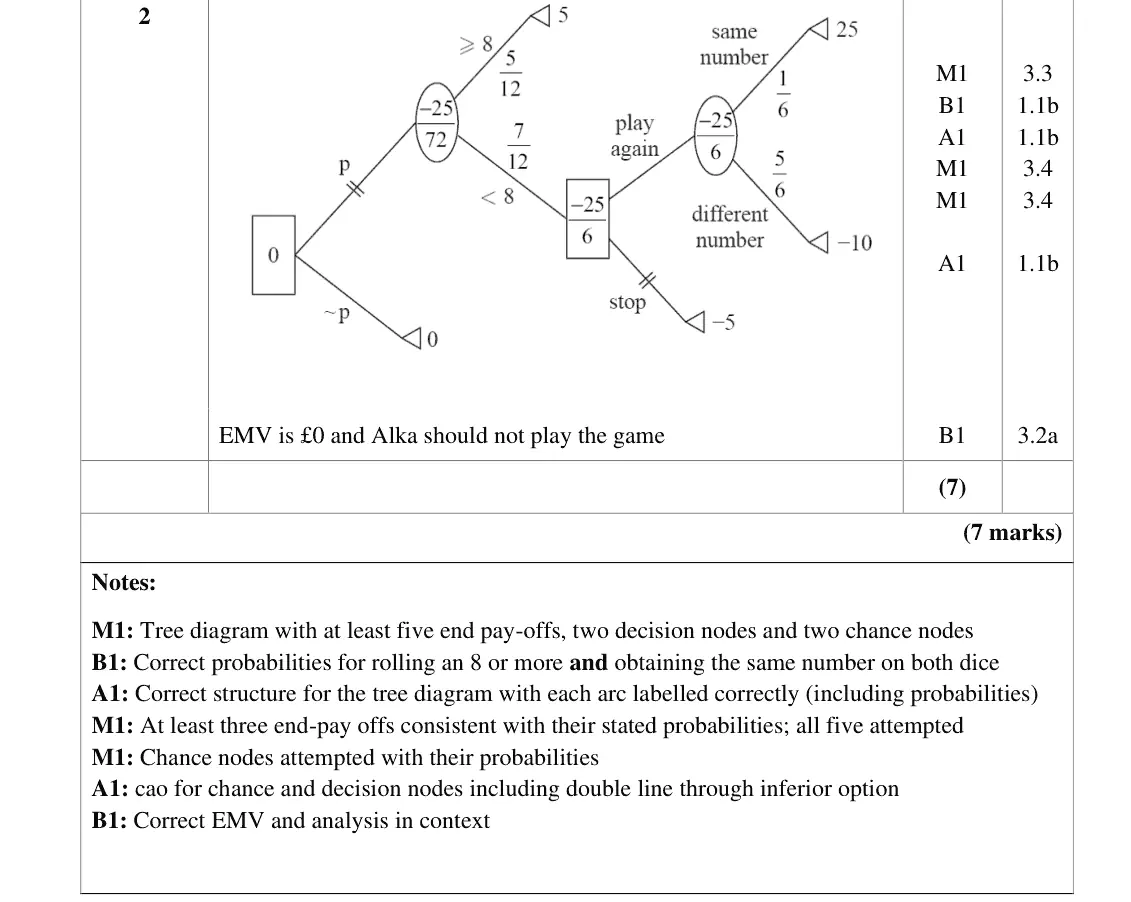
2. Alka is considering paying £5 to play a game. The game involves rolling two fair six‑sided dice. If the sum of the numbers on the two dice is at least 8, she receives £10, otherwise she loses and receives nothing. If Alka loses, she can pay a further £5 to roll the dice again. If both dice show the same number then she receives £35, otherwise she loses and receives nothing. (i) Draw a decision tree to model Alka’s possible decisions and the possible outcomes. (ii) Determine Alka’s optimal EMV and state the optimal strategy indicated by the decision tree. (7)
Oct 2020 · Paper 4D (Decision 2) · Q2(a) 3 marks
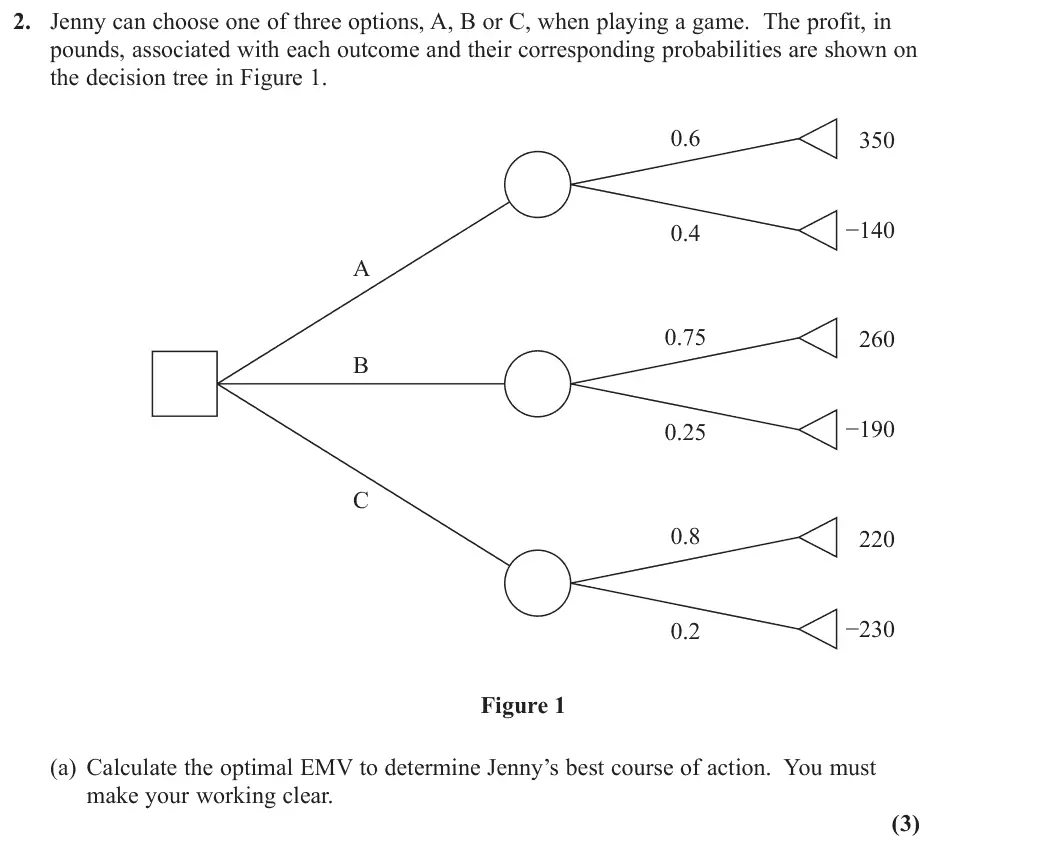
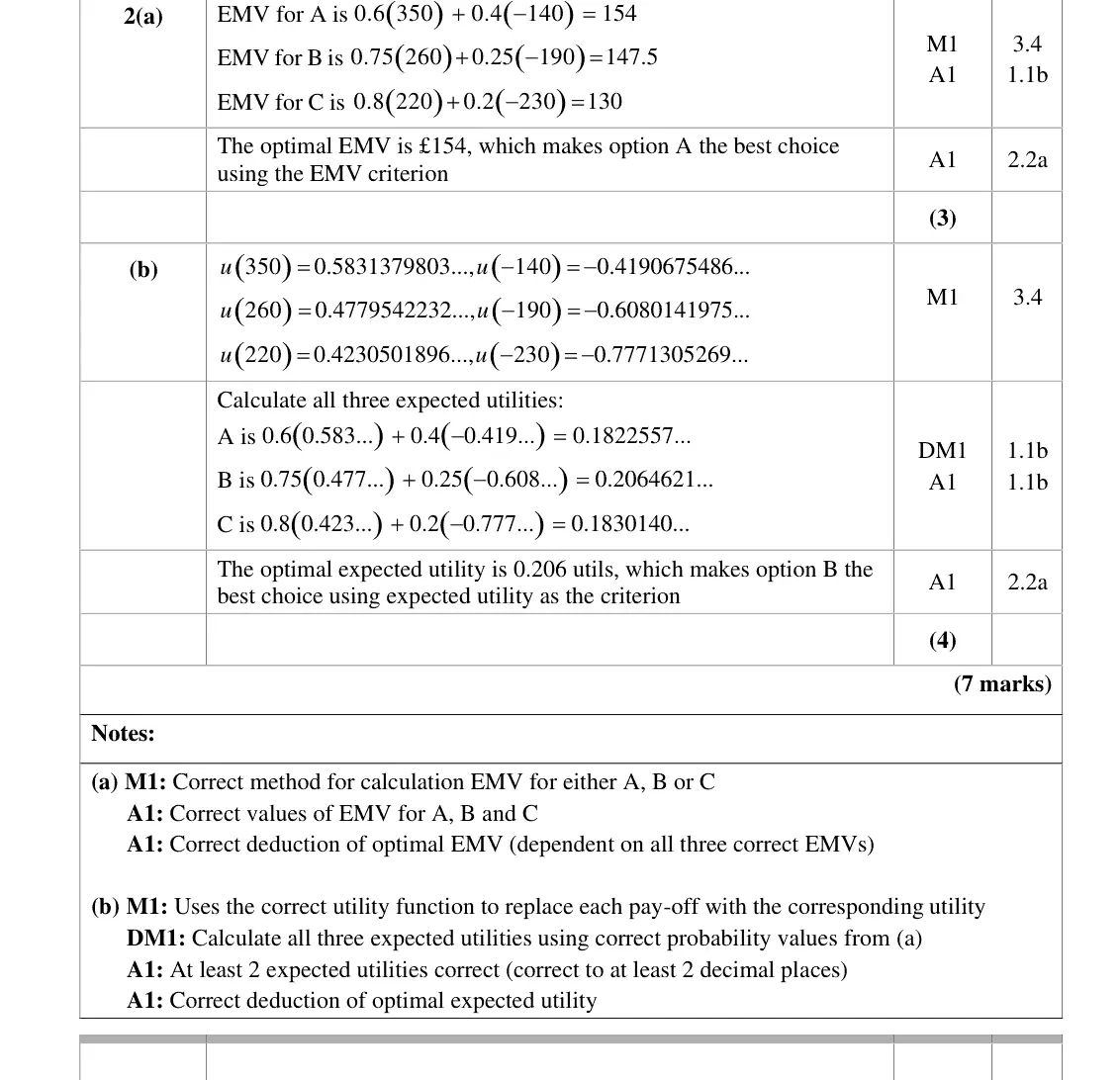
2. Jenny can choose one of three options, A, B or C, when playing a game. The profit, in pounds, associated with each outcome and their corresponding probabilities are shown on the decision tree in Figure 1. 0.6 -140 0.4 A 0.75 B -190 0.25 C 0.8 -230 0.2 Figure 1 (a) Calculate the optimal EMV to determine Jenny’s best course of action. You must make your working clear. (3)
June 2019 · Paper 4D (Decision 2) · Q7(a) 6 marks
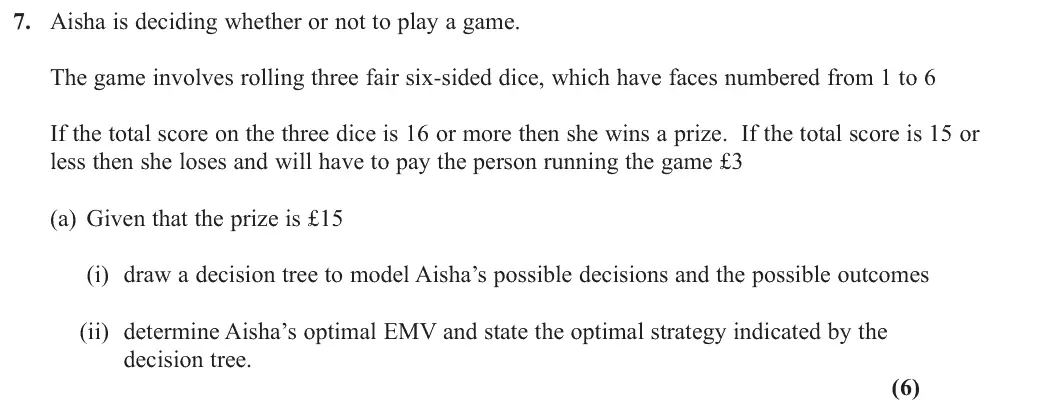
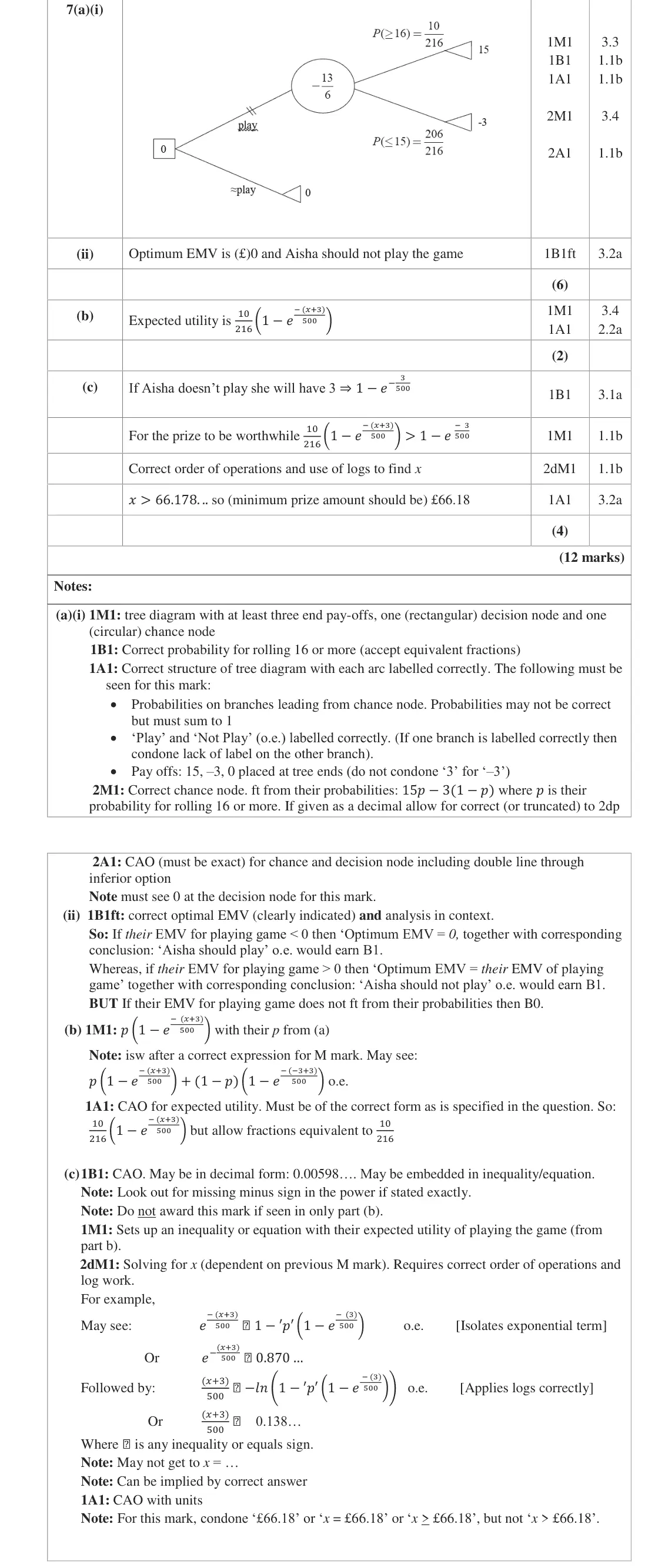
7. Aisha is deciding whether or not to play a game. The game involves rolling three fair six-sided dice, which have faces numbered from 1 to 6 If the total score on the three dice is 16 or more then she wins a prize. If the total score is 15 or less then she loses and will have to pay the person running the game £3 (a) Given that the prize is £15 (i) draw a decision tree to model Aisha’s possible decisions and the possible outcomes (ii) determine Aisha’s optimal EMV and state the optimal strategy indicated by the decision tree. (6)

Find an Edexcel Further Maths tutor

Stuck on this? Book a trial lesson with our Further Maths tutor.

Prefer email? Send an enquiry

If you are under 18, please include a parent's contact details. Enquiries go to enquiries@alevelfurthermathstutor.com and are deleted once handled.