Examiner's comment
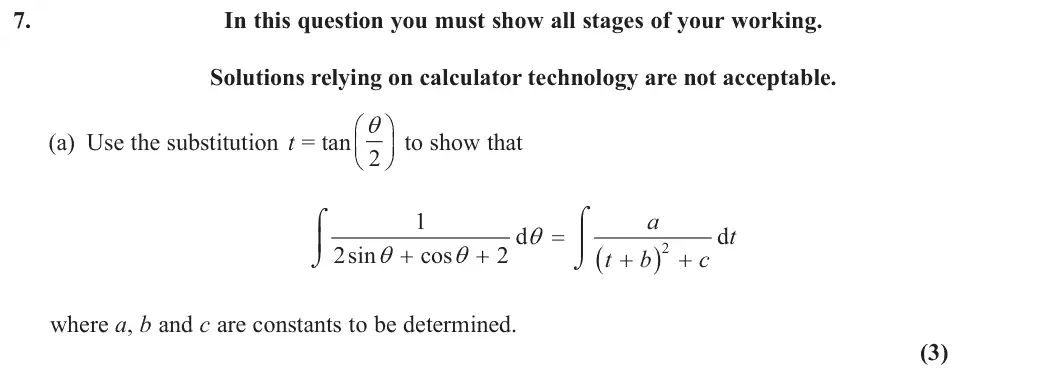
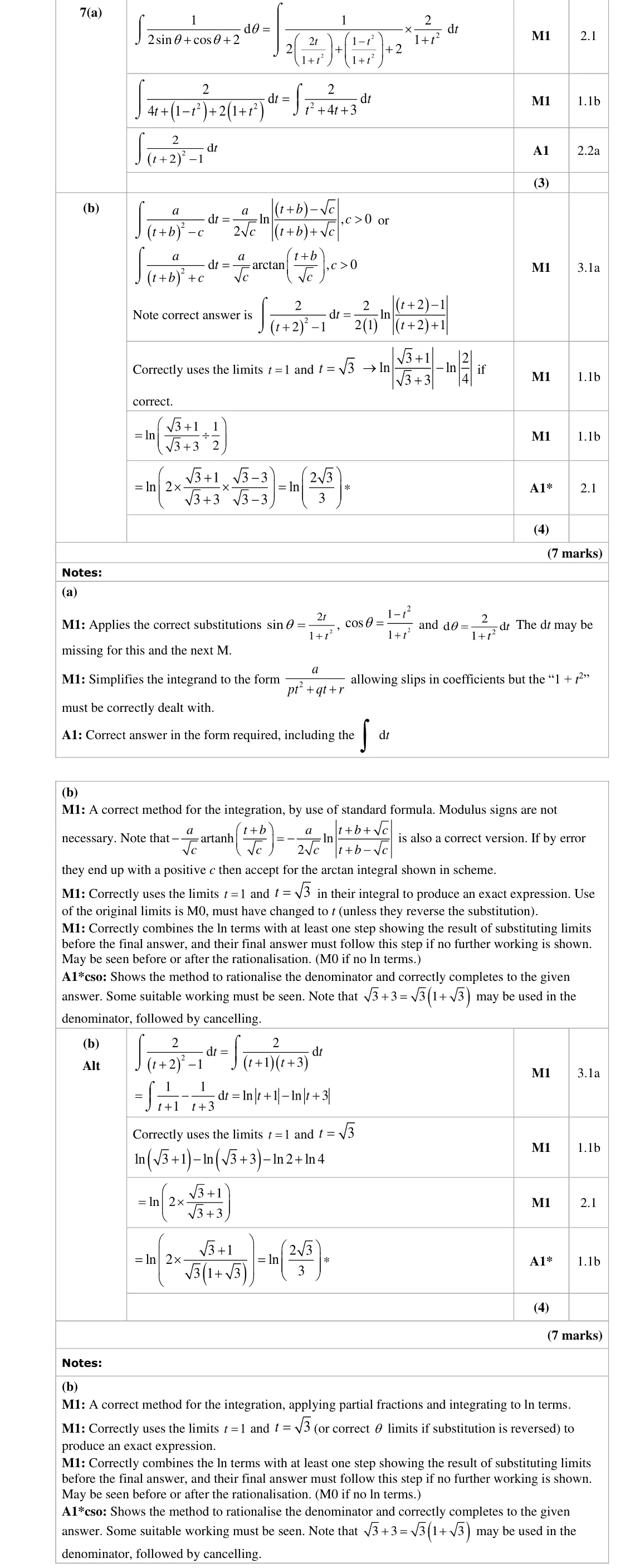
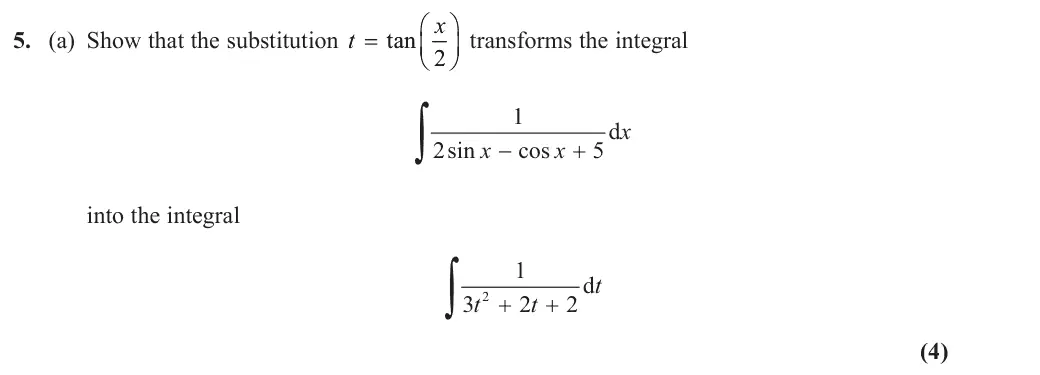
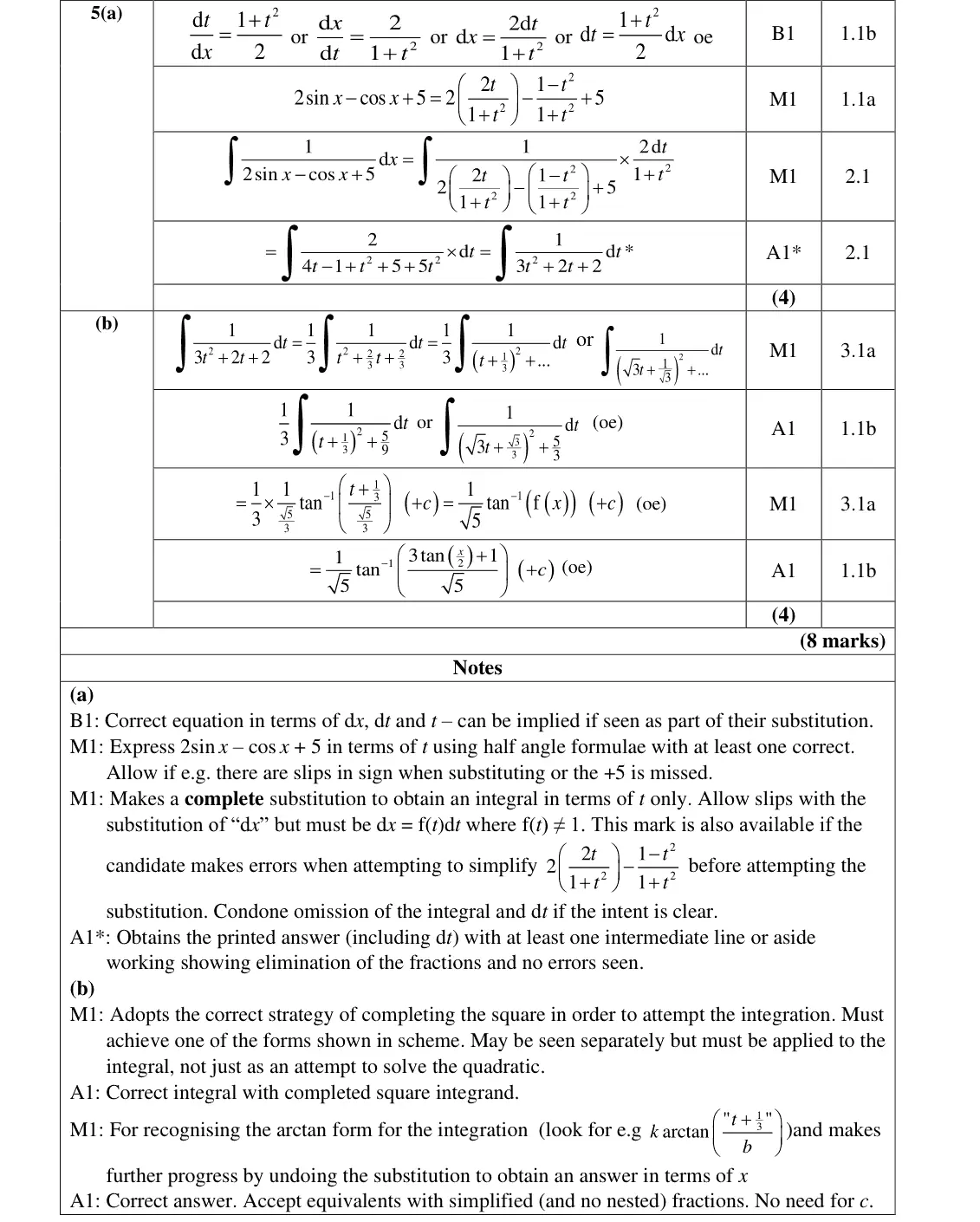
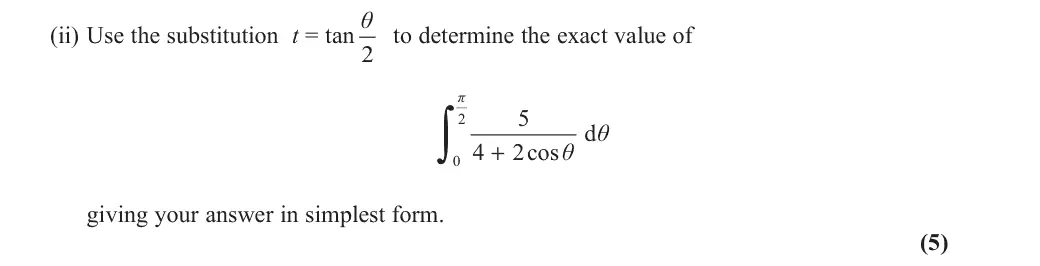
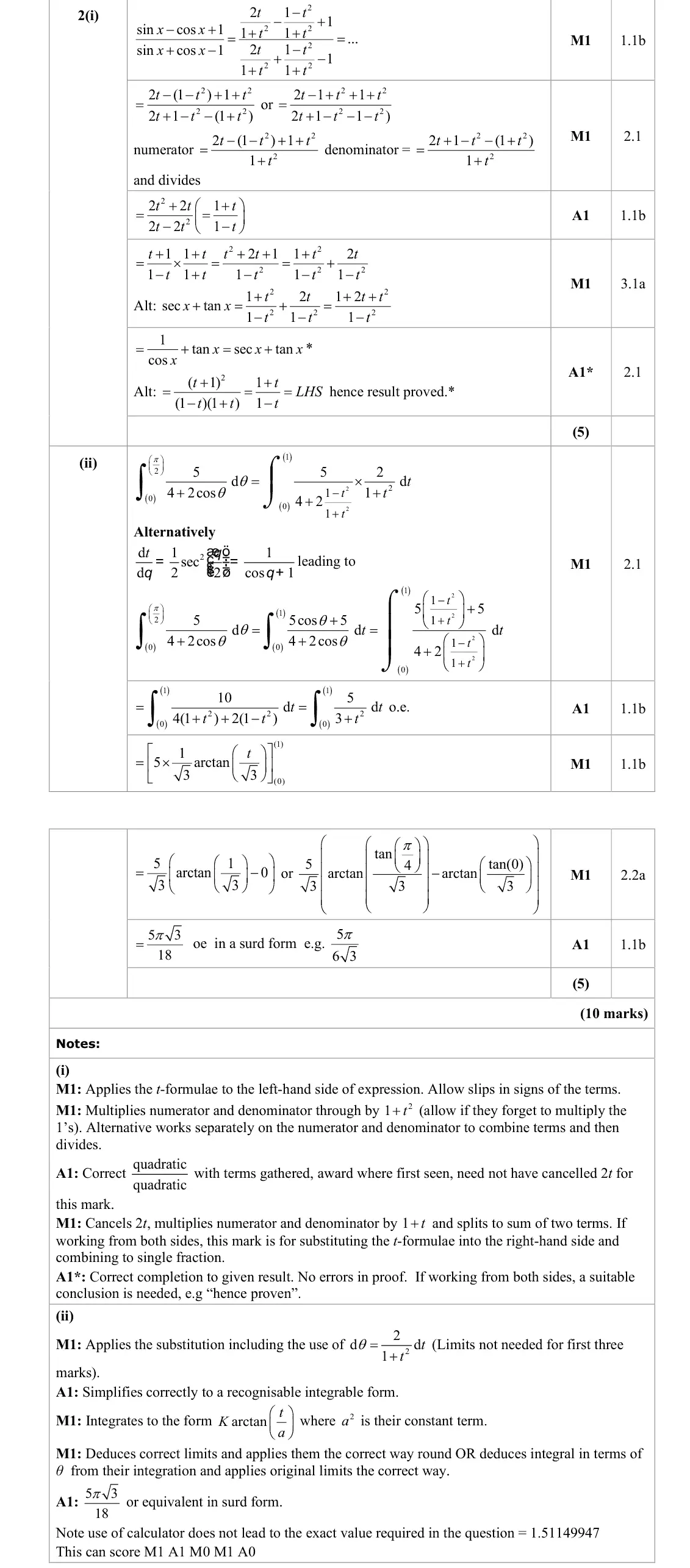
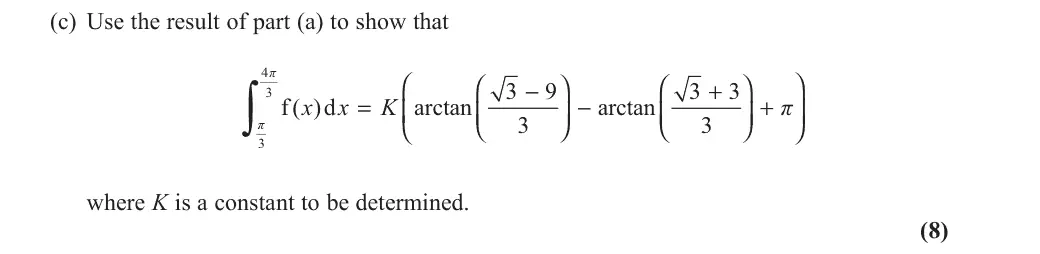
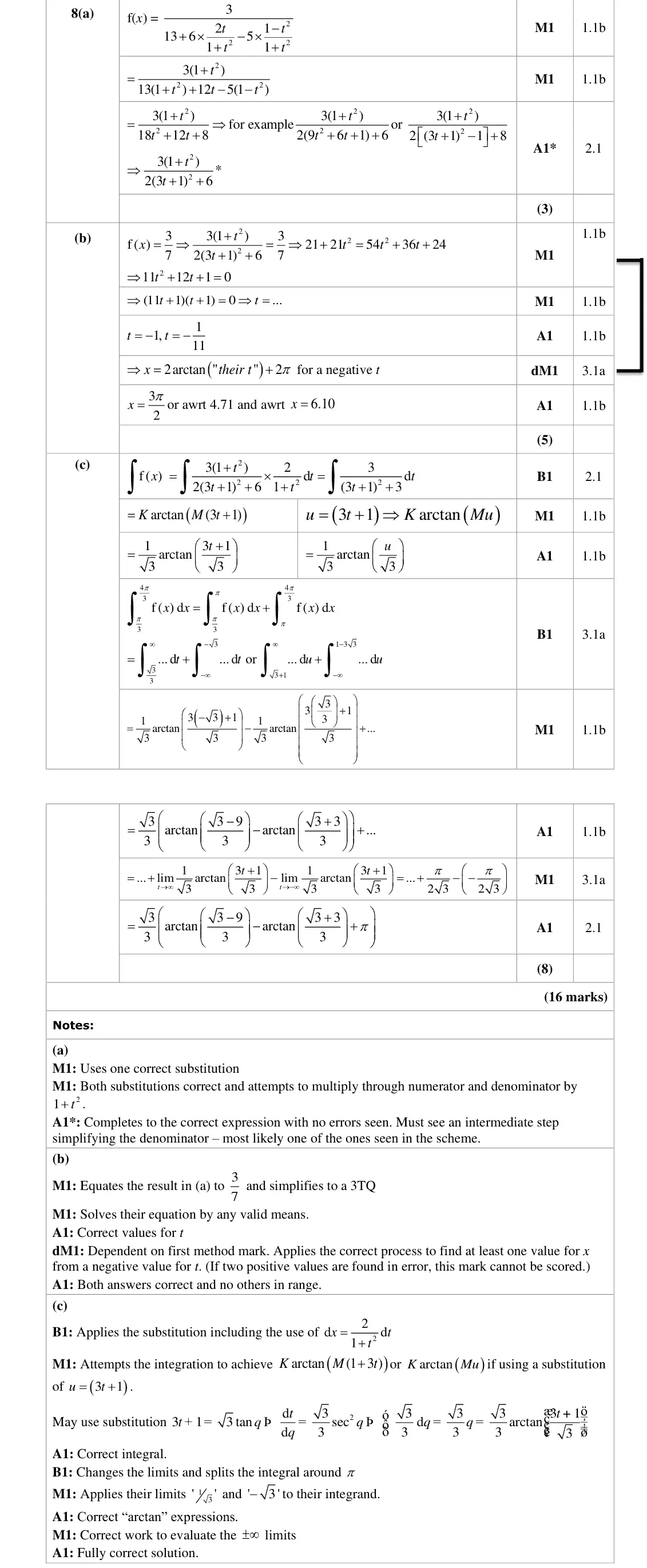
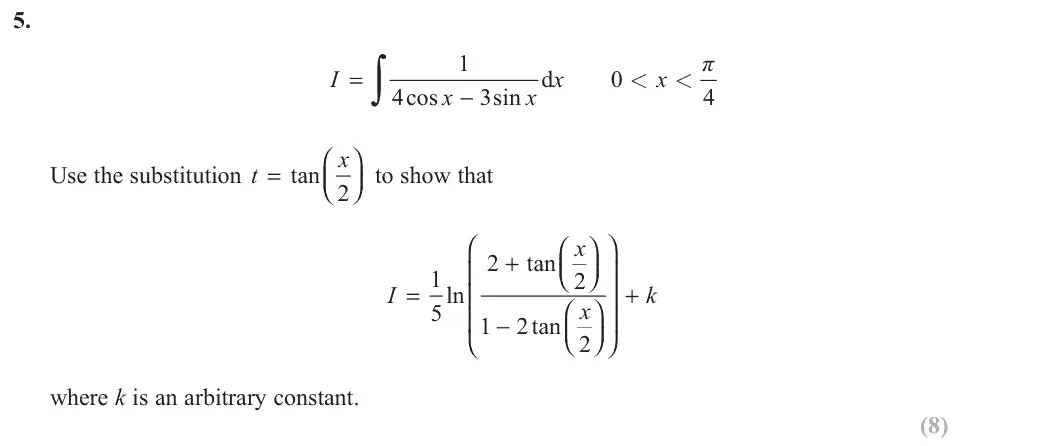
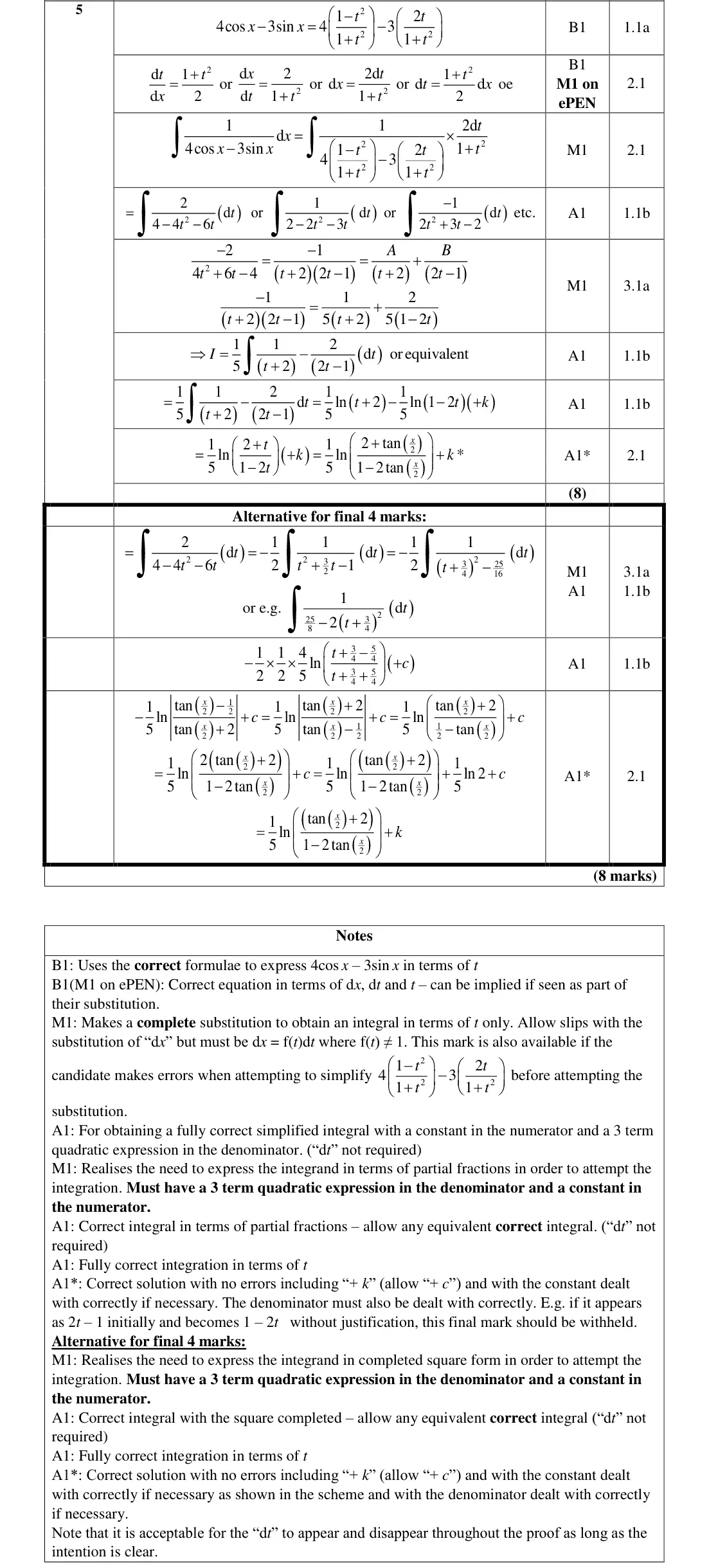
The main problem with this question seemed to be space. Most candidates clearly have not memorised the results for this half angle formulae and spent the first page of the answer booklet deriving them. That left only one page to complete both parts. Alternatively, an excessive number of lines of working simplifying the integral in part (a) pushed the solution quickly on to the second page, and many then tried to cram a lot of work into the margins, or erratically across the page, others used other pages of the answer booklet, while many others used additional answer booklets. The use of additional booklets is preferable to writing answers in other questions on the script. It is unfortunate that only two pages were assigned to this question, and is a lesson taken on board. The question itself, once results were derived, proved again highly accessible with only the final mark providing a degree of discrimination, largely due to the level of working required to establish a given answer – again. For part (b) many candidates could use the standard form of the integral accurately and change the limits correctly to proceed to a correct integral. Indeed, even in cases where incorrect answers to part (a) were found, candidates were apt to select a correct standard form for their answer, though some did not realise the arctanh integral only works for limits in the correct range. This was not, however, penalised in this question, but credit was awarded positively. Those who had the correct form of answer were generally competent in manipulating the logs. However, most of these showed insufficient working on rationalising the resulting fraction to justify the given answer, and so full marks was not commonly gained in this part. Only the better prepared candidates seem to realise the need to show the full steps of working. Of those who did not simply use the standard forms, use of partial fractions was common and generally worked well. There were also a range of substitution methods employed, with the simplest (u = t + 2) being the most successful. On occasion a needless substitution towards the end of a solution resulted in the logs of negative values, which were not always recovered. Overall, the integration work on display by the majority was very good. Sight of the given answer may have caused some to overlook the process of rationalising their result, thus losing the final mark, but a better awareness of the need to show all work should be considered.