Examiner's comment
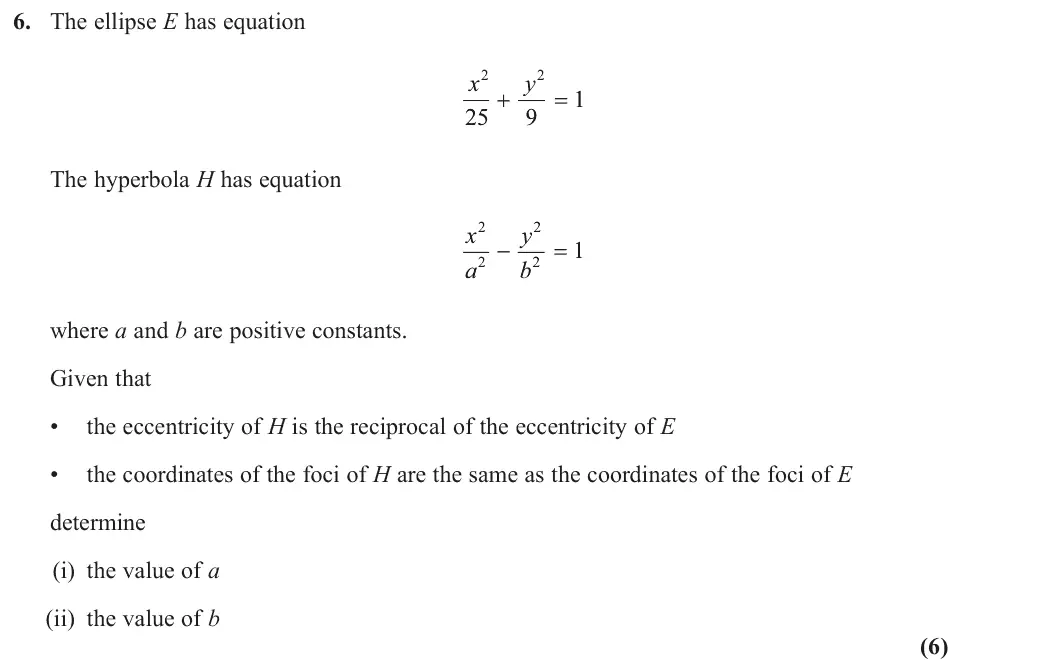
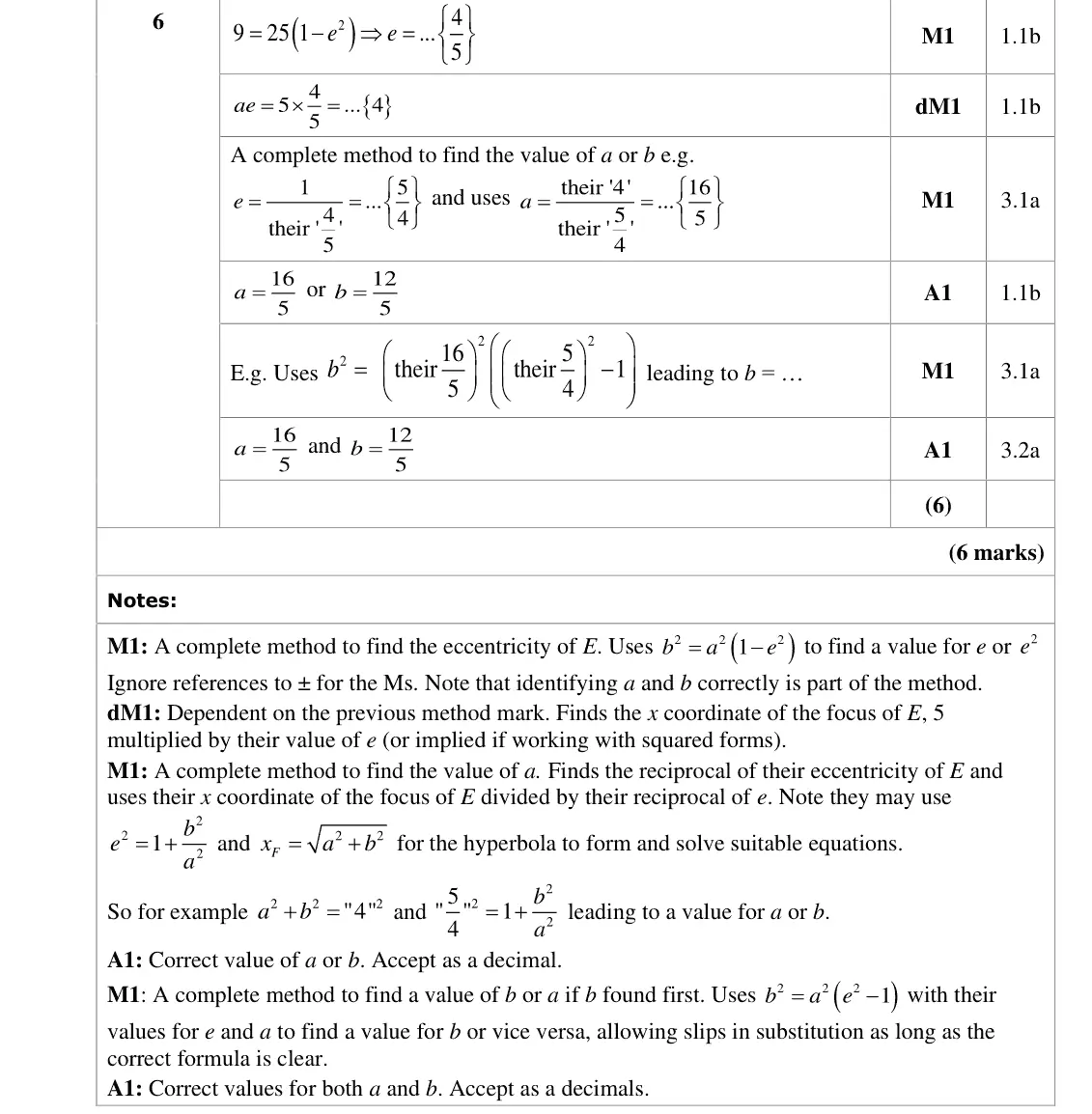
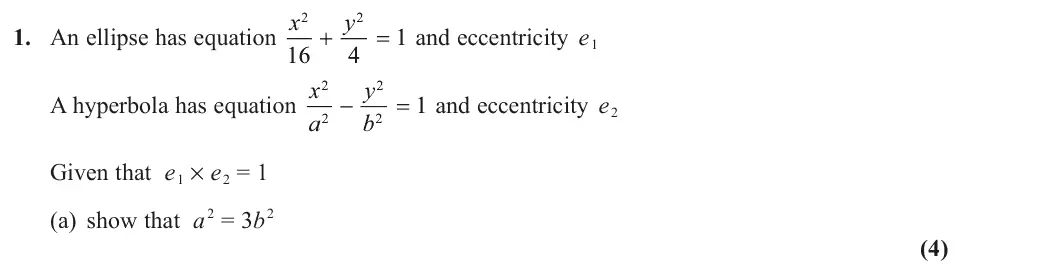
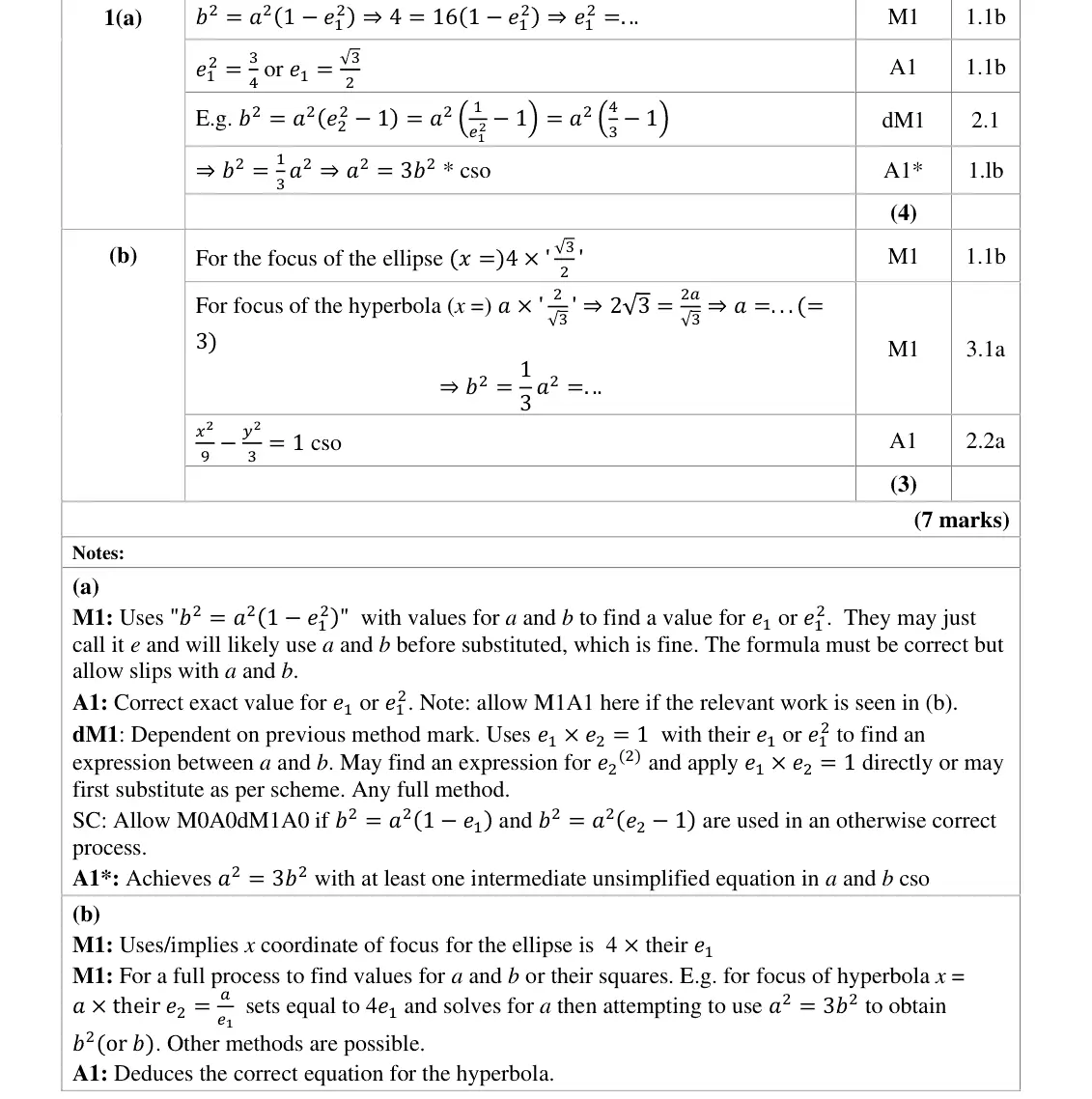
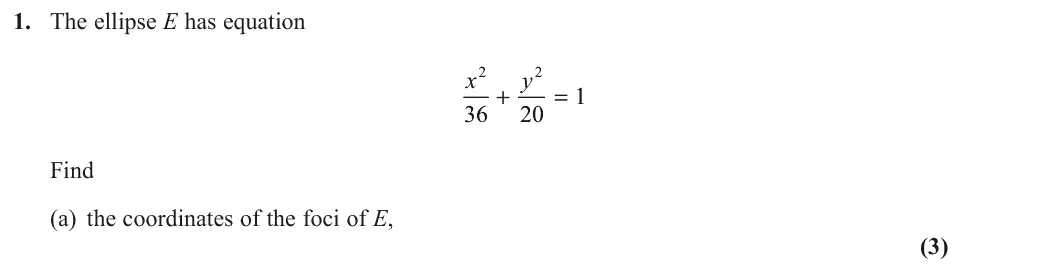
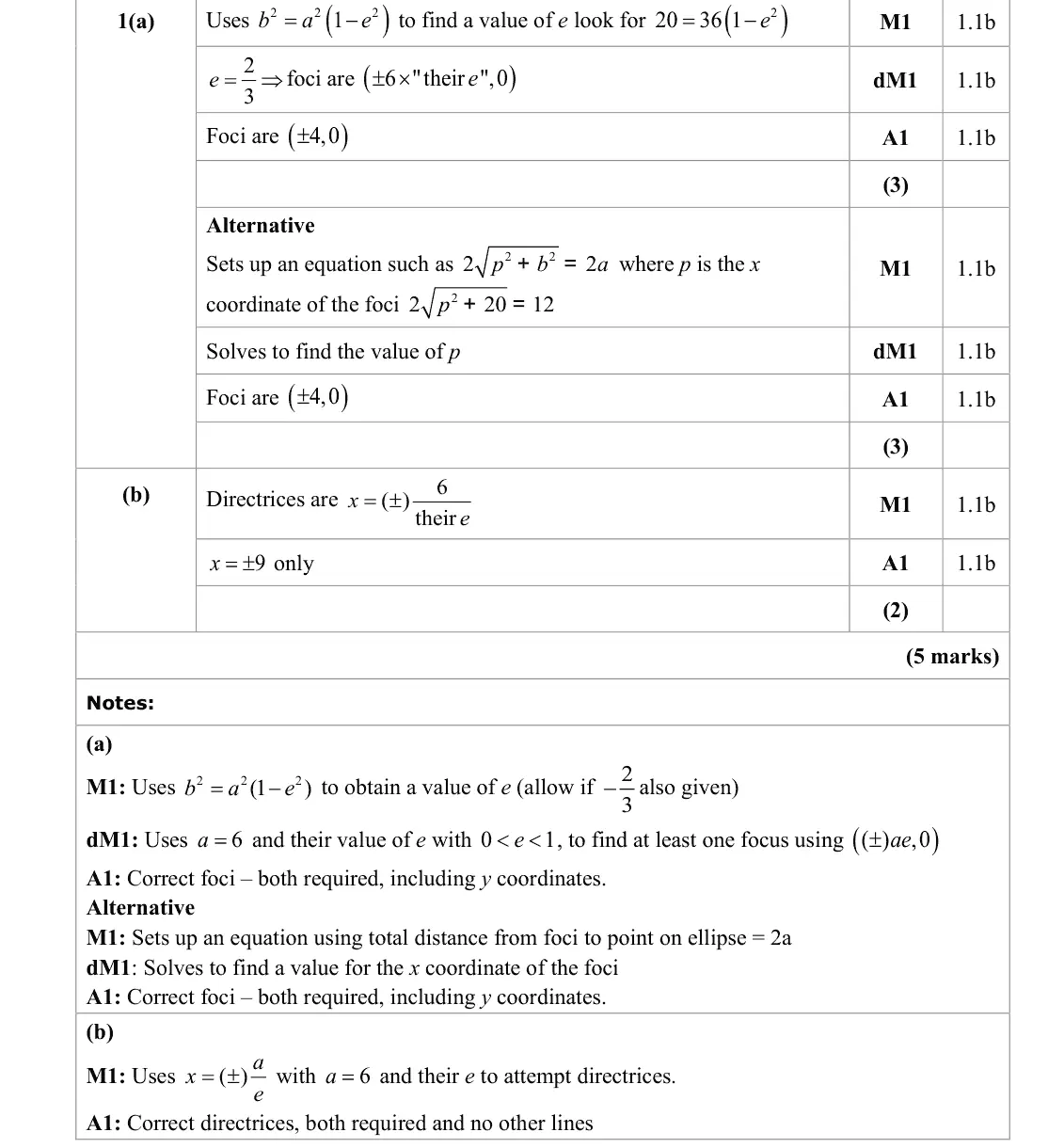
For those who knew what to do and could find the most efficient way through, this question was again swiftly answered and proved little problem. However, it was more discriminating than the earlier questions and caused problems for many who did not immediately see what to do. Candidates would be well advised to first of all write out what the given information is saying, as the reason for strife for many was the failure to use the second bullet point from the outset, but to try to use the first bullet point in the eccentricity equation for both curves first, and hence go through a process of setting up more complicated simultaneous equations when eventually bringing the second fact to bear. This was often done via using the x coordinate of the focus being 2 2 a b + , rather than finding the coordinate itself. At the outset most candidates were able to use the equation for eccentricity and obtain the correct eccentricity of the ellipse, and the first mark was therefore generally gained even if no further progress was made. They were then able to find the eccentricity of the hyperbola, but this did not necessarily gain further marks. Those who proceeded to find the coordinate of the focus as a next step usually then made light work of attempting the value of a, usually finding it correctly. Those who did not proceed via this route, but instead set up equations in a and b using the eccentricity and focus equations of the hyperbola (as noted above) had much more difficulty in reaching a value for a, with errors often made along the way, though many did reach the correct answer from this approach. If a value for a was found, most candidates then were able to attempt b from the relevant equation, although there were sometimes errors with the powers involved to gain the method mark, and this was score even in some cases where an incorrect process to attempt a had been made. But a correct value for a almost invariably led to a correct value for b and full marks ensued.