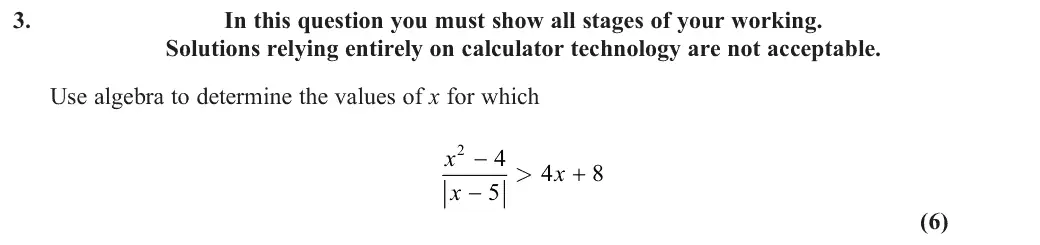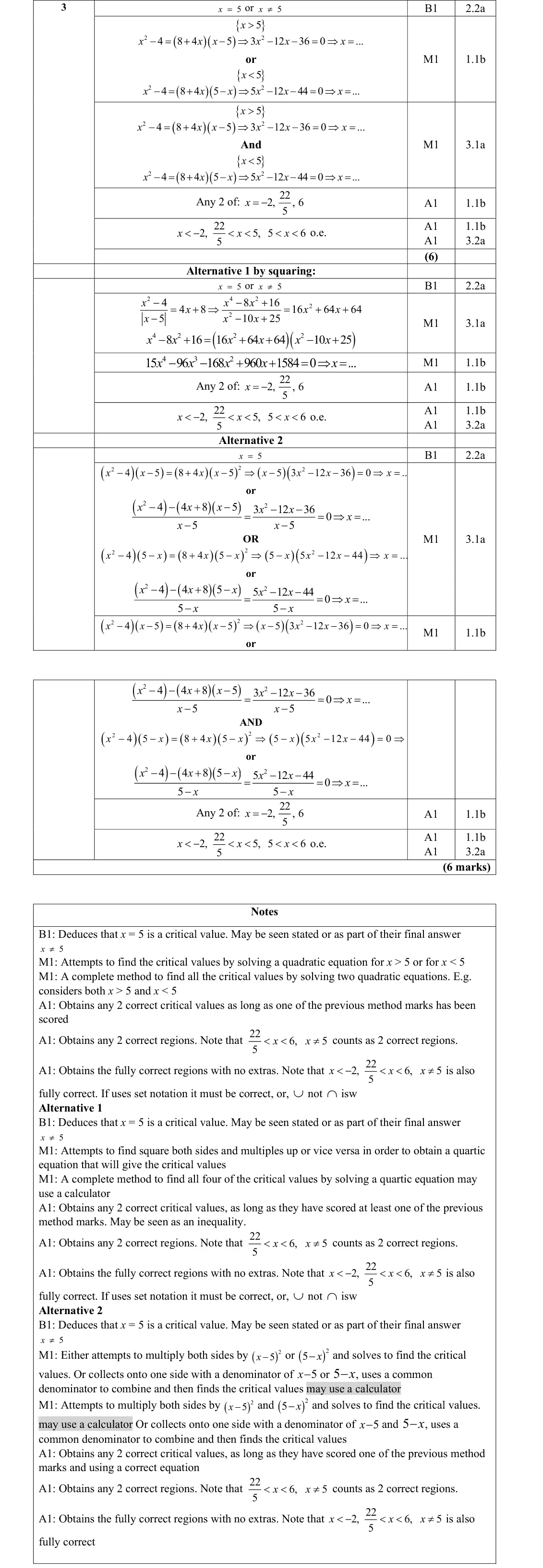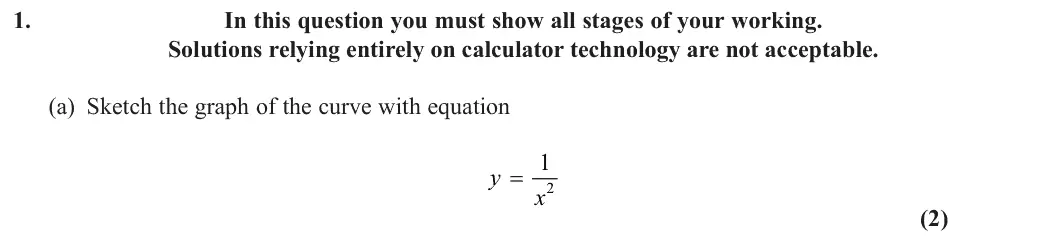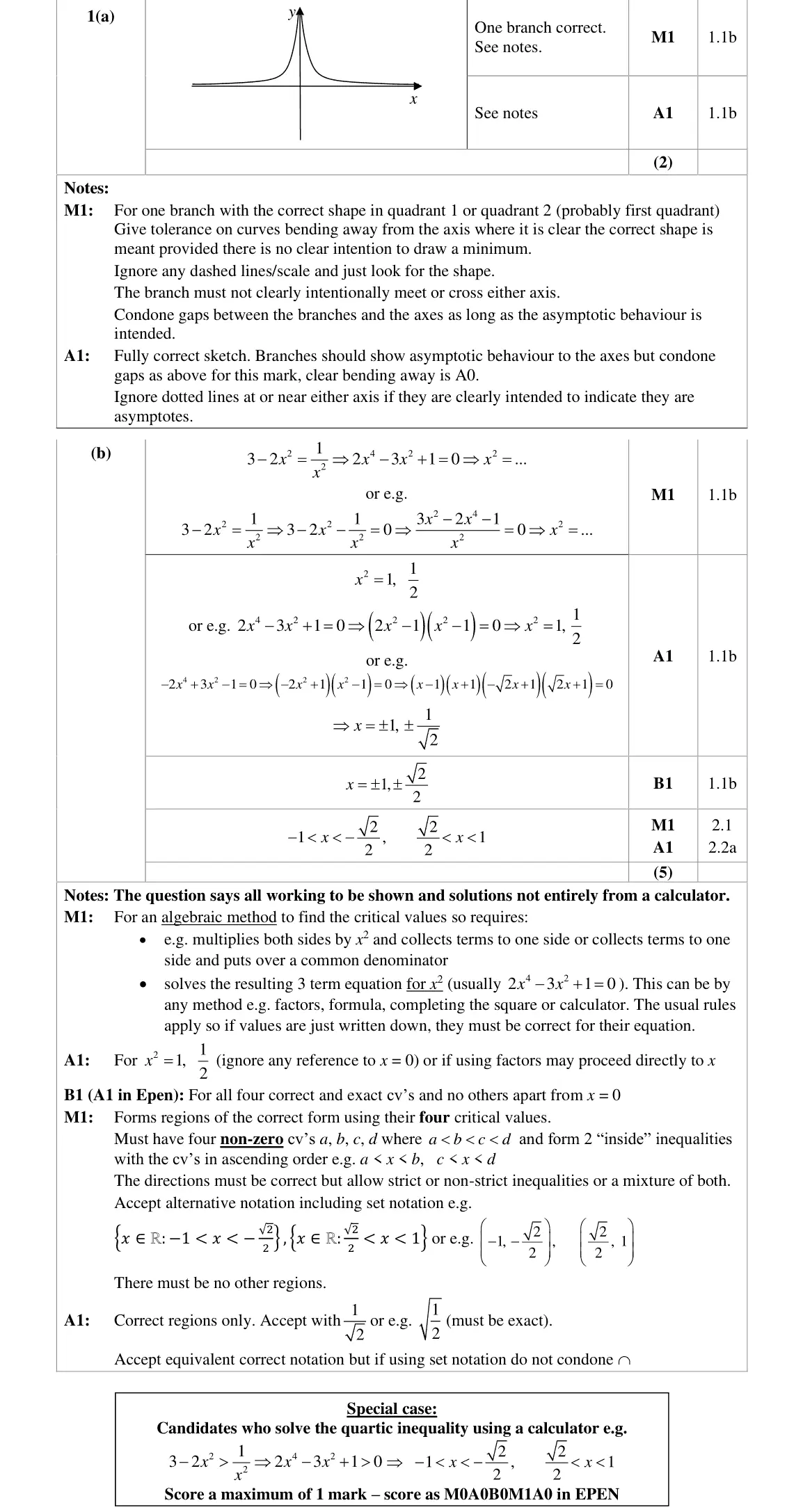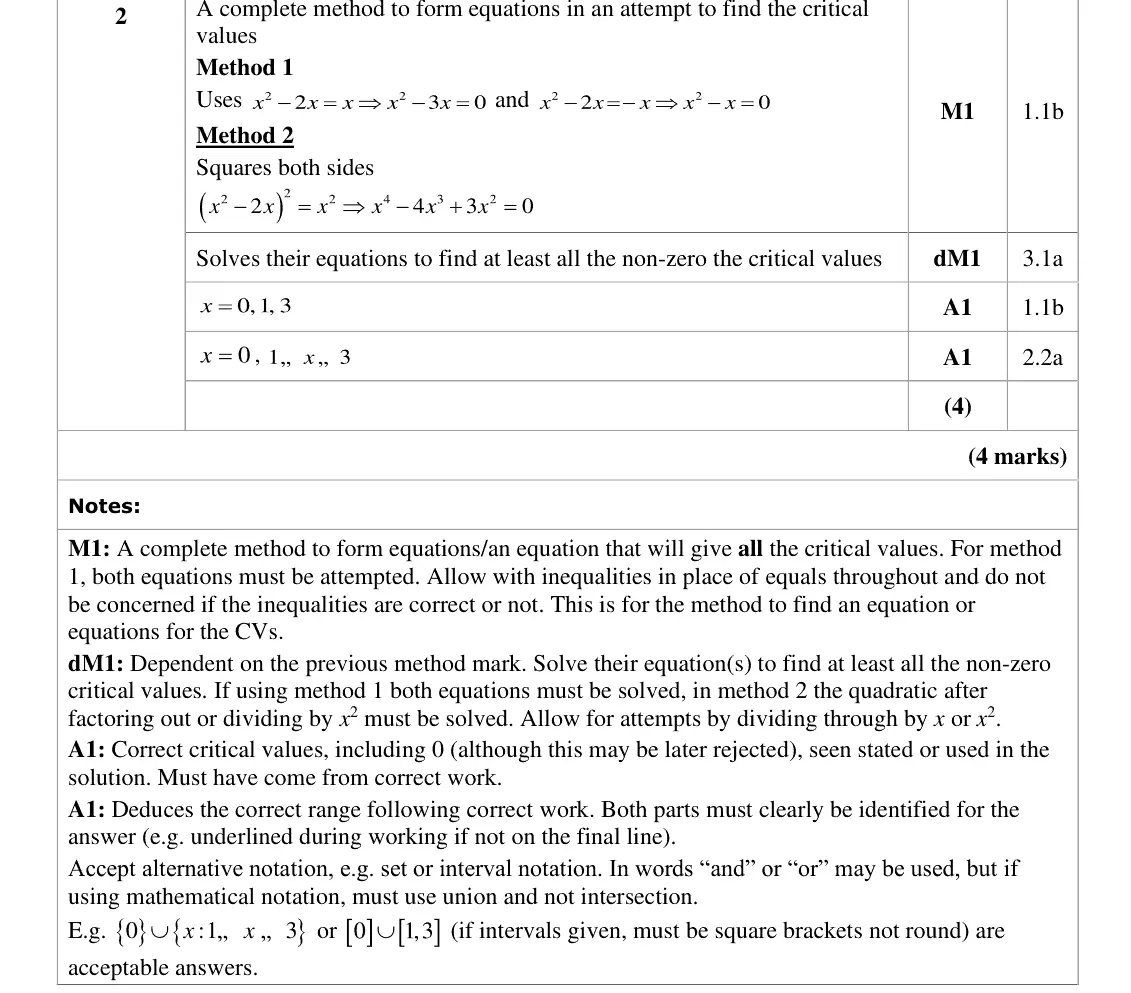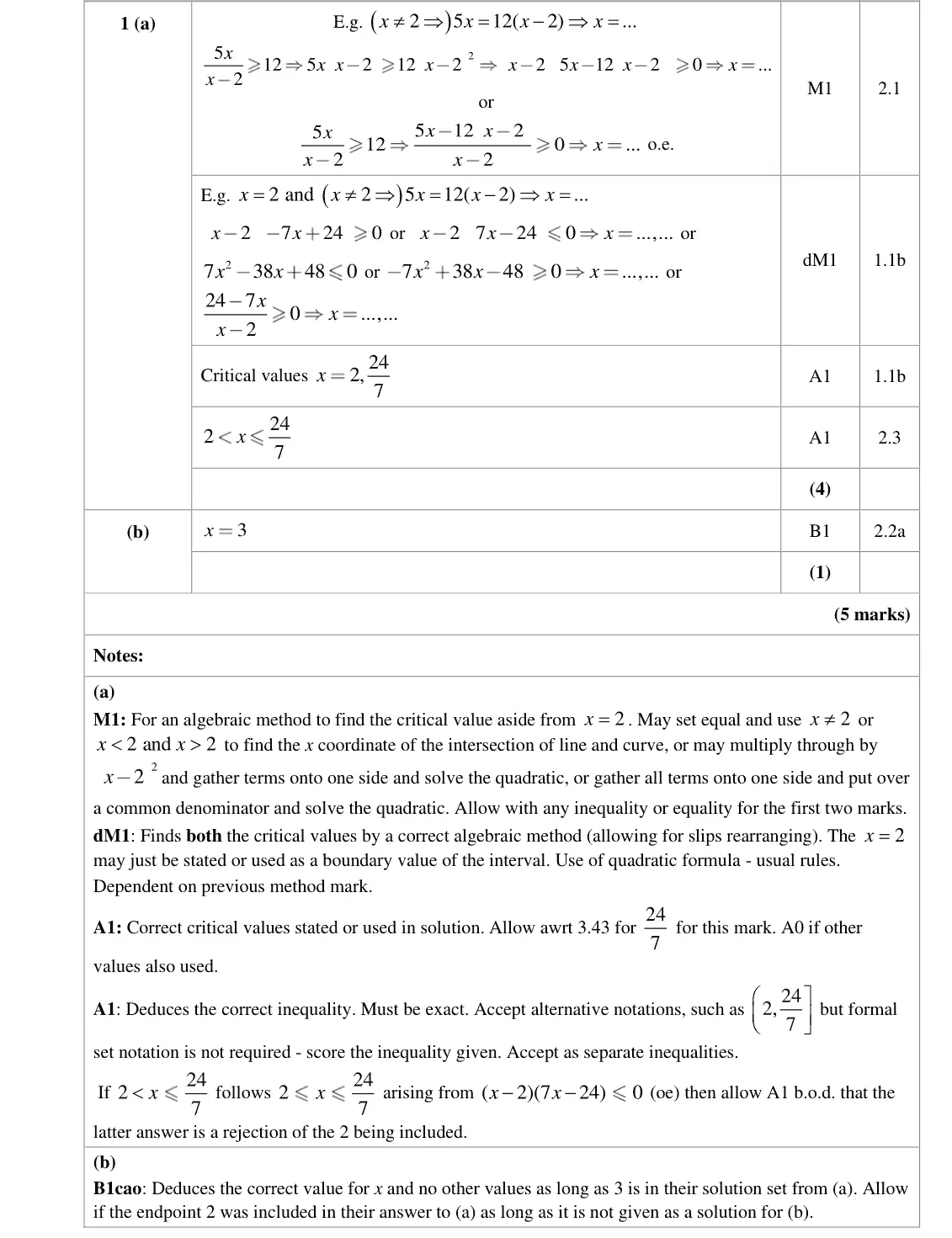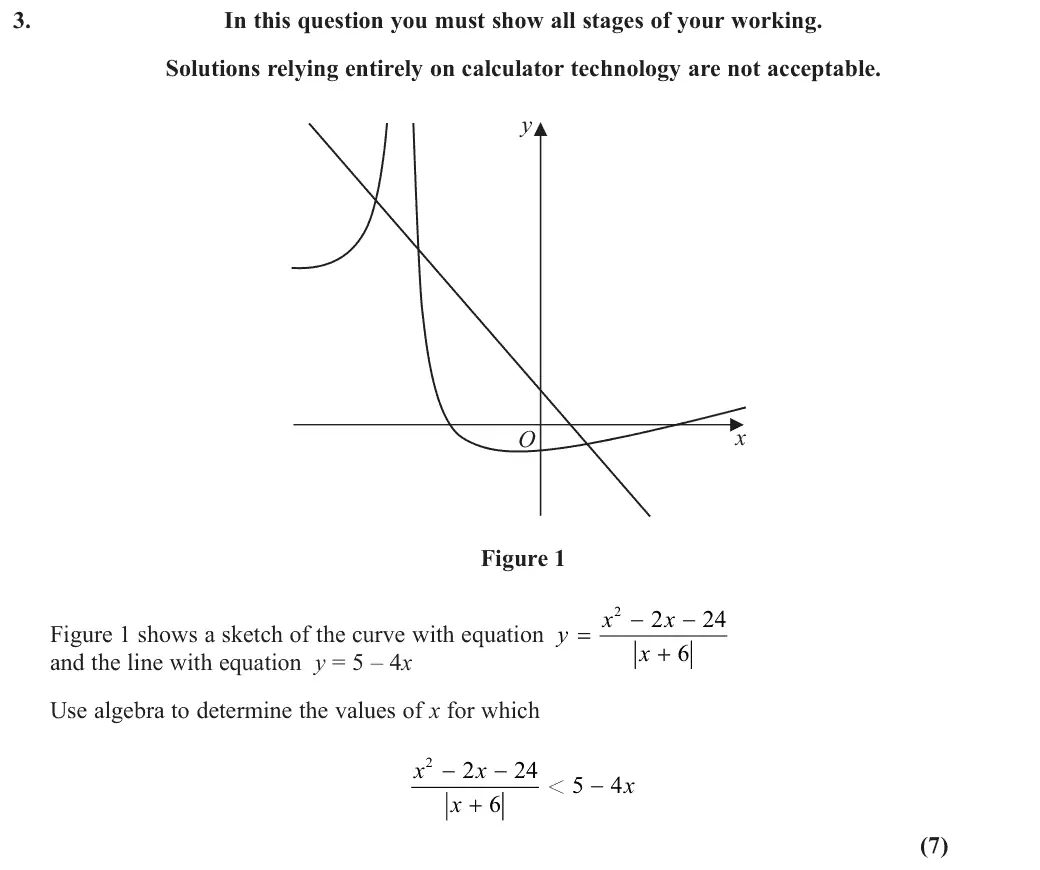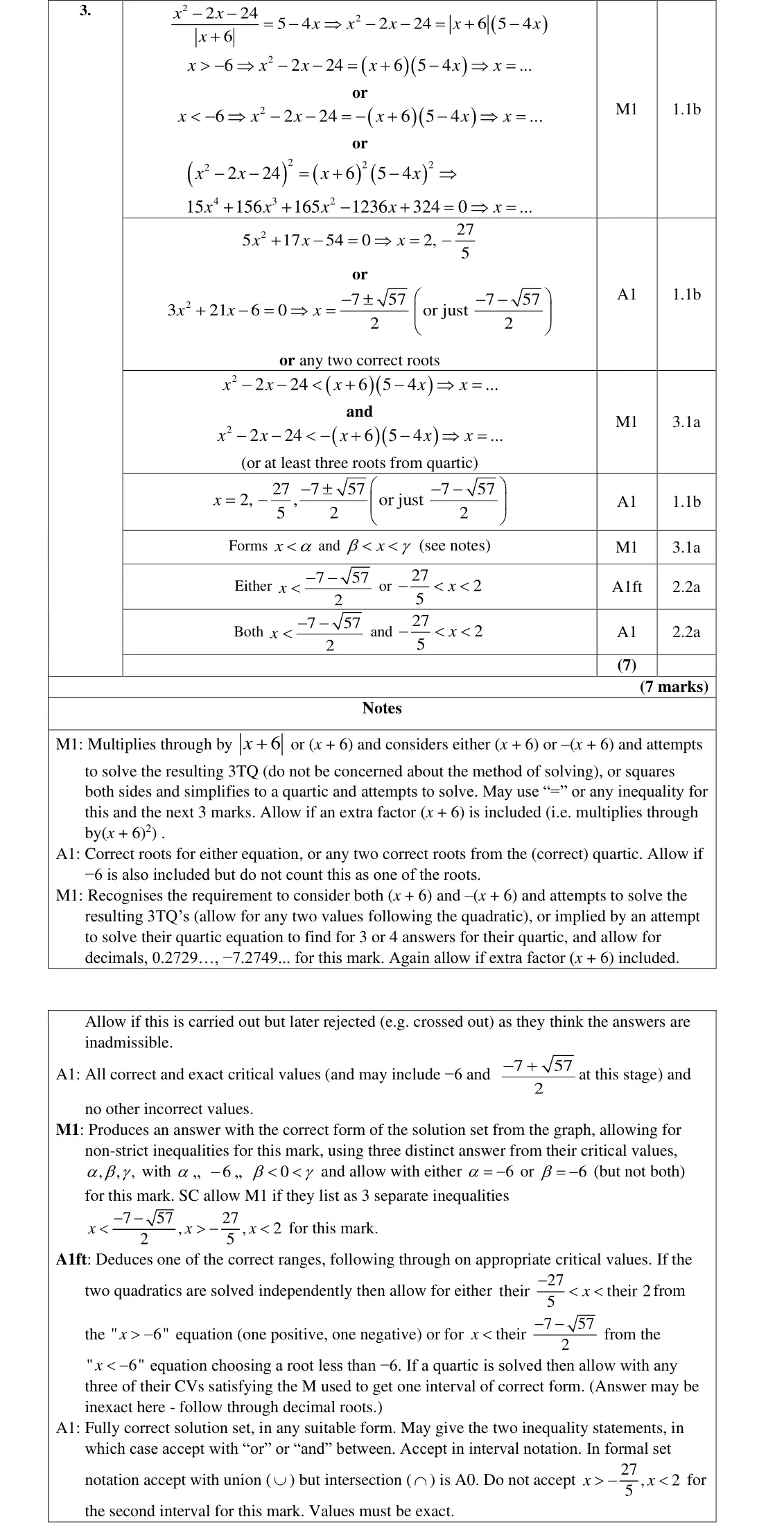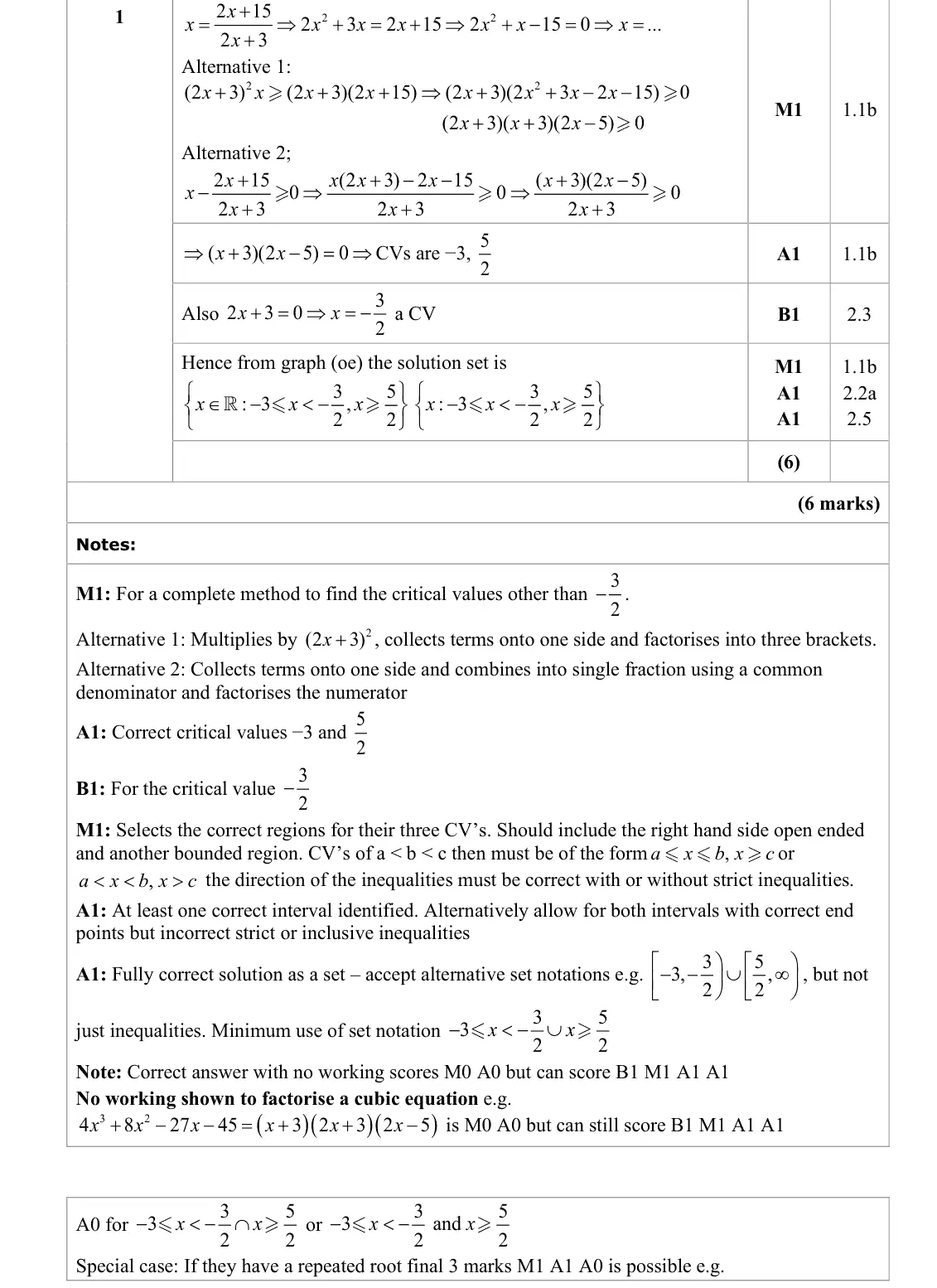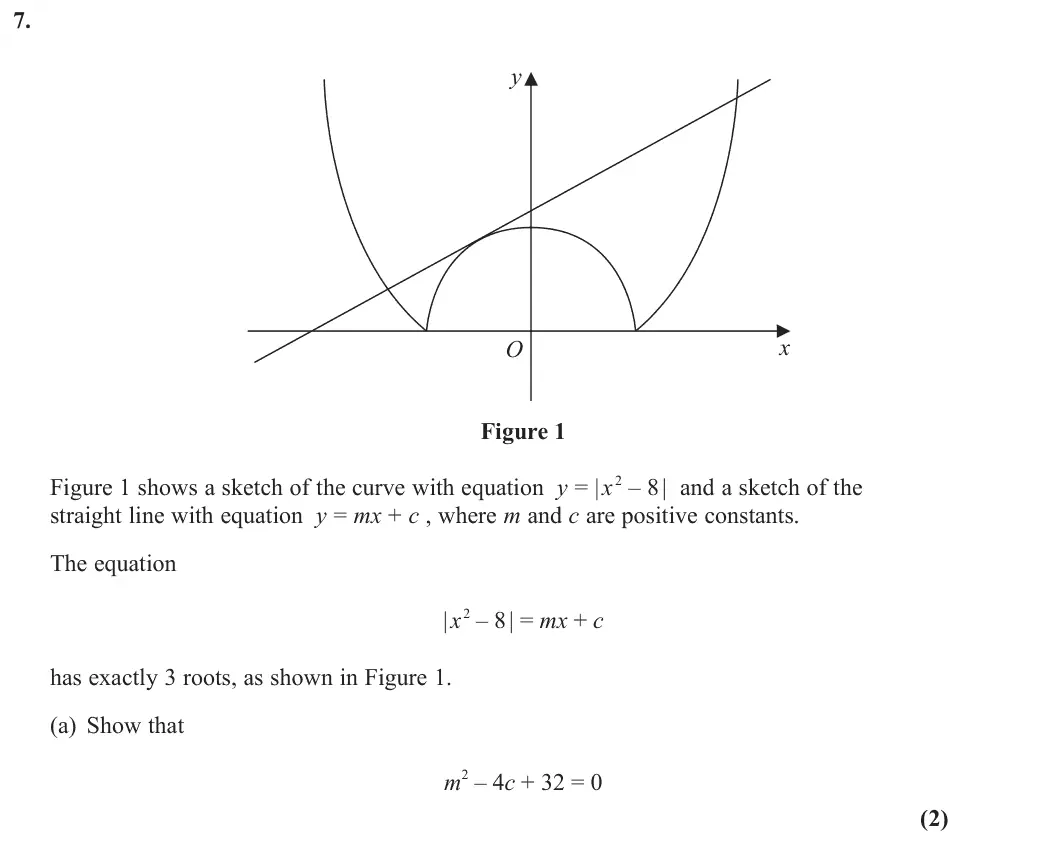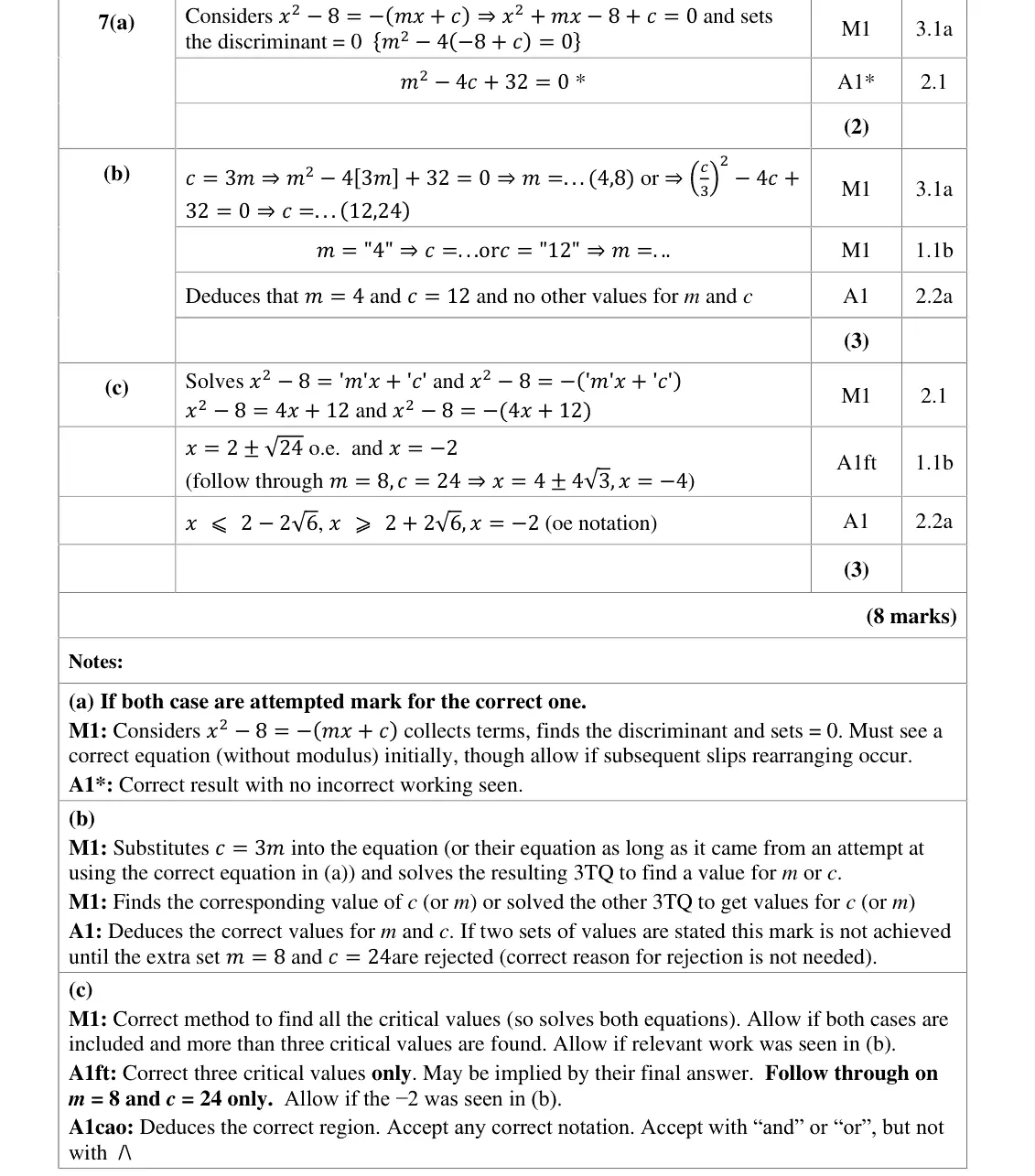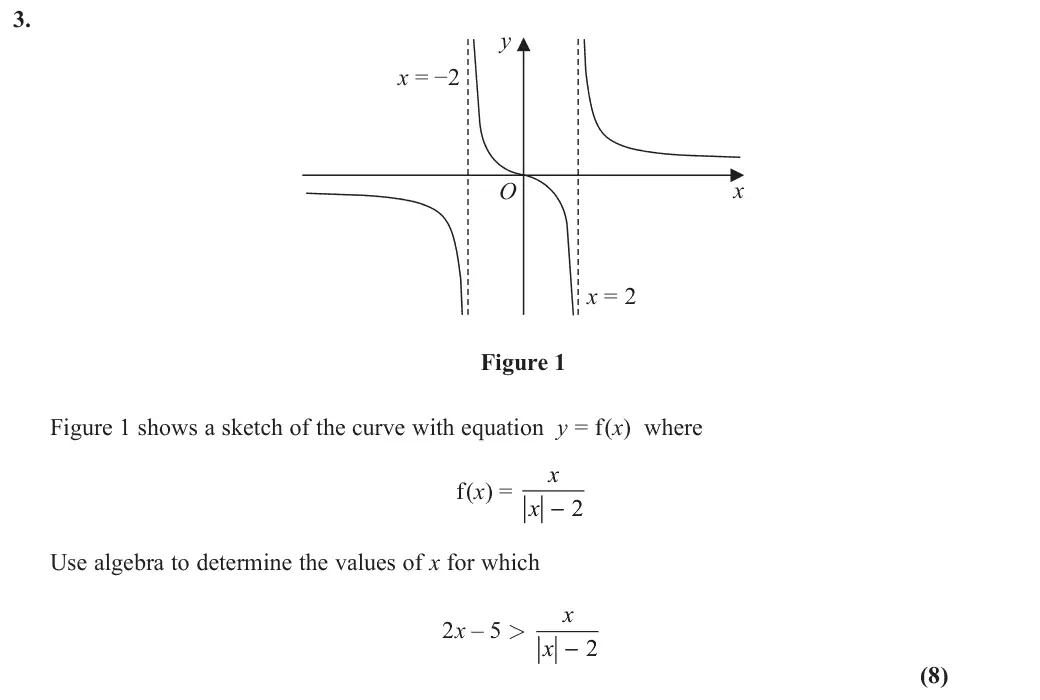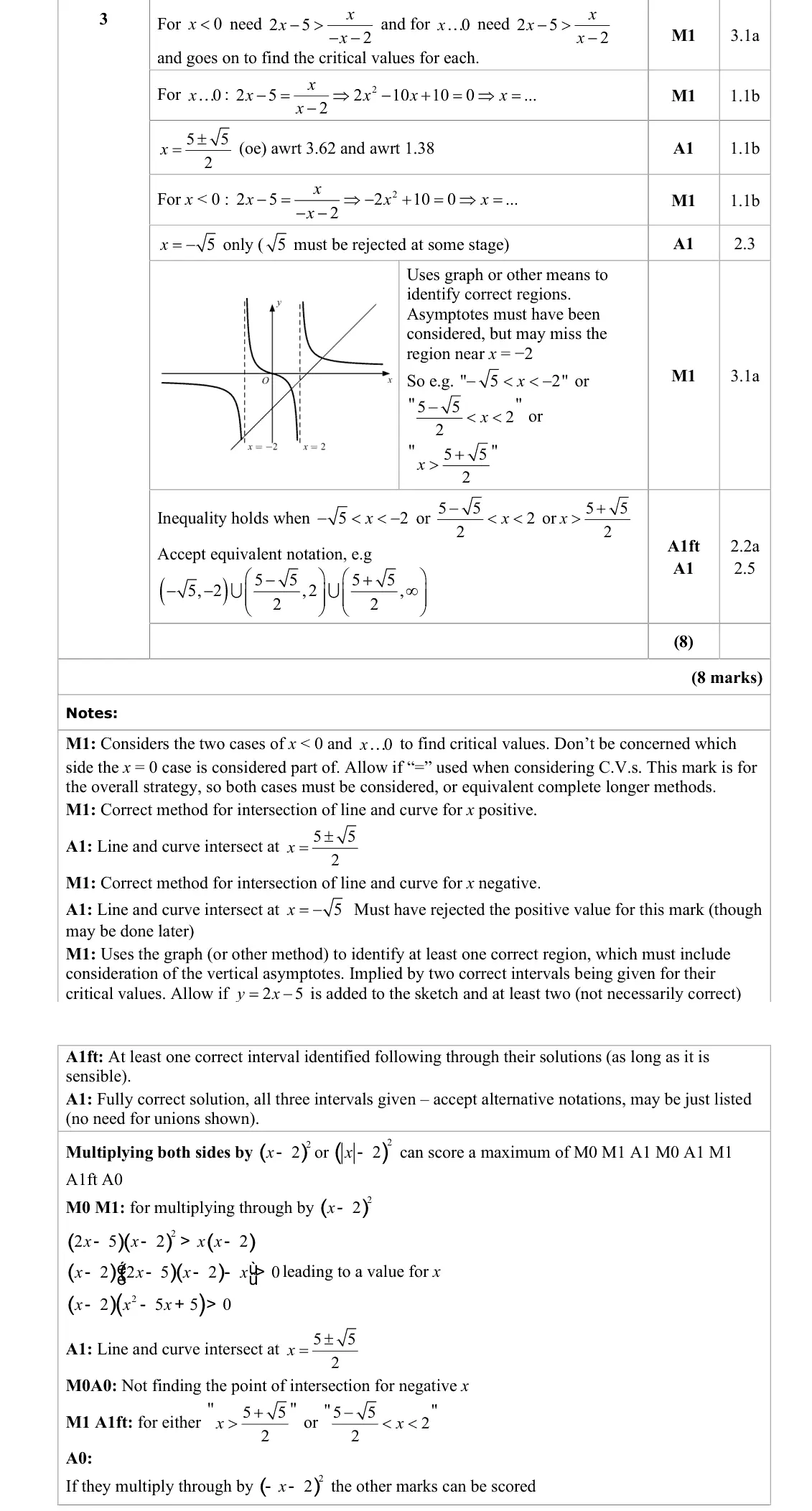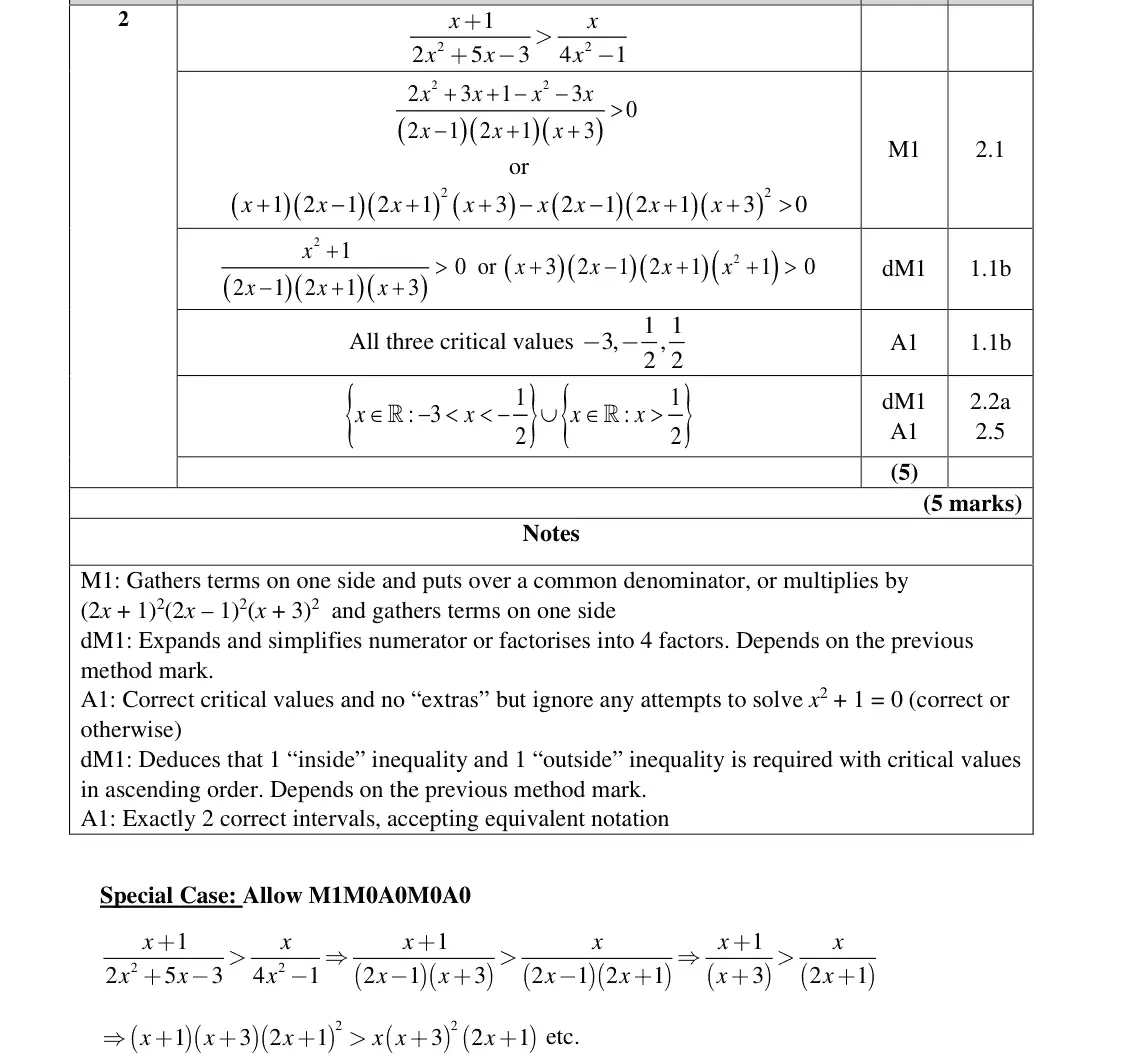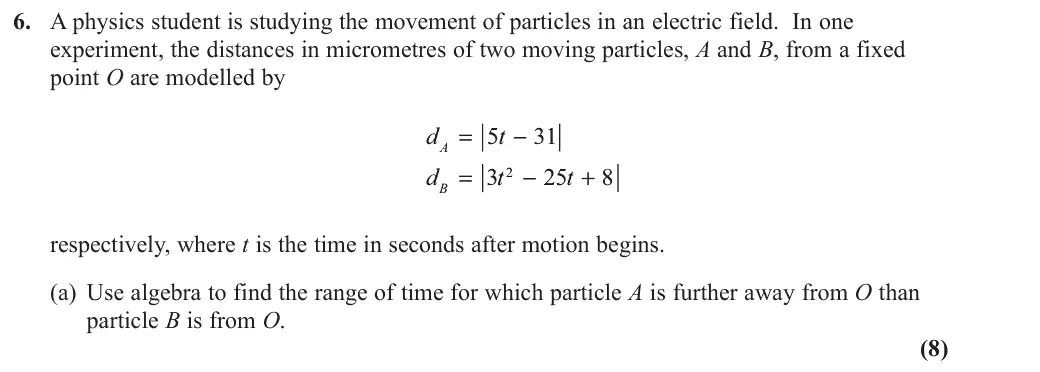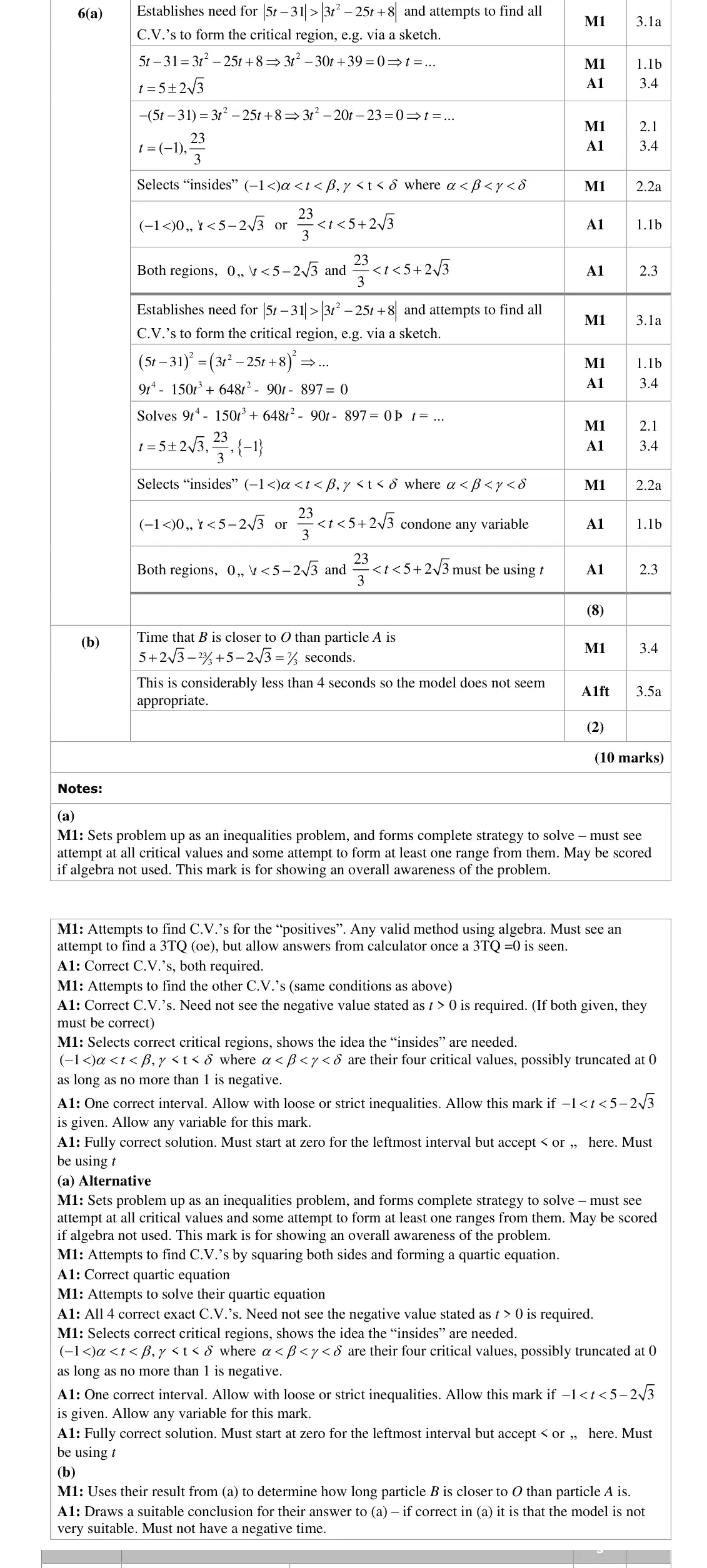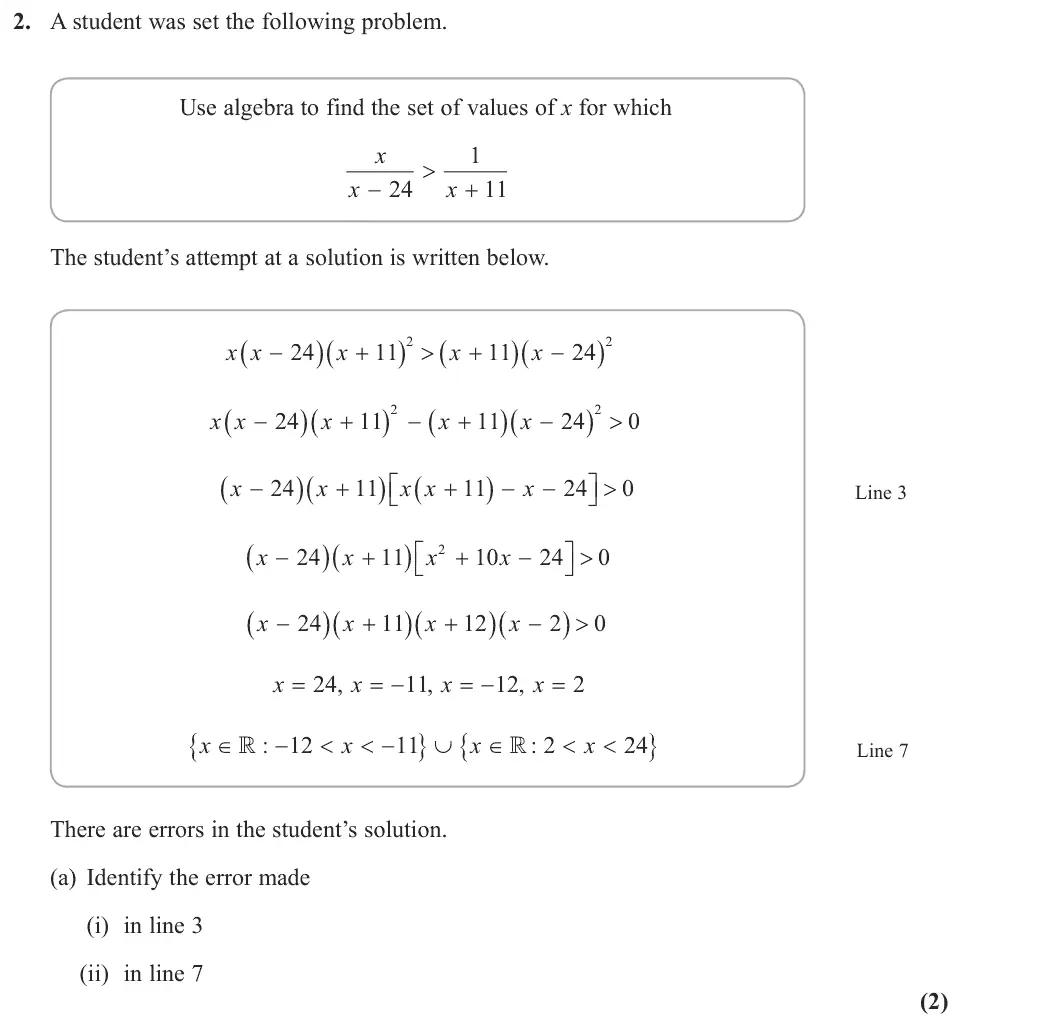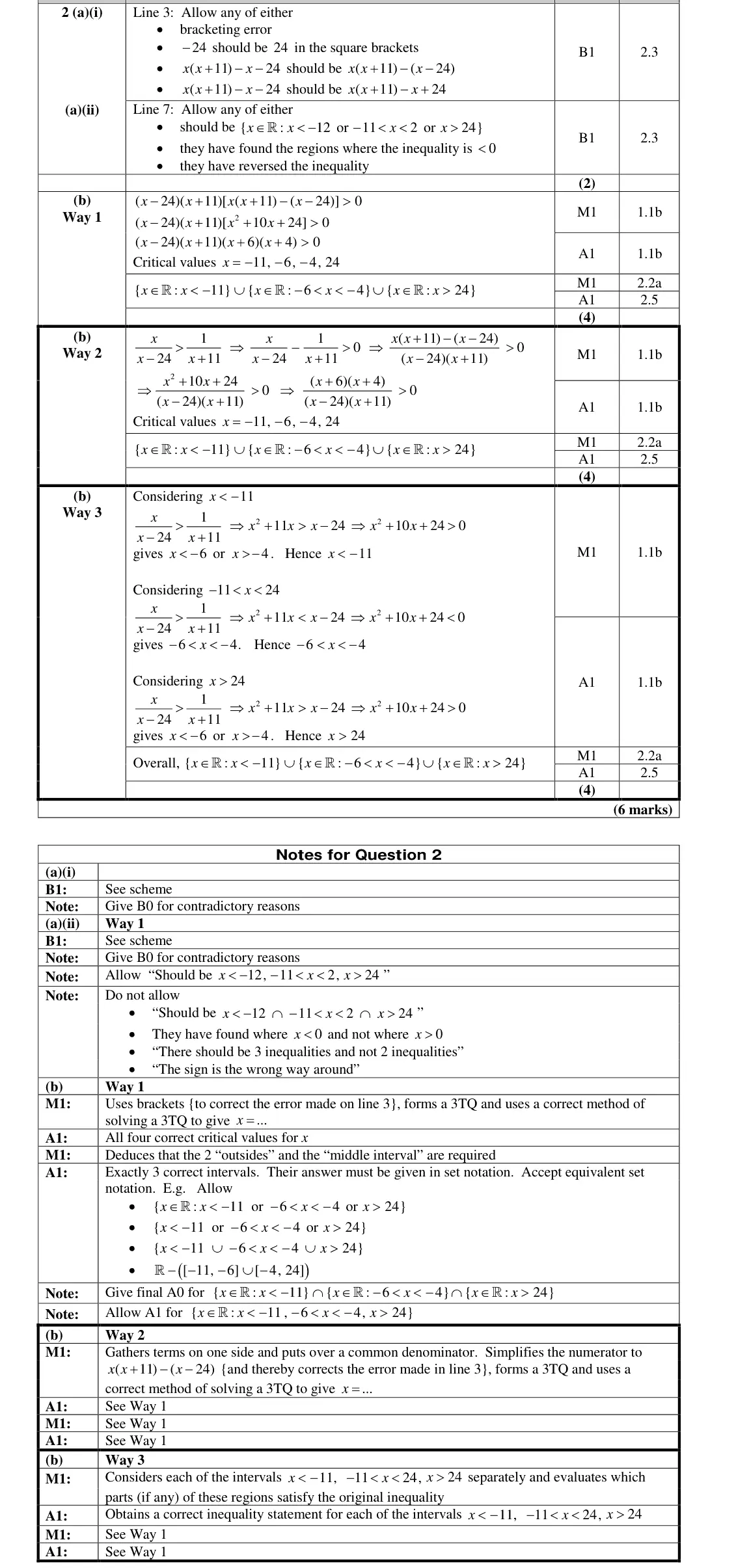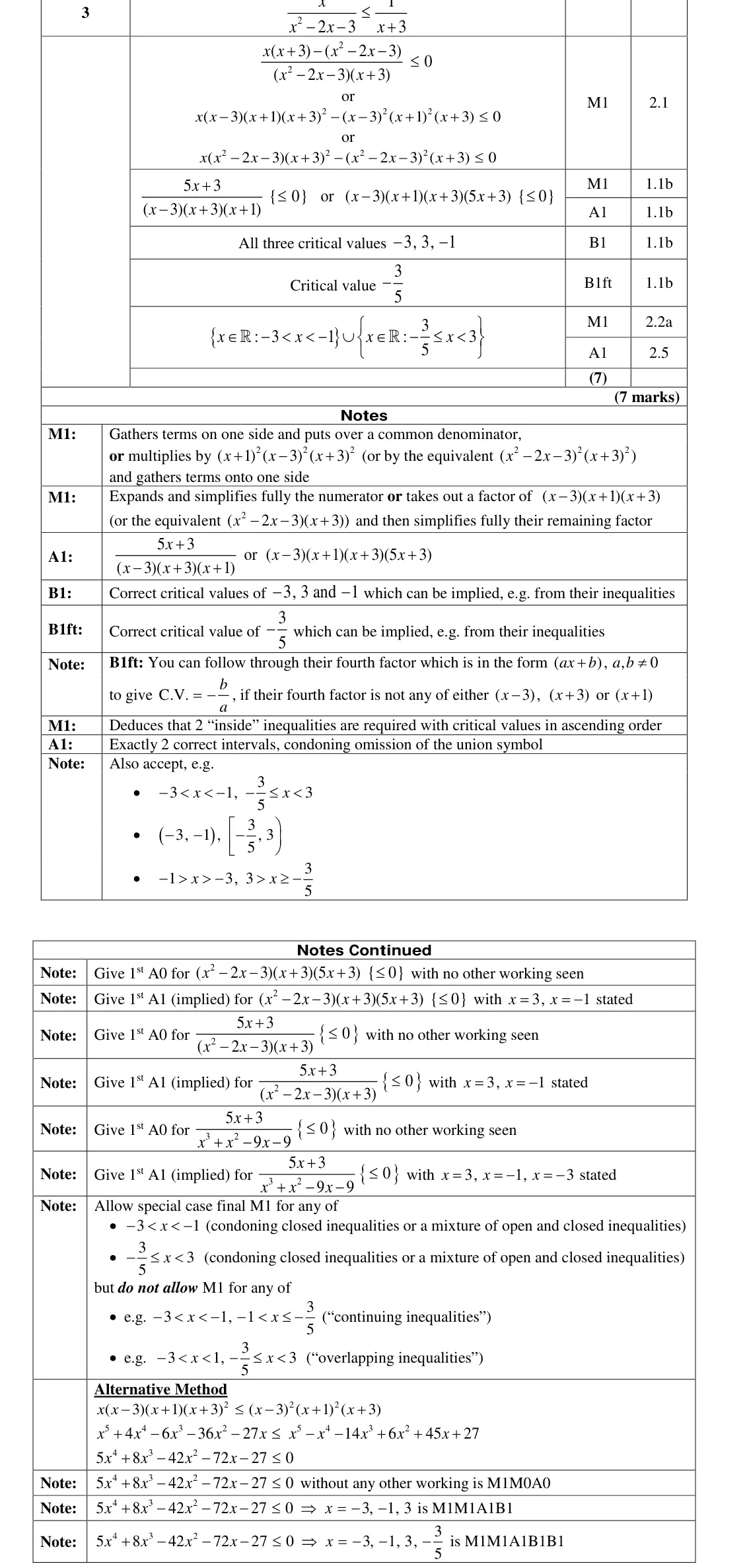
Mark scheme (whole question; this part is marked with the orange bar)
Examiner's comment
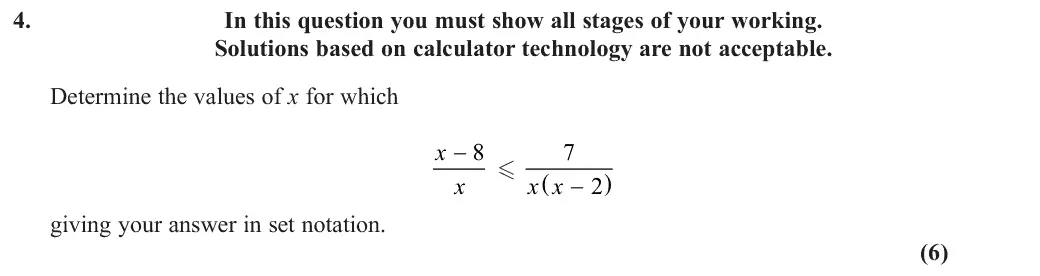
The majority of candidates attempted to solve by multiplying up, although many algebraic errors arose, particularly in ensuring that they multiplied by squared terms throughout. Those who succeeded in forming a correct inequality this way sometimes proceeded to multiply out all their brackets, forming a polynomial in x4 or x6 . Some candidates multiplied out the brackets and then used their calculator to solve and only gained two mark. Those who followed the instruction that calculator technology was not acceptable, and kept their terms as fully factorised as possible, were able to factorise the resulting expression correctly. Candidates who moved onto one side and then used a common denominator where able to factorise their numerator correctly. Some candidates ignored the 0 x = as one of their critical values. In the final answer, some candidates realised that 0 x = and 2 x = were not included in the range, but many made errors in the > or >= signs. A few candidates did not use set notation correctly, most often by using the intersection rather than union sign.
Key points from the mark scheme and examiner's report
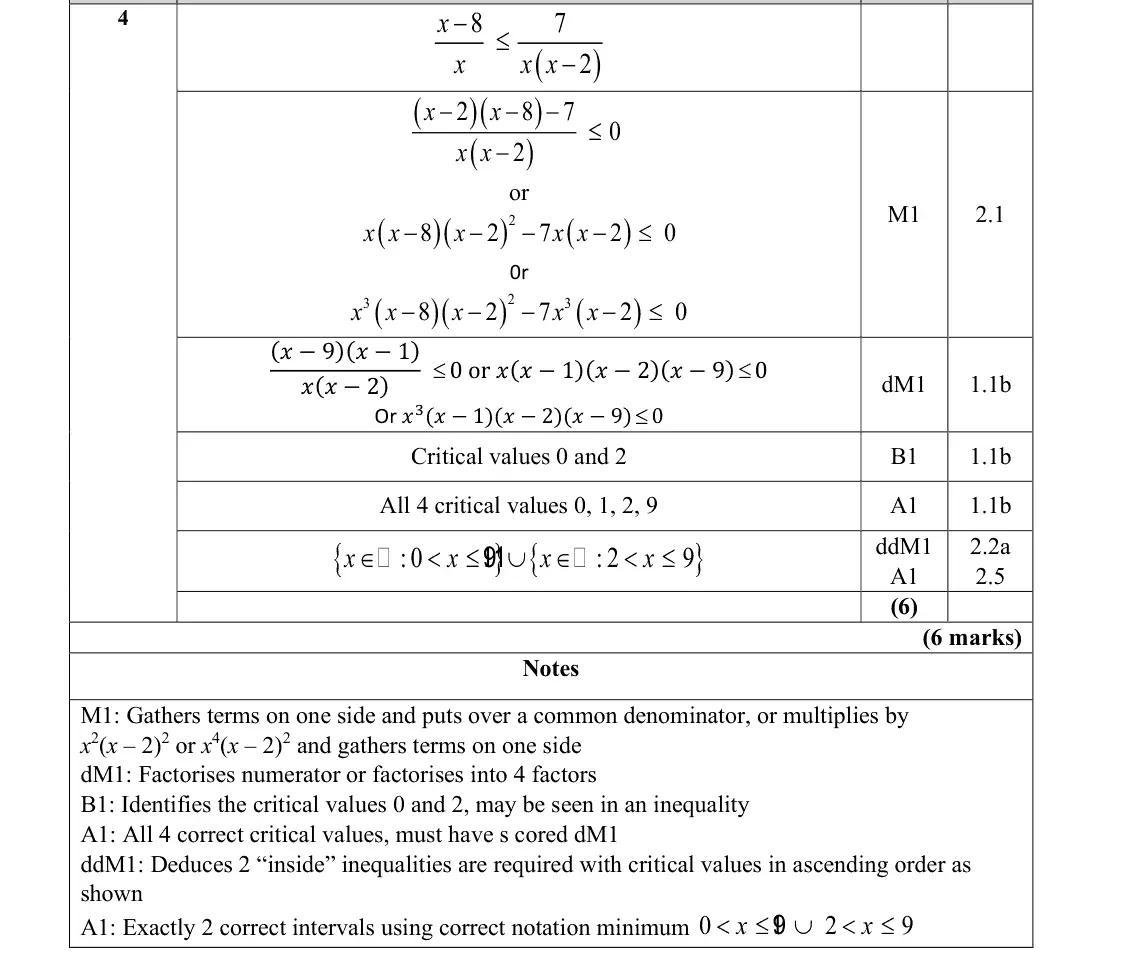
- common denominator: (x − 1)(x − 9)/(x(x − 2)) ≤ 0, or multiply by x²(x − 2)²
- critical values 0, 1, 2, 9
- answer {x : 0 < x ≤ 1} ∪ {x : 2 < x ≤ 9}
- 0 and 2 must be strict
- expanding to a polynomial and using a calculator scores little
- intersection instead of union