Examiner's comment
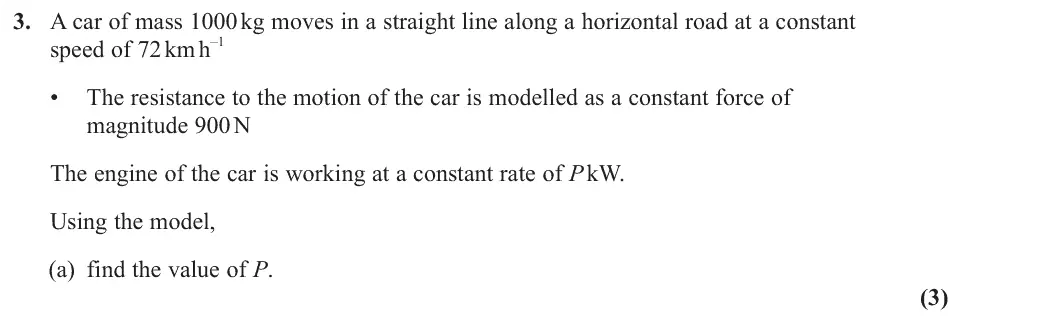
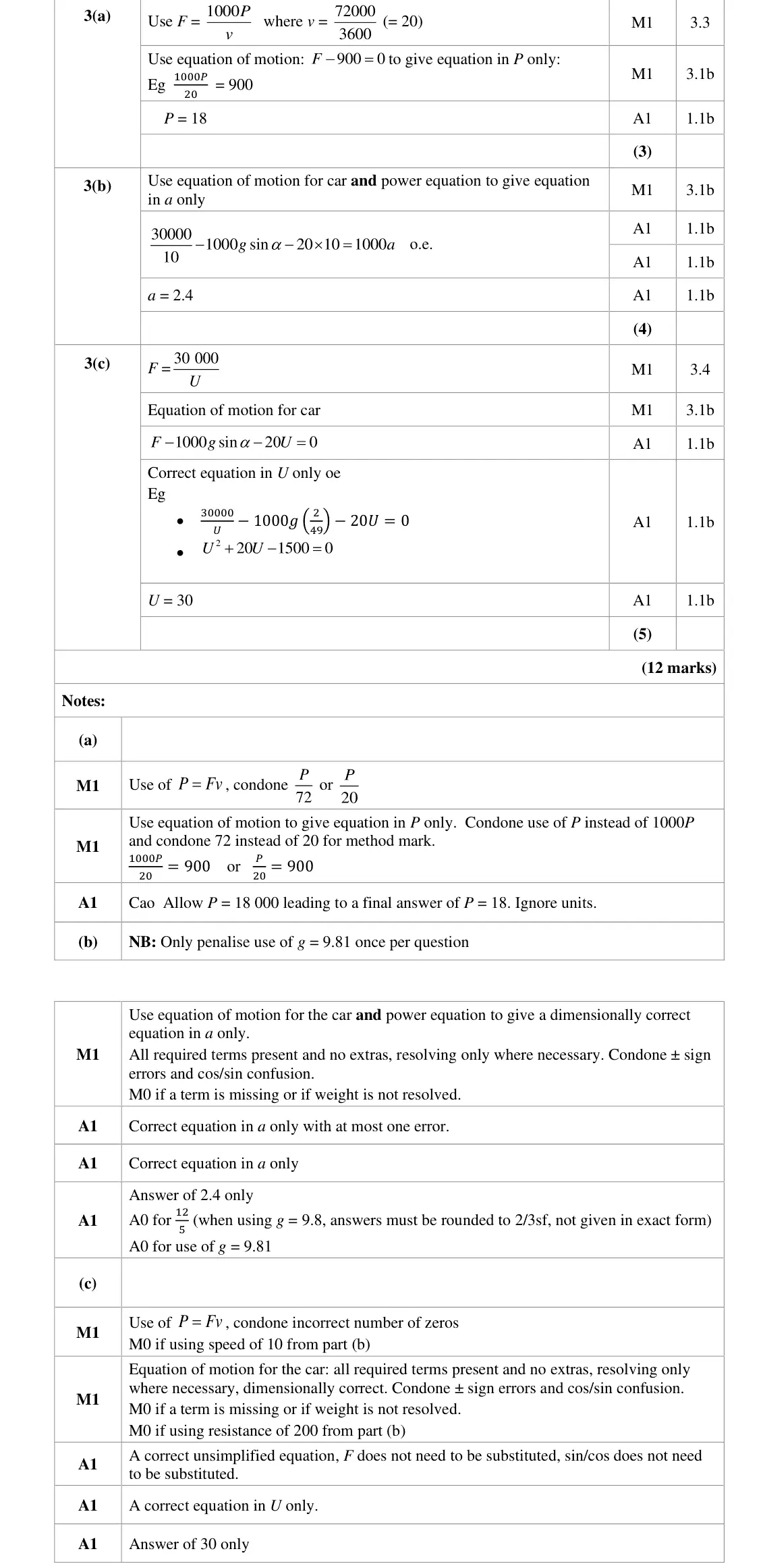
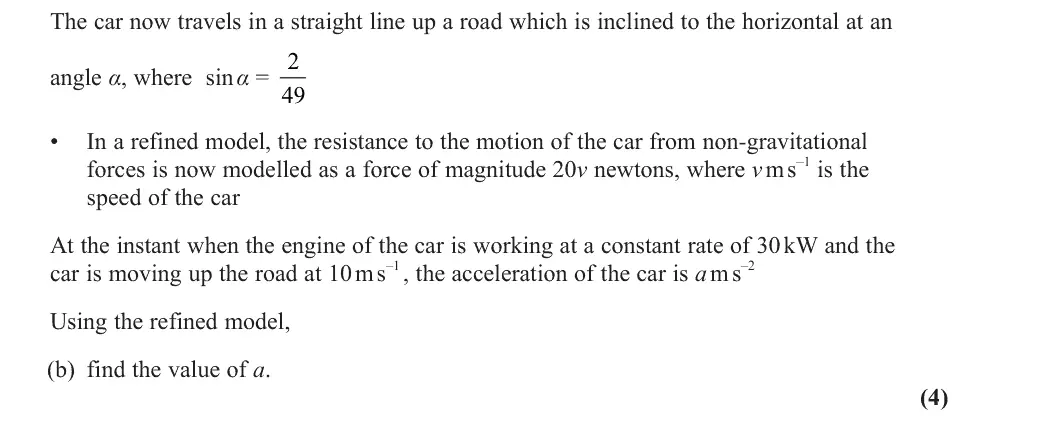
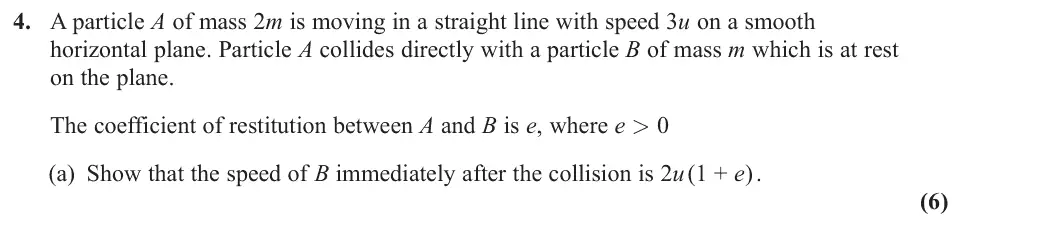
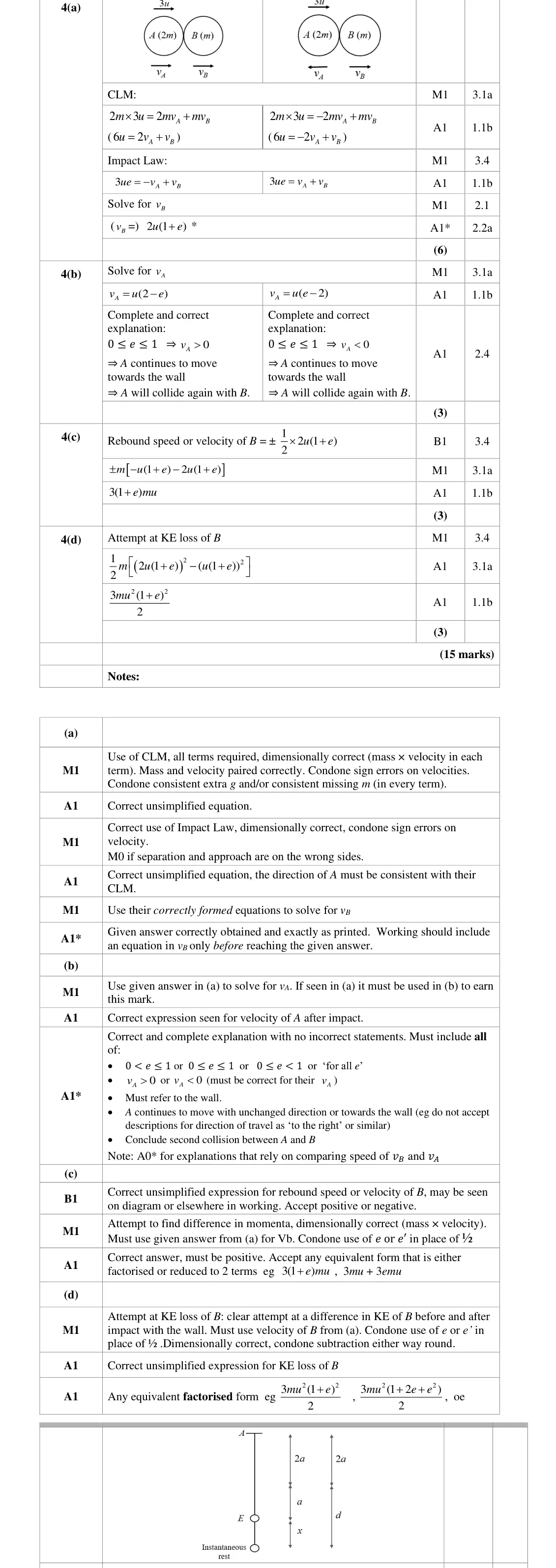
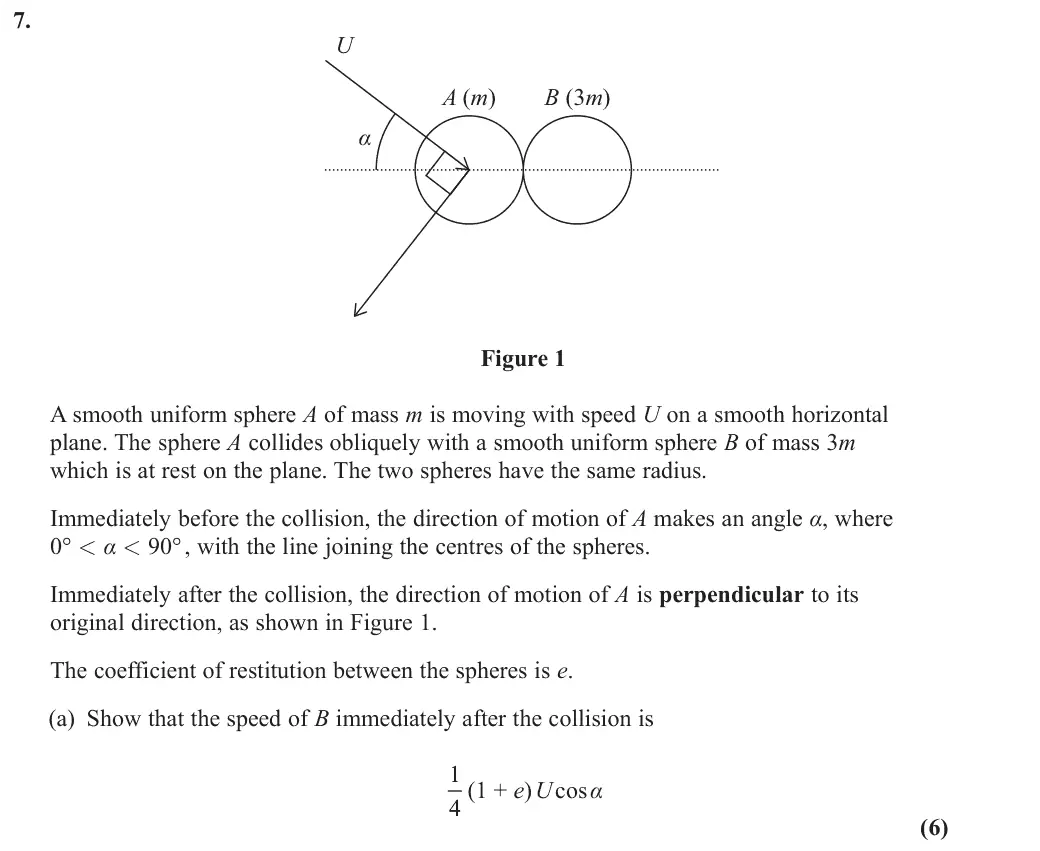
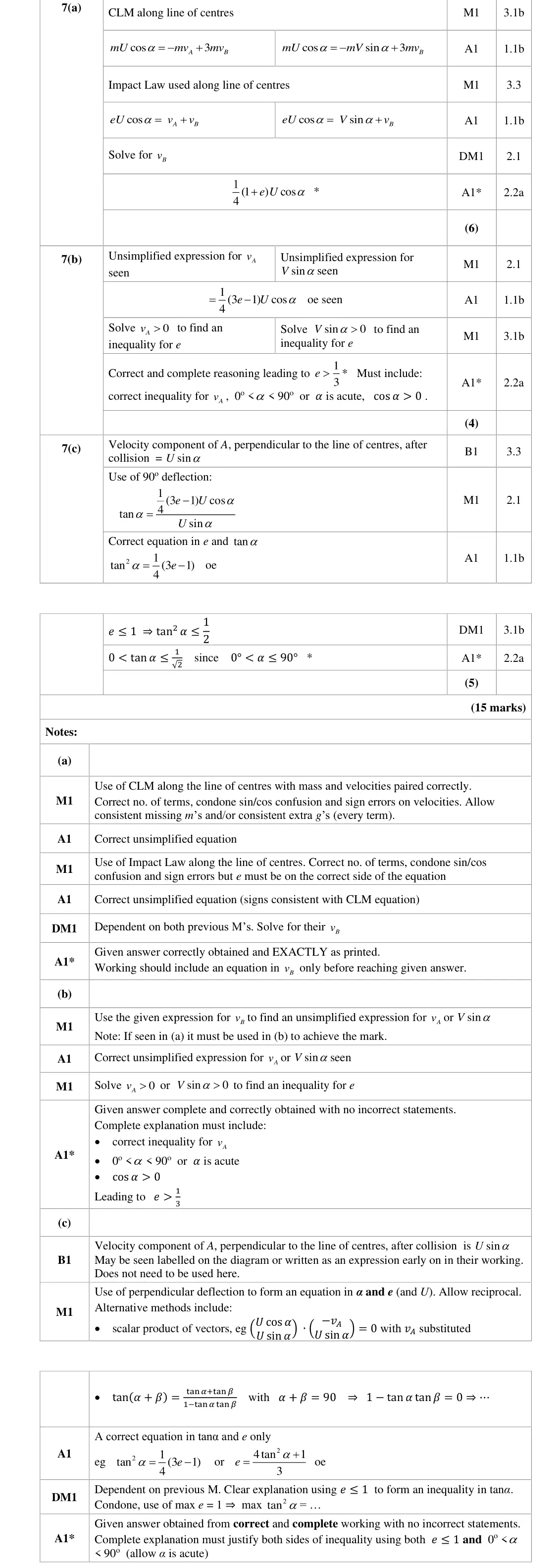
The final question on the paper contained three parts, each with a given answer, providing an appropriate level of challenge to stretch high attainers. Whilst part (a) was routine bookwork, parts (b) and (c) demanded clear reasoning and precise language, providing candidates with an opportunity to demonstrate their knowledge and understanding of mechanics. Many candidates at all levels made a confident start to part (a), labelling components on the given figure and making use of the directions of motion of A. Most assigned v as the speed of A after impact and w as the speed of B after impact. The majority recognised that the velocity component of A perpendicular to the line of centres remained unchanged, that B would move parallel to the line of centres and labelled the angle appropriately for the motion of A after impact. Well-prepared candidates produced fluent solutions, forming equations for the conservation of linear momentum and Newton’s Experimental Law and combined them to reach the given answer. It was rare for sign errors to occur, and these were easily rectified. Good exam technique was demonstrated with at least one line of working shown before reaching the given answer and the final answer re-written, if necessary, to ensure it was exactly as printed in the question. Errors in part (a) were more likely to occur in solutions where candidates chose to draw their own diagram. These candidates were more likely to ignore the angle of deflection, producing a generic solution with additional angles for both particles after impact. With additional angles and sign differences, some solutions lacked fluency and failed to obtain the given answer from fully correct working. Candidates are advised to annotate a Figure when one is provided in the question, as it is usually in place to support understanding and aid progression.