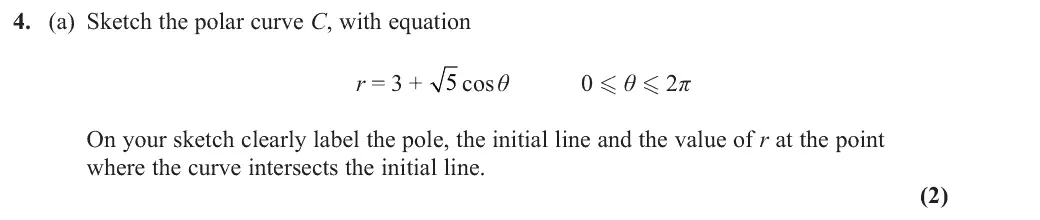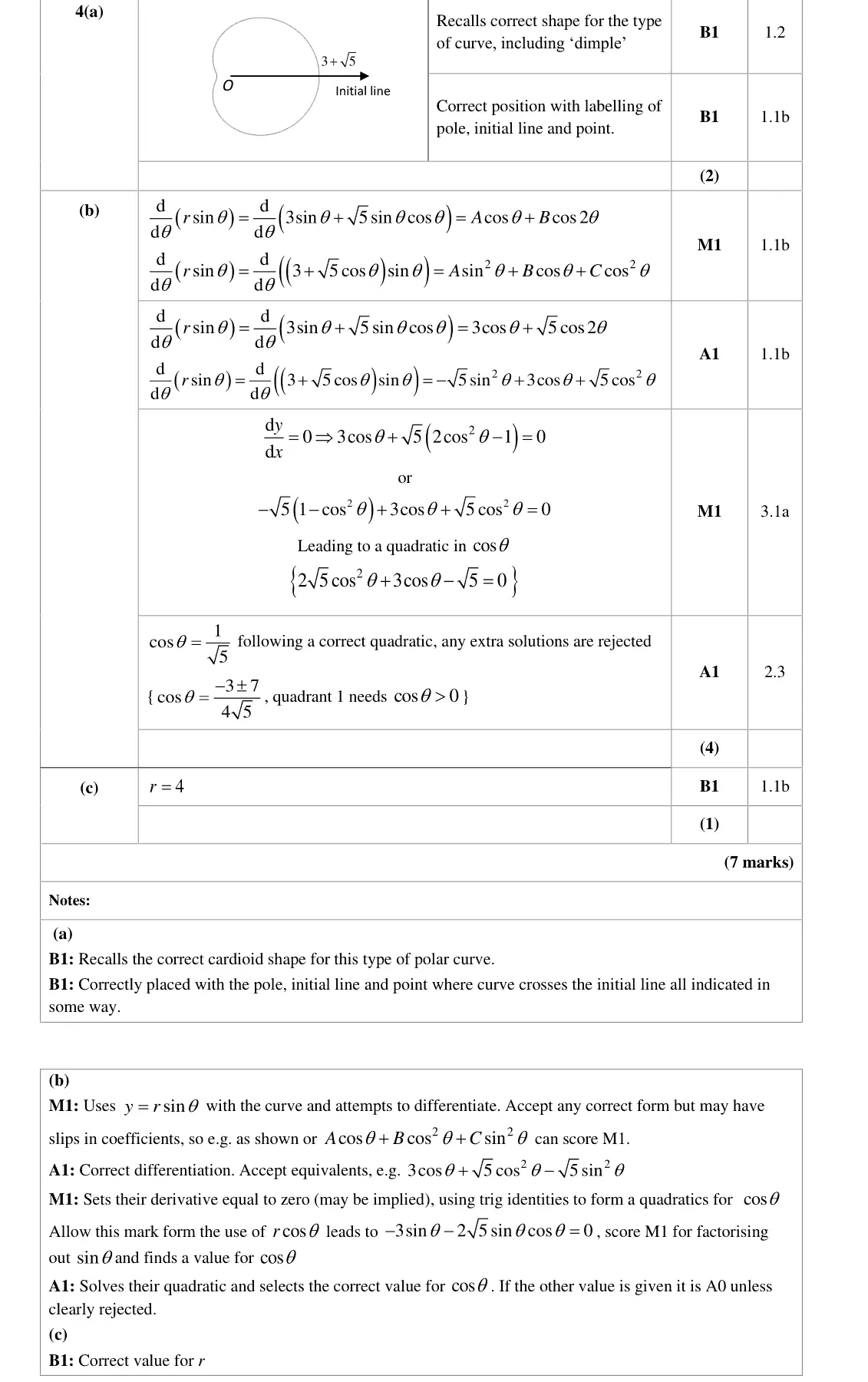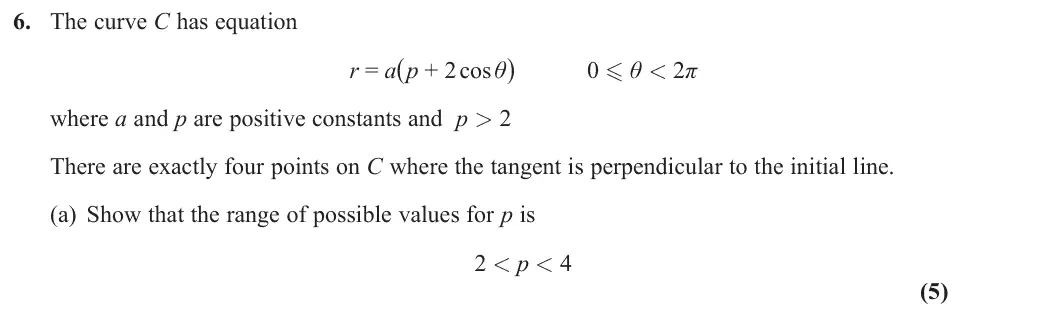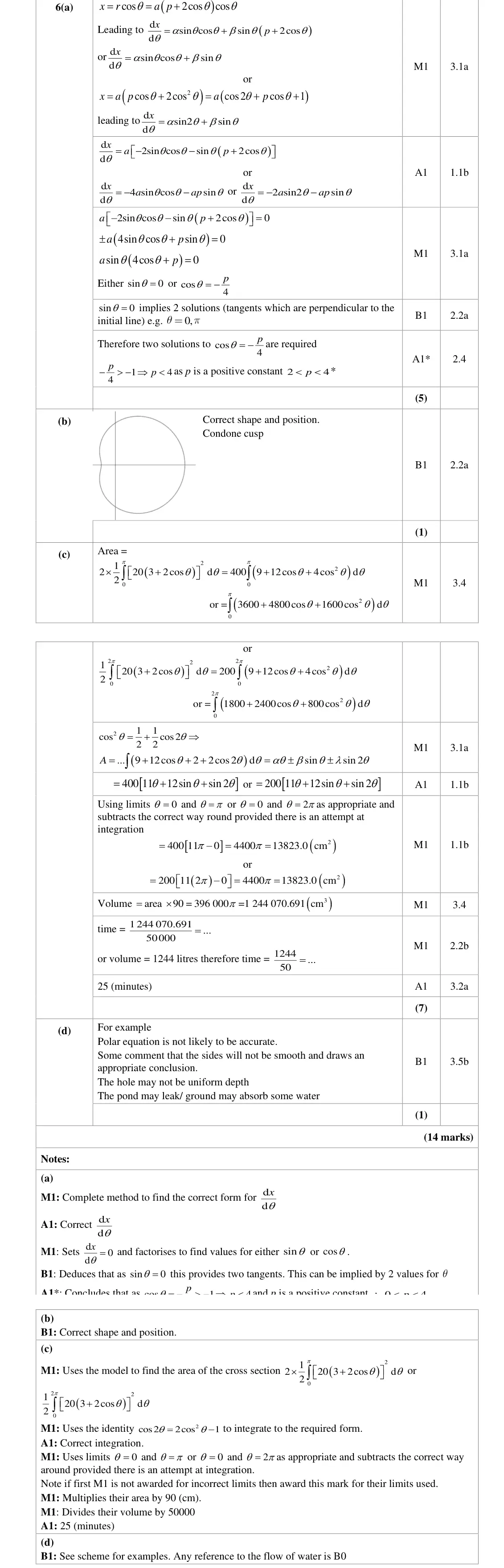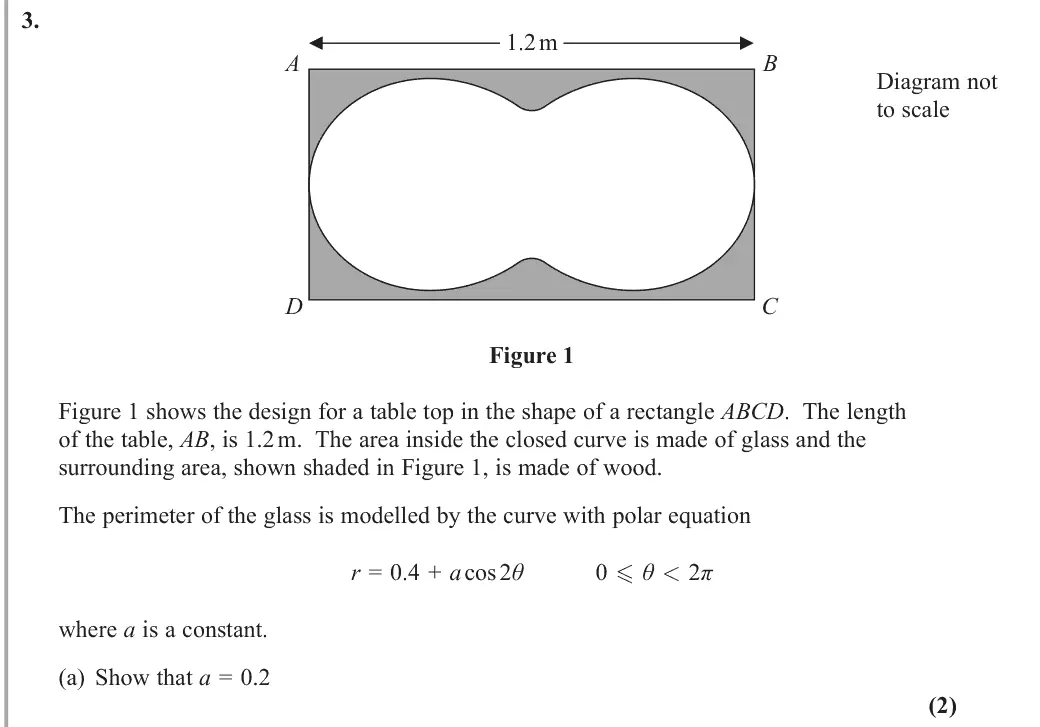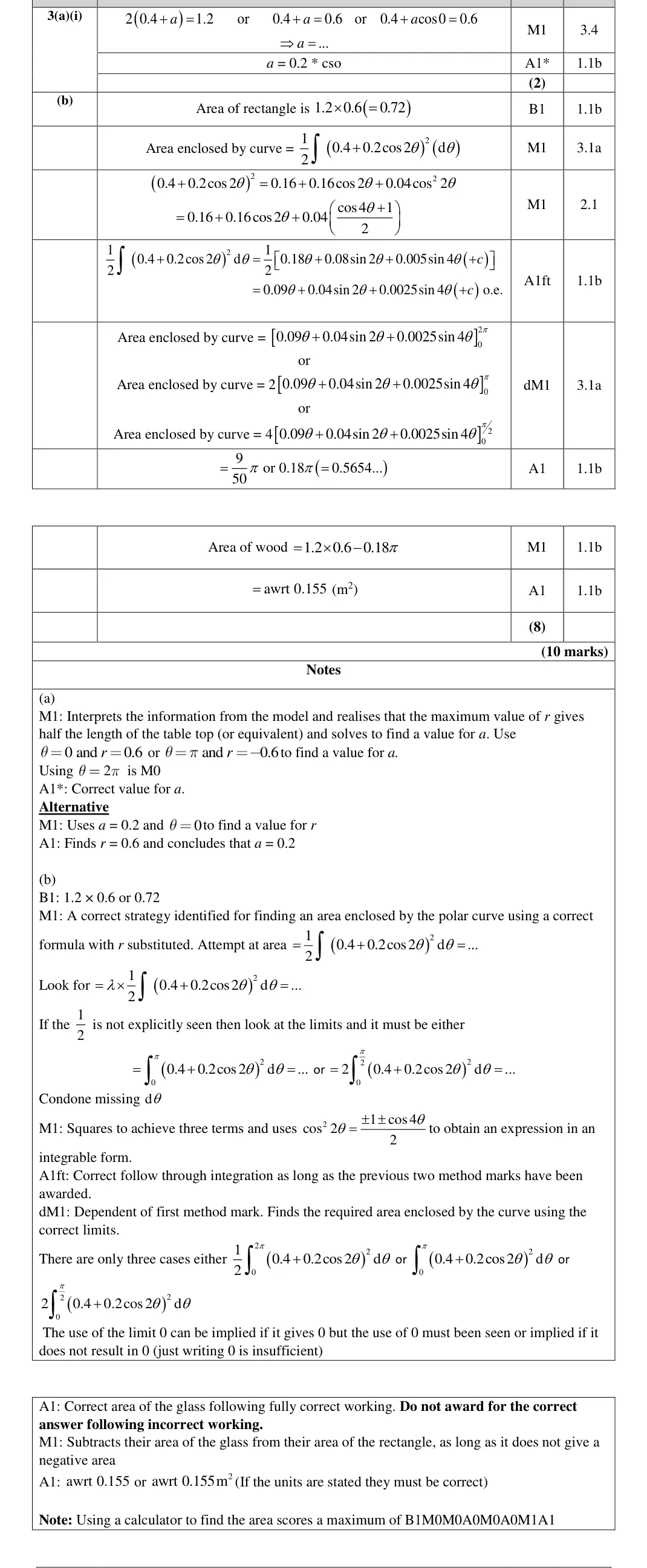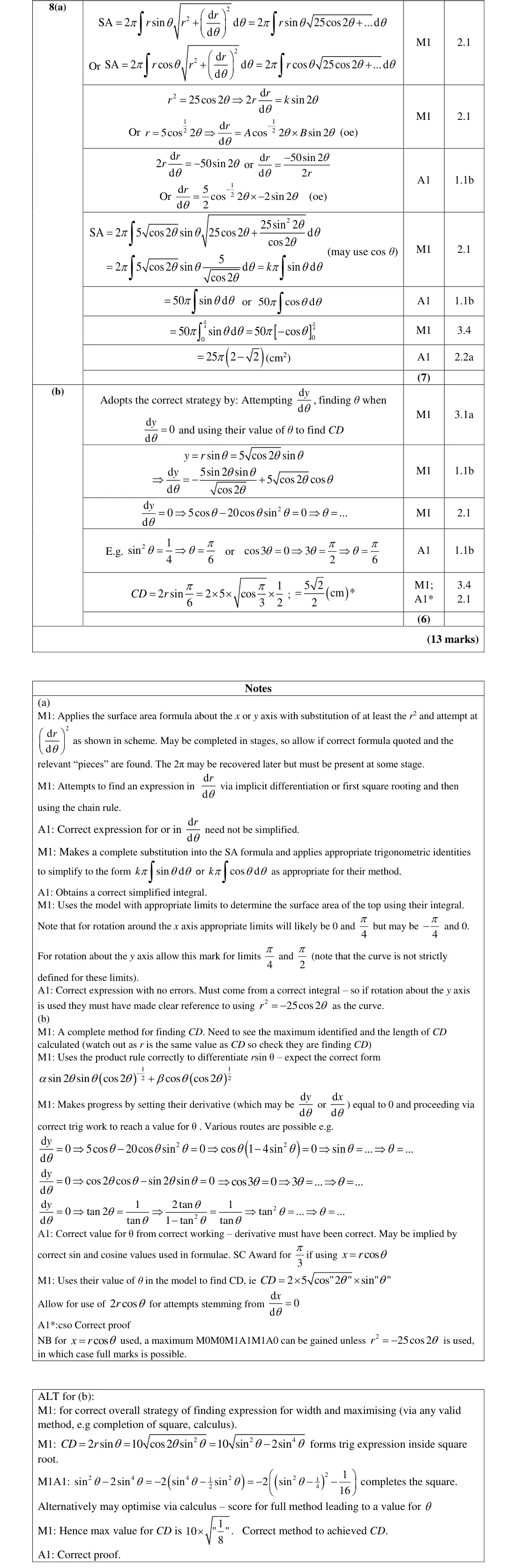
Mark scheme (whole question; this part is marked with the orange bar)
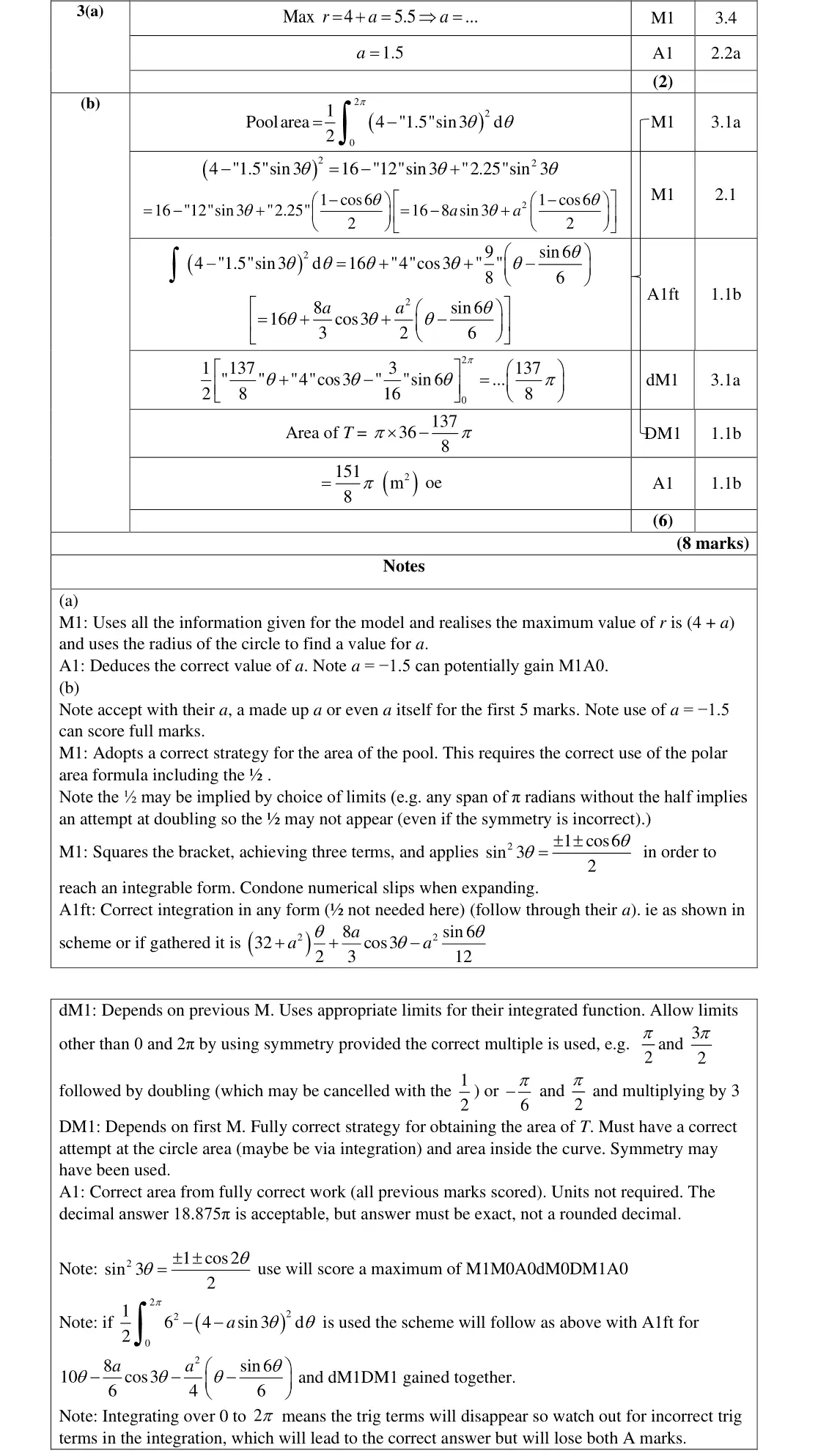
Examiner's comment
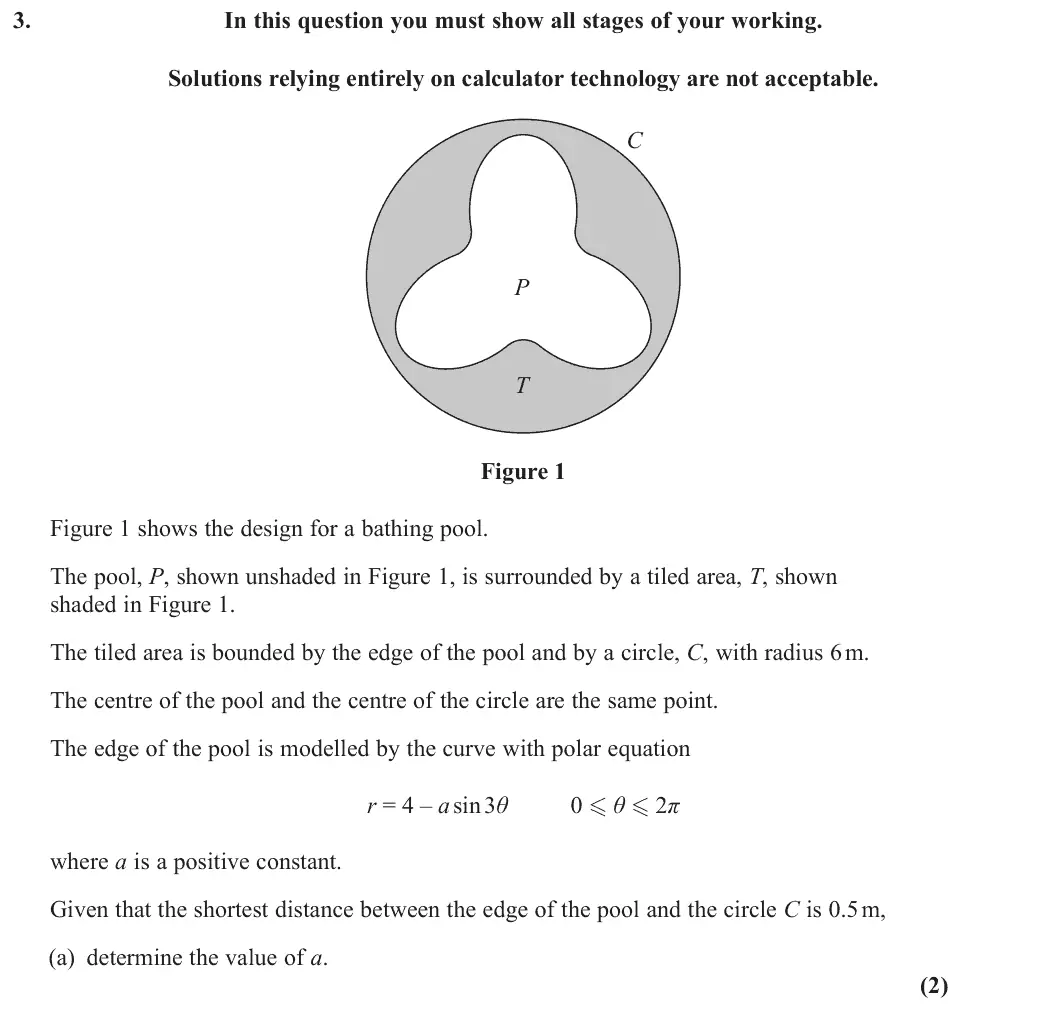
While generally the polar work was very well done in this question, understanding the context at the start caused a few difficulties with many unable to write down the correct value for a. Part (a) proved surprisingly challenging for candidates, in what was not anticipated to be a difficult part. Solutions often did not consider the extreme values of sin 3 theta or tried using incorrect values of theta to proceed. Common incorrect values for a were 1.5 - (which could gain the method mark) and 3.5 ( ) 4 0.5 = - , but various other incorrect values also were seen, for instance some candidates did not take account of the either the 0.5m gap, yielding 6 4 a = so 2 a = The strategy involved in part (b) subtracting the area enclosed of the polar curve obtained by integration from the area of the circle was well understood, and the approach to the integral was carried out correctly by most. Slips in working or inappropriate limits accounted for most errors made. There were only a small number of solutions where squaring was not seen, did not produce three terms, or where the double angle formula was not used to get to a function of 6 theta . Early coefficient slips in expanding meant the A1ft was forfeit but most showed a correct method integration for integration via use of the double angle identity. The most successful solutions then chose the limits as 0 to 2 pi for the whole area but other pairs of limits using symmetry were attempted, with varying levels of success – there were pairs that were not appropriate, such as 0 to pi followed by doubling. Some combinations such as 2 - to 2 and doubling, or 0 to 2 3 and tripling, were possible but often only served to increase the amount of work and propensity for error. Candidates should consider whether the use of symmetry approaches make the work involved any simpler. Most candidates went to find the area of the circle and subtract the area of the curve from it, though a few did omit this final step. With the vast majority having gained the first method, there were relatively few cases where the final M was lost despite remembering this step. It was pleasing to see candidates giving exact answers, with only very few resorting to decimal work, but careful checking was needed when correct answers were found since errors in the trigonometric terms cancelled over the full circle meaning inaccuracies in these terms would still lead to the correct answer but in fact lost both A marks.
Key points from the mark scheme and examiner's report
- greatest r is 4 + a = 6 − 0.5, so a = 1.5
- a = −1.5 scores M1 only
- common wrong answers 3.5 or forgetting the 0.5 m gap