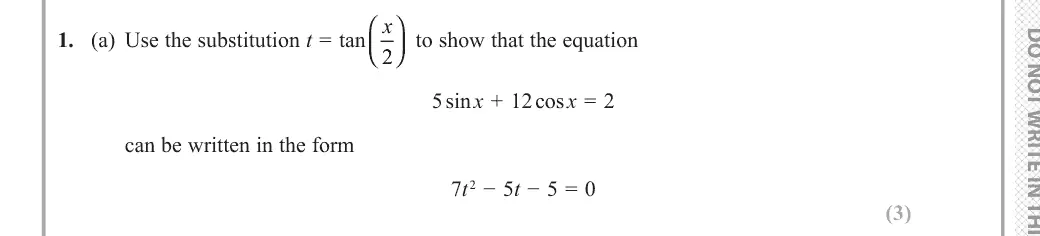
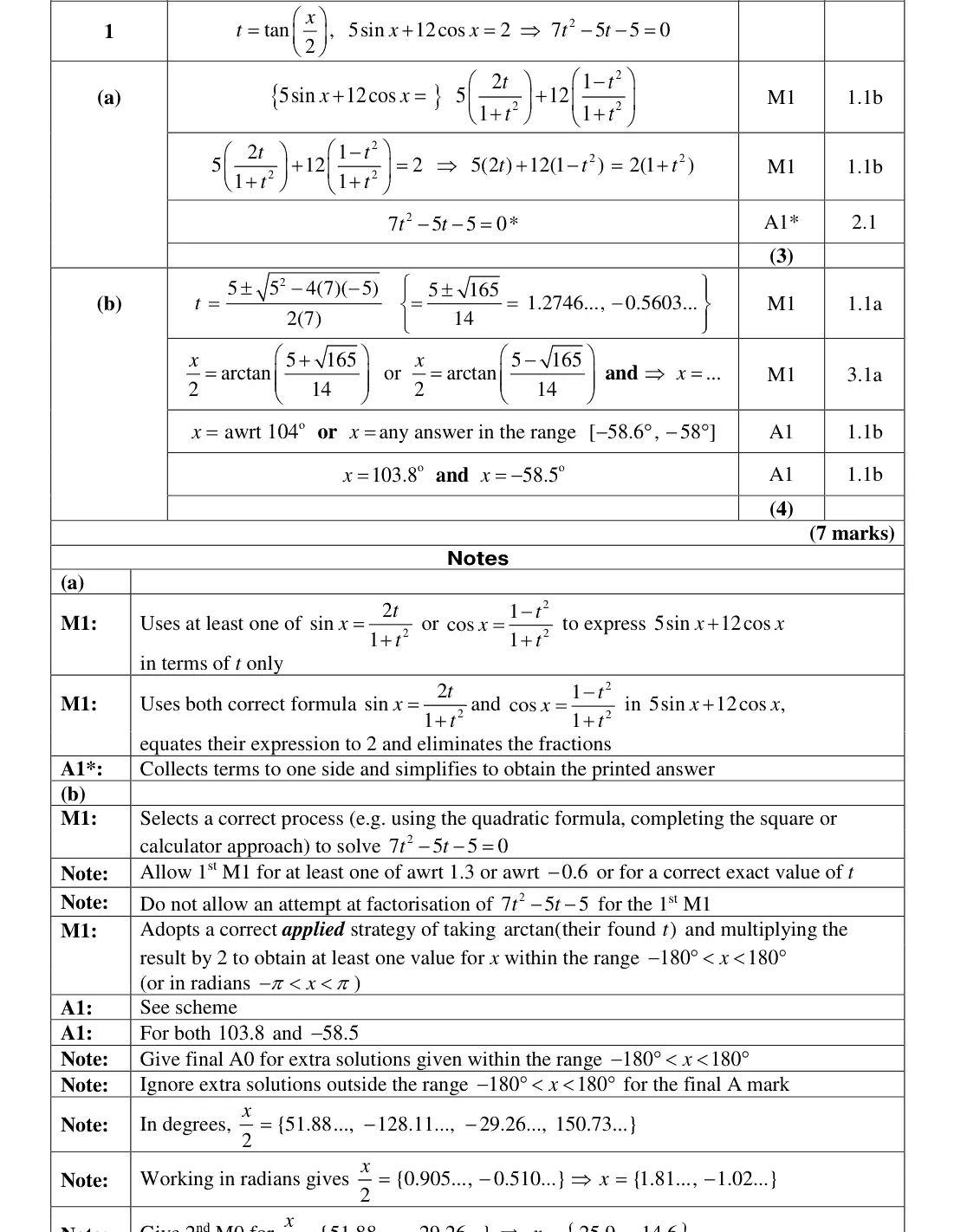
Examiner's comment
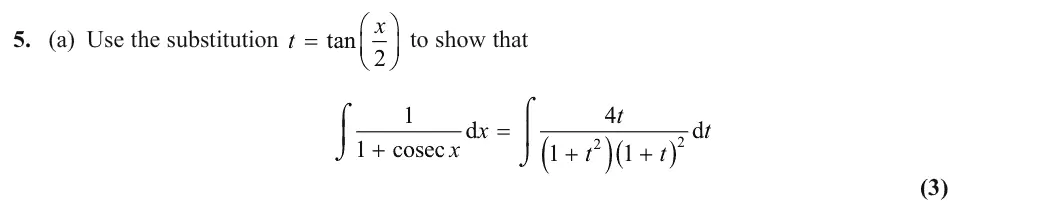
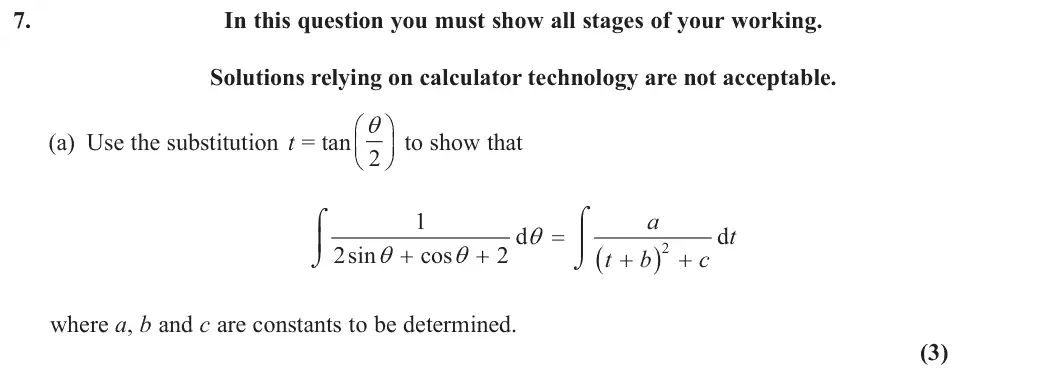
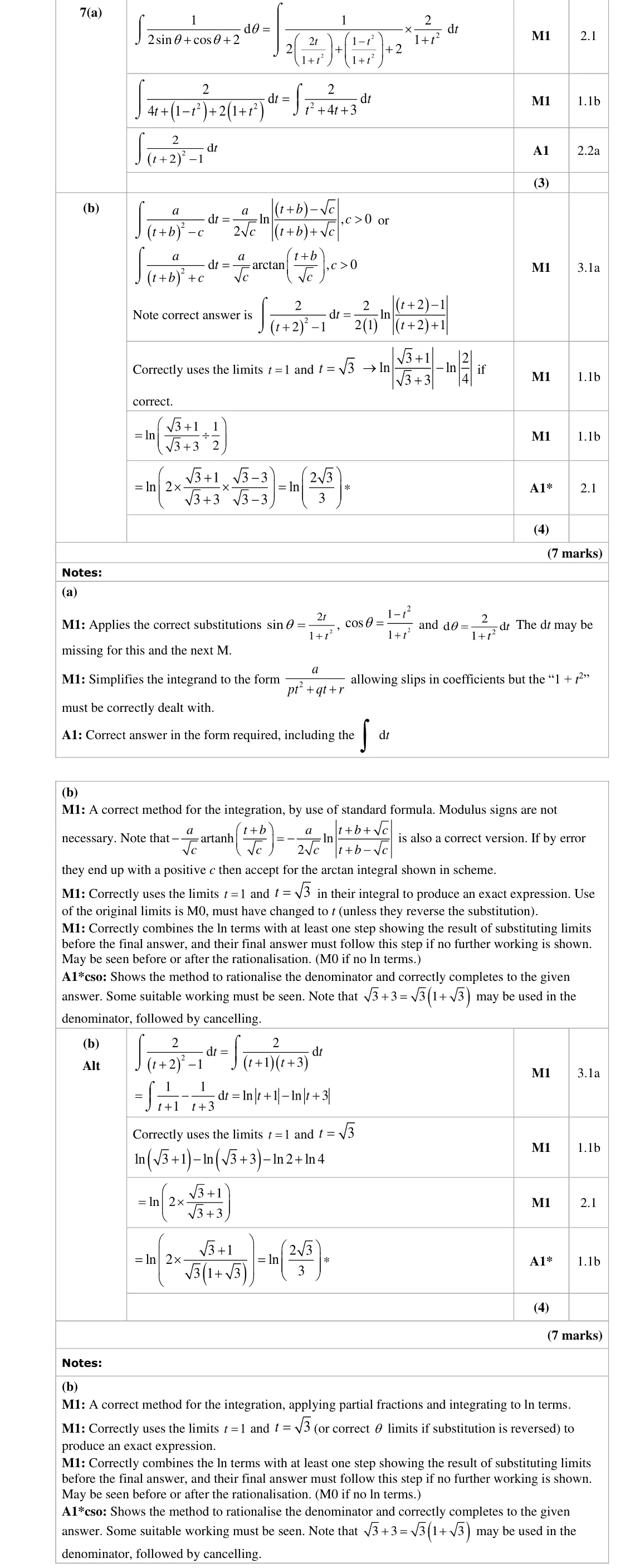
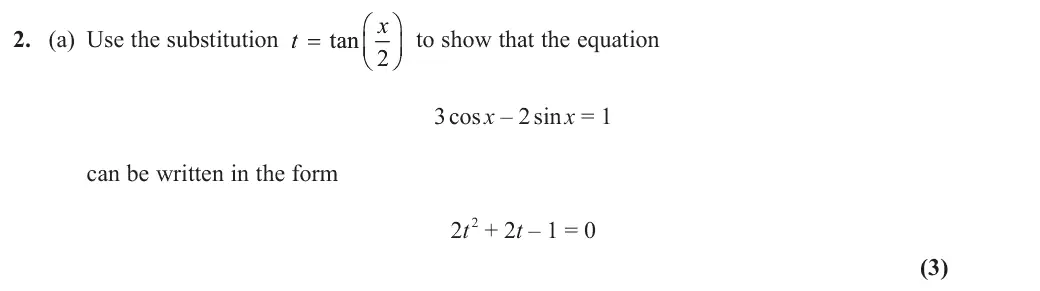
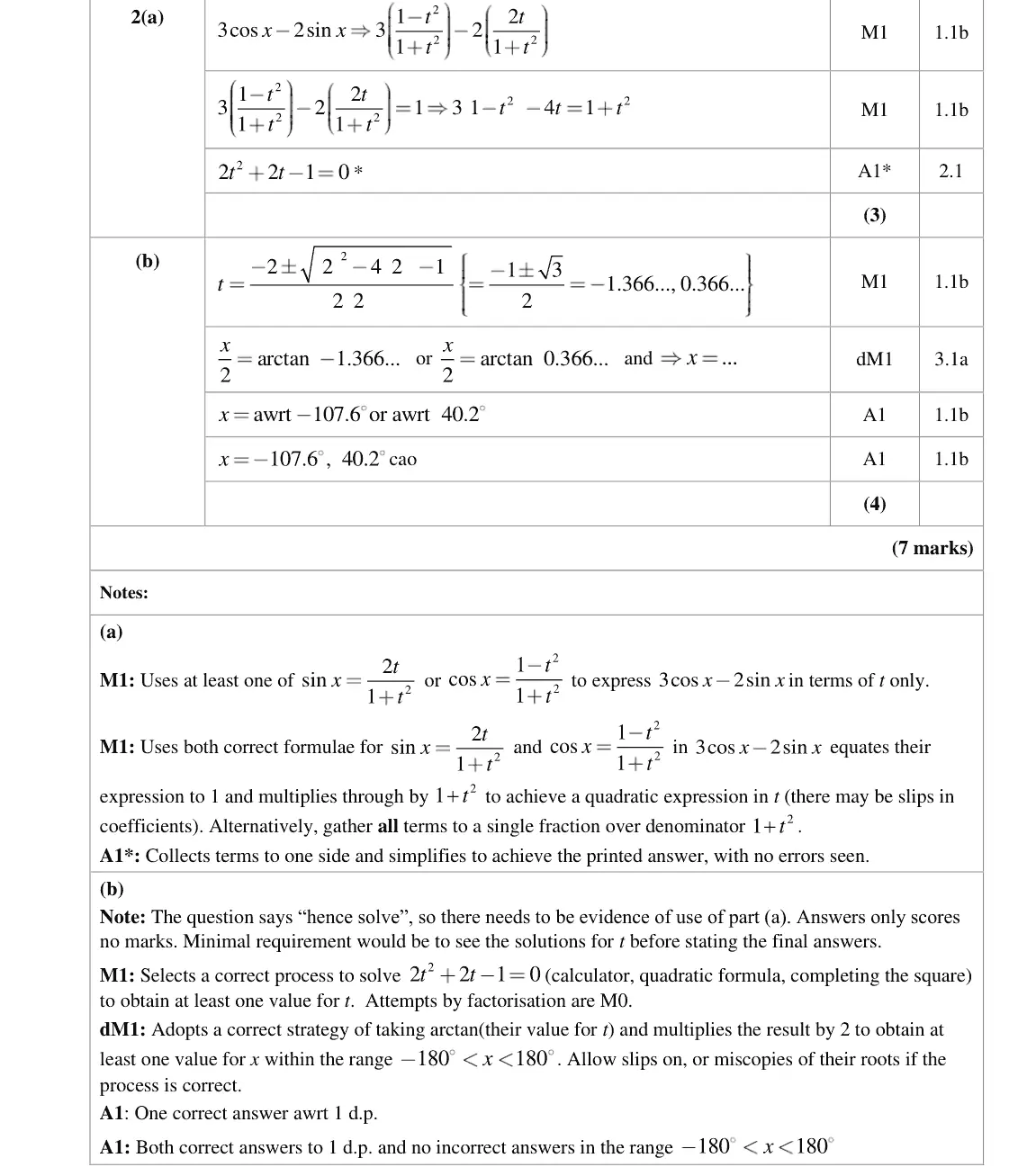
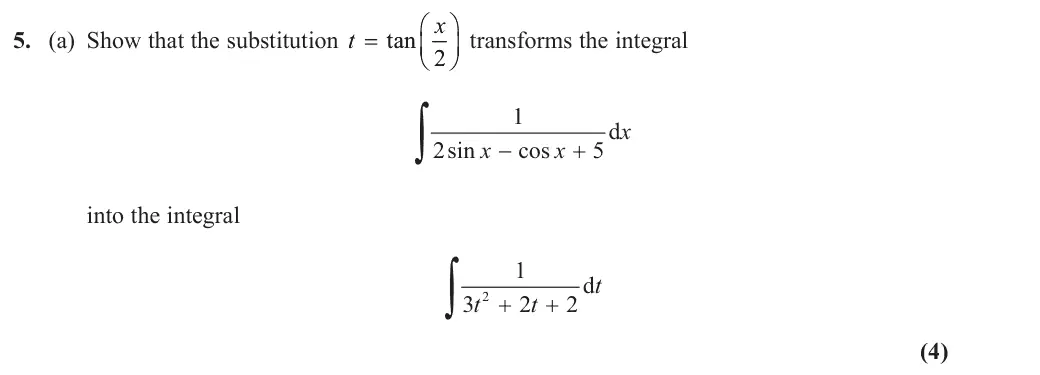
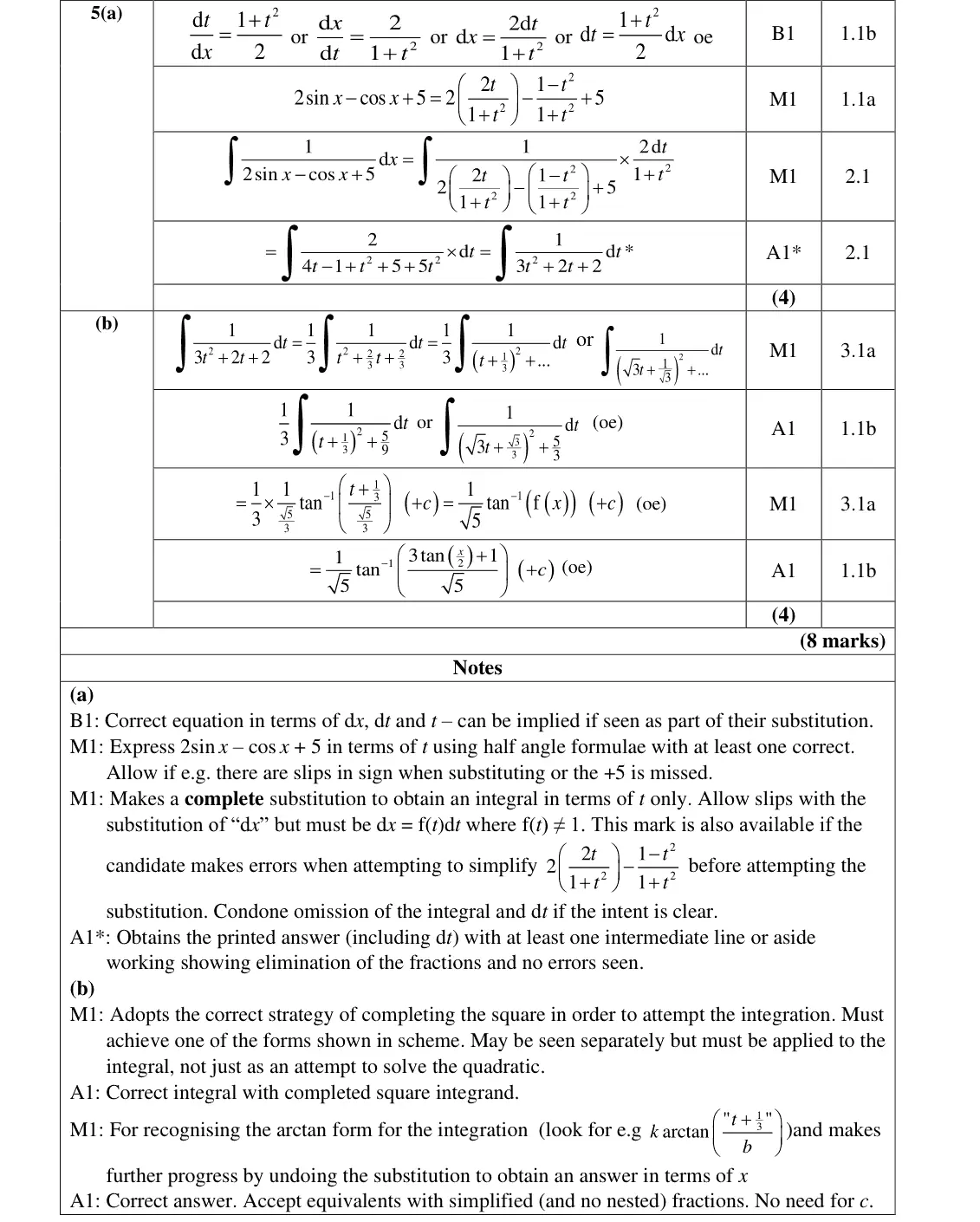
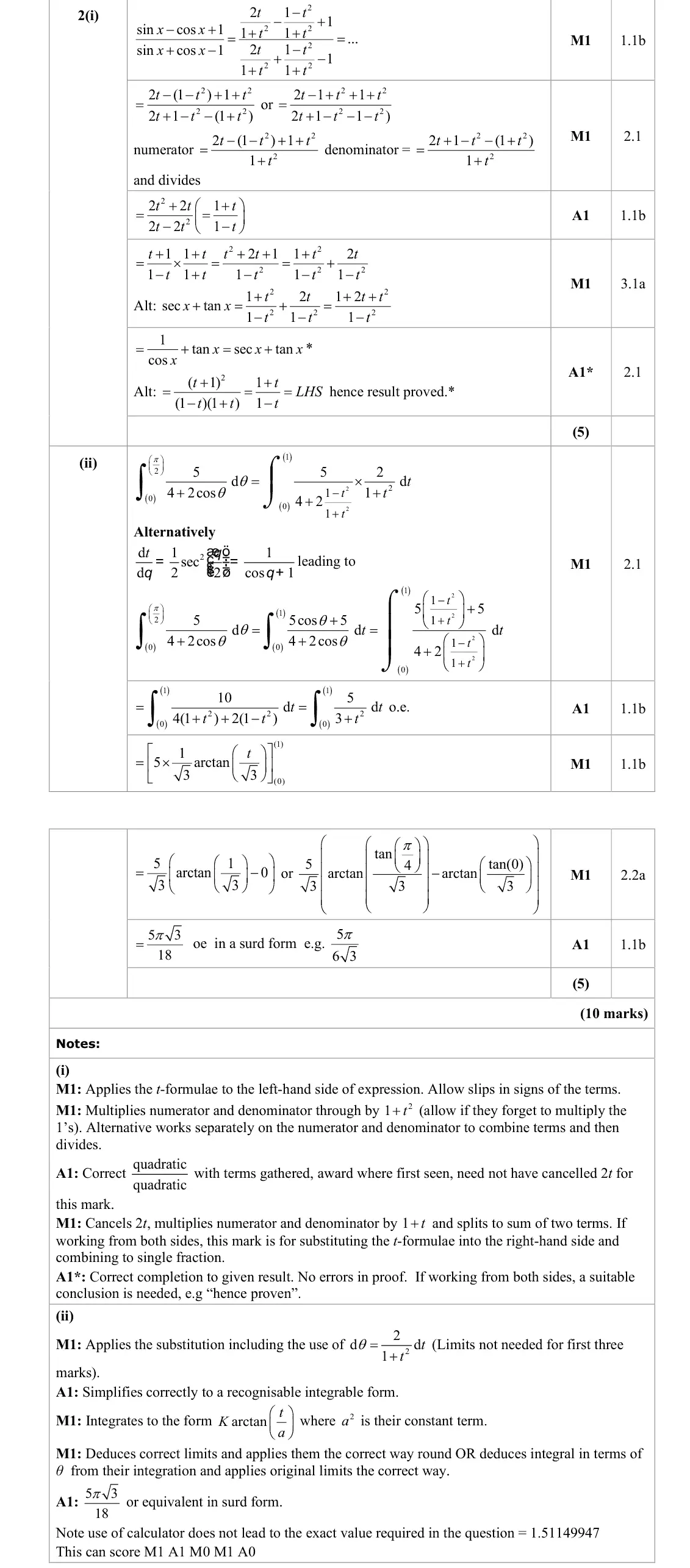
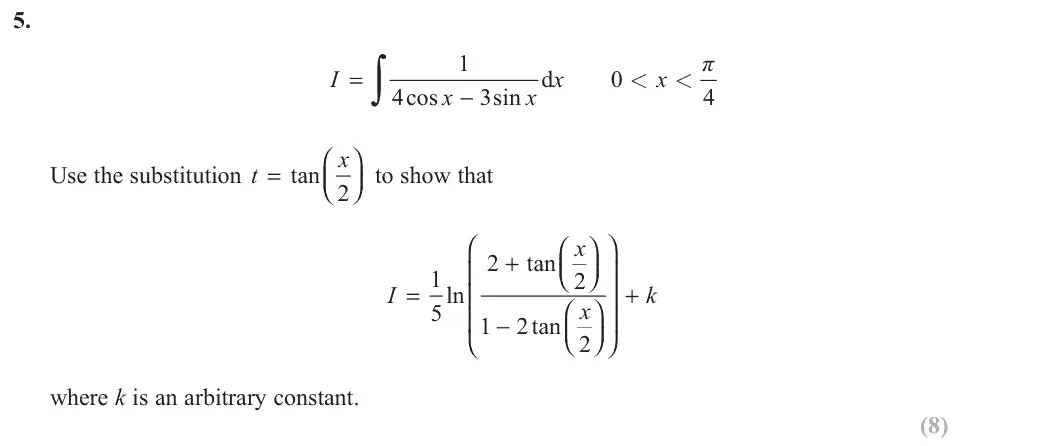
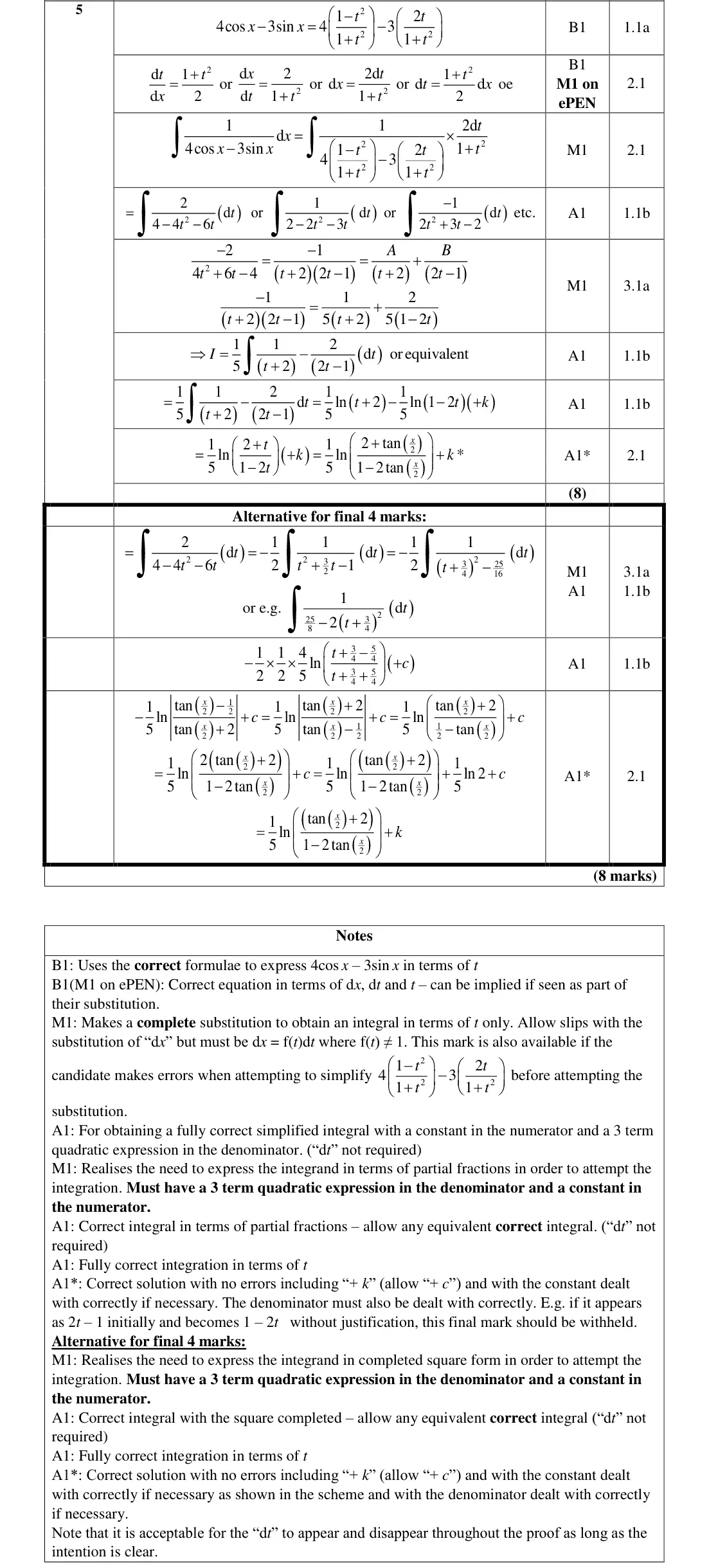
The main problem with this question seemed to be space. Most candidates clearly have not memorised the results for this half angle formulae and spent the first page of the answer booklet deriving them. That left only one page to complete both parts. Alternatively, an excessive number of lines of working simplifying the integral in part (a) pushed the solution quickly on to the second page, and many then tried to cram a lot of work into the margins, or erratically across the page, others used other pages of the answer booklet, while many others used additional answer booklets. The use of additional booklets is preferable to writing answers in other questions on the script. It is unfortunate that only two pages were assigned to this question, and is a lesson taken on board. The question itself, once results were derived, proved again highly accessible with only the final mark providing a degree of discrimination, largely due to the level of working required to establish a given answer – again. For part (a) most candidates made the correct substitutions, albeit after some hefty work to derive them sometimes. Where errors were made it was usually as some that did not remember the substitutions made errors when deriving them, with the d theta term causing most problems. Some left the substitution of the d theta until later in the proof, working with mixed variables to begin with, but generally finally managed to get to an integral in t only. Incorrect sin theta and cos theta identities did occasionally arise (e.g. 1 - t^2 used in the denominator of cos theta , or mixed-up sine and cosine identities), but these were not common. Simplifying to the quadratic denominator and completion of the square were carried out very well by the majority, and most did achieve the correct expression. The last mark was occasionally lost, either for forgetting the dt in the integral or the integral sign, or because they thought providing the values of a, b and c was sufficient.