Examiner's comment
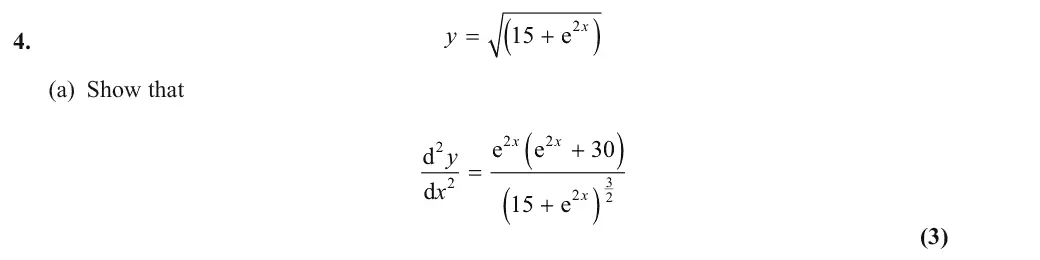
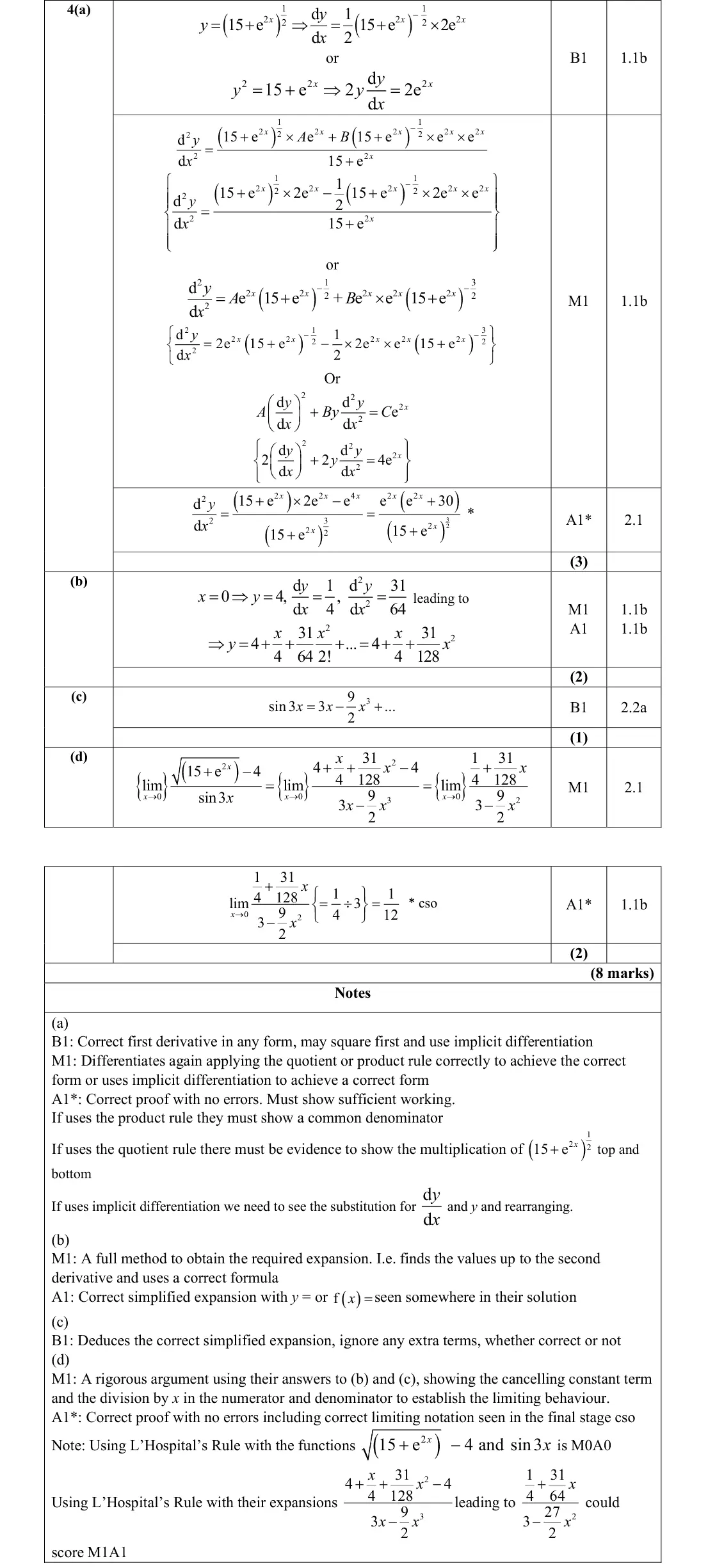
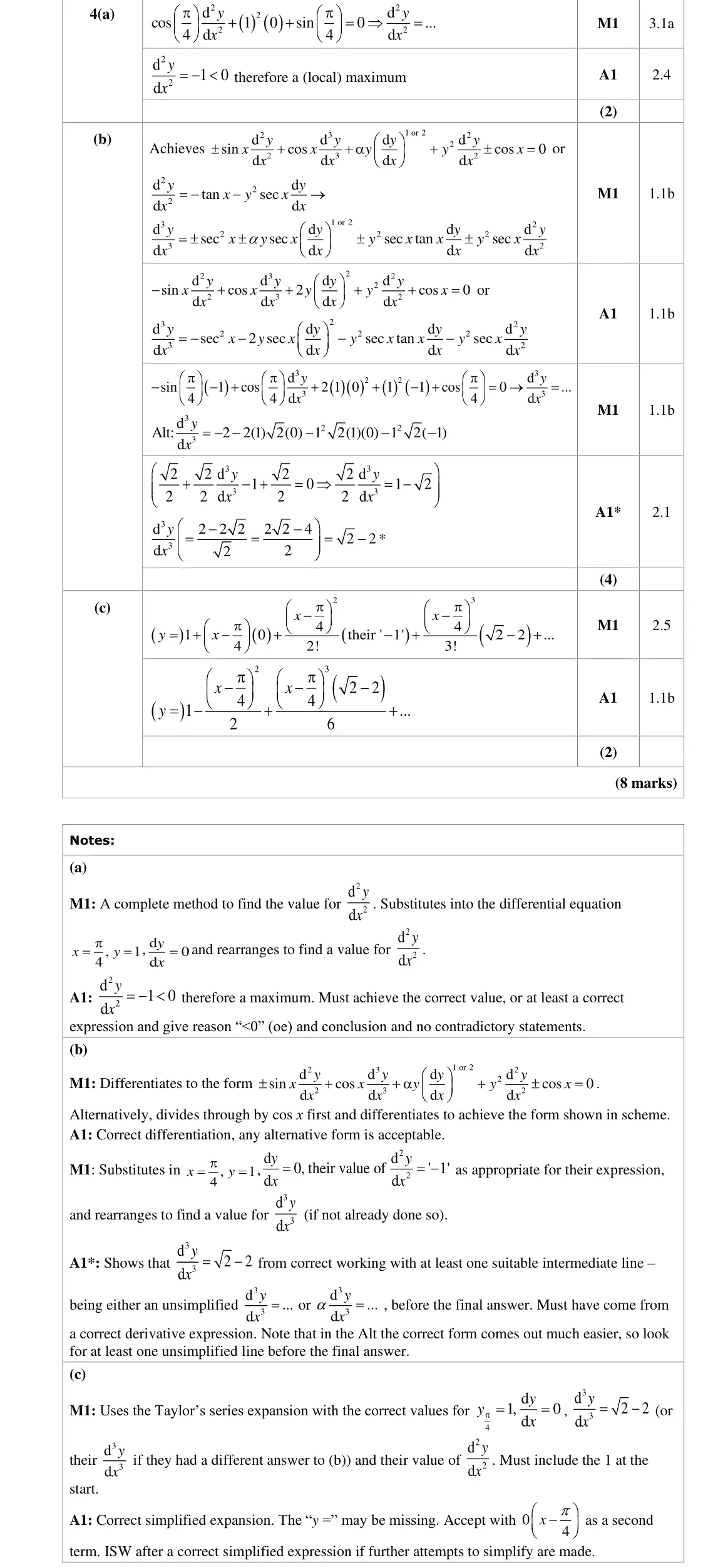
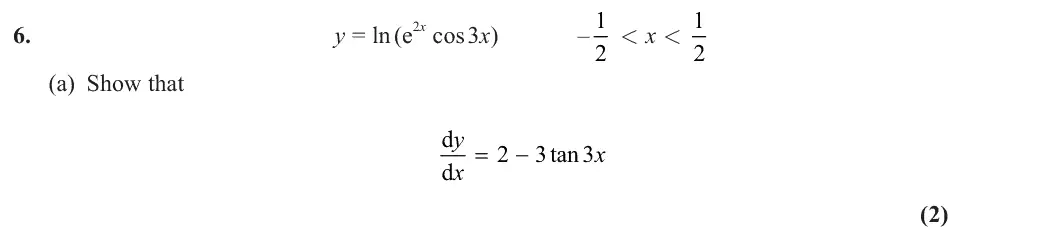
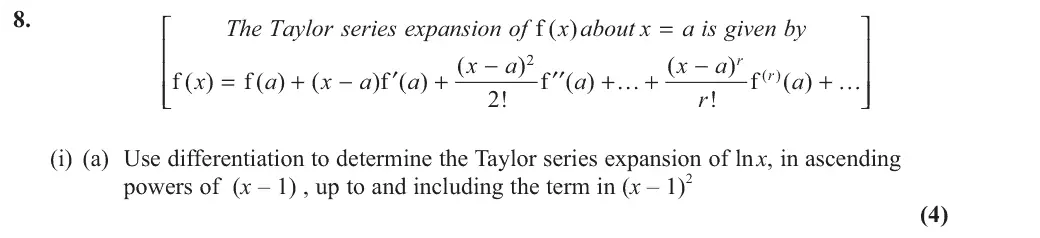
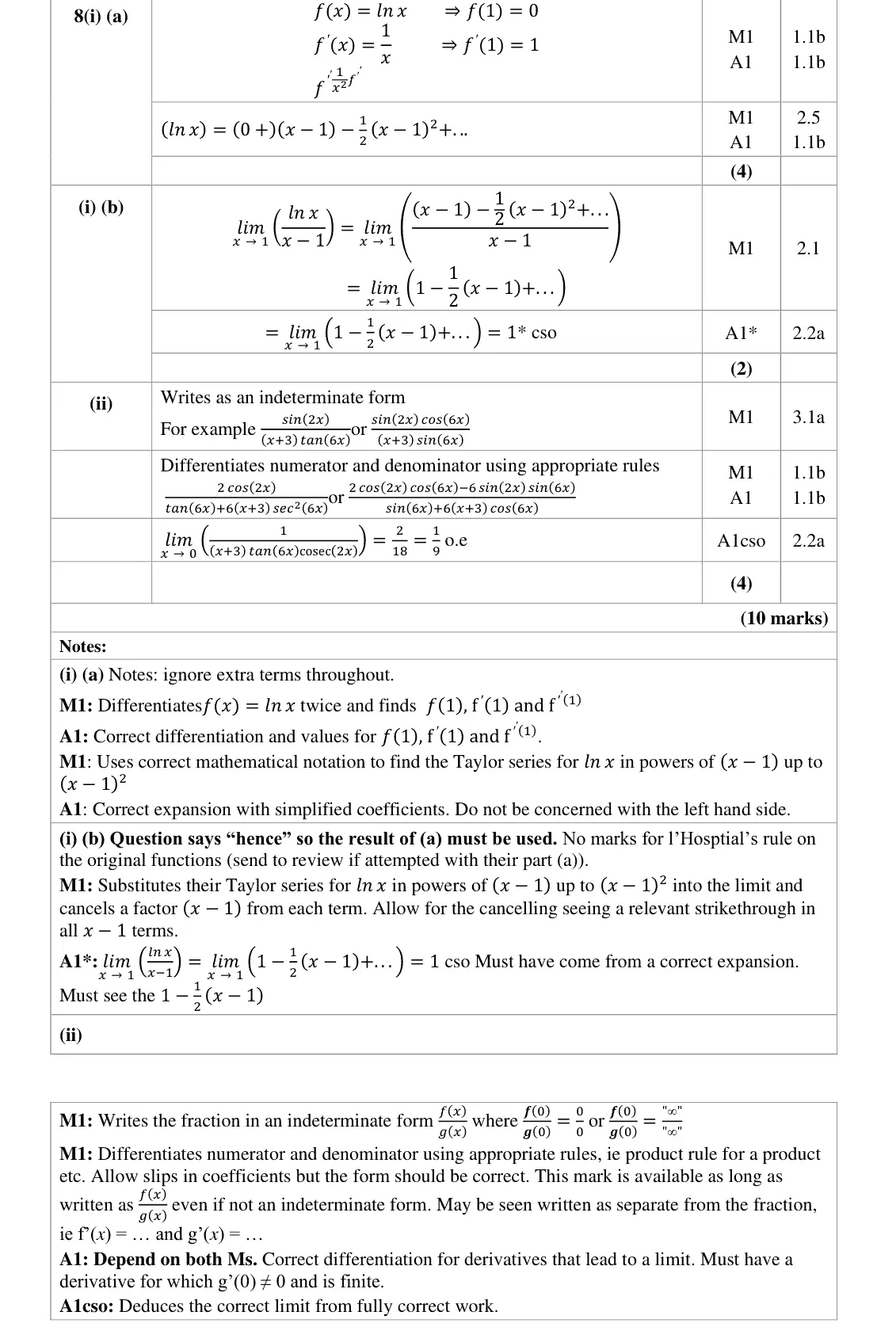
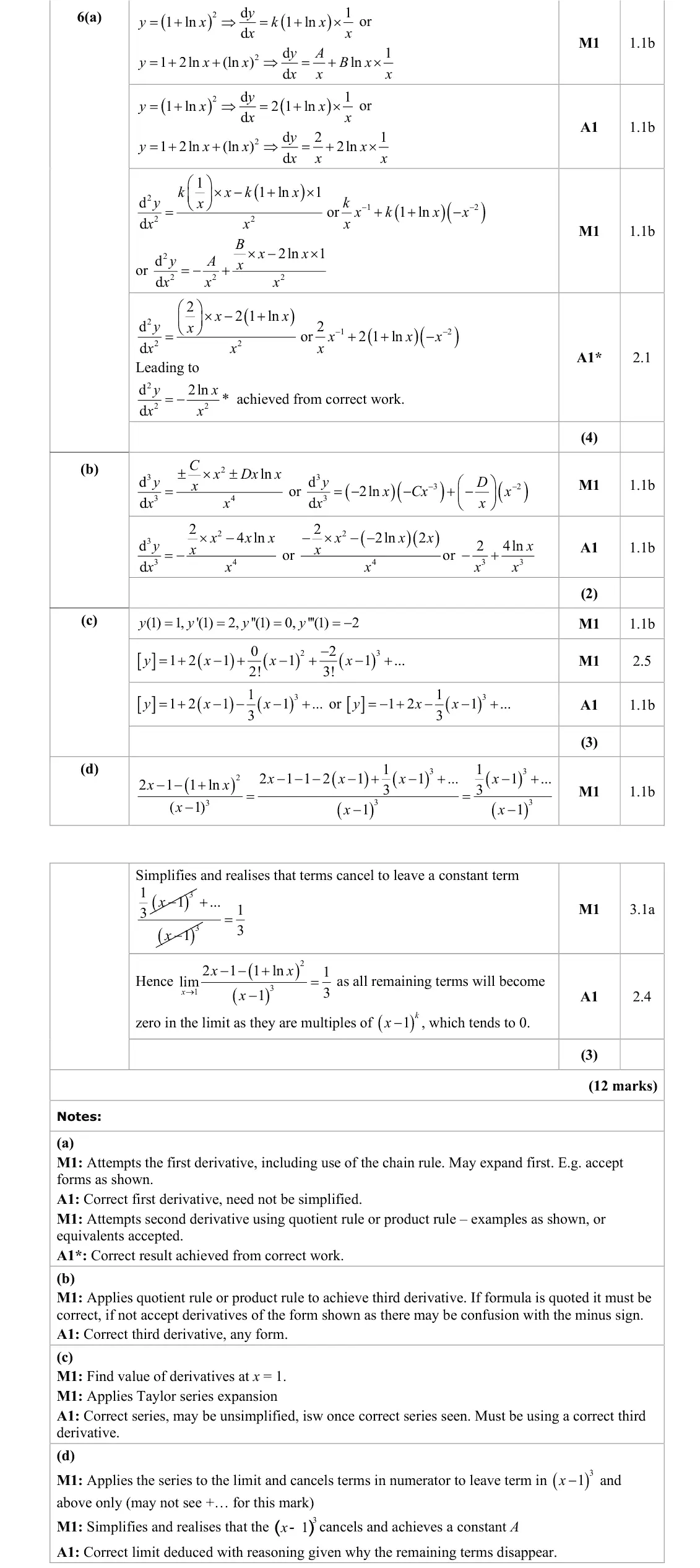
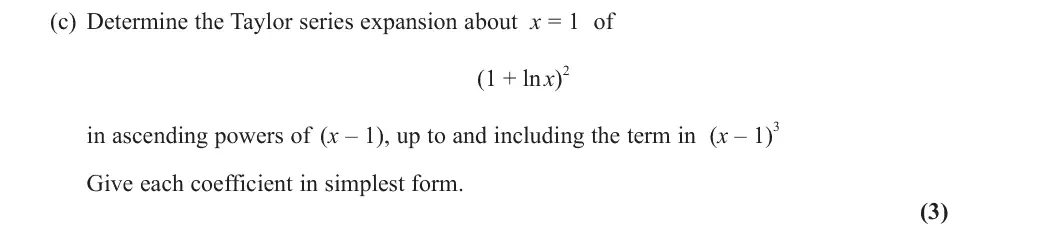
Over half of the candidates were able to score full marks for this question, by far the most common score. The rest generally scored in the range 4-8 marks, with only 5% scoring fewer than this. Part (i)(a) of this question was very generously given 4 marks and most candidates were able to obtain all of them with careful work showing their first and second derivatives evaluated at x = 1. Some candidates did not show f(1) and others substituted values directly into their Taylor’s series formula, which is risky strategy if errors are made when dong this as they may lose method marks if incorrect. Part (i)(b) also saw many successful attempts, though some candidates were careless with details for a “show” question and should be reminded to show every stage in their working. The most common mistake was not simplifying both terms correctly, but only cancelling the first term, while some lost the factor 1 2 in the second term. Also, candidates need to note that “hence prove that” means the previous result in (a) must be used, but some did not see (or ignored) the “hence” in the question and tried to use L’Hopitals rule with the original function to prove the limit, scoring no marks. Part (ii) was more of a differentiator, with finding a relevant indeterminate form elusive to some. However, many candidates did succeed in writing the given expression in a relevant indeterminate form and then attempting the differentiation. Though many were successful in this, some arrived at the “correct” answer via incorrect differentiation and this led to the loss of the final two marks. Some candidates persisted in differentiating the original denominator given in the question, and did not arrive at a limit, while others tried taking the “x + 3” into the numerator, so did not achieve a relevant form. A few mistook cosec as the reciprocal of cosine. The most successful strategy here was to rewrite in terms of sine and cosine functions, and some candidates diligently checked that the form evaluated to a quotient of zeroes. The sine and tangent approach was also common, but was more prone to error in the differentiation, usually losing the “6”. There were some excellent answers, with many candidates showing fluency with L’Hopital’s rule and appropriate rules of differentiation.