Examiner's comment
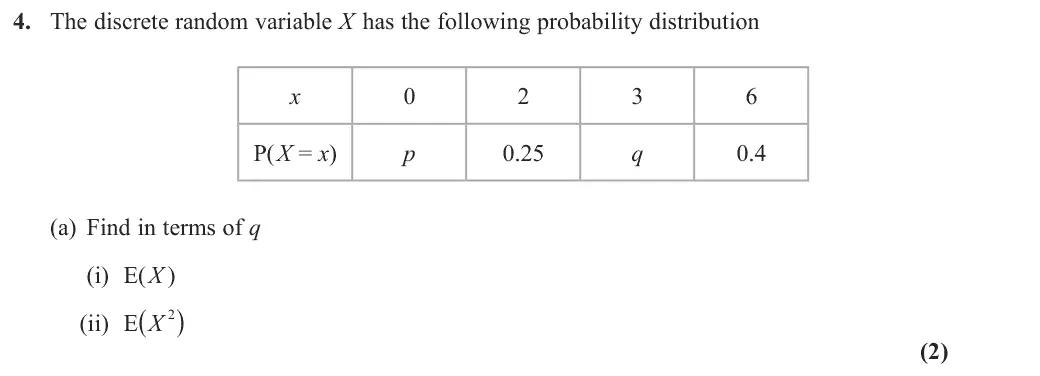
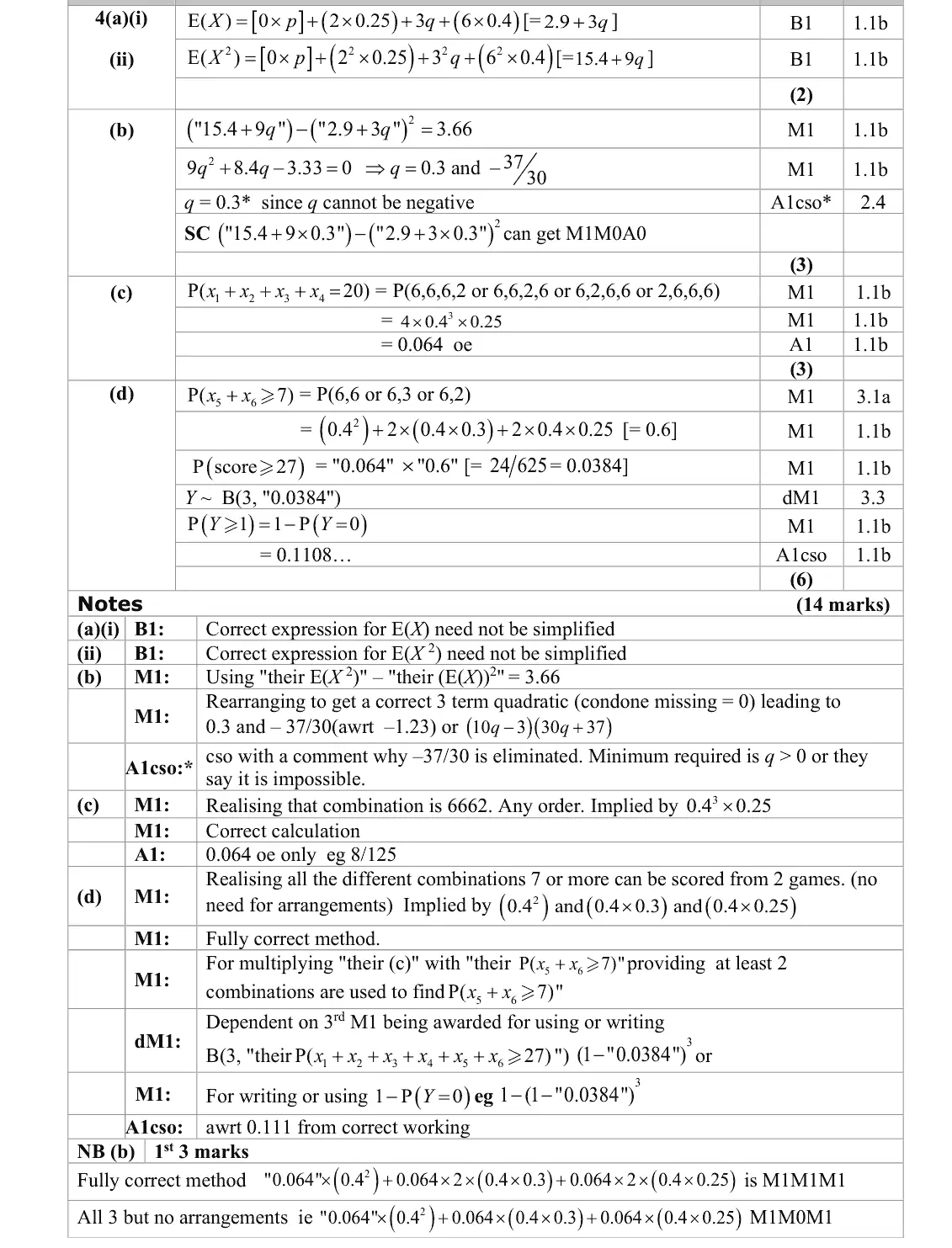
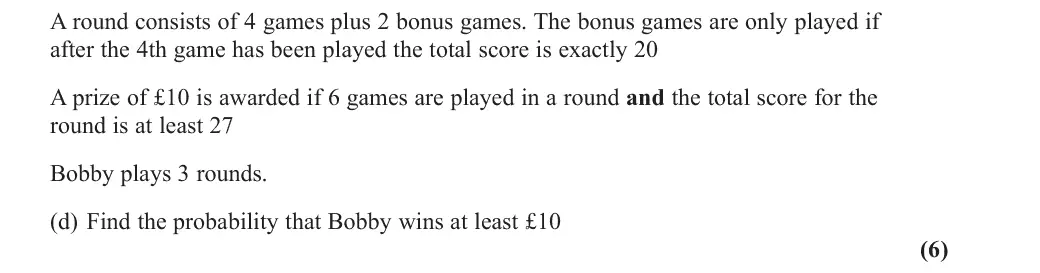
This was a standard question about discrete random variables, expectation and variance. Part (c) proved to be a good discriminator with few candidate gaining full marks. Students were generally able to identify the required combinations of 6662 leading to a total of 20 from the four games. However, many students did not consider the different arrangements of these scores leading to the very common incorrect answer of 0.016 Although part (d) was more challenging, students still, generally, made a good attempt As in part (c) many students omitted to include the different combinations leading to a total of 7 or more. Common incorrect answers for the first two marks were • identifying 6, 2 or 6, 3 but omitting 6, 6. • ignoring the 2 different arrangements of 6, 2 and 6, 3 or incorrectly including 2 arrangements of 6, 6. • mistakenly adding (rather than multiplied) the probability that the total of the first four games was 20 (their answer to part (c)) to their probability the next two games had a total of 7 or more. Once the probability of scoring a total of 27 or more had been found a large number of students simply multiplied their probability by 3 rather than using (and stating) a binomial model with n = 3 and their p value. Those students who showed all of their steps including multiplications and the new model were often able to pick up at least half of the available marks, even when they had made errors.