Oct 2020: A level Paper 4C: Further Mechanics 2

75 marks · 15 question parts · Question paper, mark scheme and examiner's report on Pearson's site

Question by question

QTopicMarksDifficulty
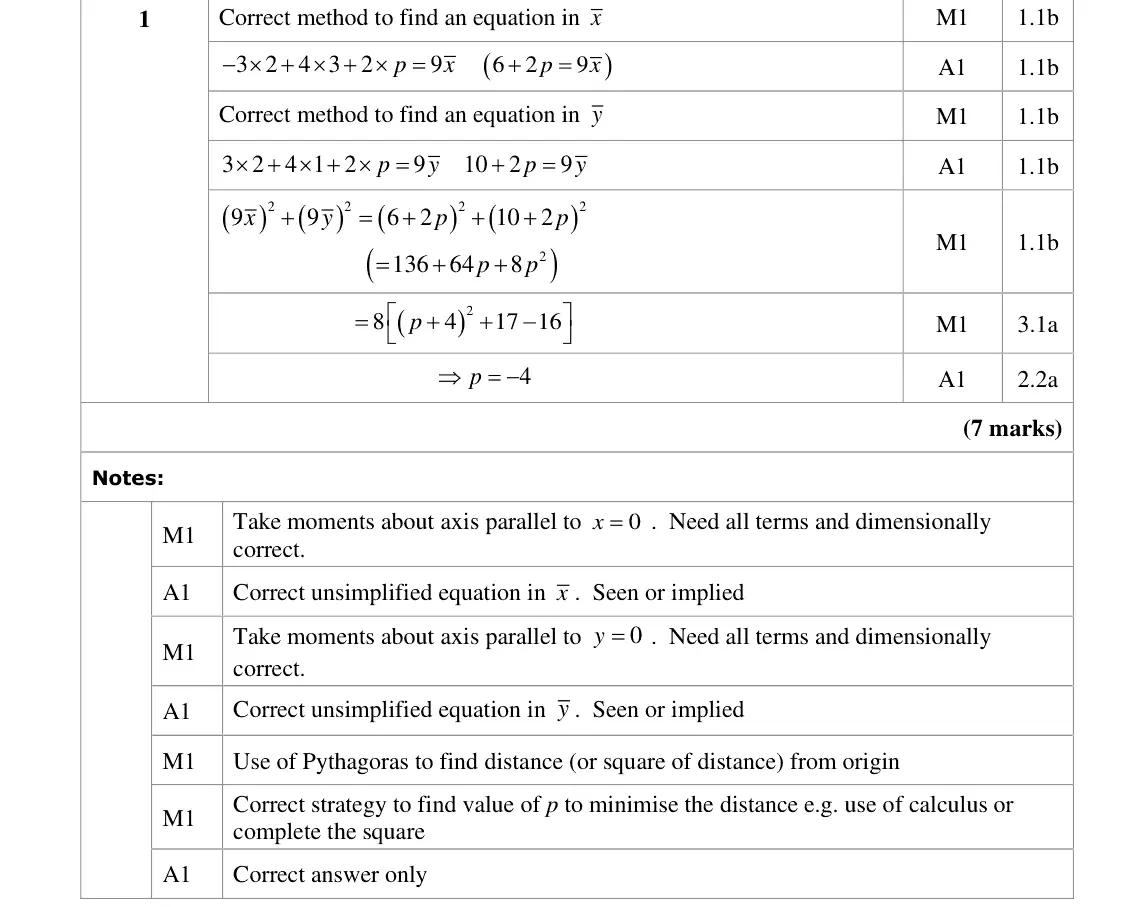
1 Centres of mass of plane figures 7 —
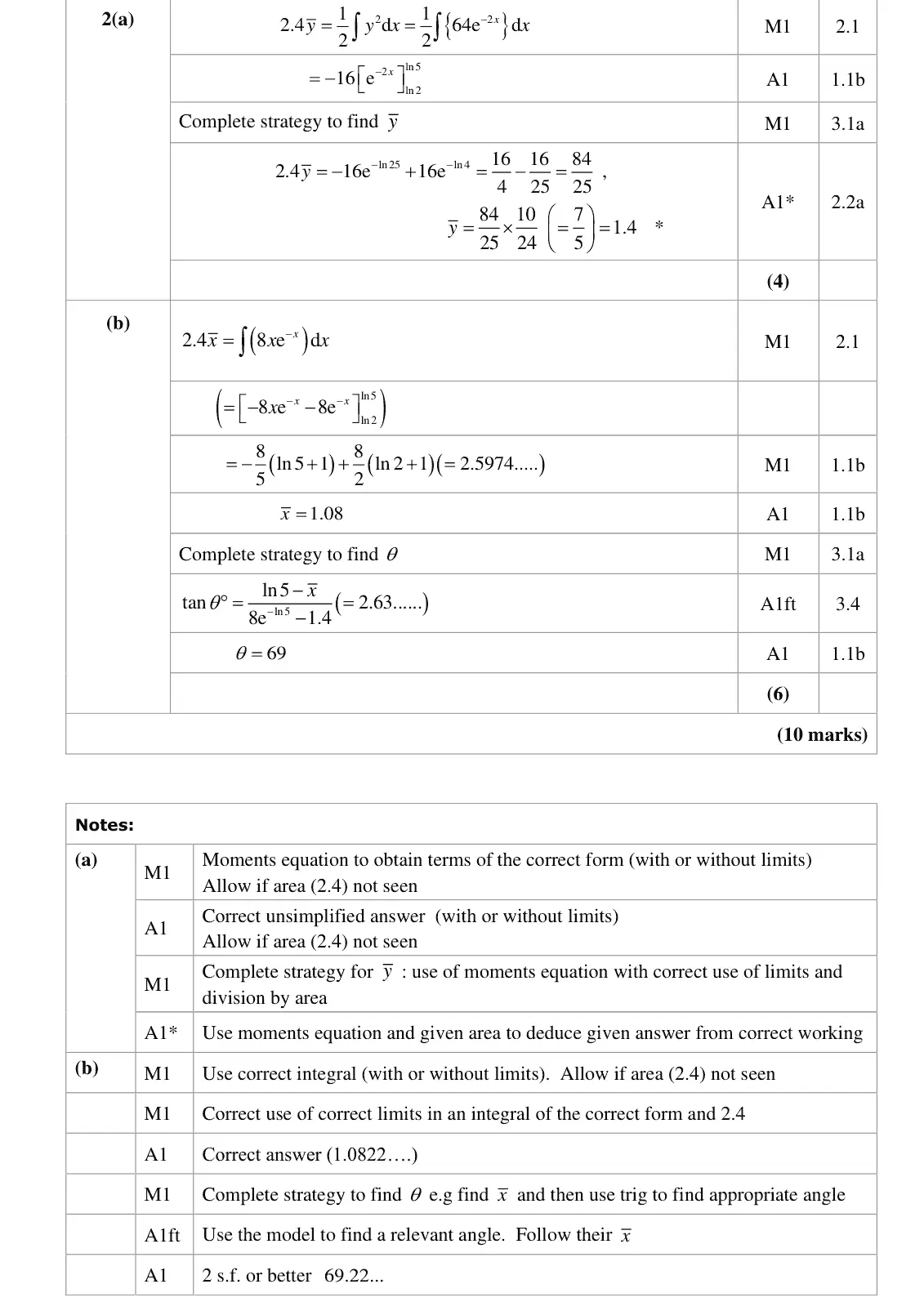
2(a) Centres of mass of rigid bodies, equilibrium, toppling and sliding 4 —
2(b) Centres of mass of rigid bodies, equilibrium, toppling and sliding 6 —
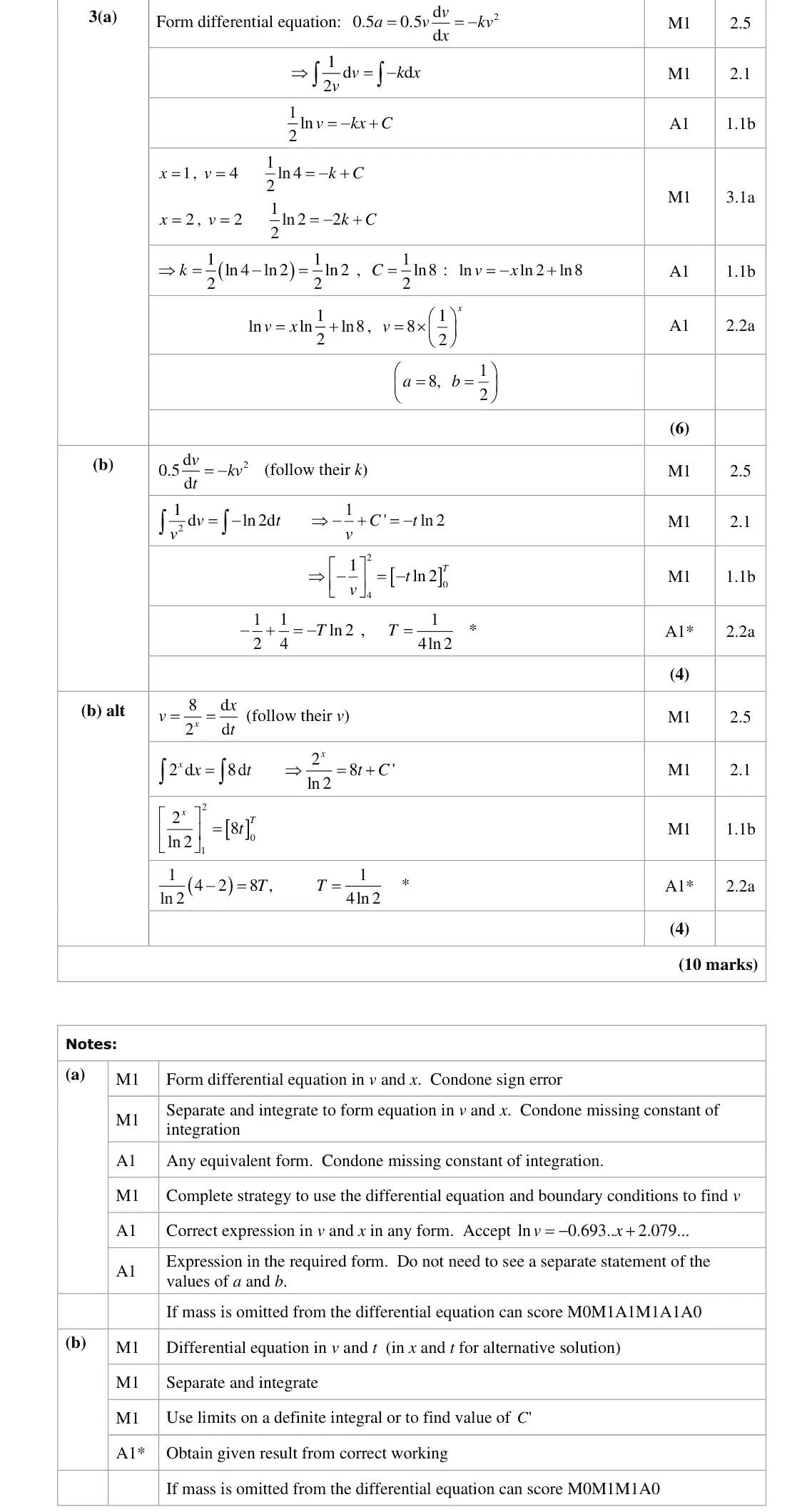
3(a) Further dynamics: variable forces and simple harmonic motion, Further kinematics: acceleration as a function of time, displacement or velocity 6 —
3(b) Further kinematics: acceleration as a function of time, displacement or velocity, Further dynamics: variable forces and simple harmonic motion 4 —
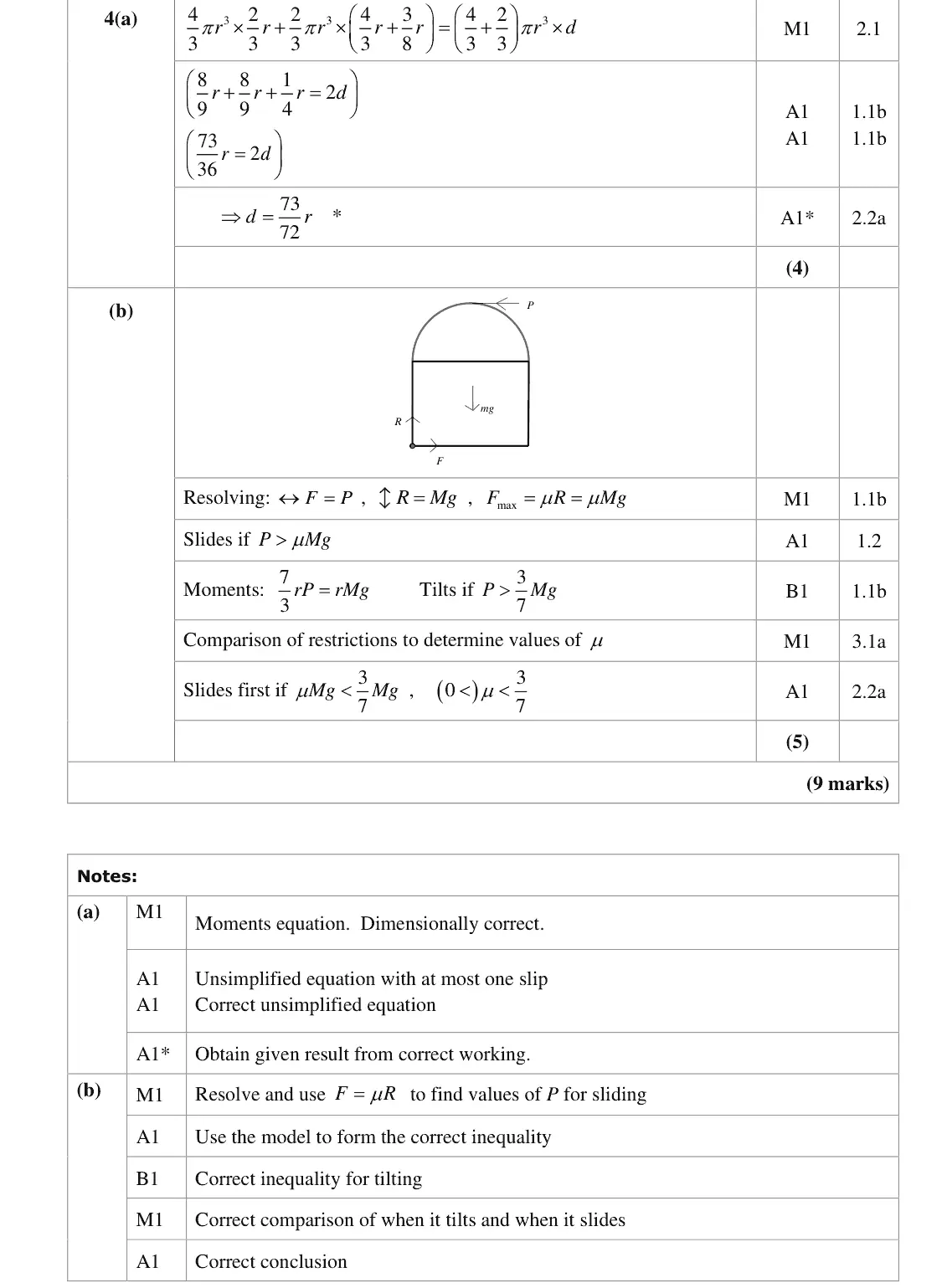
4(a) Centres of mass of rigid bodies, equilibrium, toppling and sliding 4 —
4(b) Centres of mass of rigid bodies, equilibrium, toppling and sliding 5 —
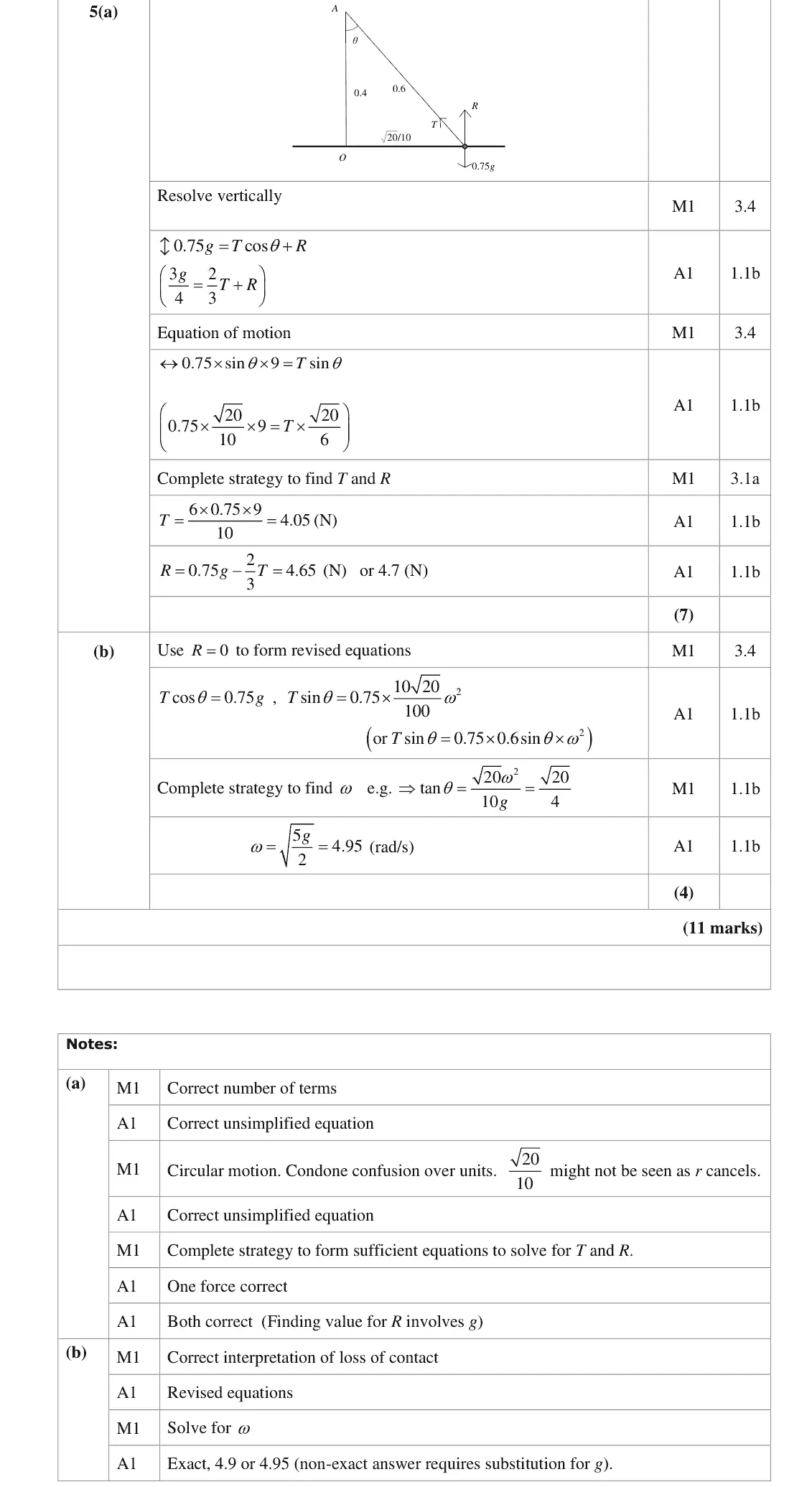
5(a) Motion in a circle: horizontal and vertical 7 —
5(b) Motion in a circle: horizontal and vertical 4 —
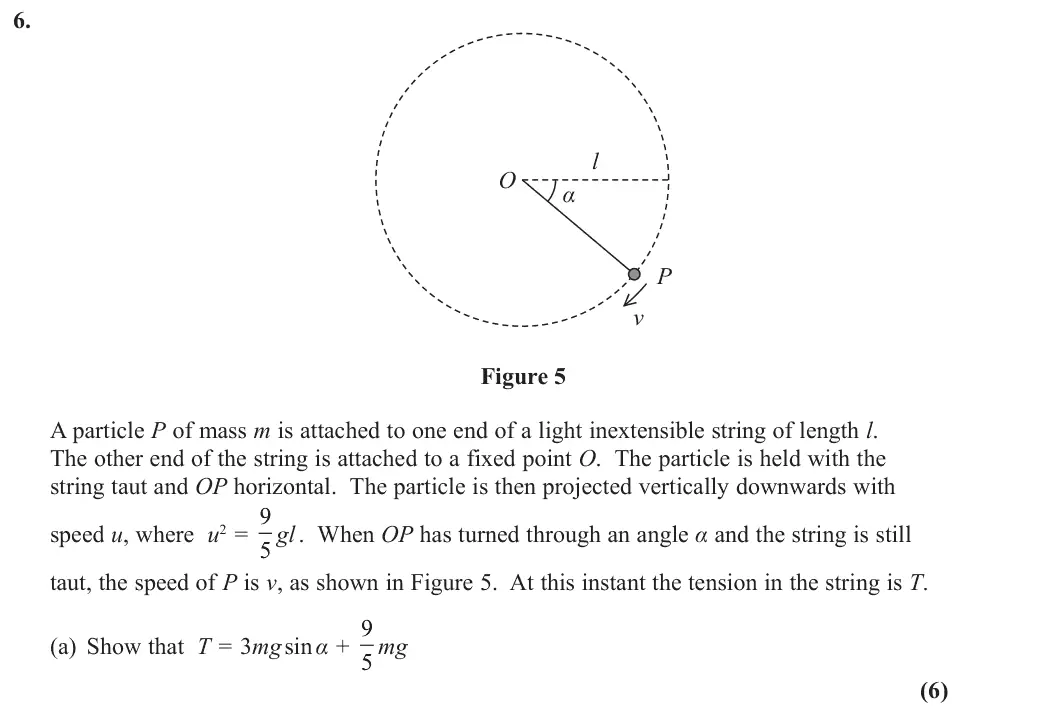
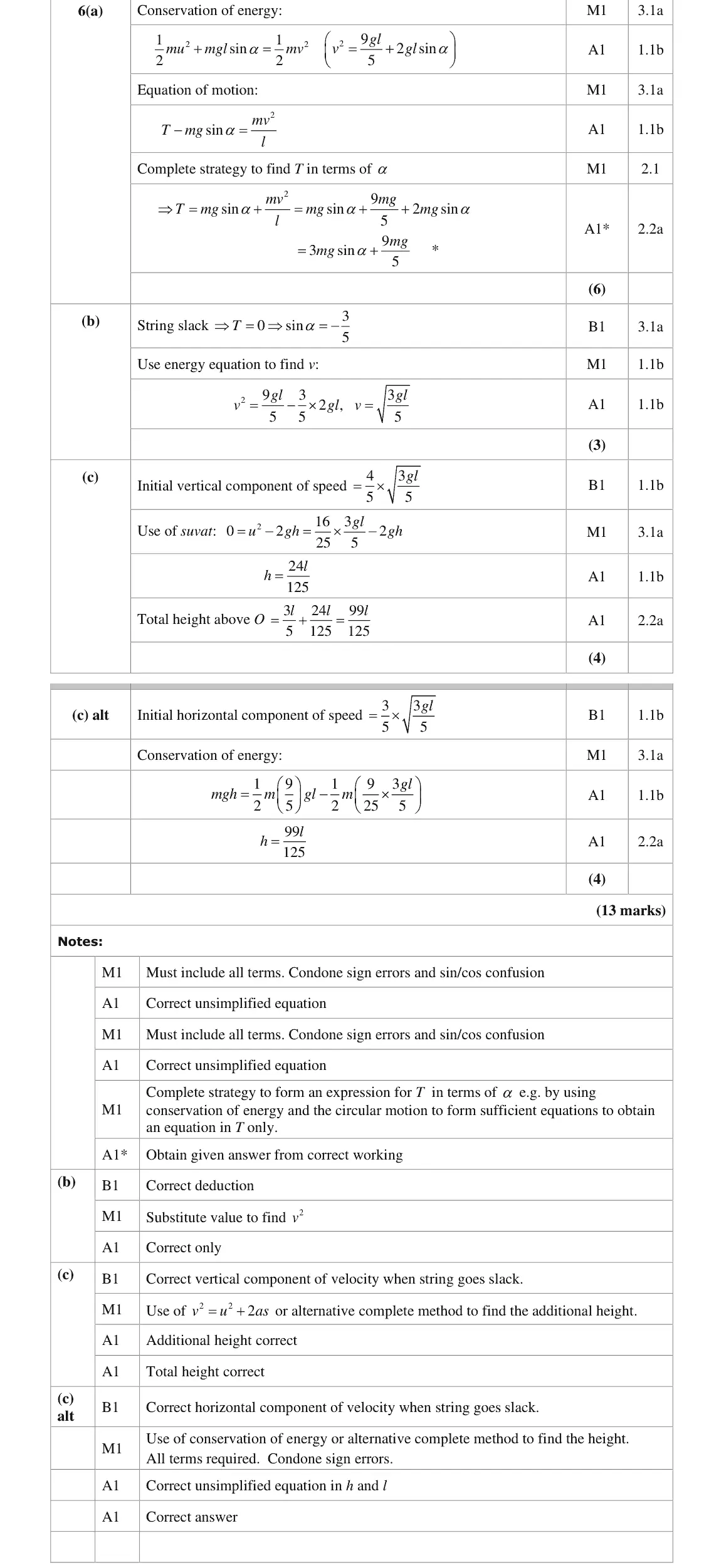
6(a) Motion in a circle: horizontal and vertical 6 —
6(b) Motion in a circle: horizontal and vertical 3 —
6(c) Motion in a circle: horizontal and vertical 4 —
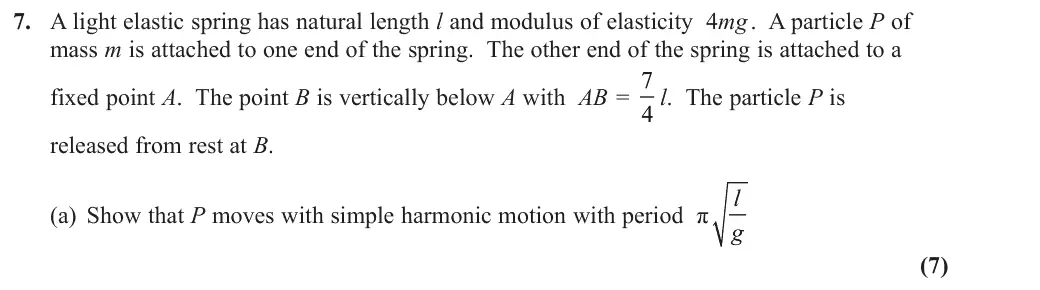
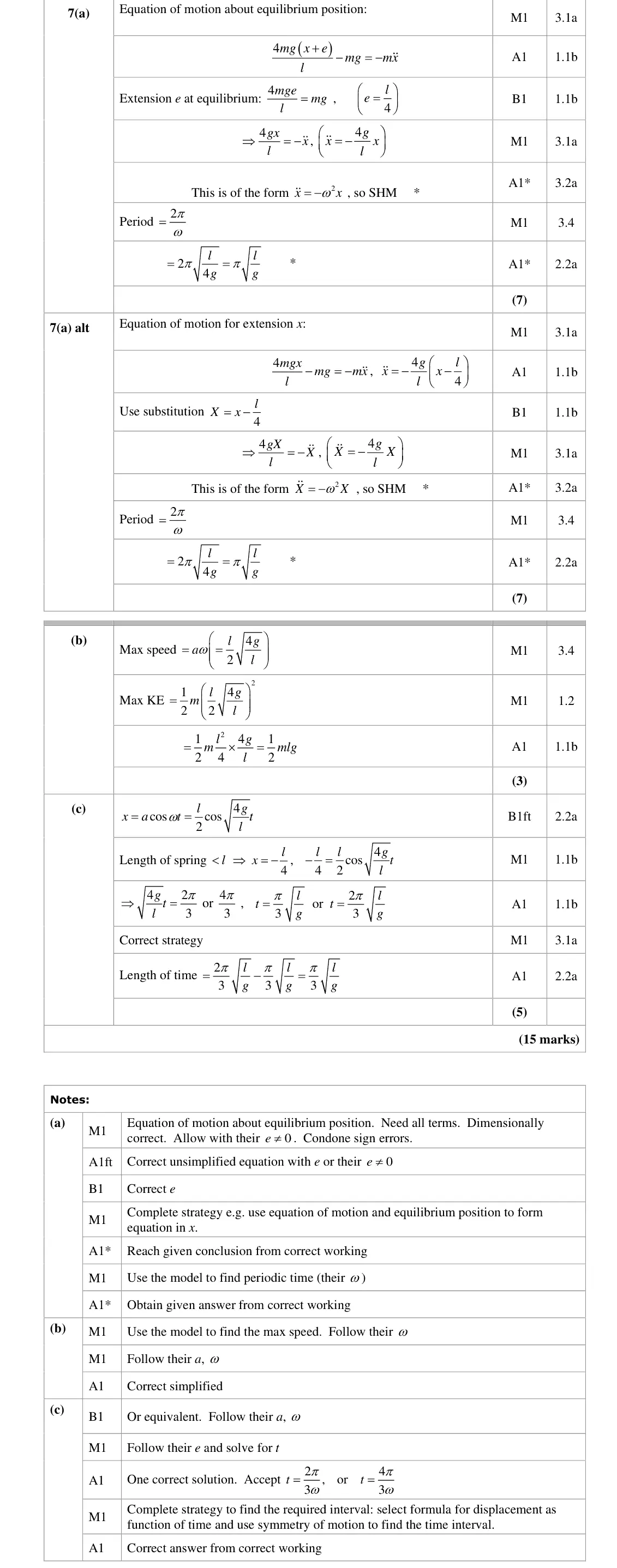
7(a) Further dynamics: variable forces and simple harmonic motion 7 —
7(b) Further dynamics: variable forces and simple harmonic motion 3 —
7(c) Further dynamics: variable forces and simple harmonic motion 5 —

The questions

12(a)2(b)3(a)3(b)4(a)4(b)5(a)5(b)6(a)6(b)6(c)7(a)7(b)7(c)
Oct 2020 · Paper 4C (Further Mechanics 2) · Q1 7 marks centres of mass plane figures
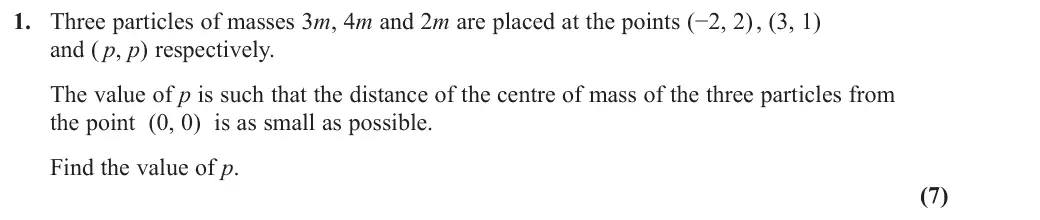
1. Three particles of masses 3m, 4m and 2m are placed at the points (-2, 2) , (3, 1) and ( p, p) respectively. The value of p is such that the distance of the centre of mass of the three particles from the point (0, 0) is as small as possible. Find the value of p. (7)
Oct 2020 · Paper 4C (Further Mechanics 2) · Q2(a) 4 marks further centres of mass
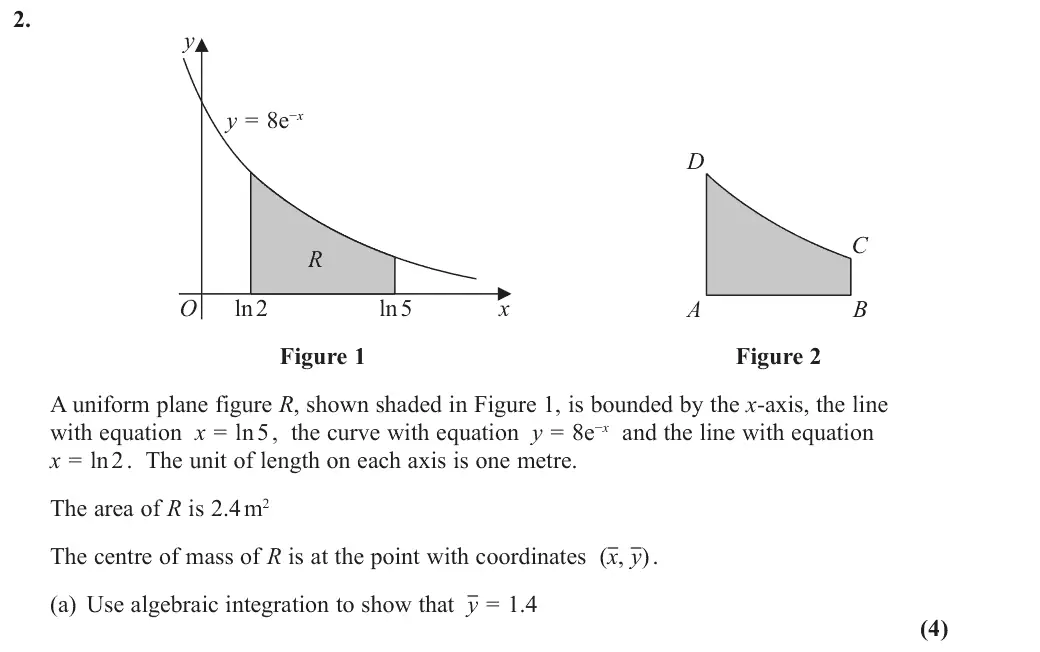
2. y y = 8e-x C R ln 2 ln 5 x A B Figure 1 Figure 2 A uniform plane figure R, shown shaded in Figure 1, is bounded by the x-axis, the line with equation x = ln 5 , the curve with equation y = 8e-x and the line with equation x = ln 2 . The unit of length on each axis is one metre. The area of R is 2.4 m2 The centre of mass of R is at the point with coordinates (x, y) . (a) Use algebraic integration to show that y = 1.4 (4)
Oct 2020 · Paper 4C (Further Mechanics 2) · Q2(b) 6 marks further centres of mass
Figure 2 shows a uniform lamina ABCD, which is the same size and shape as R. The lamina is freely suspended from C and hangs in equilibrium with CB at an angle theta ° to the downward vertical. (b) Find the value of theta (6)
Oct 2020 · Paper 4C (Further Mechanics 2) · Q3(a) 6 marks further dynamics and shmfurther kinematics
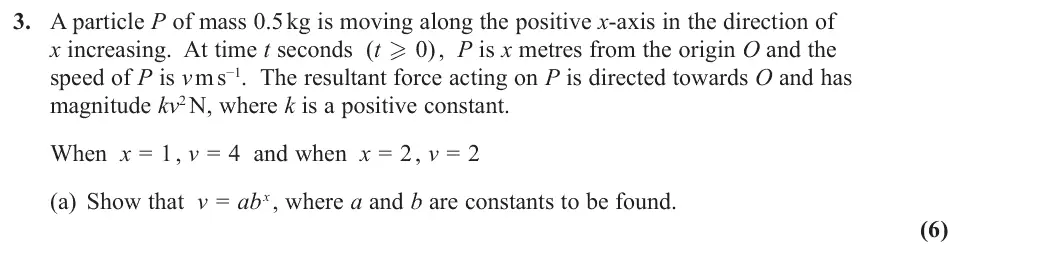
3. A particle P of mass 0.5 kg is moving along the positive x-axis in the direction of x increasing. At time t seconds (t 0) , P is x metres from the origin O and the speed of P is v m s-1. The resultant force acting on P is directed towards O and has magnitude kv2 N, where k is a positive constant. When x = 1 , v = 4 and when x = 2 , v = 2 (a) Show that v = ab x , where a and b are constants to be found. (6)
Oct 2020 · Paper 4C (Further Mechanics 2) · Q3(b) 4 marks further kinematicsfurther dynamics and shm
The time taken for the speed of P to decrease from 4 m s-1 to 2 m s-1 is T seconds. (b) Show that T = ln (4)
Oct 2020 · Paper 4C (Further Mechanics 2) · Q4(a) 4 marks further centres of mass
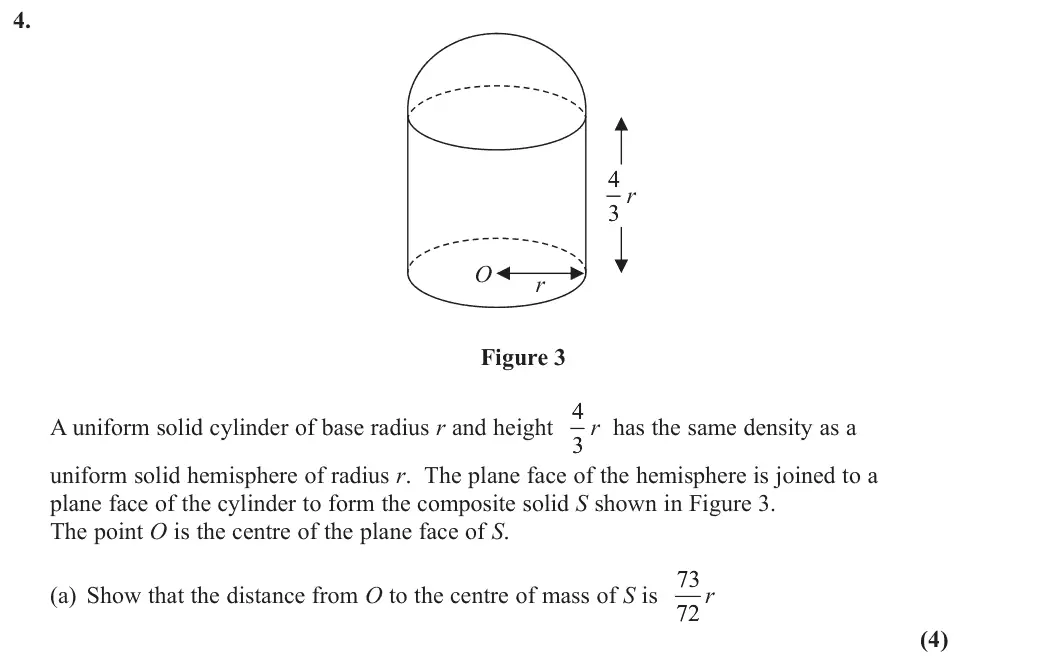
4. 3 r r Figure 3 A uniform solid cylinder of base radius r and height 4 3 r has the same density as a uniform solid hemisphere of radius r. The plane face of the hemisphere is joined to a plane face of the cylinder to form the composite solid S shown in Figure 3. The point O is the centre of the plane face of S. (a) Show that the distance from O to the centre of mass of S is 73 72 r (4)
Oct 2020 · Paper 4C (Further Mechanics 2) · Q4(b) 5 marks further centres of mass
The solid S is placed with its plane face on a rough horizontal plane. The coefficient of friction between S and the plane is μ. A horizontal force P is applied to the highest point of S. The magnitude of P is gradually increased. (b) Find the range of values of μ for which S will slide before it starts to tilt. (5)
Oct 2020 · Paper 4C (Further Mechanics 2) · Q5(a) 7 marks circular motion
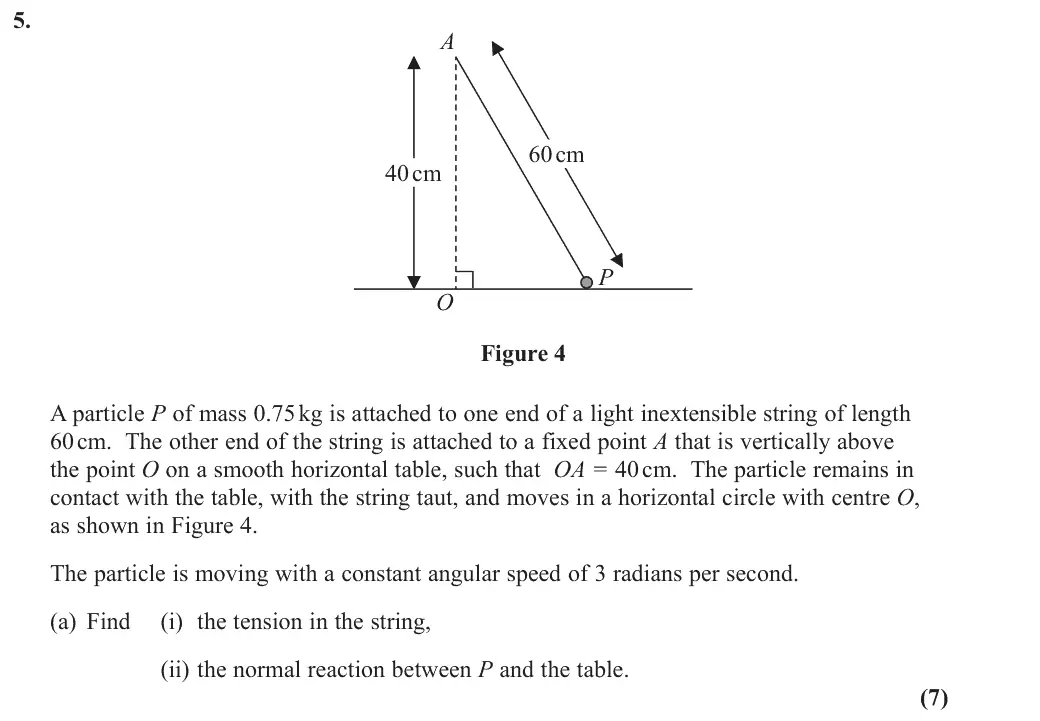
5. A 60 cm 40 cm P Figure 4 A particle P of mass 0.75 kg is attached to one end of a light inextensible string of length 60 cm. The other end of the string is attached to a fixed point A that is vertically above the point O on a smooth horizontal table, such that OA = 40 cm. The particle remains in contact with the table, with the string taut, and moves in a horizontal circle with centre O, as shown in Figure 4. The particle is moving with a constant angular speed of 3 radians per second. (a) Find (i) the tension in the string, (ii) the normal reaction between P and the table. (7)
Oct 2020 · Paper 4C (Further Mechanics 2) · Q5(b) 4 marks circular motion
The angular speed of P is now gradually increased. (b) Find the angular speed of P at the instant P loses contact with the table. (4)
Oct 2020 · Paper 4C (Further Mechanics 2) · Q6(a) 6 marks circular motion
6. l alpha P v Figure 5 A particle P of mass m is attached to one end of a light inextensible string of length l. The other end of the string is attached to a fixed point O. The particle is held with the string taut and OP horizontal. The particle is then projected vertically downwards with speed u, where u2 = 9 5 gl . When OP has turned through an angle alpha and the string is still taut, the speed of P is v, as shown in Figure 5. At this instant the tension in the string is T. (a) Show that T = 3mg sin alpha + 9 5 mg (6)
Oct 2020 · Paper 4C (Further Mechanics 2) · Q6(b) 3 marks circular motion
(b) Find, in terms of g and l, the speed of P at the instant when the string goes slack. (3)
Oct 2020 · Paper 4C (Further Mechanics 2) · Q6(c) 4 marks circular motion
(c) Find, in terms of l, the greatest vertical height reached by P above the level of O. (4)
Oct 2020 · Paper 4C (Further Mechanics 2) · Q7(a) 7 marks further dynamics and shm
7. A light elastic spring has natural length l and modulus of elasticity 4mg . A particle P of mass m is attached to one end of the spring. The other end of the spring is attached to a fixed point A. The point B is vertically below A with AB = 7 4 l. The particle P is released from rest at B. l (a) Show that P moves with simple harmonic motion with period pi g (7)
Oct 2020 · Paper 4C (Further Mechanics 2) · Q7(b) 3 marks further dynamics and shm
(b) Find, in terms of m, l and g, the maximum kinetic energy of P during the motion. (3)
Oct 2020 · Paper 4C (Further Mechanics 2) · Q7(c) 5 marks further dynamics and shm
(c) Find the time within each complete oscillation for which the length of the spring is less than l. (5)

Find an Edexcel Further Maths tutor

Want this paper marked and gone through with a Further Maths tutor? Message us.

Prefer email? Send an enquiry

If you are under 18, please include a parent's contact details. Enquiries go to enquiries@alevelfurthermathstutor.com and are deleted once handled.