Examiner's comment
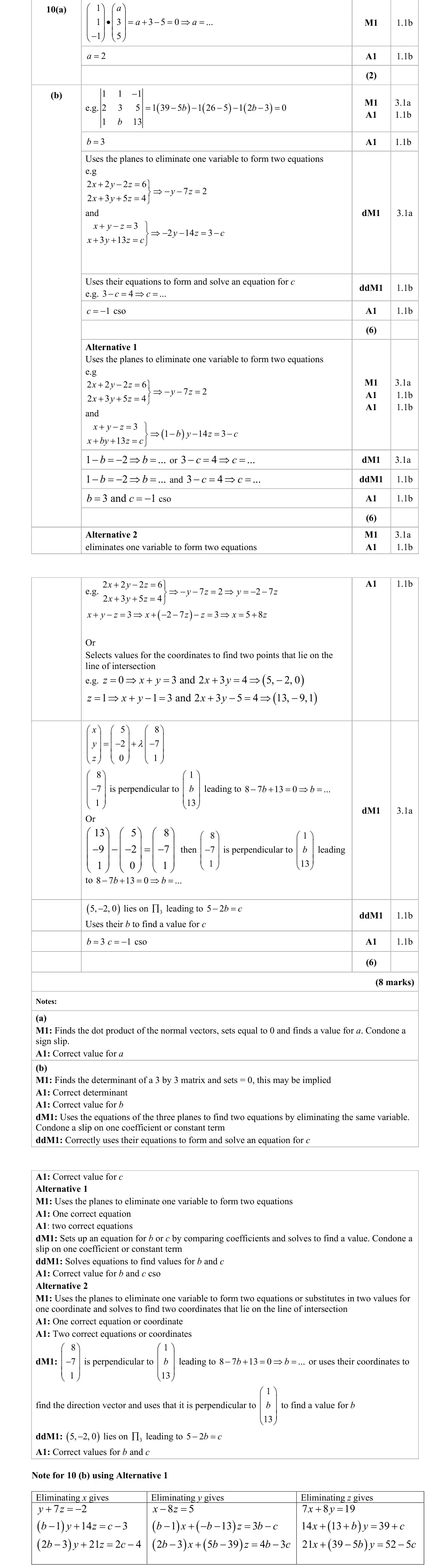
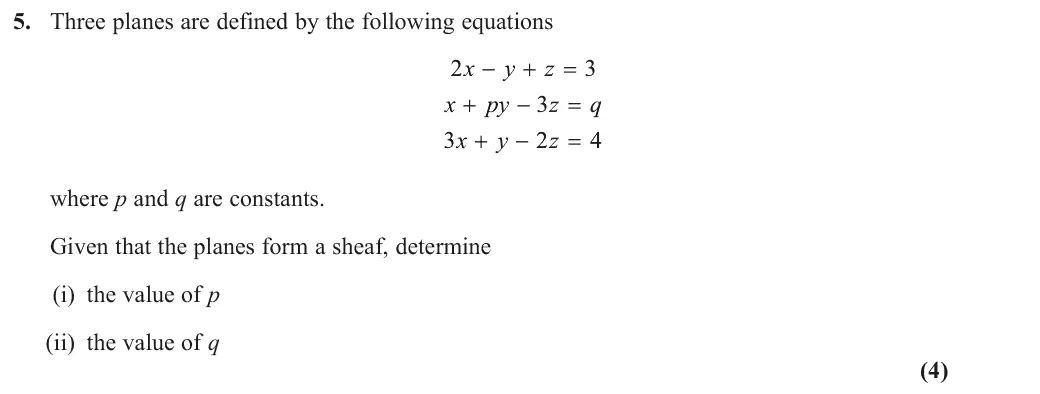
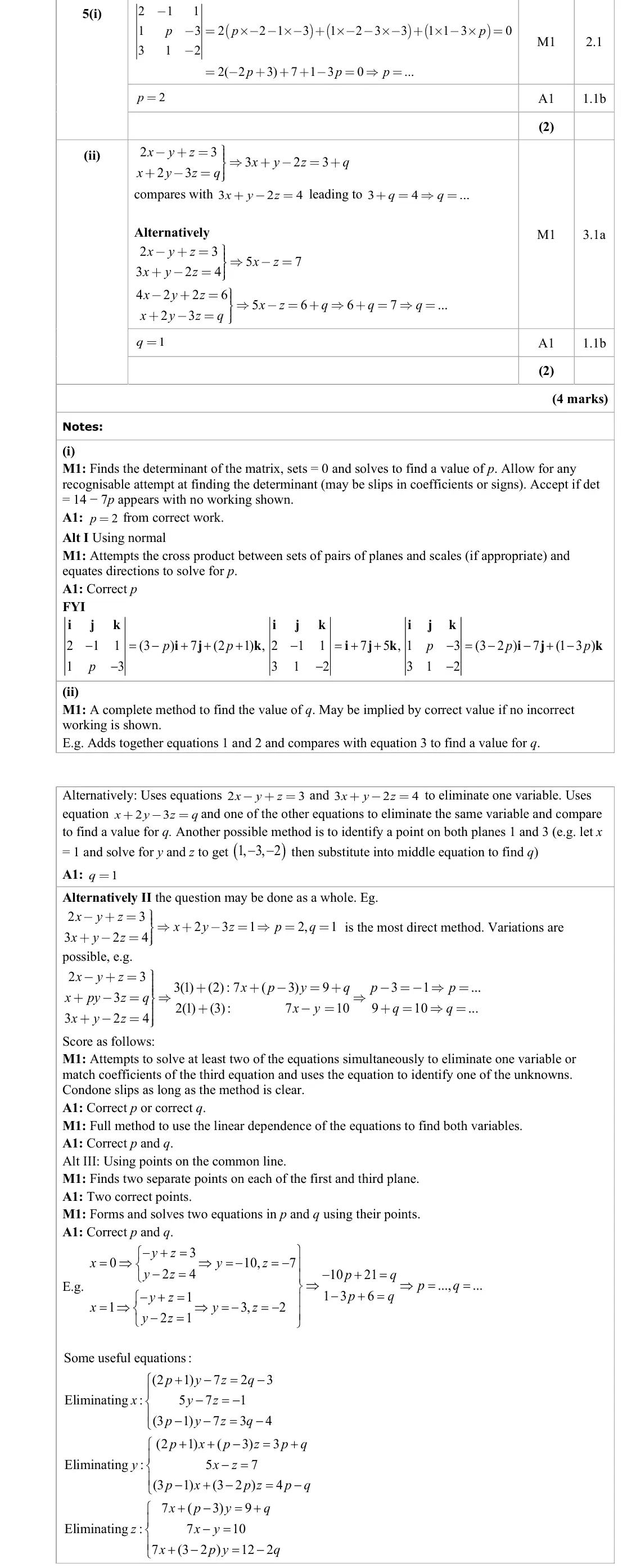
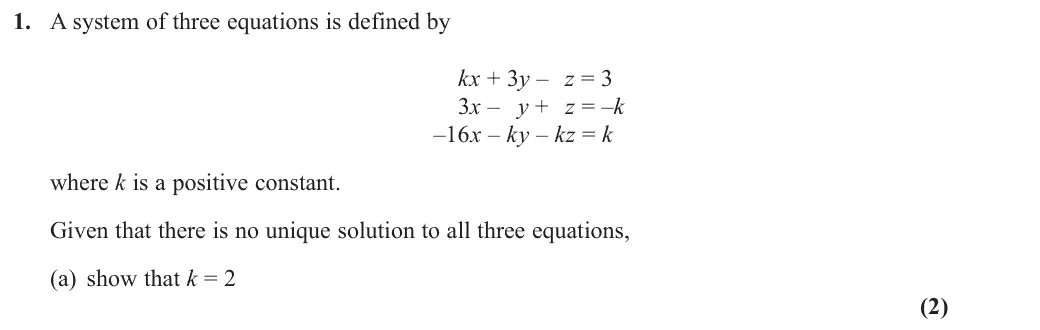
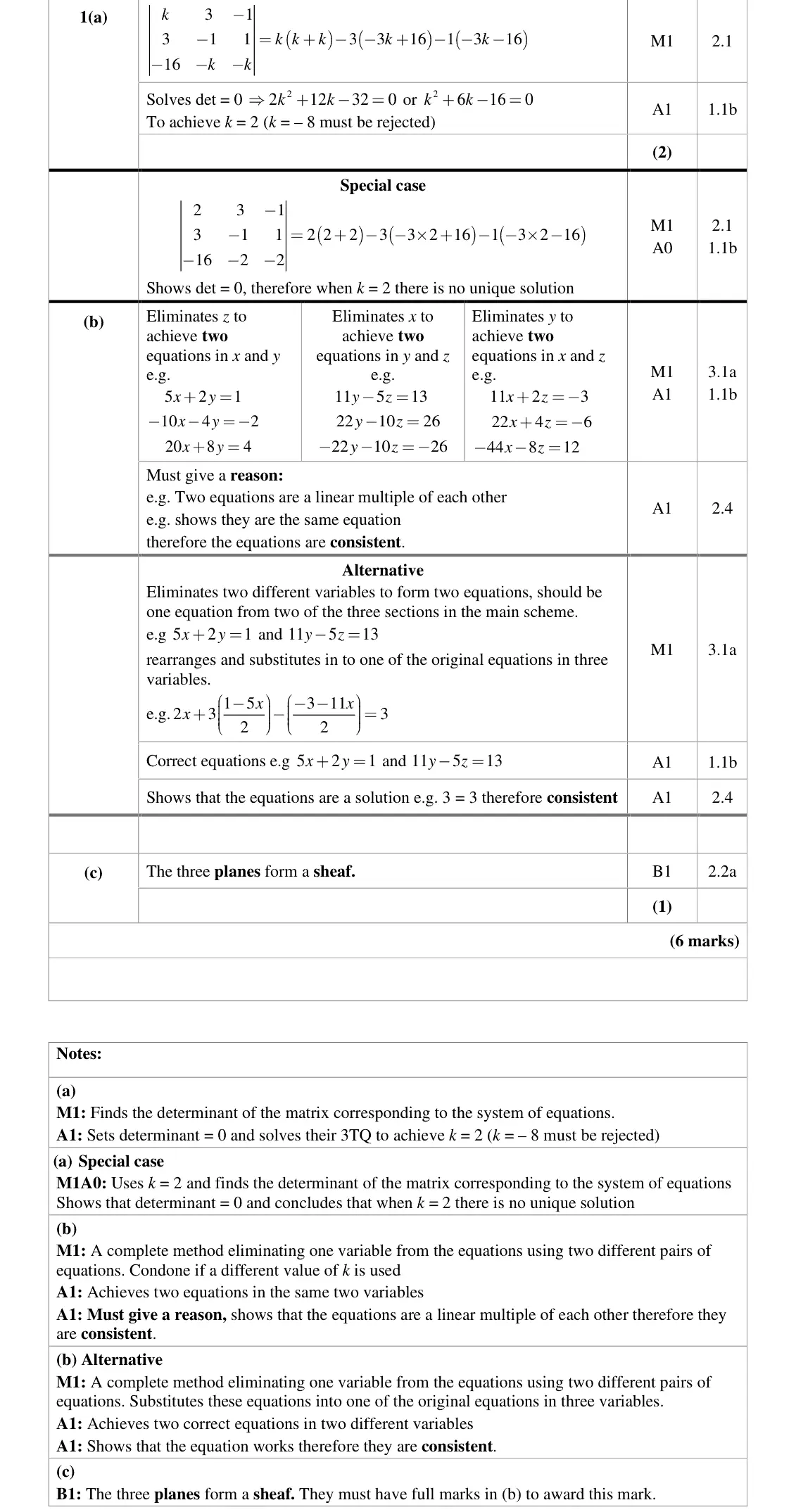
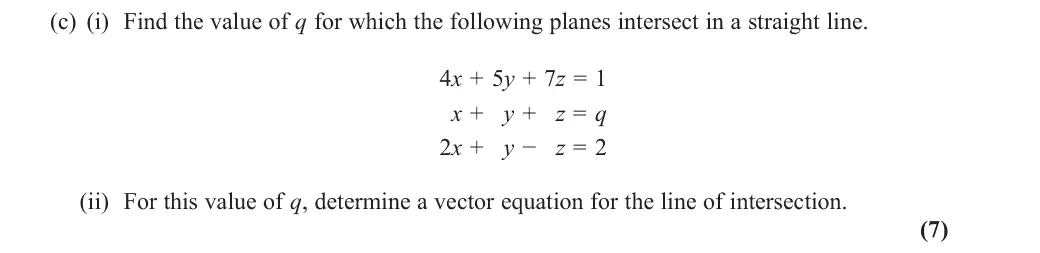
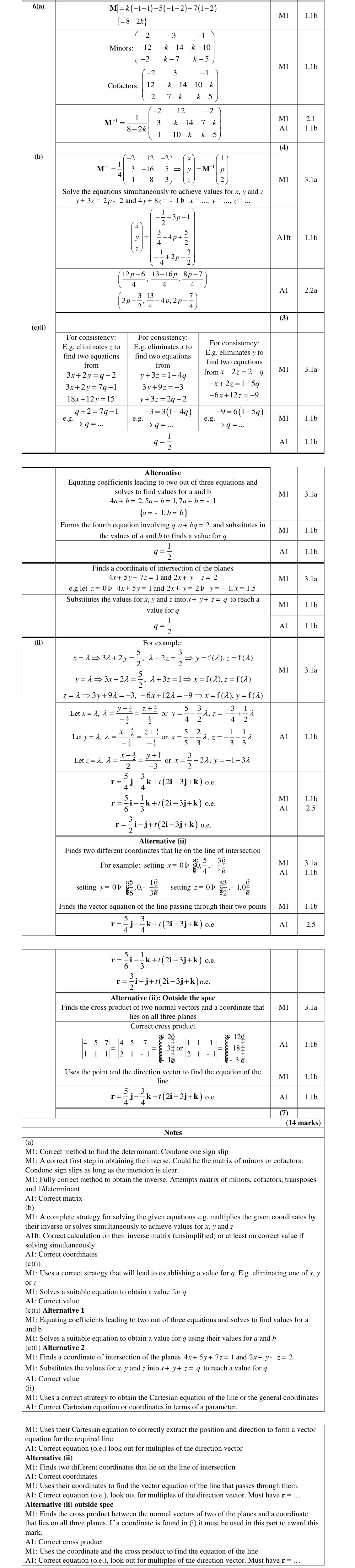
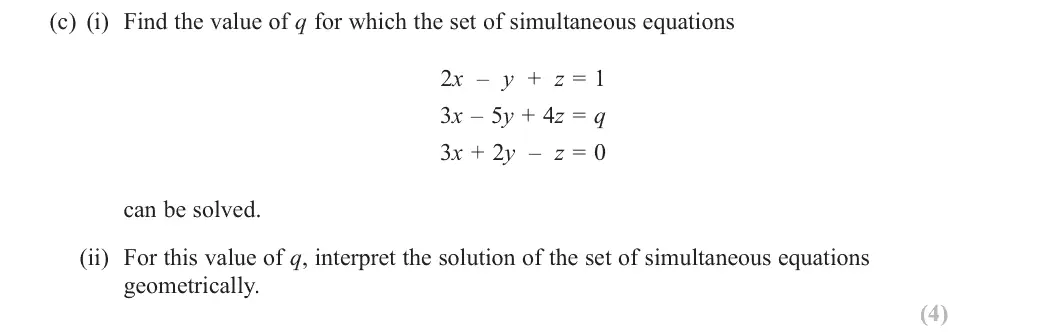
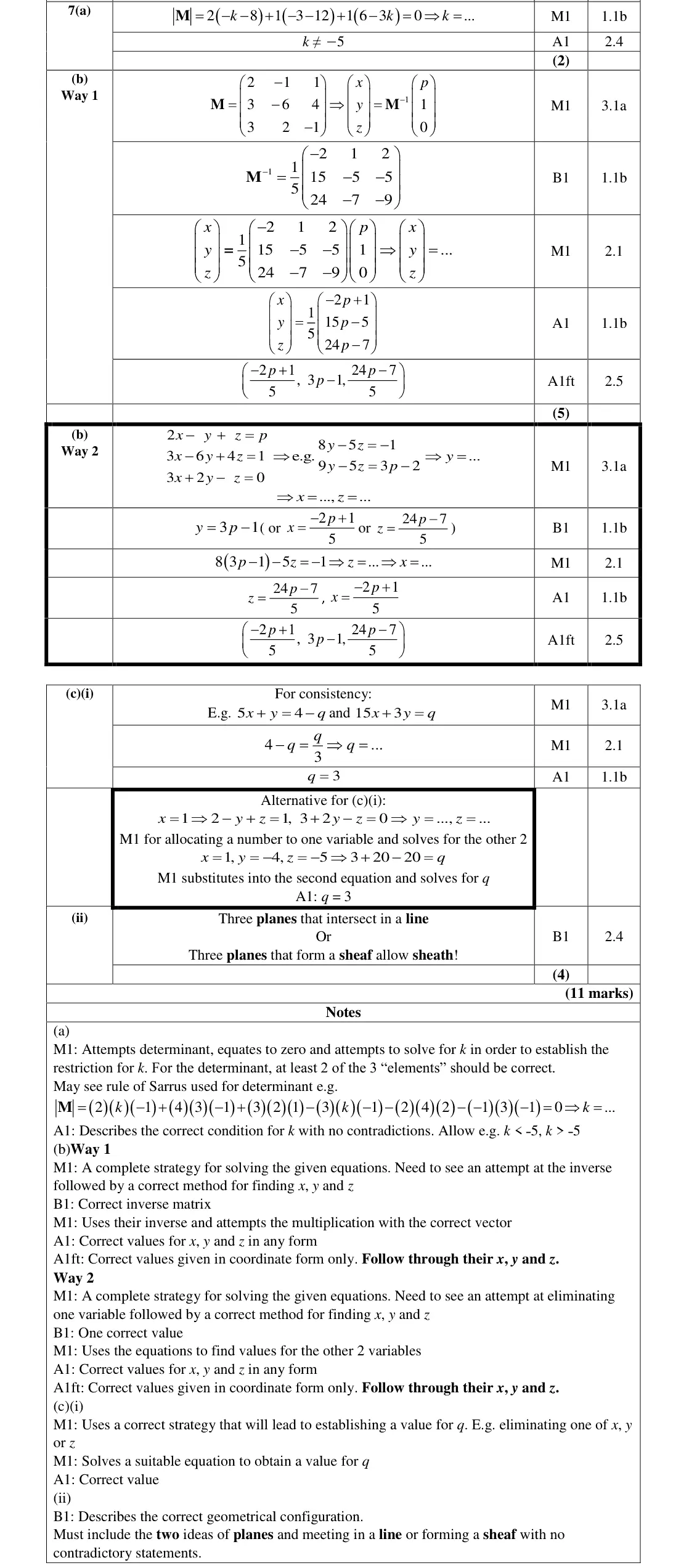
A deceptively simple looking question with a very efficient solution for those who appreciated the geometry of the situation and could see the third equation was the sum of the first two, this nevertheless produced a plethora of responses and proved difficult to mark. Most had an idea of what to do and tried to solve the equations simultaneously in some way, but with varying degrees of success. The most successful method used to find p was to form the matrix of the equations and set the determinant equal to 0. A few candidates found the determinant but failed to set it to zero. Once p was found, it was very much easier to find q and those candidates approaching the question this way had much more success. Most candidates knew that the equations had to be consistent and used this with their p to find q, though a few at this point instead reverted to solving the equations simultaneously, even though they had p. Many others went directly for the method of solving the equations, but many made slips causing problems, and so many managed to get method marks but lost the accuracy. Alternatively, to using the determinant, many learners were also able to find p and q by tackling the question as a whole, eliminating one variable and using linear dependence to find p and q. Occasionally candidates spotted the most direct method subtracting equation 1 from 3 and comparing coefficients with equation 2, but most took more convoluted roots, with varying degrees of success in eliminating one of p or q from the equations. Other methods were also used, with some successfully finding one point in common, or the common line, and solving from there. Some used the cross product to deduce the direction vector of the normal and used this in conjunction with the common line or with another normal direction from other equations. Various attempts at using vector or scalar products of various vectors formed from the equations were seen.