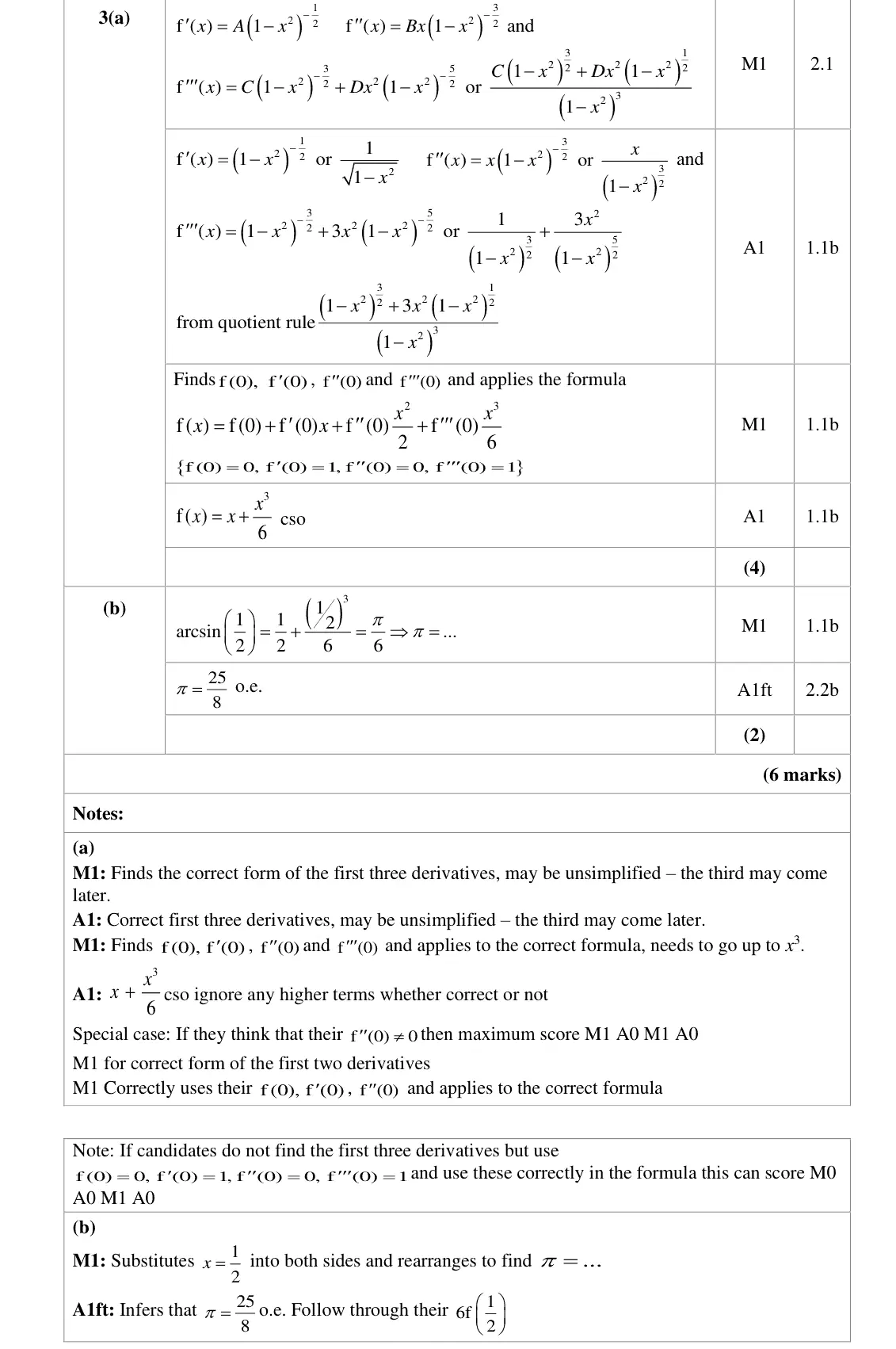
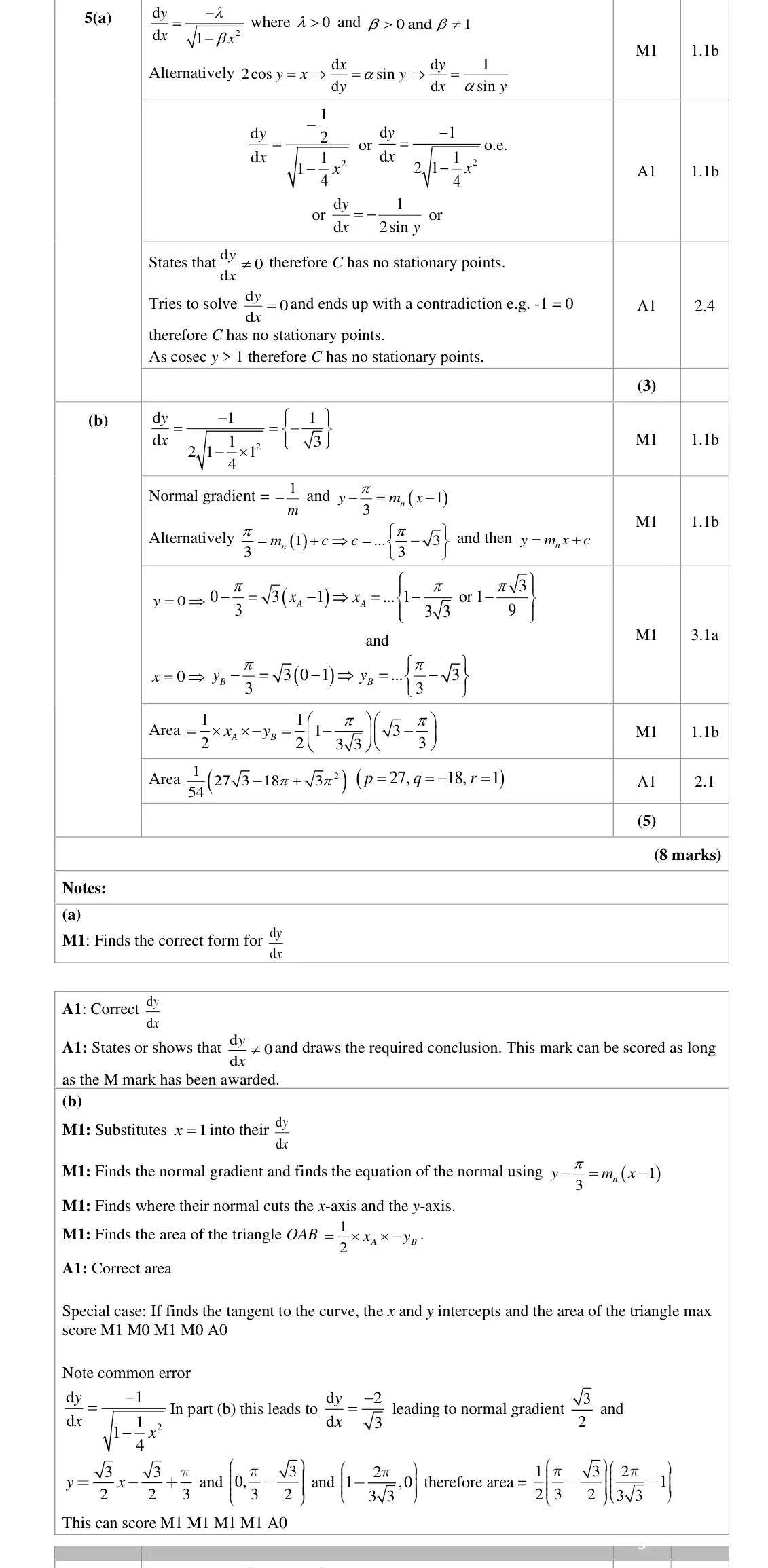
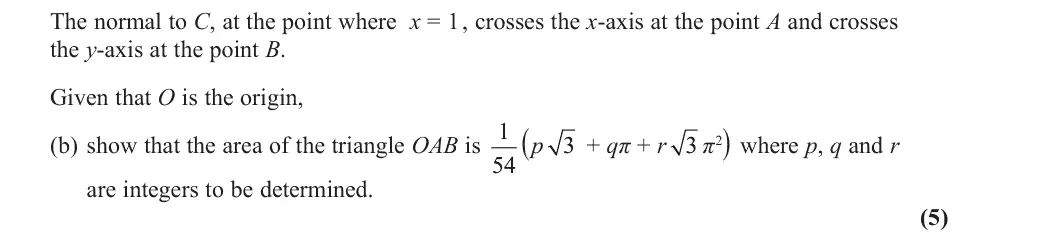
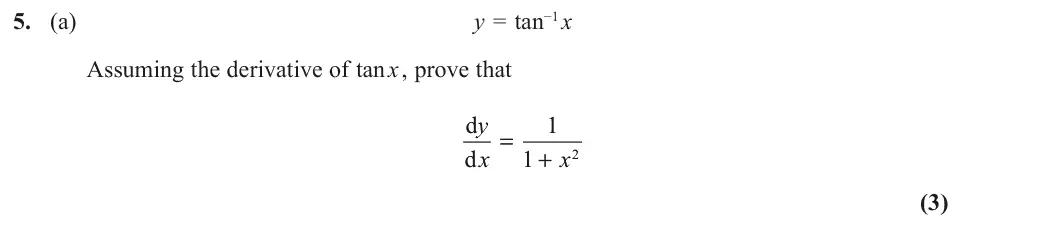
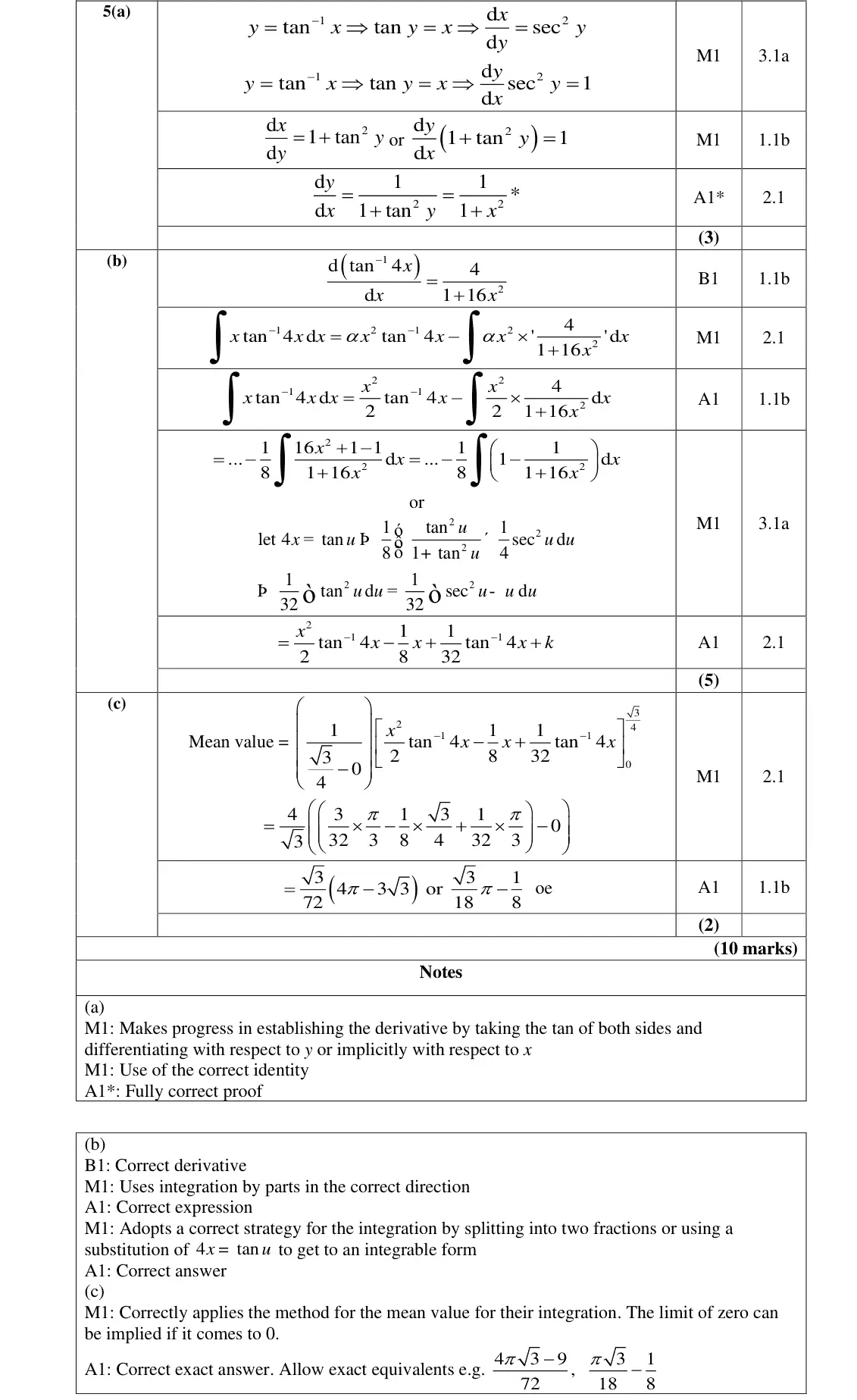
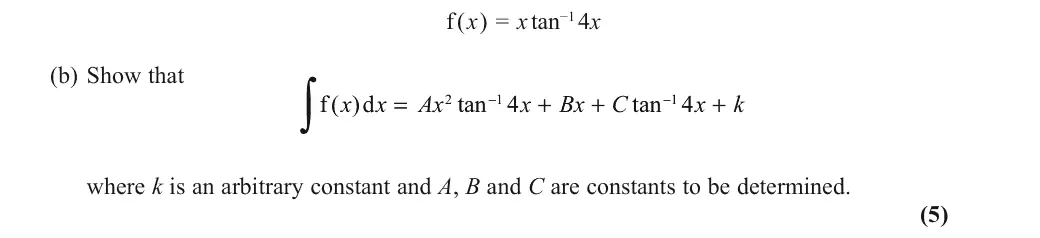
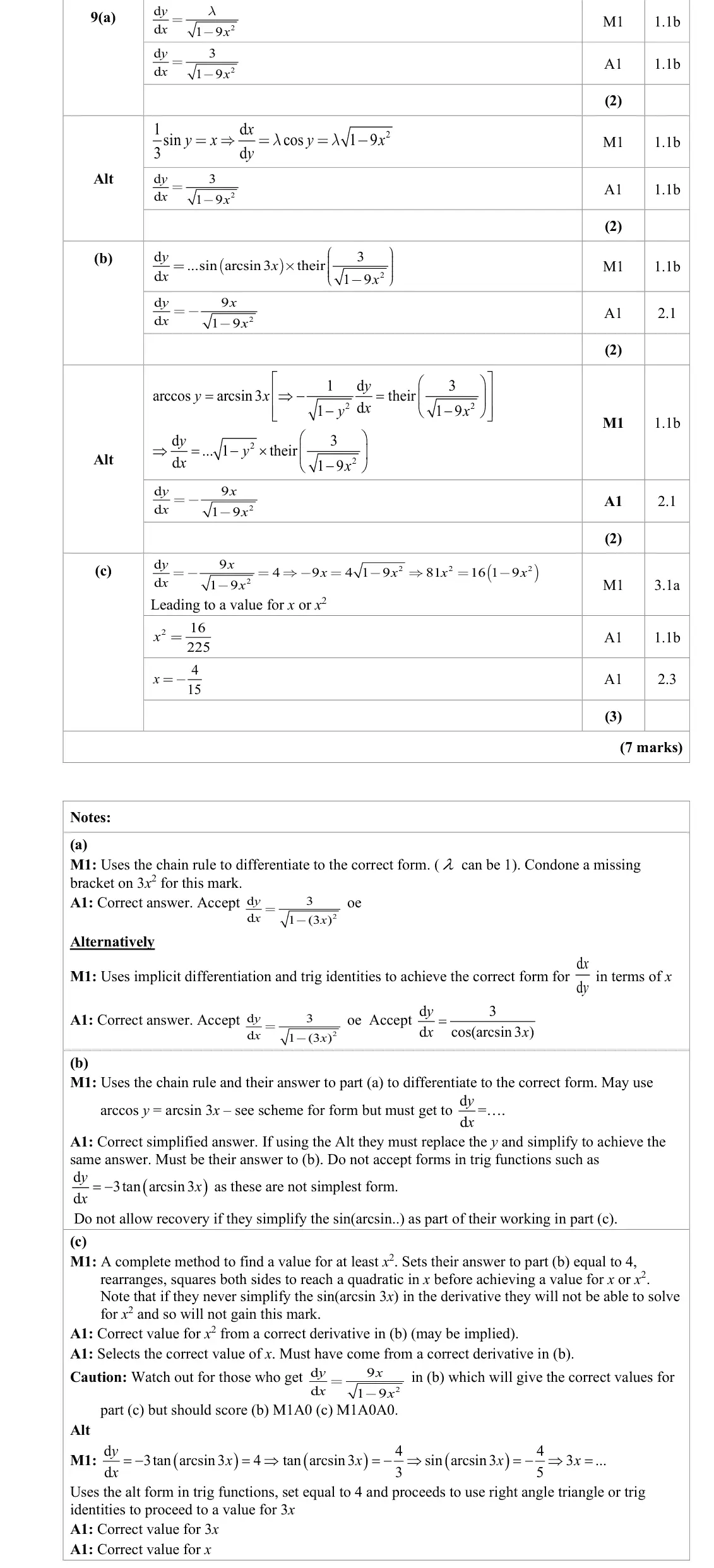
Mark scheme (whole question; this part is marked with the orange bar)
Examiner's comment
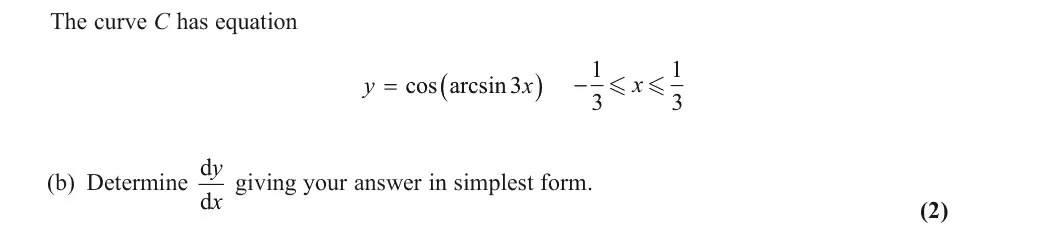
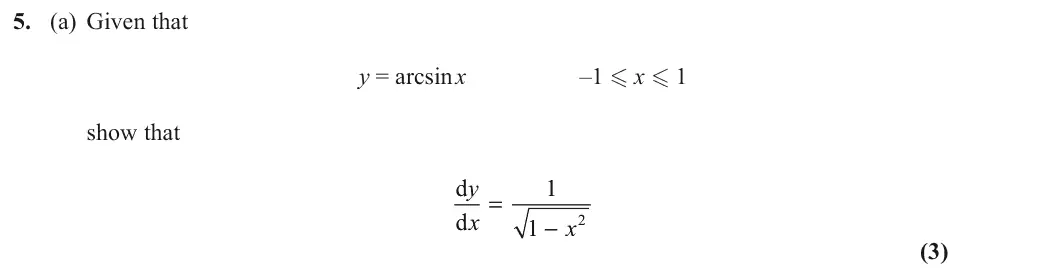
This proved a relatively straightforward closing question compared to some final questions, and many were able to score full marks. Giving a fully simplified form for (b) proved to be the main stumbling block, though not selecting the correct root for (c) was also relatively common. Part (a) was well-answered by most candidates, though not all used the standard formula, but many used implicit differentiation to approach the problem to prove the result. The most common mistake was simply to have a 1 in the numerator rather than 3, which occurred in both methods. When using the formula another error that occurred, albeit infrequently, was to omit the 3 in the square root, giving 2 1 k x - , which scored no marks. Those using implicit or reciprocal differentiation by rearranging the initial question, were generally successful, but again occasionally made slips, losing the 3, or sometime failed find the correct expression for y in terms of x, either leaving in terms of y or giving an incorrect expression. Some gave ( ) d 3 d cos arcsin3 y x x = which was reluctantly accepted for the answer, but learners should aim in such questions to eliminate the trigonometric terms.
Key points from the mark scheme and examiner's report
- dy/dx = 3/√(1 − 9x²)
- a 1 instead of 3 in the numerator was the common error