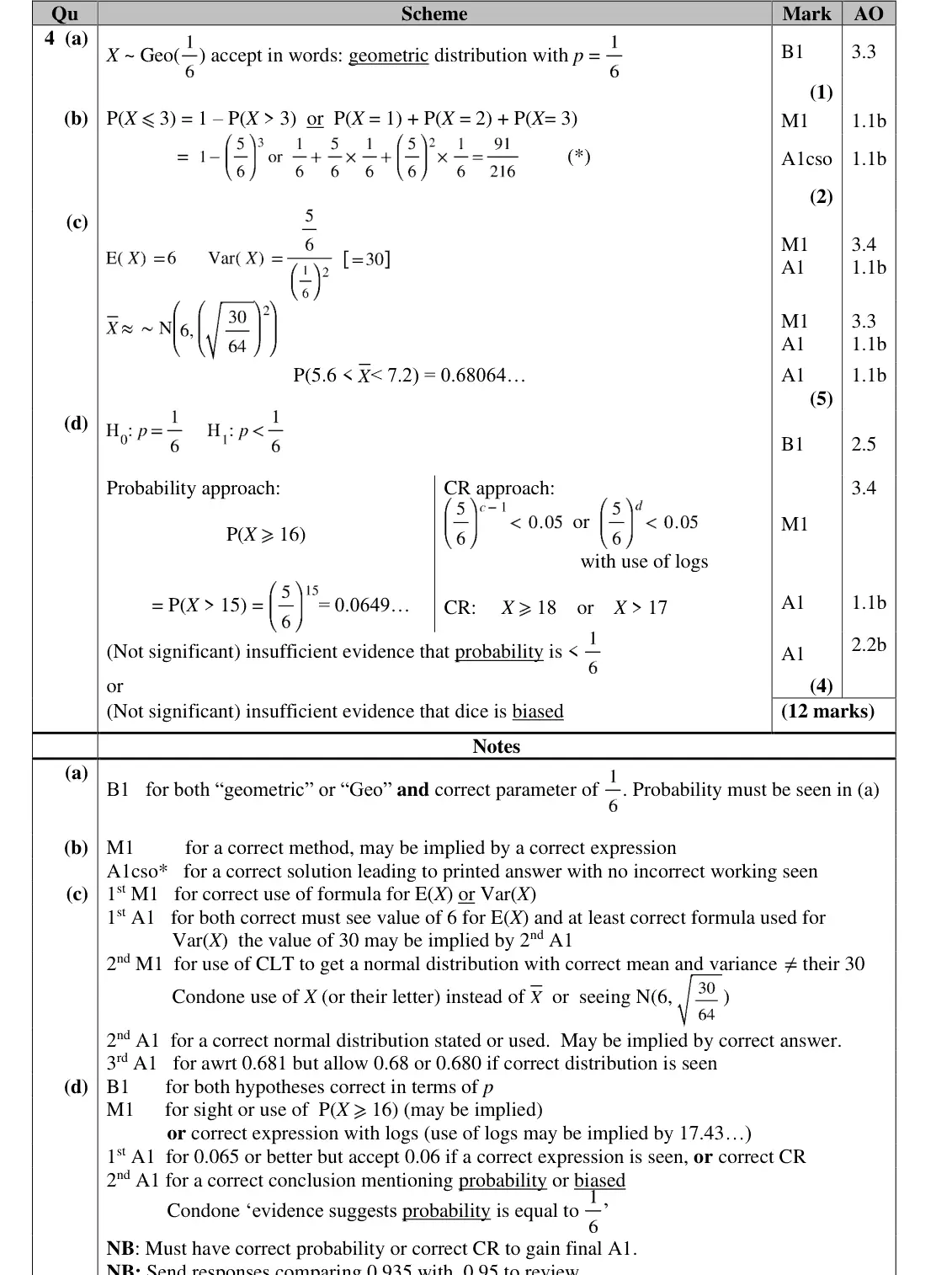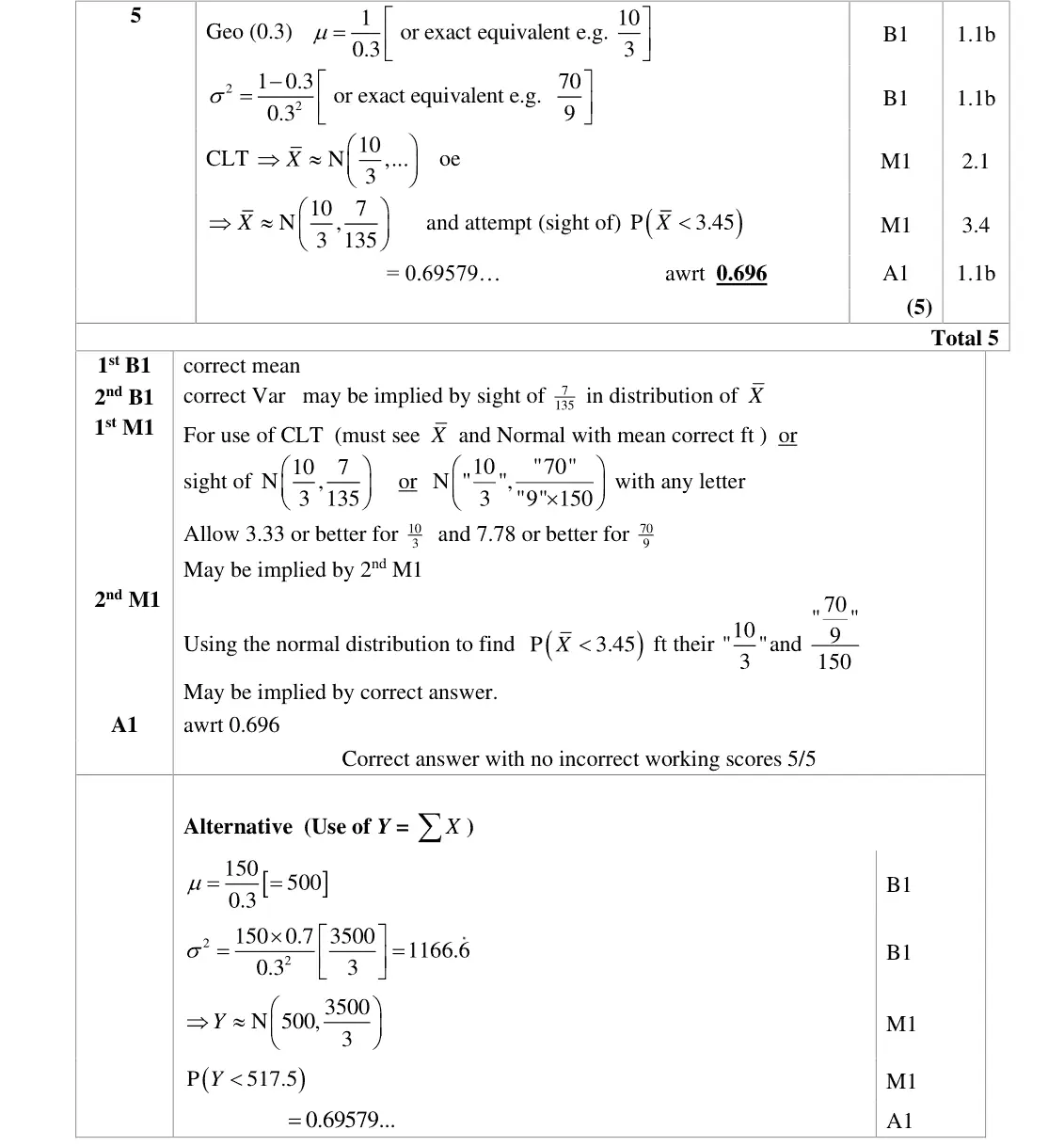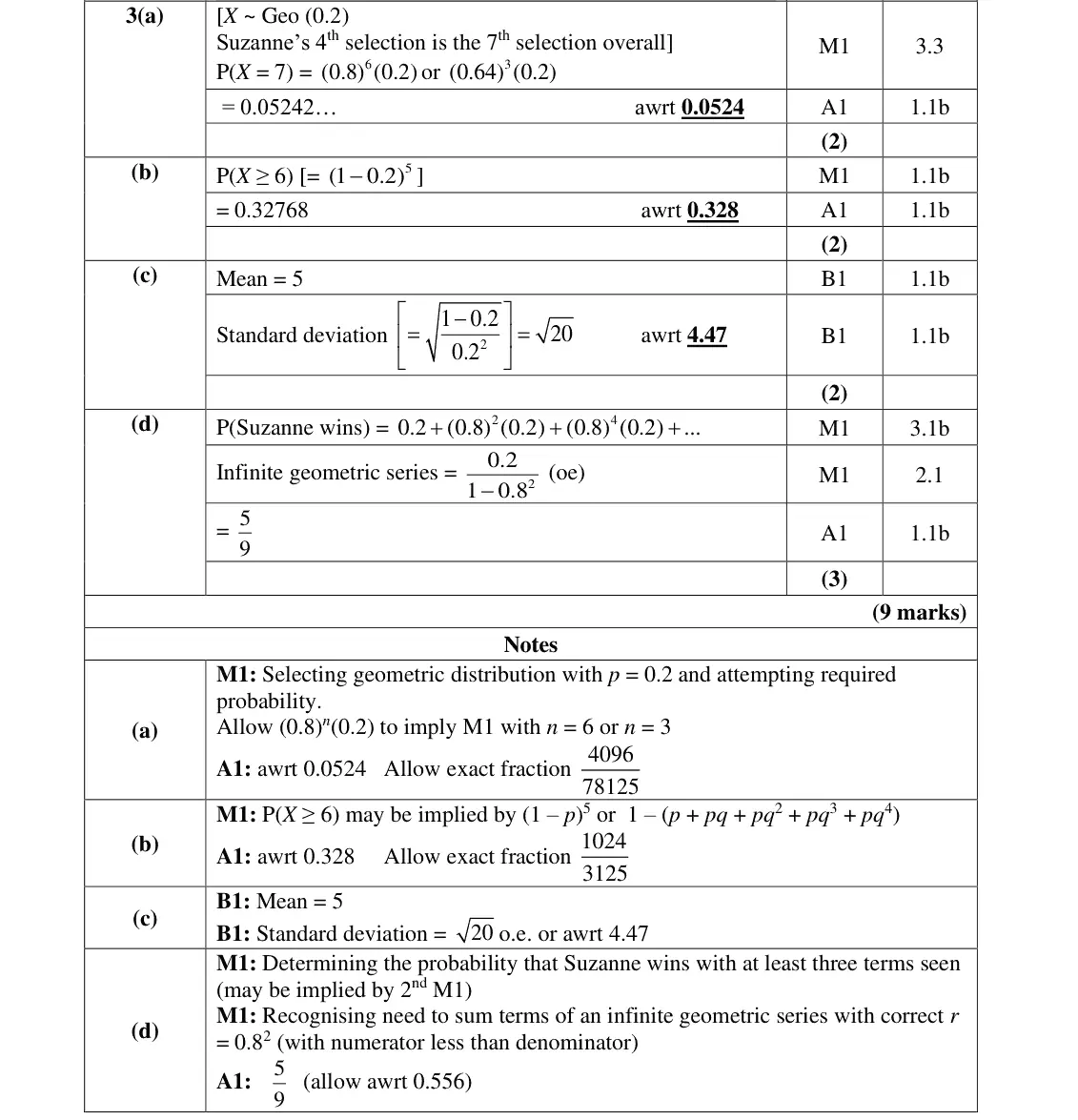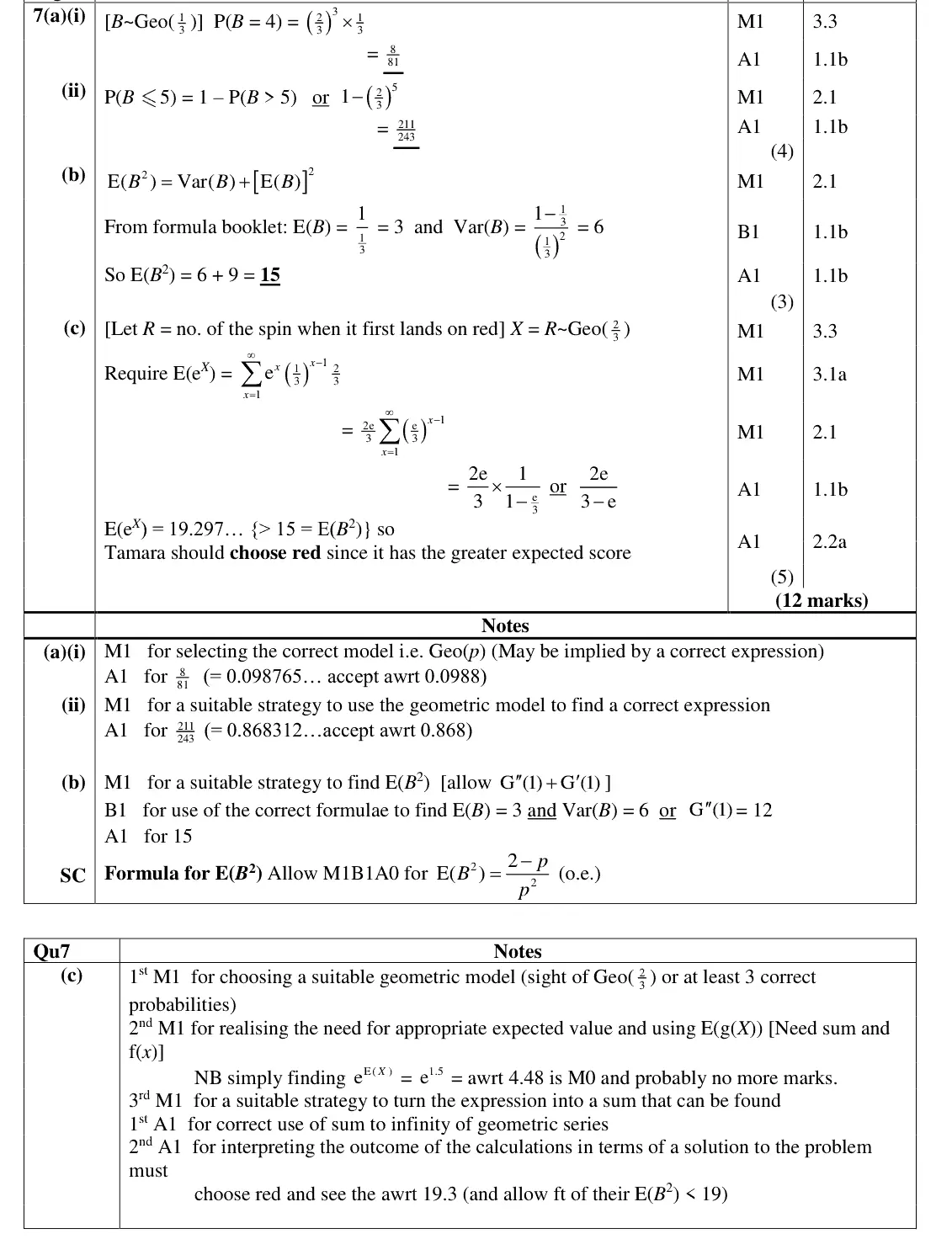
Mark scheme (whole question; this part is marked with the orange bar)
Examiner's comment
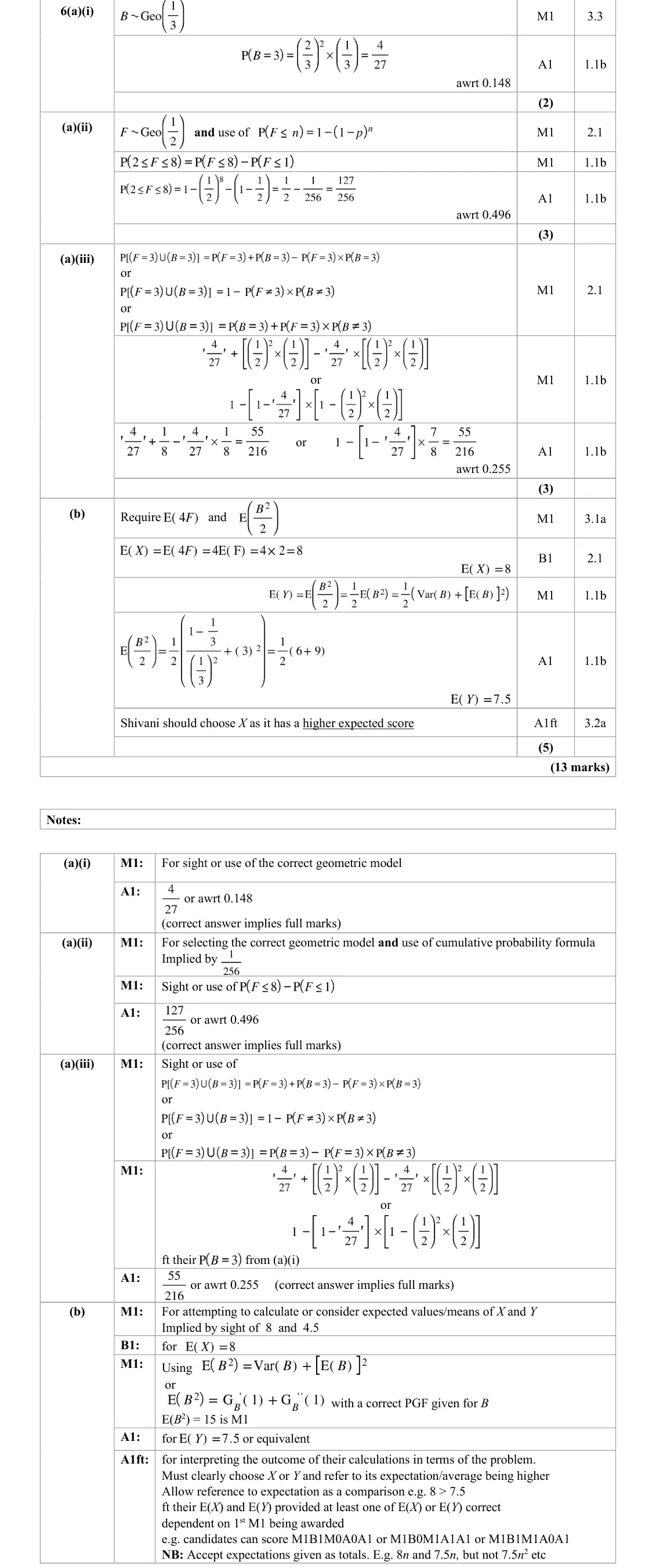
This question was accessible to the candidates, helped by the first parts being routine. The final part of the question did require some problem-solving, but most candidates were still able to score a good number of marks. Part (b) took the question in a new direction, and most candidates were able to make inroads into this part. Almost all realised that they needed to consider expectations, and the majority of these went on to find E(X) correctly. This was vital, as it gave them access to the final method mark. Candidates struggled to find E(B2) correctly, with a large number simply squaring E(B). This meant that, many candidates scored 3 of the 5 marks, as they usually went on to compare their two expectations correctly and choose X. However, a decent number of candidates were able to navigate part (b) and gain full marks. The question allowed for good discrimination between candidates of varying ability levels with almost all gaining 2 or 3 marks, and a many going further to score full marks. Some candidates used E(X)n, which was accepted. However, these candidates often included the n as part of the variable, while this did not make a difference for E(X), they ended up with E(Y) being multiplied by n2, which is incorrect. A few candidates who struggled tried to find the expectations using summations but did not do so correctly. Whenever candidates had their expressions for E(X) and E(Y) they almost always made a correct conclusion and scored the final mark. Candidates should be advised to take care to label their working clearly and correctly. Some candidates did not label their expressions and never referred to what they had as means or expectations, and hence did not score any marks.
Key points from the mark scheme and examiner's report
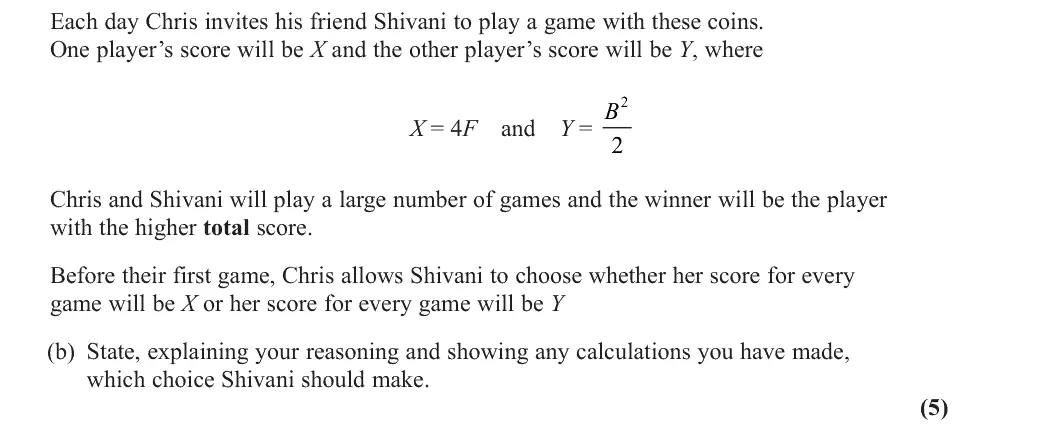
- E(4F) = 8
- E(B²/2) = ½(Var(B) + [E(B)]²) = ½(6 + 9) = 7.5
- choose X
- squaring E(B) is the common error