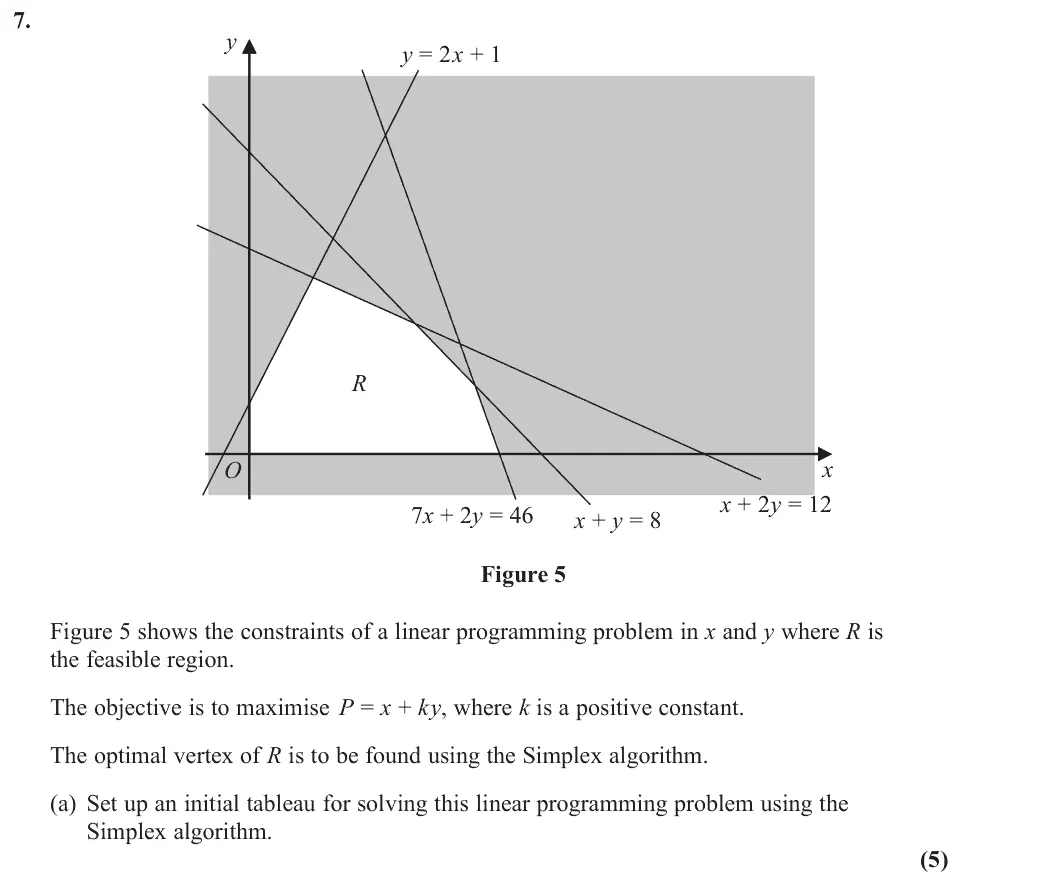
Examiner's comment
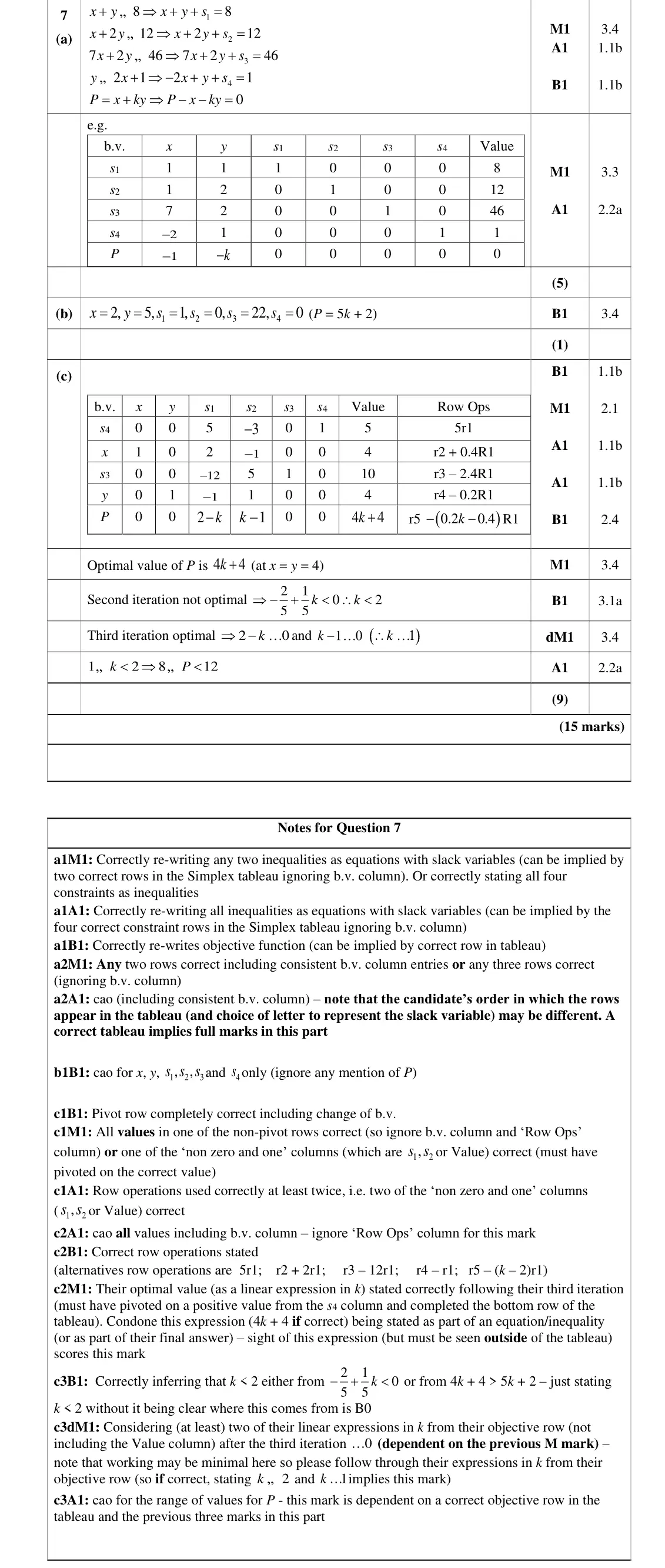
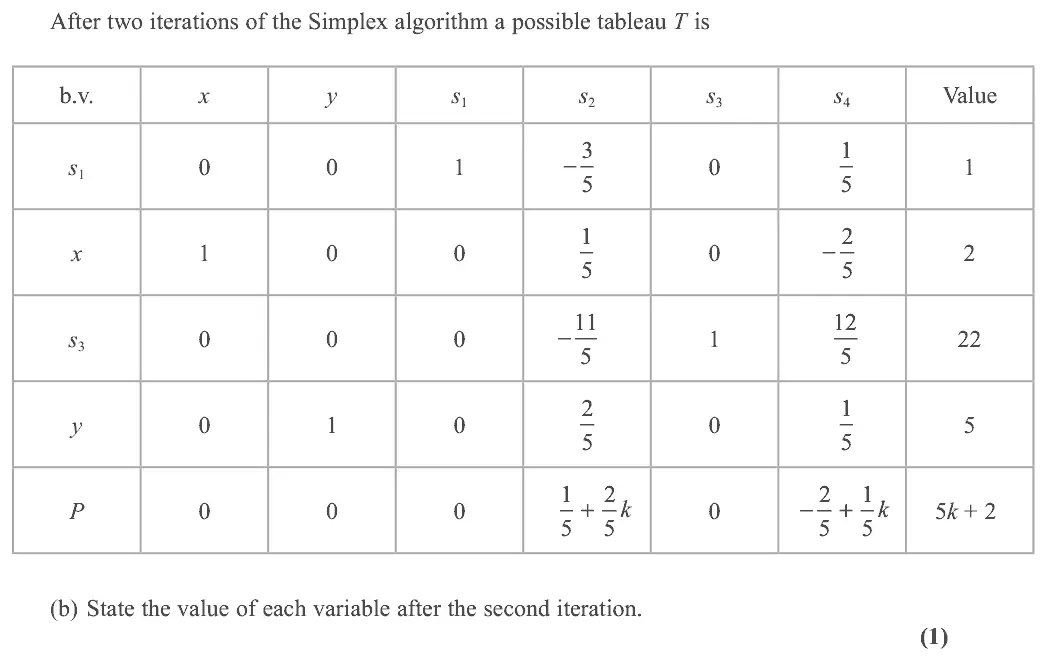
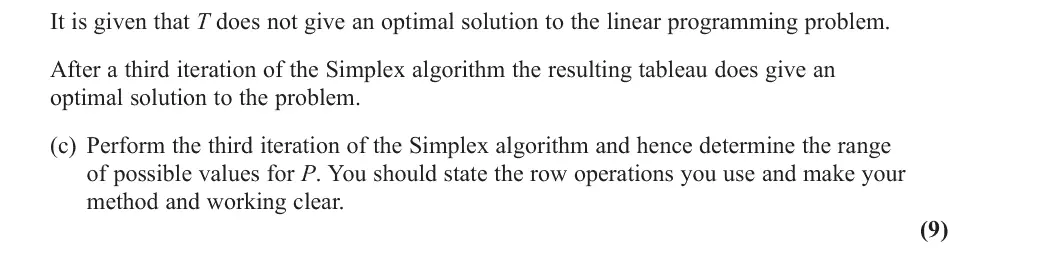
Candidates found this to be one of the most challenging questions on the paper, with very few candidates scoring full marks. Each part of this question was independent of each other and therefore candidates who performed poorly, or didn’t attempt some parts, were in some cases still able to score on other parts of the question. For (c), performing the iteration of the Simplex algorithm at the beginning of this part was generally well done. The vast majority used the correct pivot and so were able to make some progress, and most gained the mark for expressing their row operations correctly. A significant number of candidates gained partially correct solutions with errors on the objective row, some minor and some leaving values out, presumable because they did not know how to deal with the variable in this row. A few candidates chose a negative pivot and so therefore scored very few marks in this part. Whilst most candidates were confident with the mechanics of applying the Simplex algorithm, very few were able to show that they fully understood how simplex worked to get the correct range of values for P. Many candidates did not attempt this, and of those who did, many did not make their working clear. Most who attempted this seemed to be either unclear about whether their inequality should be strict or not or tried to skip steps in their method in order to reach a solution. Therefore most failed to realise that k < 2 (from the knowledge that one of the entries in the pivot row of T must be negative), rather than 2 k „ (from the fact that all the entries in their pivot row of their final tableau must be non-negative), leading to P < 12 rather than 12. P „ Fully correct solutions to this question were therefore extremely rare. 8