June 2022: A level Paper 4A: Further Pure Mathematics 2

75 marks · 30 question parts · Question paper, mark scheme and examiner's report on Pearson's site

Question by question

QTopicMarksDifficulty
1(a) Groups: axioms, Cayley tables, subgroups, Lagrange and isomorphism 1 —
1(b) Groups: axioms, Cayley tables, subgroups, Lagrange and isomorphism 1 —
1(c) Groups: axioms, Cayley tables, subgroups, Lagrange and isomorphism 2 —
1(d) Groups: axioms, Cayley tables, subgroups, Lagrange and isomorphism 2 —
2(a) Eigenvalues, eigenvectors, diagonalisation and Cayley-Hamilton 5 —
2(b) Eigenvalues, eigenvectors, diagonalisation and Cayley-Hamilton 3 —
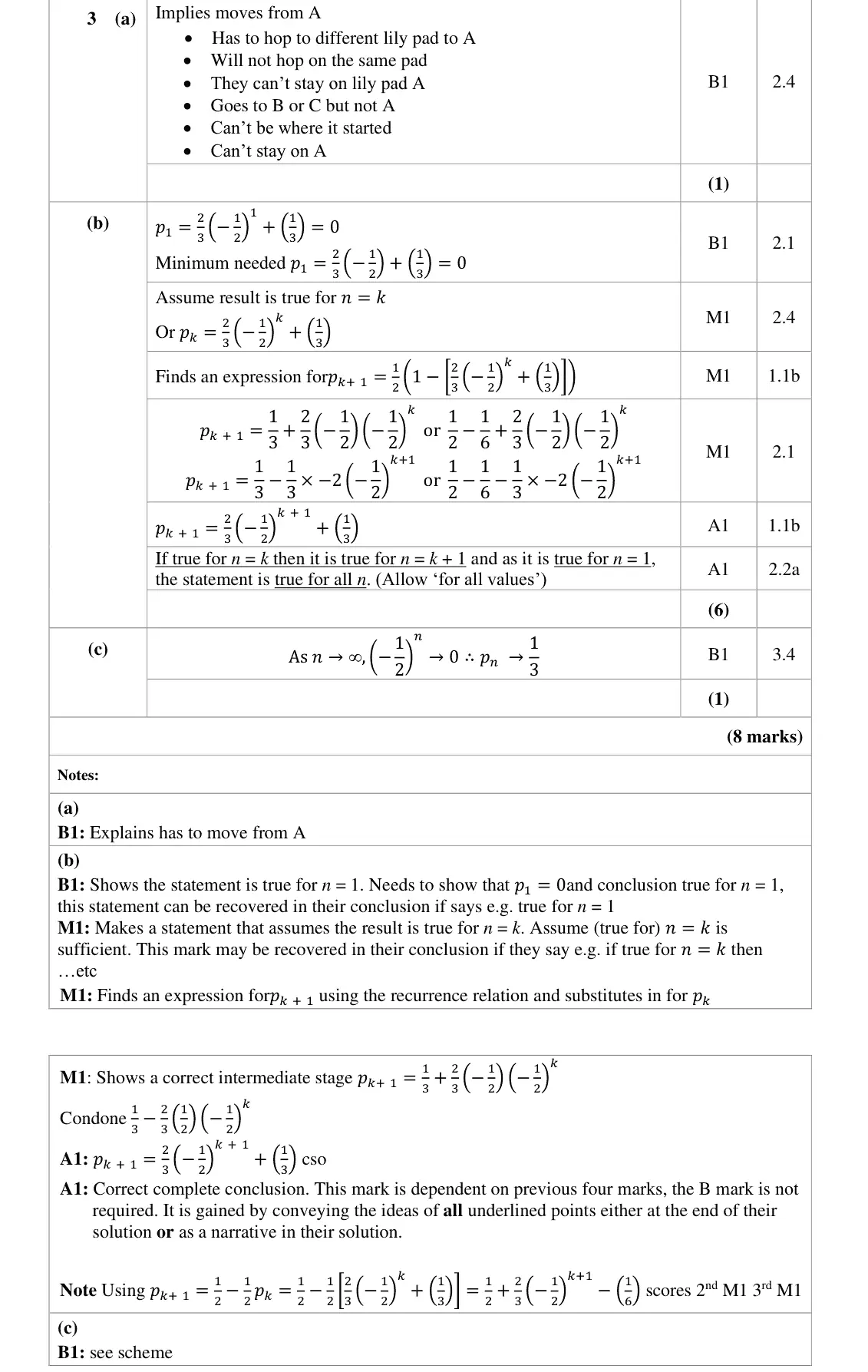
3(a) Recurrence relations and proof of closed forms 1 —
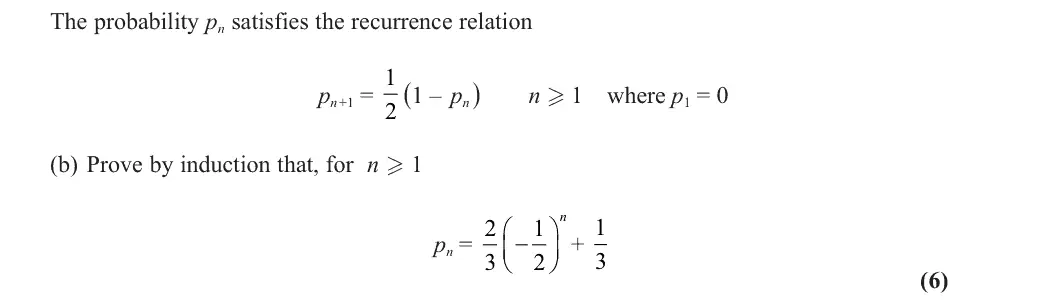
3(b) Recurrence relations and proof of closed forms 6 —
3(c) Recurrence relations and proof of closed forms 1 —
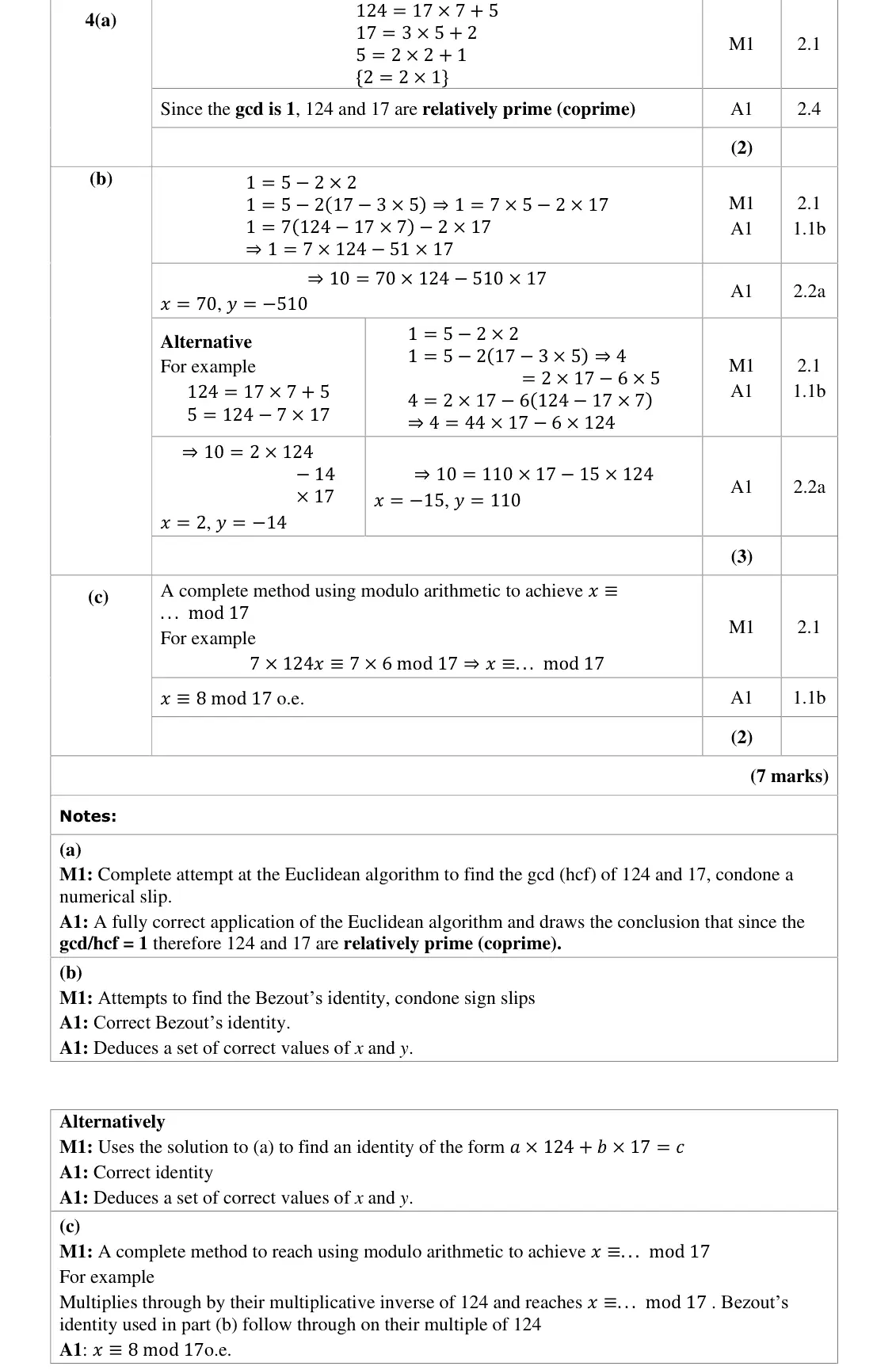
4(a) Number theory: Euclid, Bezout, modular arithmetic and Fermat 2 —
4(b) Number theory: Euclid, Bezout, modular arithmetic and Fermat 3 —
4(c) Number theory: Euclid, Bezout, modular arithmetic and Fermat 2 —
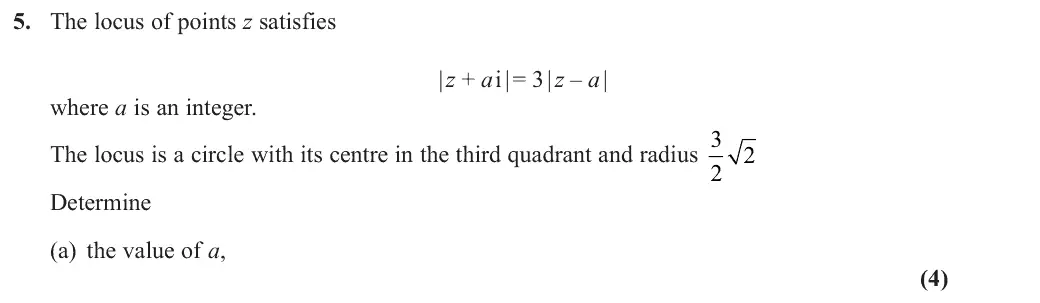
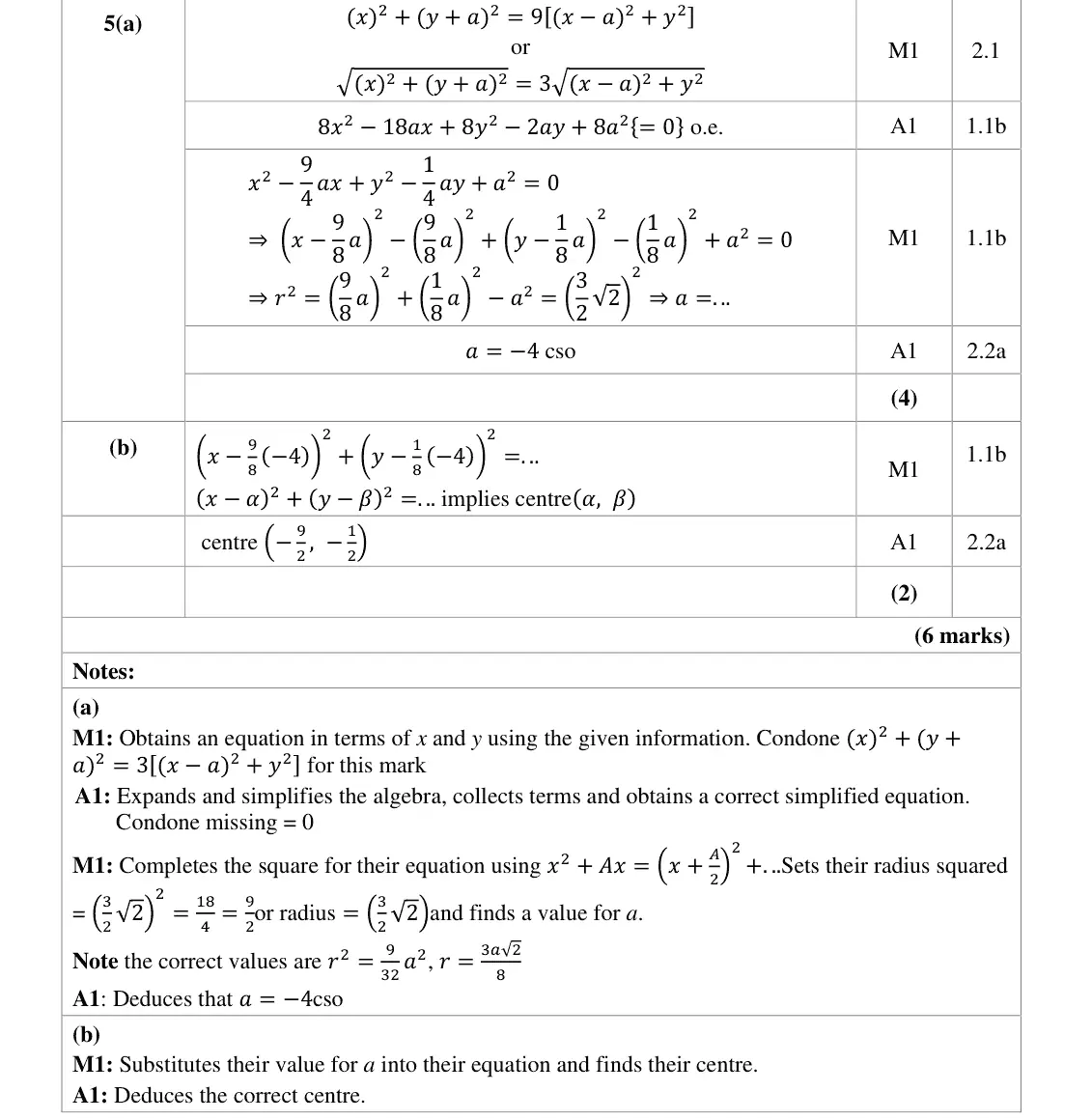
5(a) Further complex numbers: regions and transformations of the plane 4 —
5(b) Further complex numbers: regions and transformations of the plane 2 —
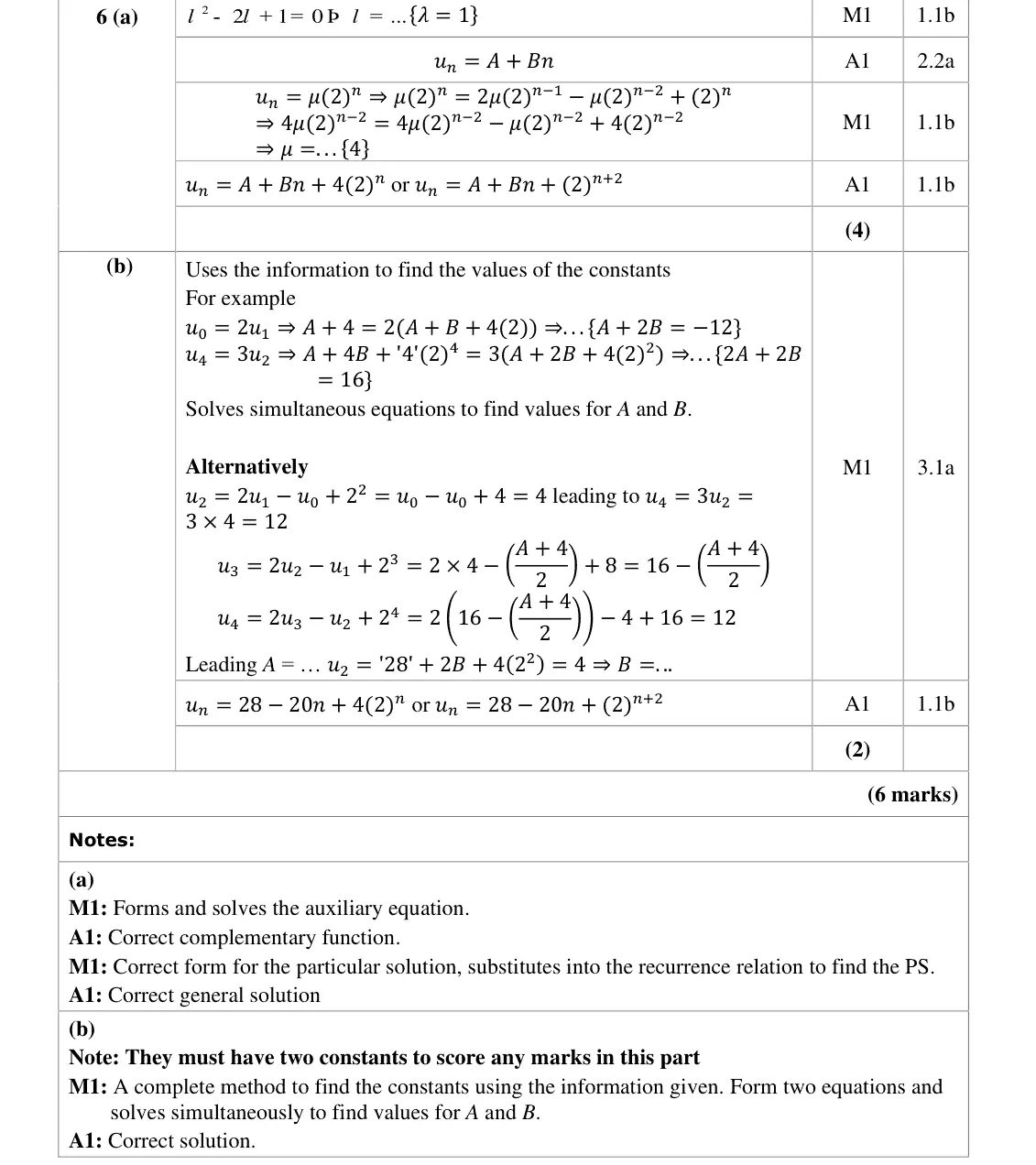
6(a) Recurrence relations and proof of closed forms 4 —
6(b) Recurrence relations and proof of closed forms 2 —
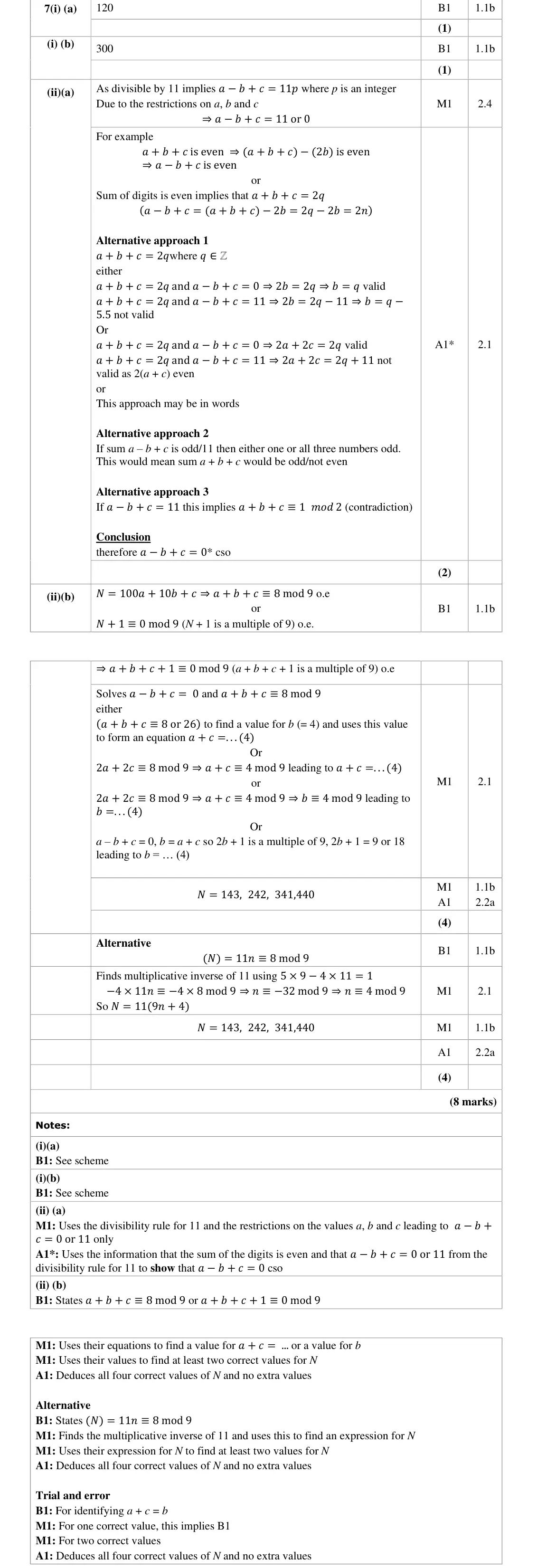
7(i)(a) Combinatorics: counting, permutations and combinations 1 —
7(i)(b) Combinatorics: counting, permutations and combinations 1 —
7(ii)(a) Number theory: Euclid, Bezout, modular arithmetic and Fermat 2 —
7(ii)(b) Number theory: Euclid, Bezout, modular arithmetic and Fermat 4 —
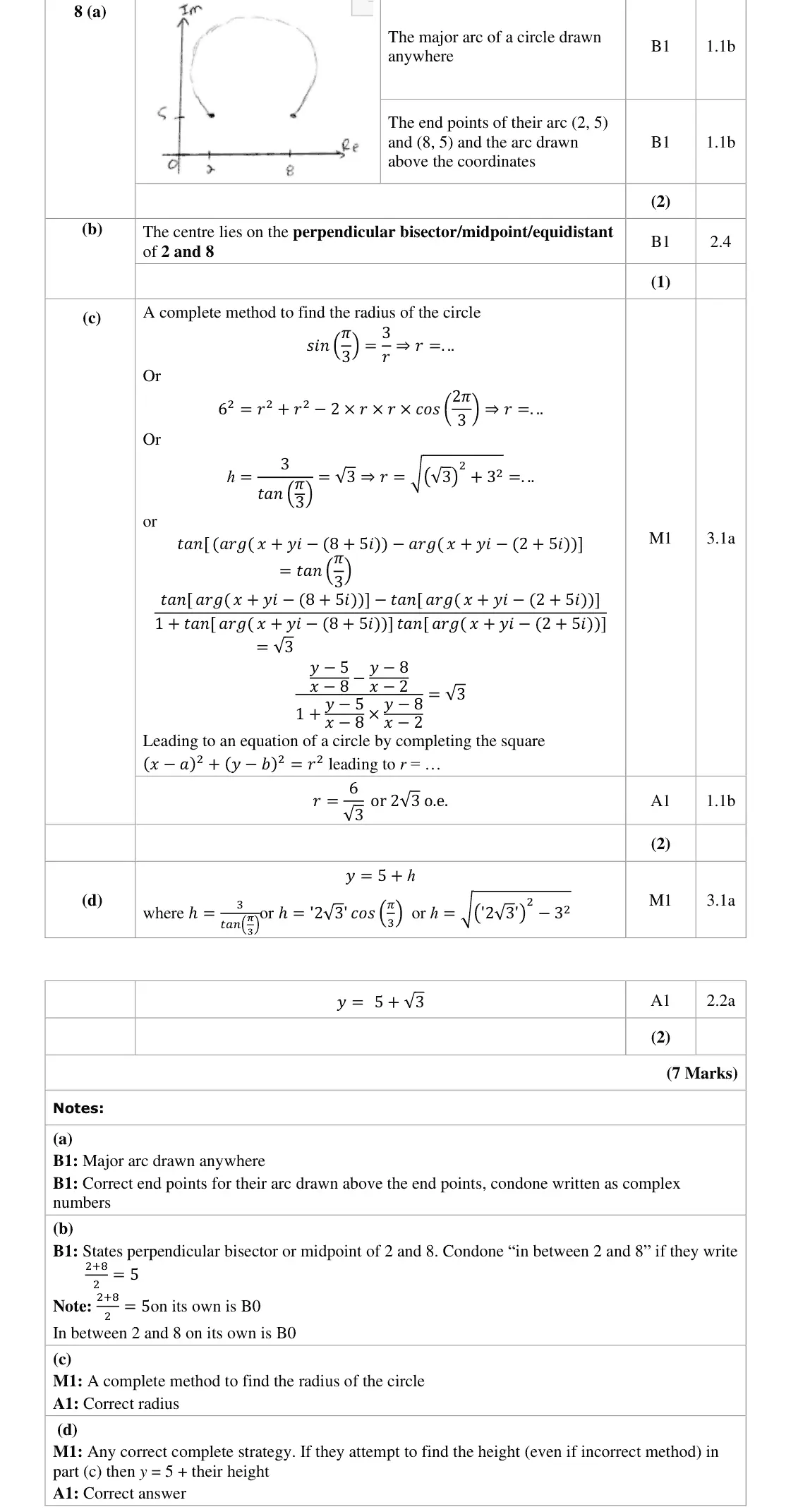
8(a) Further complex numbers: regions and transformations of the plane 2 —
8(b) Further complex numbers: regions and transformations of the plane 1 —
8(c) Further complex numbers: regions and transformations of the plane 2 —
8(d) Further complex numbers: regions and transformations of the plane 2 —
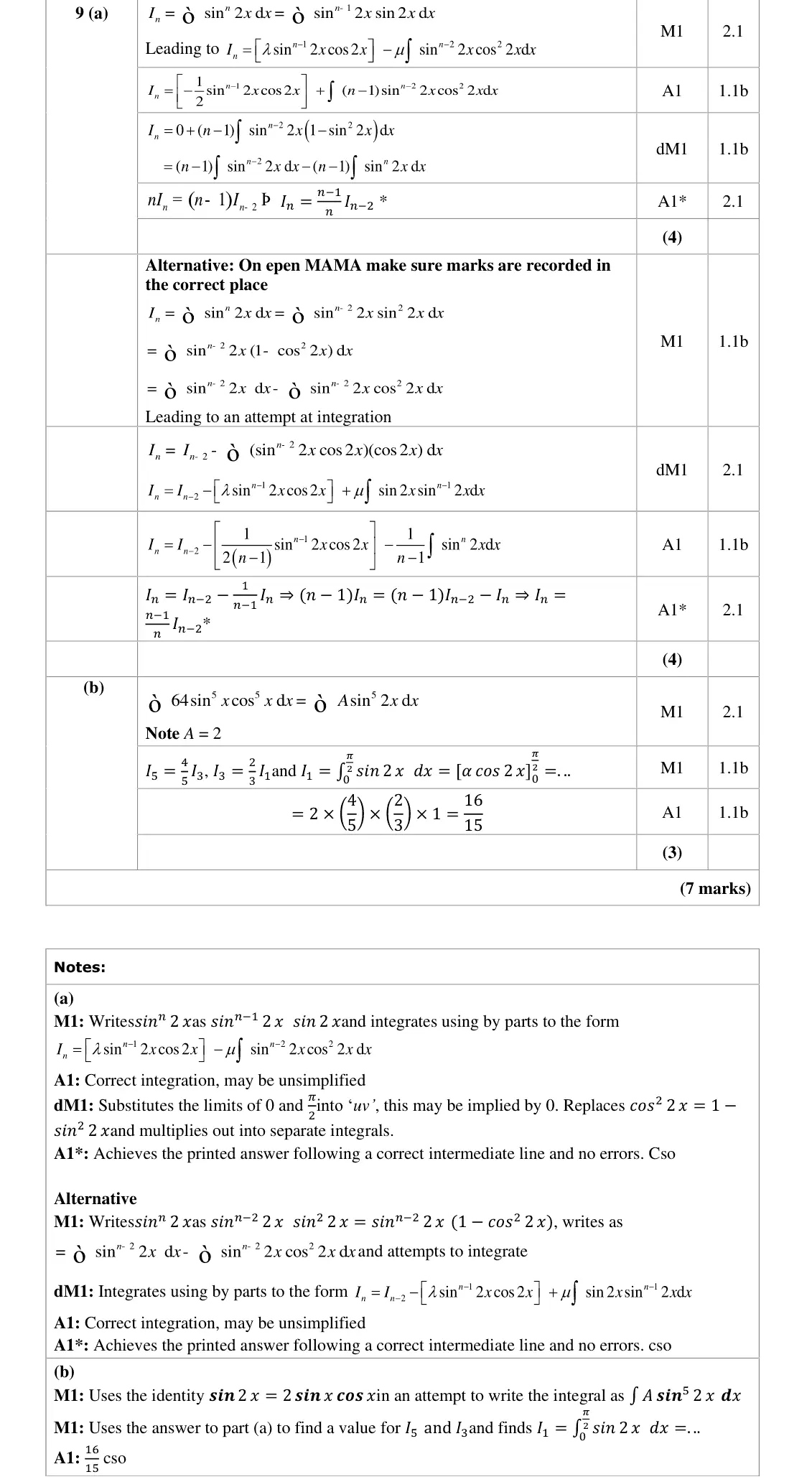
9(a) Reduction formulae, arc length and surface area 4 —
9(b) Reduction formulae, arc length and surface area 3 —
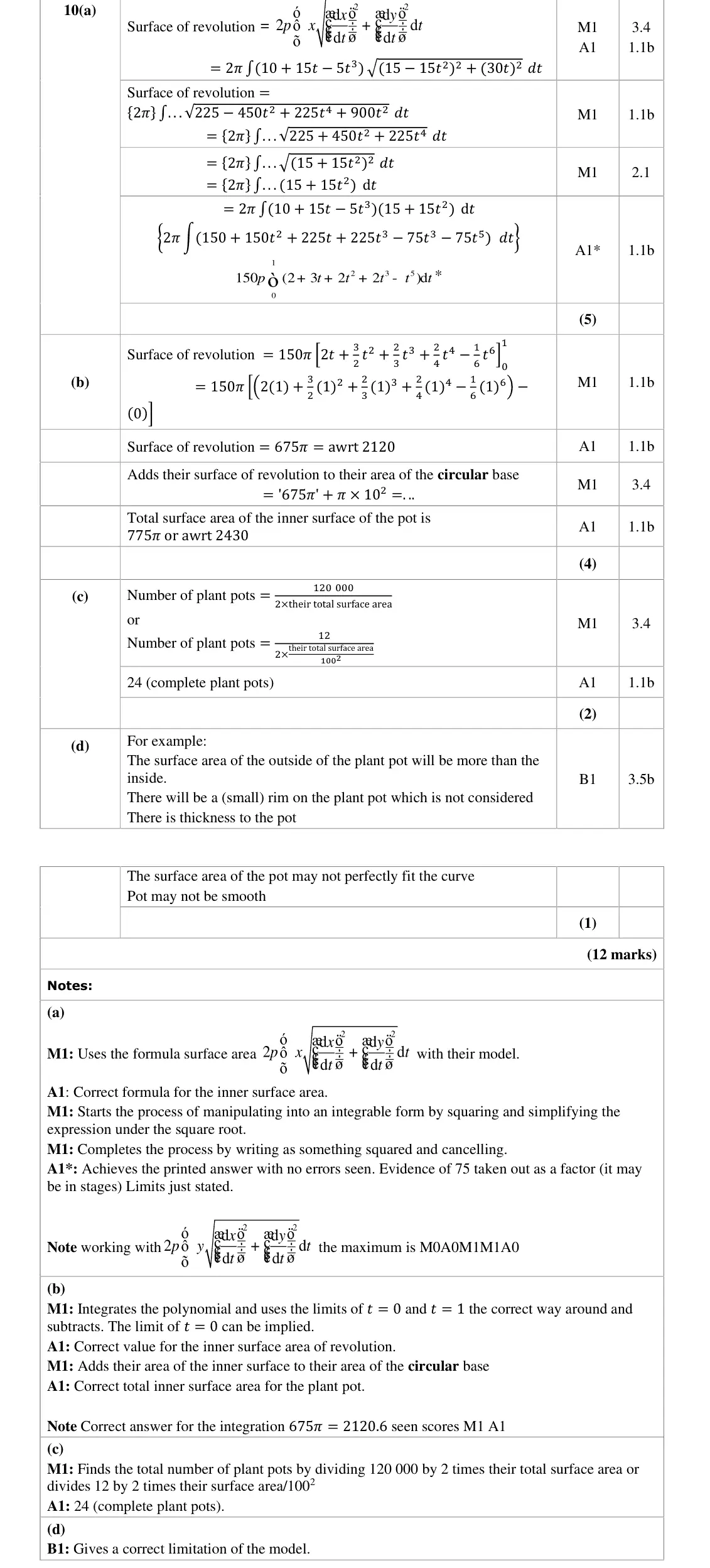
10(a) Reduction formulae, arc length and surface area 5 —
10(b) Reduction formulae, arc length and surface area 4 —
10(c) Reduction formulae, arc length and surface area 2 —
10(d) Reduction formulae, arc length and surface area 1 —

The questions

1(a)1(b)1(c)1(d)2(a)2(b)3(a)3(b)3(c)4(a)4(b)4(c)5(a)5(b)6(a)6(b)7(i)(a)7(i)(b)7(ii)(a)7(ii)(b)8(a)8(b)8(c)8(d)9(a)9(b)10(a)10(b)10(c)10(d)
June 2022 · Paper 4A (Further Pure 2) · Q1(a) 1 mark groups
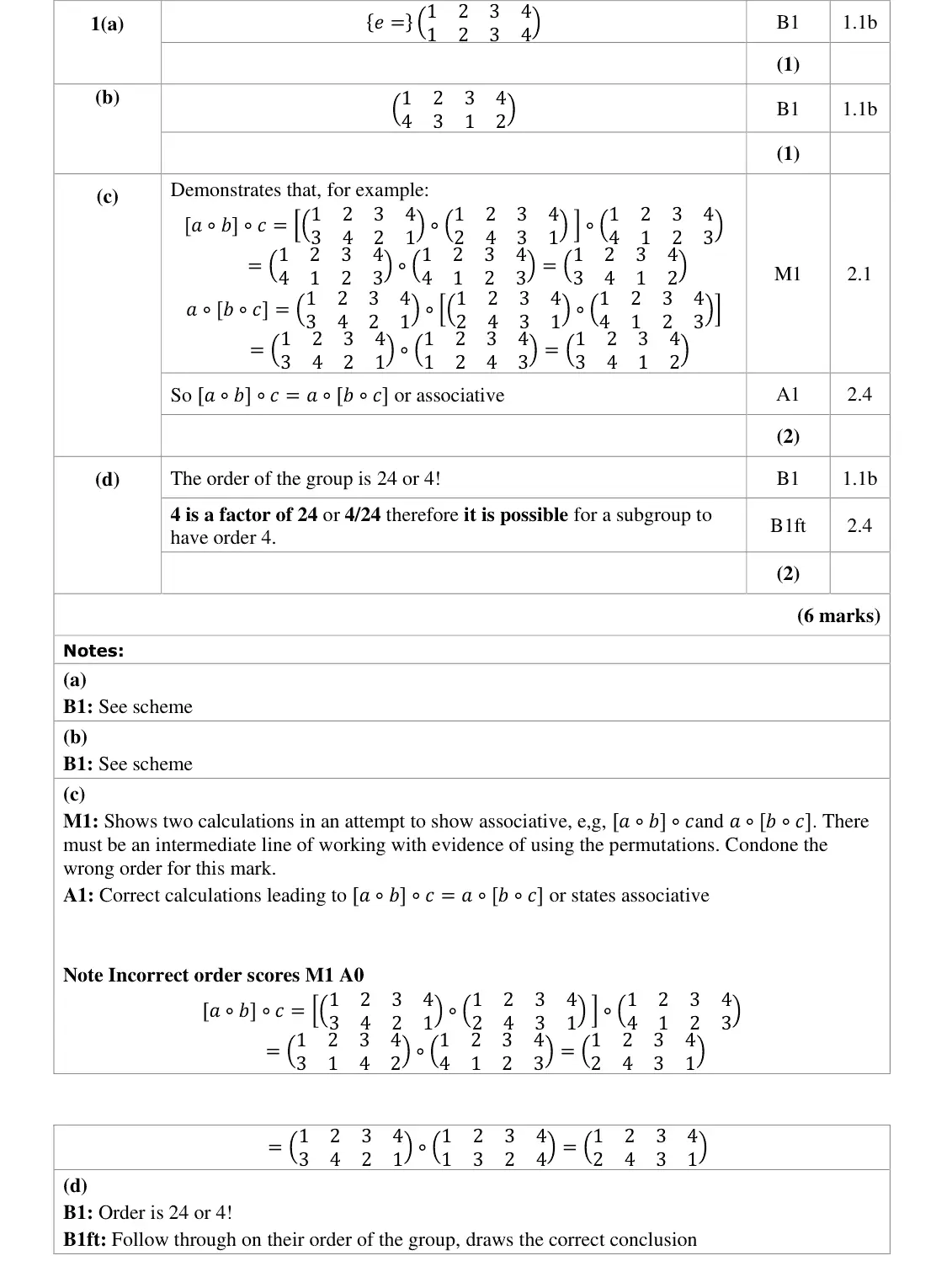
1. The group S4 is the set of all possible permutations that can be performed on the four numbers 1, 2, 3 and 4, under the operation of composition. For the group S4 (a) write down the identity element, (1)

June 2022 · Paper 4A (Further Pure 2) · Q1(b) 1 mark groups
(b) write down the inverse of the element a, where < a = ;: (1)
June 2022 · Paper 4A (Further Pure 2) · Q1(c) 2 marks groups
(c) demonstrate that the operation of composition is associative using the following elements < < < a = 87 b = 87 and c = ;: ;: ;: (2)
June 2022 · Paper 4A (Further Pure 2) · Q1(d) 2 marks groups
(d) Explain why it is possible for the group S4 to have a subgroup of order 4 You do not need to find such a subgroup. (2)
June 2022 · Paper 4A (Further Pure 2) · Q2(a) 5 marks eigenvalues and eigenvectors
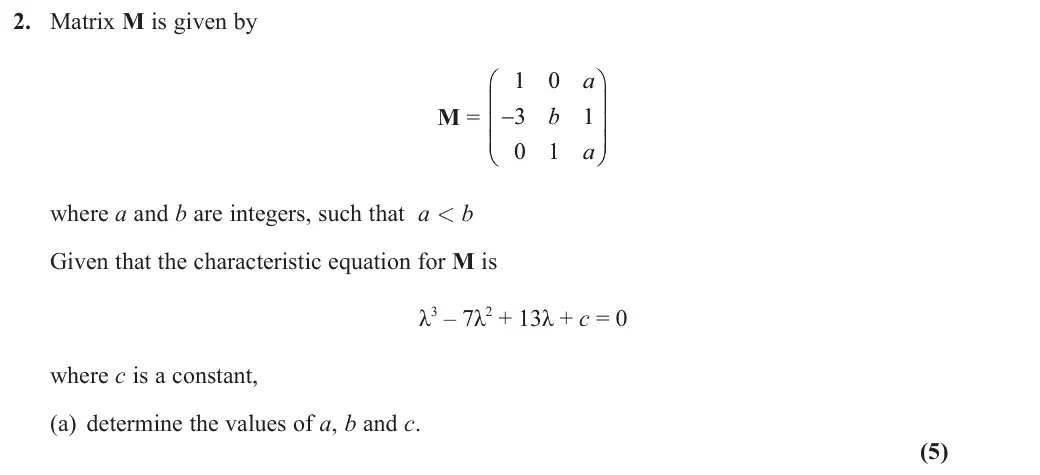
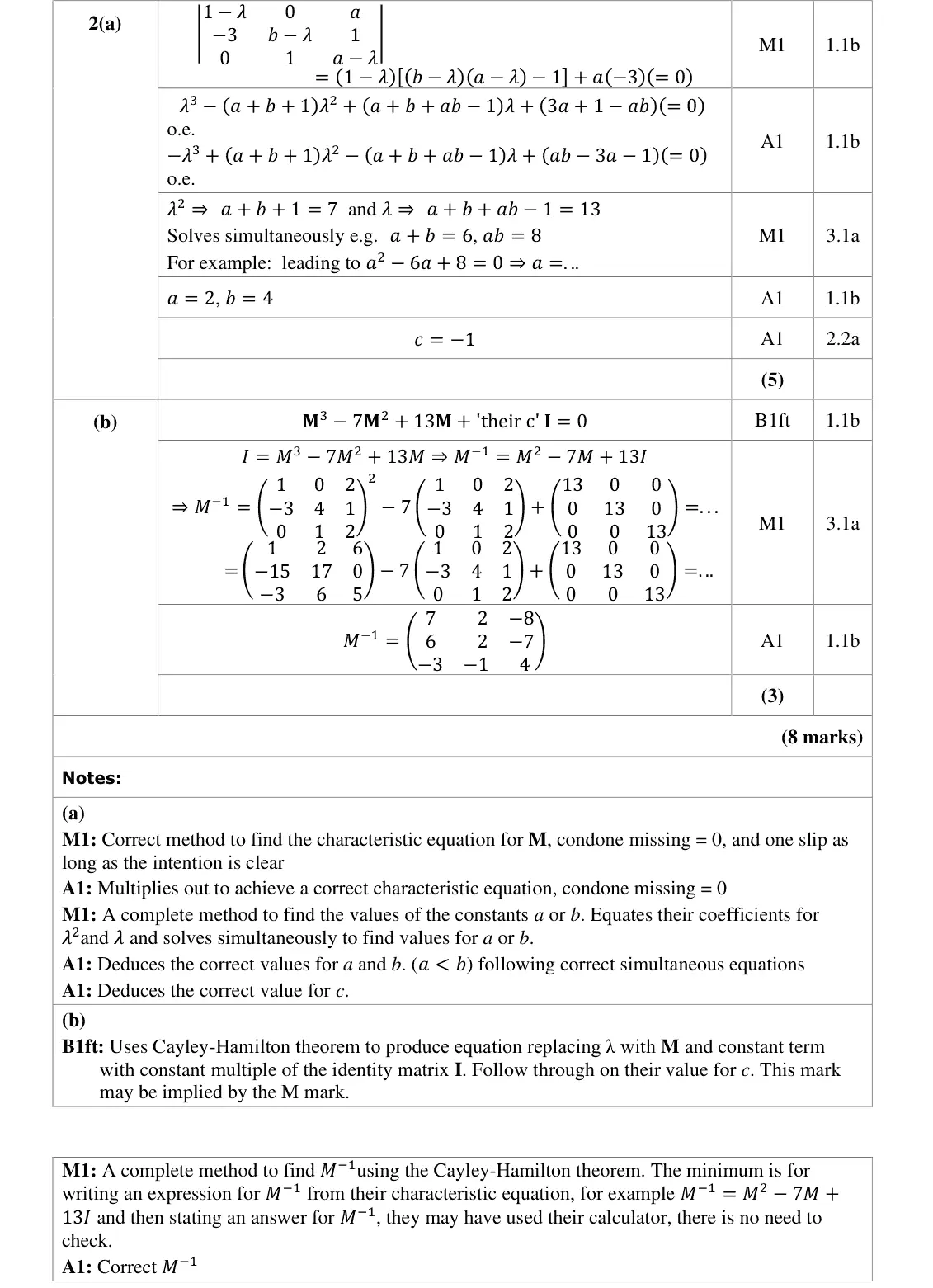
2. Matrix M is given by a ; M = b a : where a and b are integers, such that a < b Given that the characteristic equation for M is λ3 – 7λ2 + 13λ + c = 0 where c is a constant, (a) determine the values of a, b and c. (5)
June 2022 · Paper 4A (Further Pure 2) · Q2(b) 3 marks eigenvalues and eigenvectors
(b) Hence, using the Cayley–Hamilton theorem, determine the matrix M –1 (3)
June 2022 · Paper 4A (Further Pure 2) · Q3(a) 1 mark recurrence relations fp2
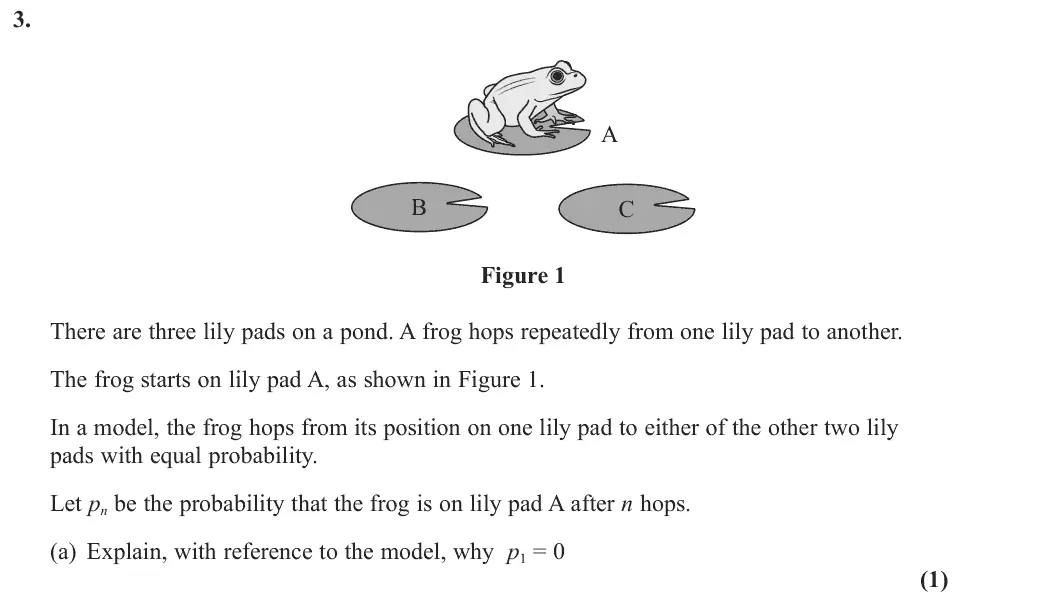
3. A B C Figure 1 There are three lily pads on a pond. A frog hops repeatedly from one lily pad to another. The frog starts on lily pad A, as shown in Figure 1. In a model, the frog hops from its position on one lily pad to either of the other two lily pads with equal probability. Let pn be the probability that the frog is on lily pad A after n hops. (a) Explain, with reference to the model, why p1 = 0 (1)
June 2022 · Paper 4A (Further Pure 2) · Q3(b) 6 marks recurrence relations fp2
The probability pn satisfies the recurrence relation pn +1 = 1 2 (1 – pn ) n 1 where p1 = 0 (b) Prove by induction that, for n 1 n pn = 2 + 1 ; :9 (6)
June 2022 · Paper 4A (Further Pure 2) · Q3(c) 1 mark recurrence relations fp2
(c) Use the result in part (b) to explain why, in the long term, the probability that the frog is on lily pad A is 1 (1)
June 2022 · Paper 4A (Further Pure 2) · Q4(a) 2 marks number theory
4. (a) Use the Euclidean algorithm to show that 124 and 17 are relatively prime (coprime). (2)
June 2022 · Paper 4A (Further Pure 2) · Q4(b) 3 marks number theory
(b) Hence solve the equation 124x + 17y = 10 (3)
June 2022 · Paper 4A (Further Pure 2) · Q4(c) 2 marks number theory
(c) Solve the congruence equation 124x ≡ 6 mod 17 (2)
June 2022 · Paper 4A (Further Pure 2) · Q5(a) 4 marks complex transformations
5. The locus of points z satisfies | z + a i | = 3 | z – a | where a is an integer. The locus is a circle with its centre in the third quadrant and radius 3 Determine (a) the value of a, (4)
June 2022 · Paper 4A (Further Pure 2) · Q5(b) 2 marks complex transformations
(b) the coordinates of the centre of the circle. (2)
June 2022 · Paper 4A (Further Pure 2) · Q6(a) 4 marks recurrence relations fp2
6. (a) Determine the general solution of the recurrence relation u n = 2u n – 1 – u n – 2 + 2n n 2 (4)
June 2022 · Paper 4A (Further Pure 2) · Q6(b) 2 marks recurrence relations fp2
(b) Hence solve this recurrence relation given that u0 = 2u1 and u4 = 3u2 (2)
June 2022 · Paper 4A (Further Pure 2) · Q7(i)(a) 1 mark combinatorics
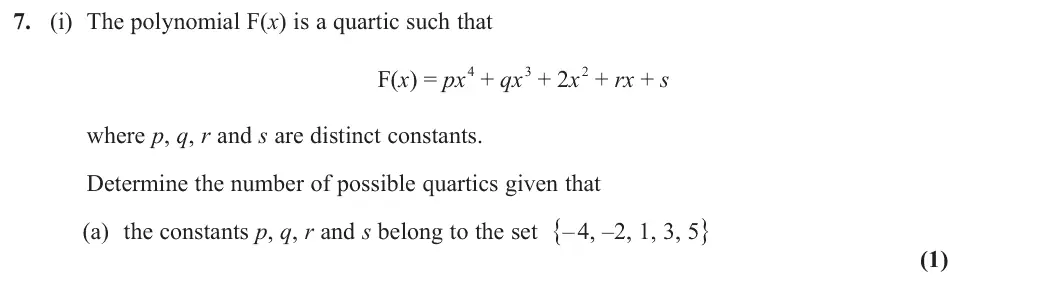
7. (i) The polynomial F(x) is a quartic such that F(x) = px 4 + qx 3 + 2x 2 + rx + s where p, q, r and s are distinct constants. Determine the number of possible quartics given that (a) the constants p, q, r and s belong to the set {– 4, –2, 1, 3, 5} (1)
June 2022 · Paper 4A (Further Pure 2) · Q7(i)(b) 1 mark combinatorics
(b) the constants p, q, r and s belong to the set {– 4, –2, 0, 1, 3, 5} (1)
June 2022 · Paper 4A (Further Pure 2) · Q7(ii)(a) 2 marks number theory
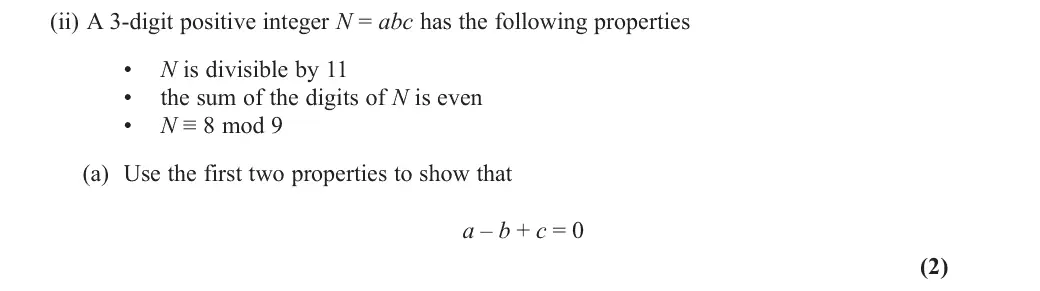
(ii) A 3-digit positive integer N = abc has the following properties • N is divisible by 11 • the sum of the digits of N is even • N ≡ 8 mod 9 (a) Use the first two properties to show that a – b + c = 0 (2)
June 2022 · Paper 4A (Further Pure 2) · Q7(ii)(b) 4 marks number theory
(b) Hence determine all possible integers N, showing all your working and reasoning. (4)
June 2022 · Paper 4A (Further Pure 2) · Q8(a) 2 marks complex transformations
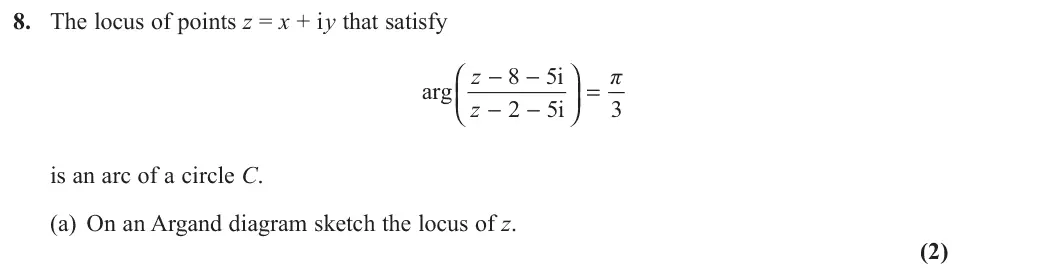
8. The locus of points z = x + i y that satisfy z - - 5i pi = arg z - - 5i is an arc of a circle C. (a) On an Argand diagram sketch the locus of z. (2)
June 2022 · Paper 4A (Further Pure 2) · Q8(b) 1 mark complex transformations
(b) Explain why the centre of C has x coordinate 5 (1)
June 2022 · Paper 4A (Further Pure 2) · Q8(c) 2 marks complex transformations
(c) Determine the radius of C. (2)
June 2022 · Paper 4A (Further Pure 2) · Q8(d) 2 marks complex transformations
(d) Determine the y coordinate of the centre of C. (2)
June 2022 · Paper 4A (Further Pure 2) · Q9(a) 4 marks reduction formulae arc length
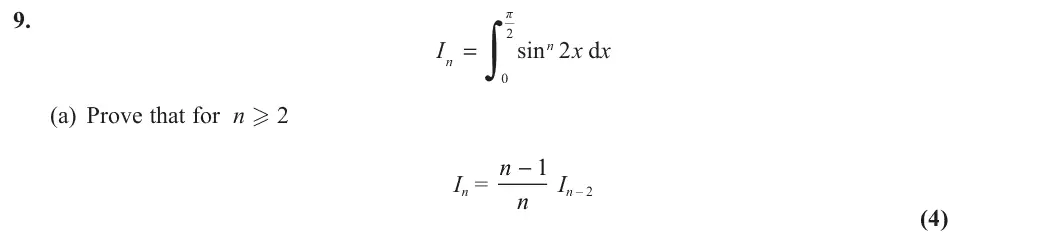
9. pi =∫ nI sin 2 d x x n (a) Prove that for n 2 In = n -1 In – 2 n (4)
June 2022 · Paper 4A (Further Pure 2) · Q9(b) 3 marks reduction formulae arc length
(b) Hence determine the exact value of pi ∫ x x x 64sin cos d (3)
June 2022 · Paper 4A (Further Pure 2) · Q10(a) 5 marks reduction formulae arc length
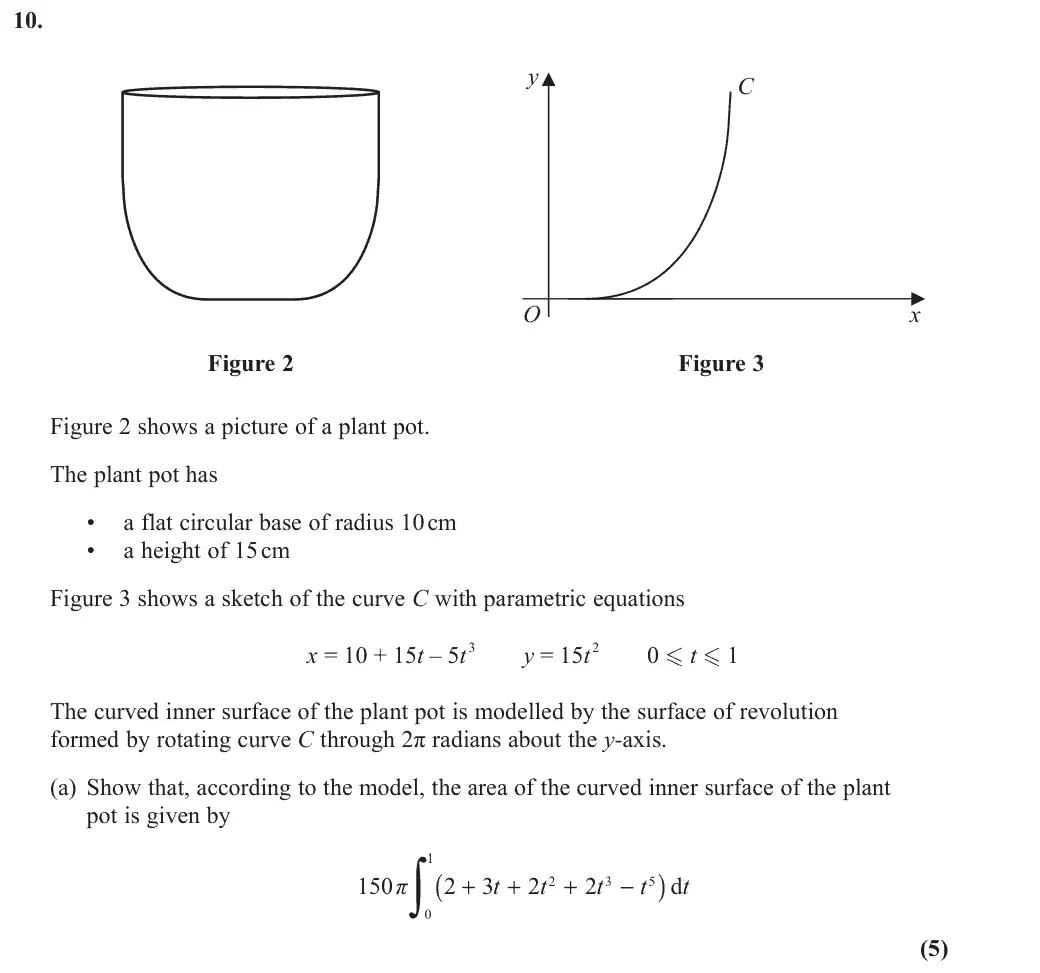
10. y C x Figure 2 Figure 3 Figure 2 shows a picture of a plant pot. The plant pot has • a flat circular base of radius 10 cm • a height of 15 cm Figure 3 shows a sketch of the curve C with parametric equations x = 10 + 15t – 5t 3 y = 15t 2 0 t 1 The curved inner surface of the plant pot is modelled by the surface of revolution formed by rotating curve C through 2 pi radians about the y-axis. (a) Show that, according to the model, the area of the curved inner surface of the plant pot is given by ∫ ( ) pi + t + t + t - t d t (5)
June 2022 · Paper 4A (Further Pure 2) · Q10(b) 4 marks reduction formulae arc length
(b) Determine, according to the model, the total area of the inner surface of the plant pot. (4)
June 2022 · Paper 4A (Further Pure 2) · Q10(c) 2 marks reduction formulae arc length
Each plant pot will be painted with one coat of paint, both inside and outside. The paint in one tin will cover an area of 12 m2 (c) Use the answer to part (b) to estimate how many plant pots can be painted using one tin of paint. (2)
June 2022 · Paper 4A (Further Pure 2) · Q10(d) 1 mark reduction formulae arc length
(d) Give a reason why the model might not give an accurate answer to part (c). (1)

Find an Edexcel Further Maths tutor

Want this paper marked and gone through with a Further Maths tutor? Message us.

Prefer email? Send an enquiry

If you are under 18, please include a parent's contact details. Enquiries go to enquiries@alevelfurthermathstutor.com and are deleted once handled.