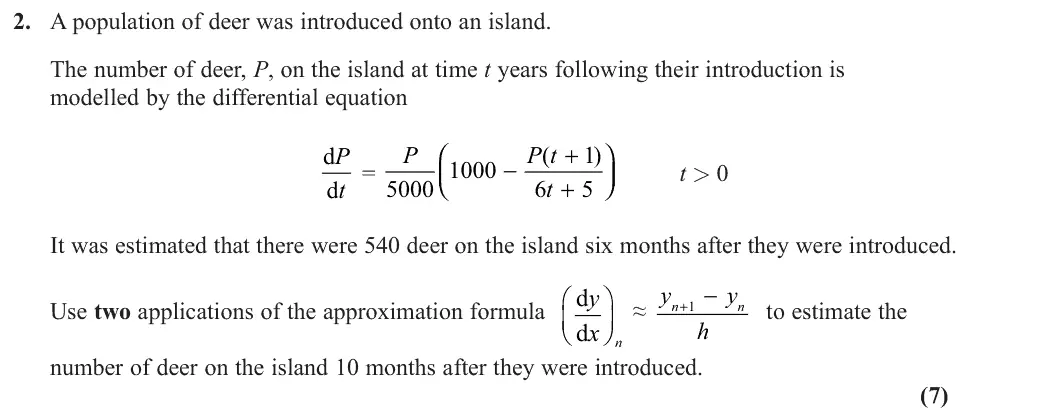
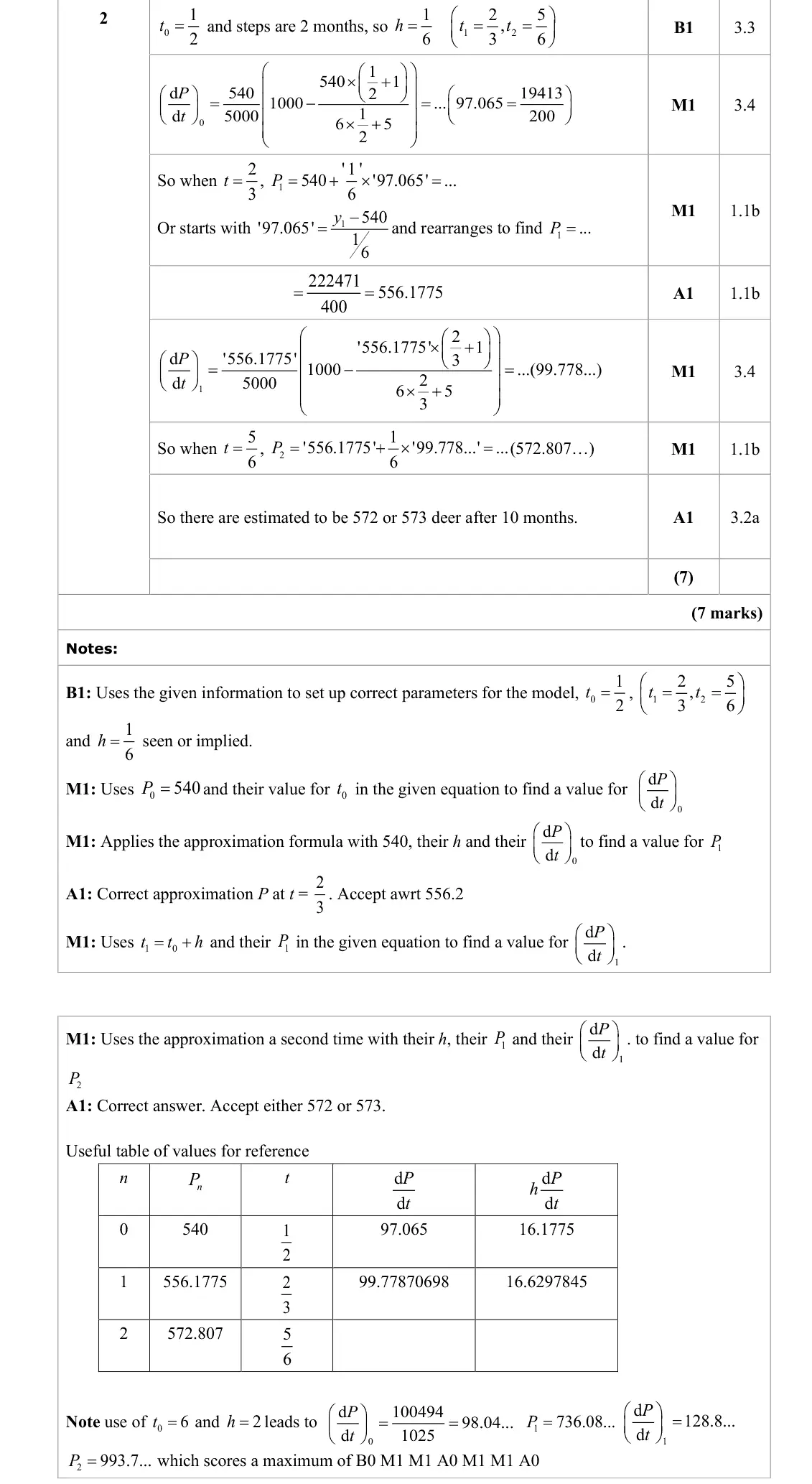
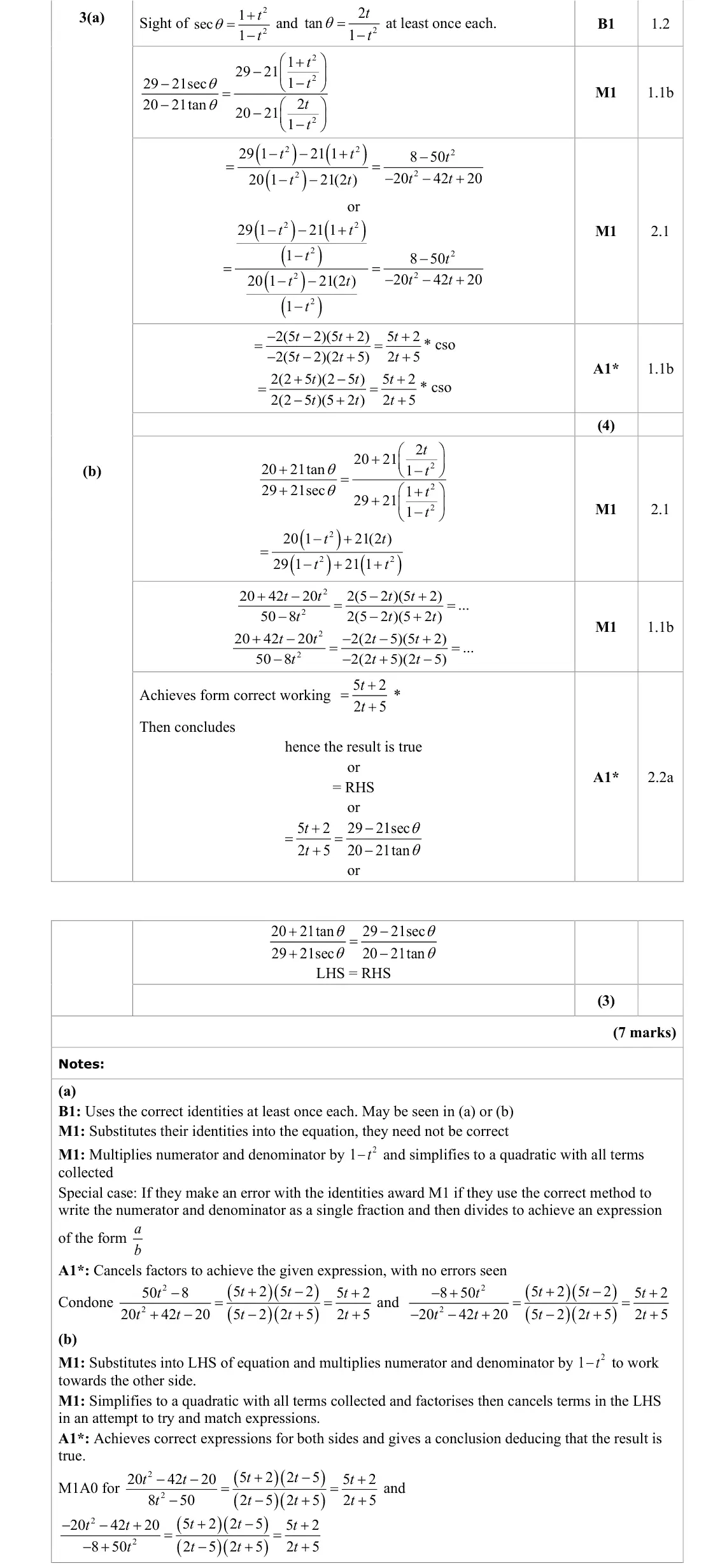
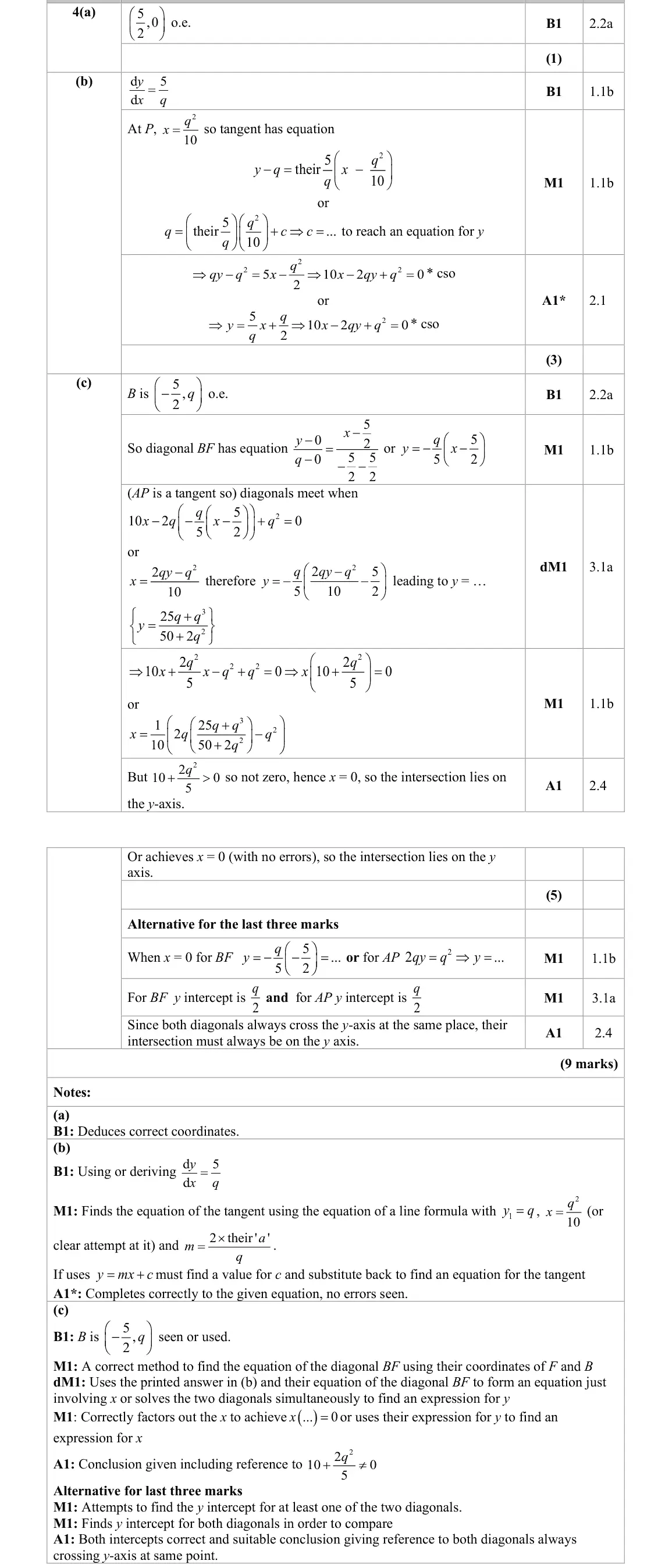
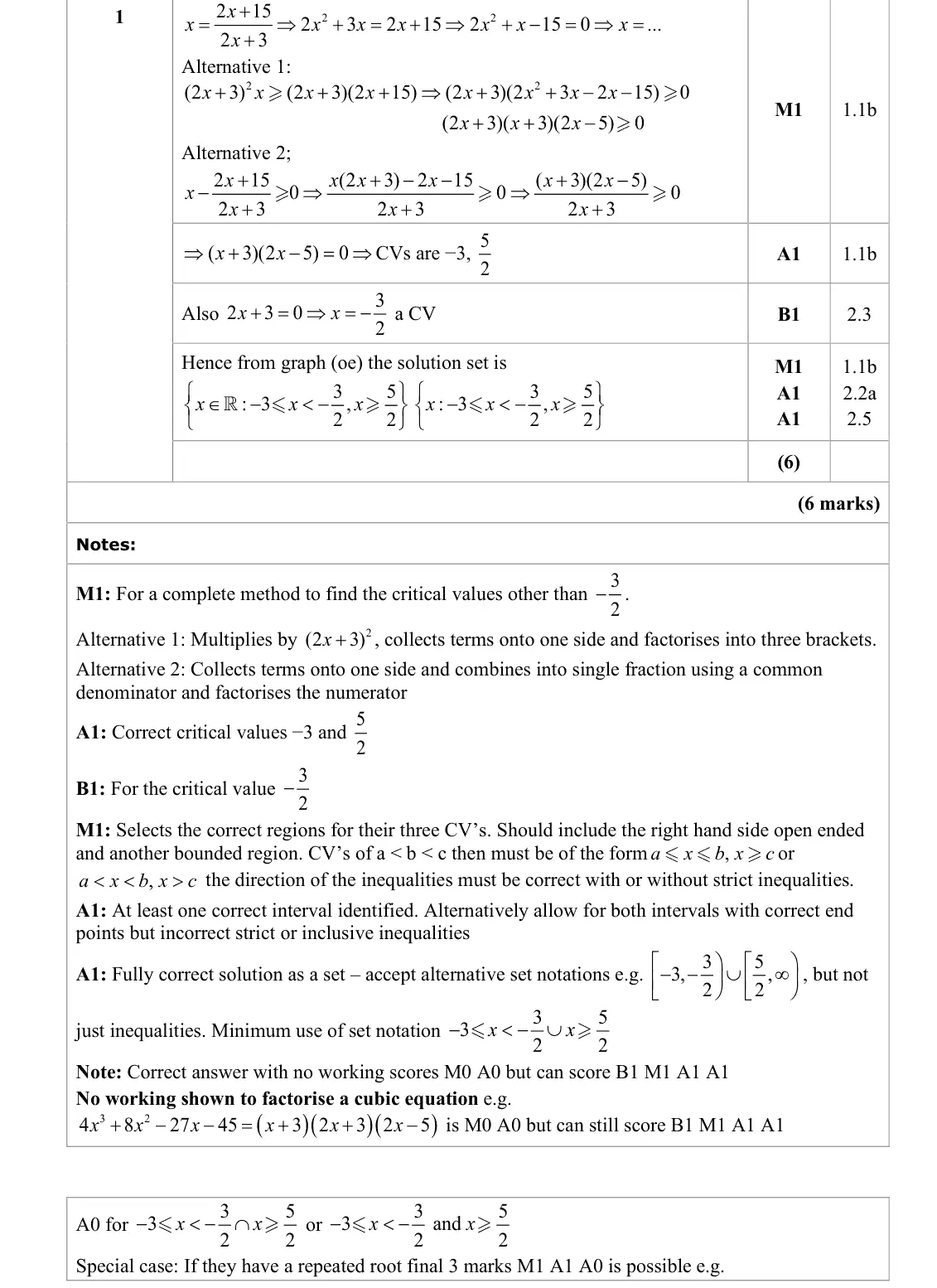
Mark scheme (whole question; this part is marked with the orange bar)
Examiner's comment
The vast majority of candidates understood how to approach this question, with the most common approach to be multiplying both sides by ( ) 2 2 3 x + , rearranging, simplifying and factorising. In most cases this was successful, although there were some arithmetic errors. Amongst candidates who expanded to a cubic only a very few showed an algebraic method to locate the critical values, and lost marks as a result. Almost all candidates located 3 2 - as a critical value but only a minority recognised that the function was not defined at this value. Most candidates with 3 critical values went on to correctly identify the inequalities needed to solve the inequality, however most used weak inequalities throughout, rather than the strict inequality needed for 3 2 - . A significant number of responses did not use set notation in their final answer and lost the last A1 as a result.
Key points from the mark scheme and examiner's report
- multiply by (2x + 3)² or combine into one fraction: (x + 3)(2x − 5)/(2x + 3) ≥ 0
- critical values −3, −3/2, 5/2
- answer −3 ≤ x < −3/2 or x ≥ 5/2 in set notation
- −3/2 must be strict (function undefined)
- missing set notation loses the last mark
- an unfactorised cubic with no working loses the method marks