Examiner's comment
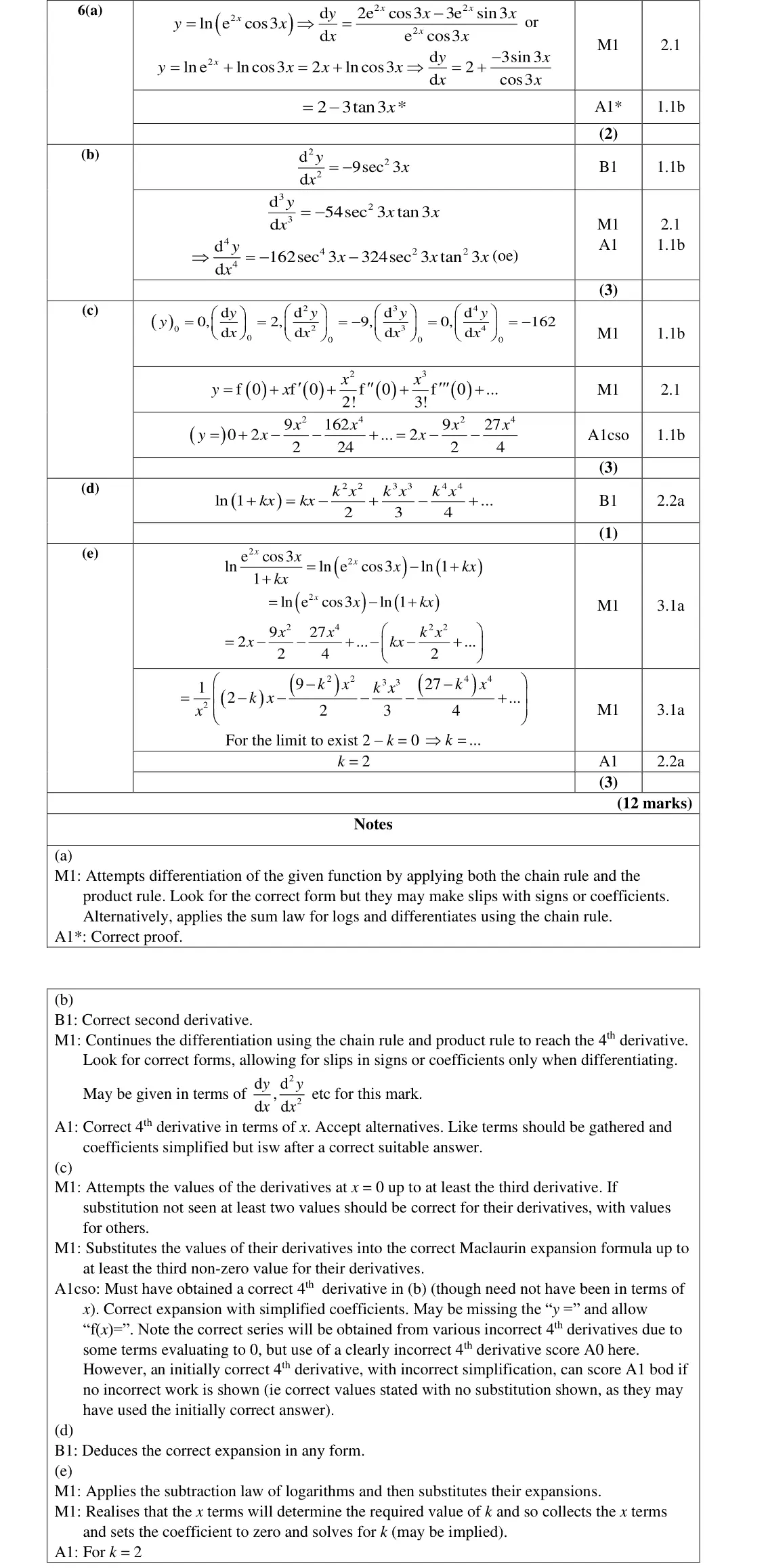
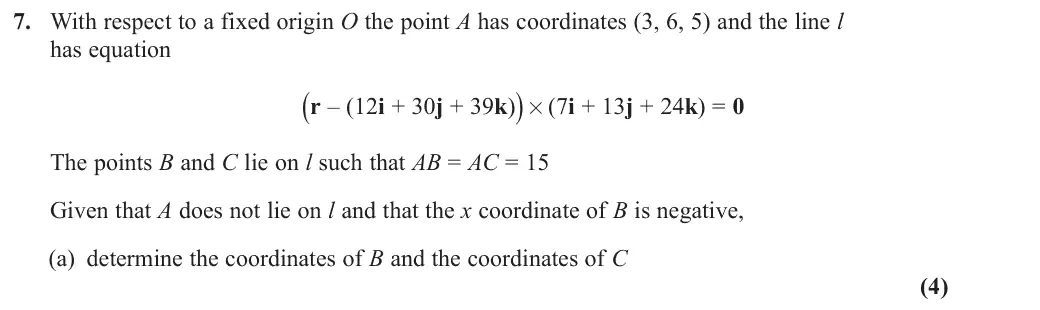
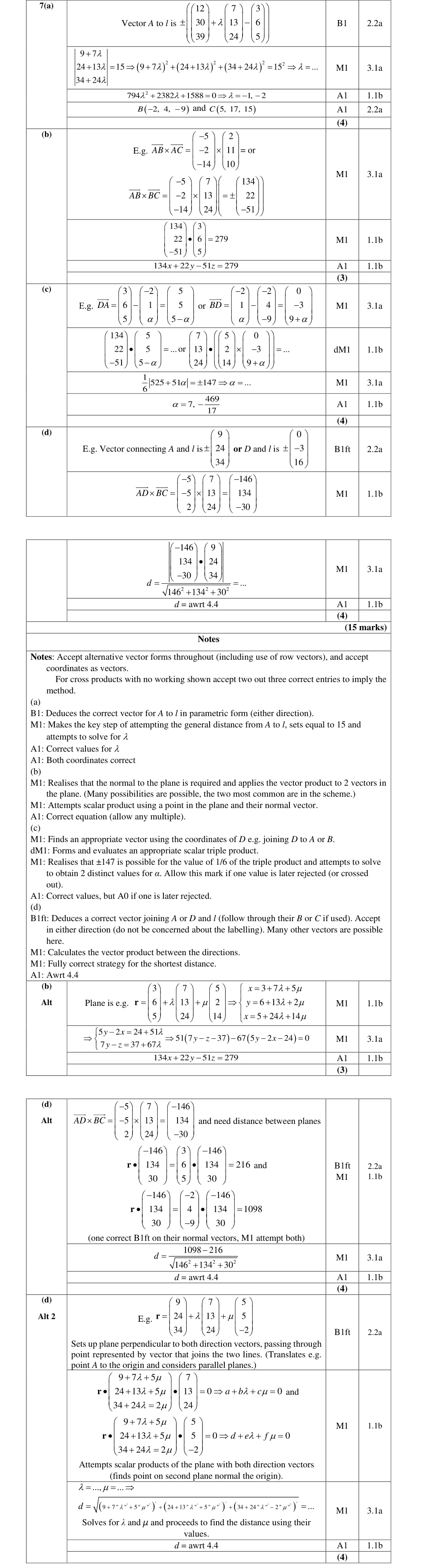
Easily the most challenging question of the paper, with many students unable to make progress, especially in the latter parts. However, there were still many who were able to successfully complete the whole question, so there was little evidence time was an issue, but mainly the low scores were due to very poor attempts with students unable to determine what was required. Vectors is, and will continue to be, one of the most demanding subjects for students. However, the majority were able to make some progress in places, though only the higher-grade students could access part (d). The techniques involved throughout seemed to be well known to many, with formulae quoted for various parts. However, in many cases these were not always employed to good effect, but sometimes just stated without the students working out the relevant vectors needed to use in them. It would help the understanding of a solution if students clearly stated which vectors they were using in their attempted solution. The method of evaluating cross products was well demonstrated by the majority, but there were a lot of arithmetic errors, sign errors and poor notation during the workings and simplifications, even for students who knew the required steps. As the question progressed, workings became scrappier as students struggled to find their way through, and possibly hurried to finish the paper, with many attempting dot and cross products of any vector they could find just in case it helped. By part (d), many students had given up and offered no solution at all. For those who did persevere, the most common approach was for students to quote and attempt to apply the formula for the shortest distance. Clearly many had memorised this in anticipation. However, working out which vectors to use did prove a challenge for many, and this part did discriminate very well at the top-grade range. Where incorrect answers to part (c) had been found, the first three marks were still attainable in this part and were scored by many students. Identifying a vector connecting A and the line was often, but not always, done correctly with the first shown in the mark scheme the prevalent one. Likewise, good progress with the required cross product was often made, and once achieved the completion of the method usually followed. But correct answers were relatively rare, as slips in earlier working, an incorrect alpha being very common, prevented the correct answer being found. Other approaches were seen to this part, by those who either had not learned or remembered the shortest distance formula, and some students were able to work their way to a solution through the alternatives shown in the scheme. These tended to be longer winded and prone to errors in calculation, or required dependence on calculators solving equations, but showed good ability to think through a situation to come up with an approach to the answer.