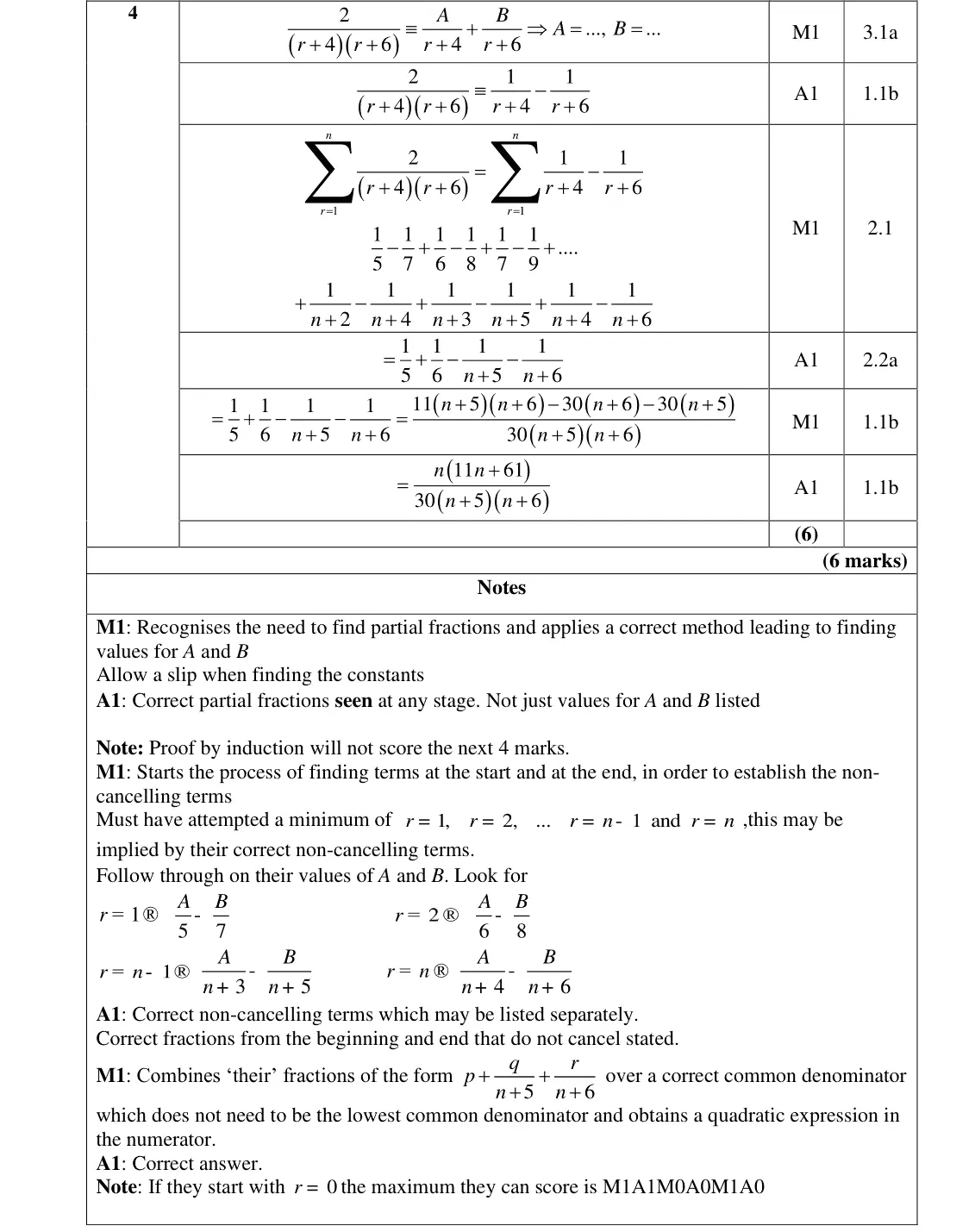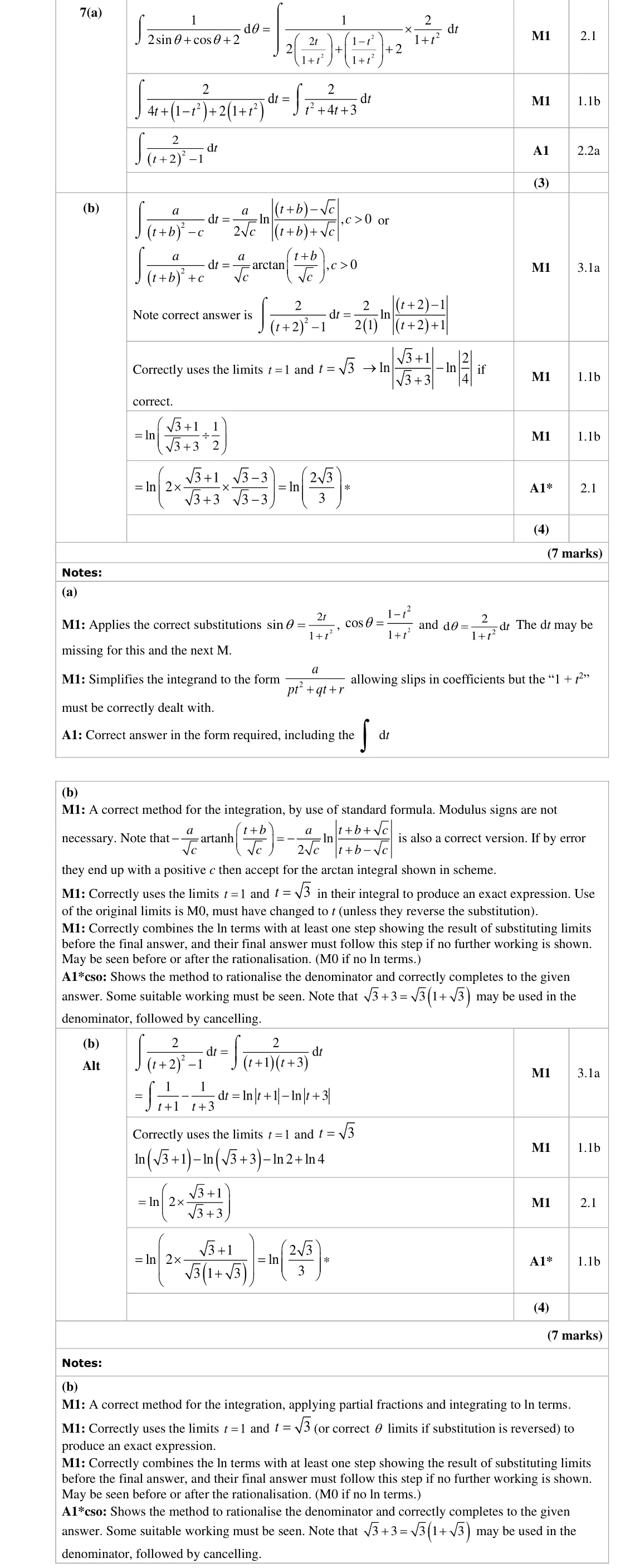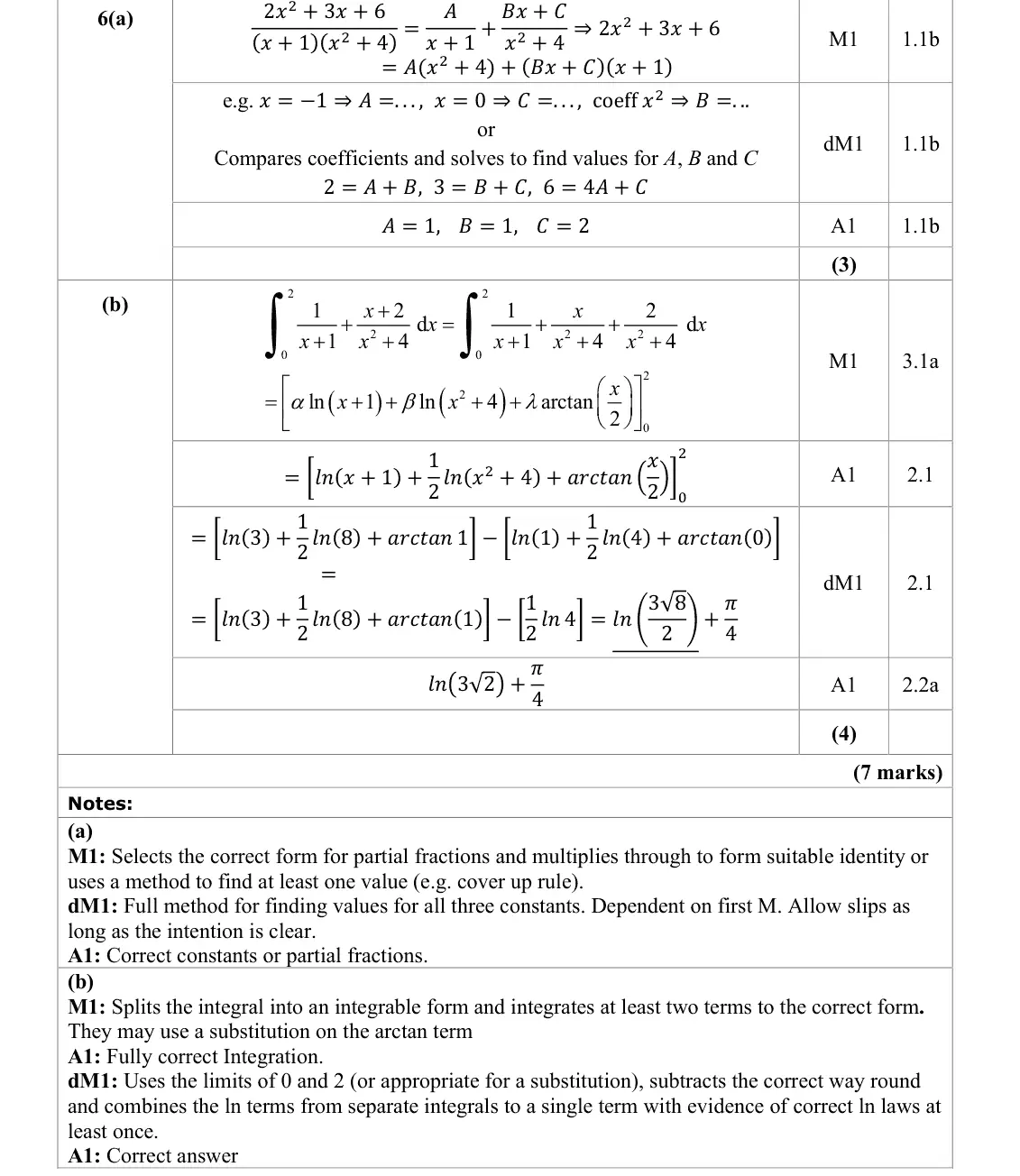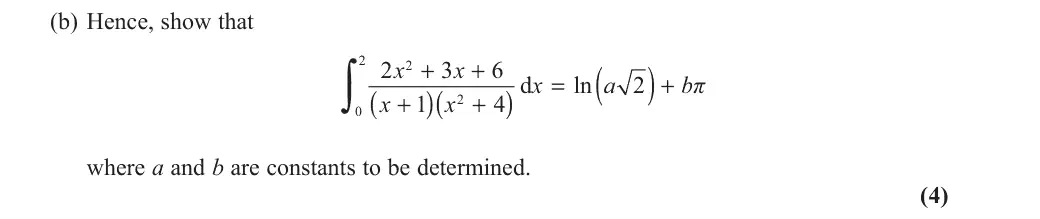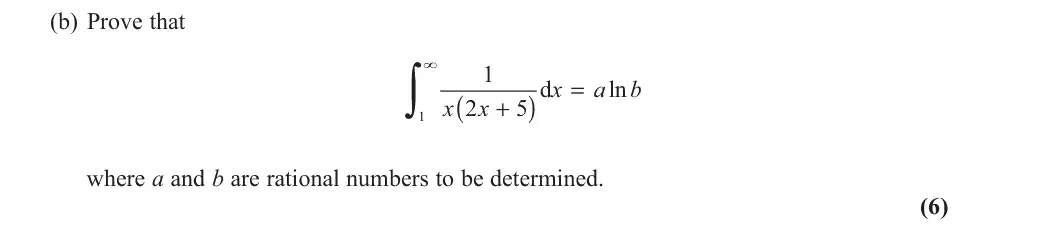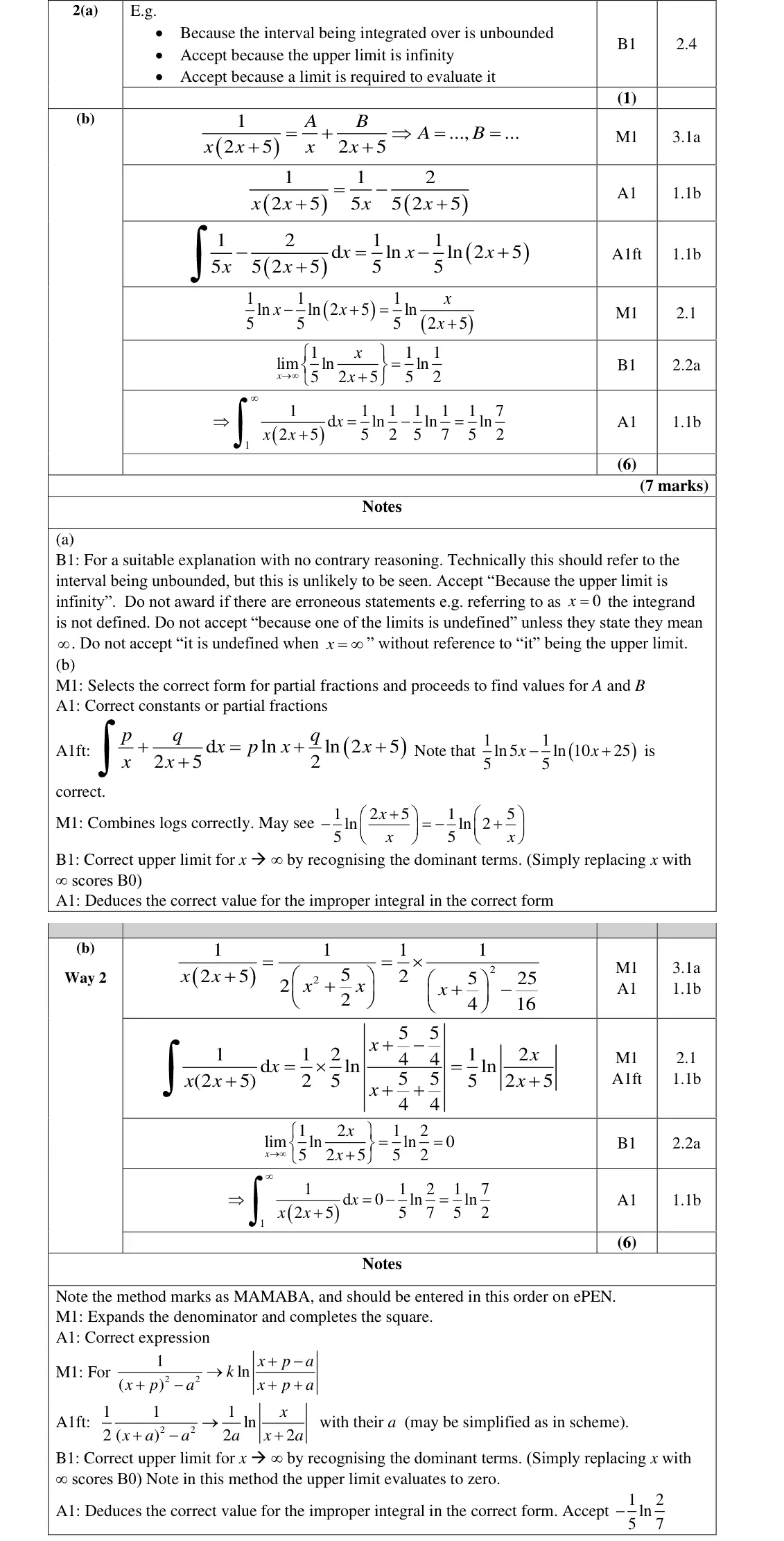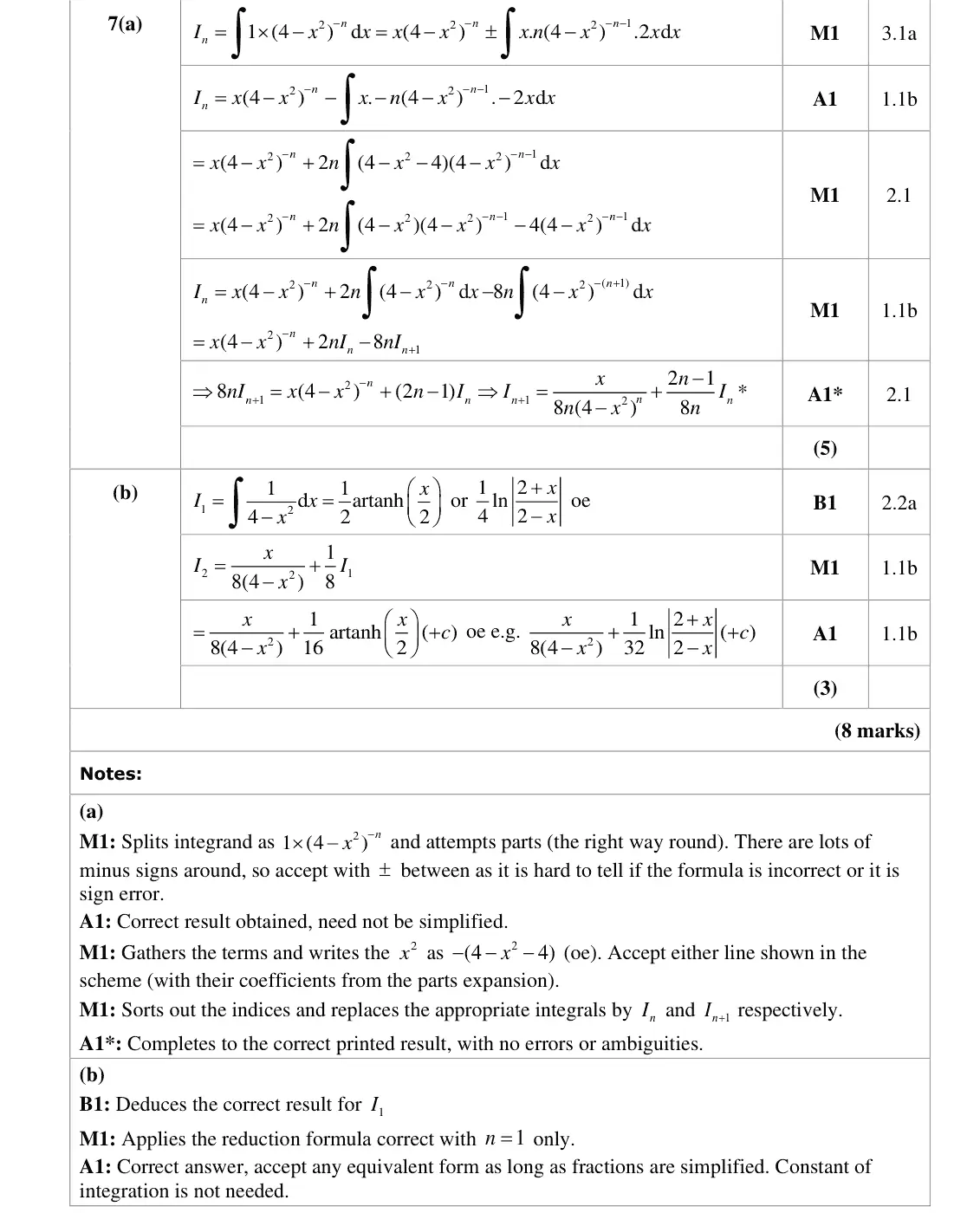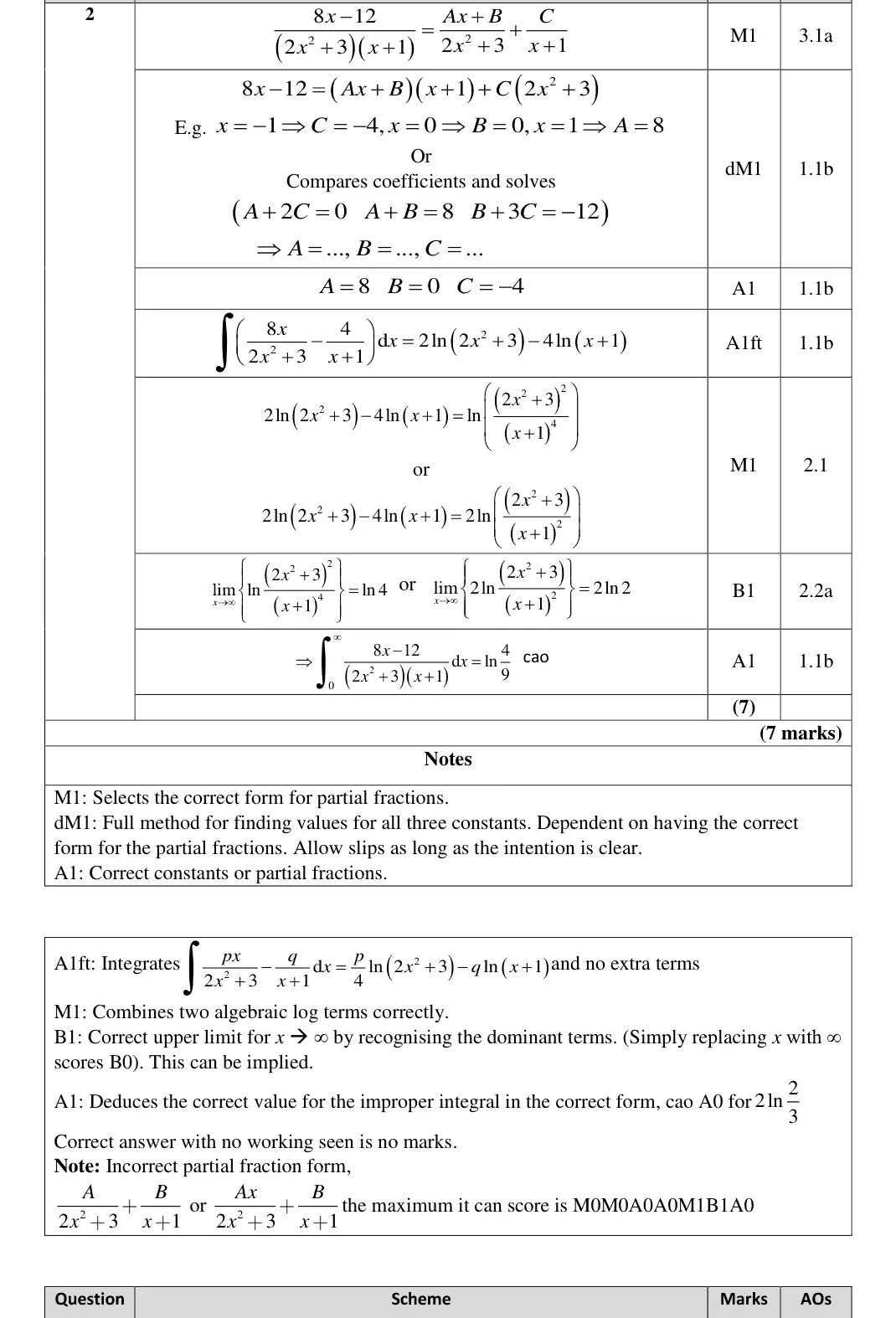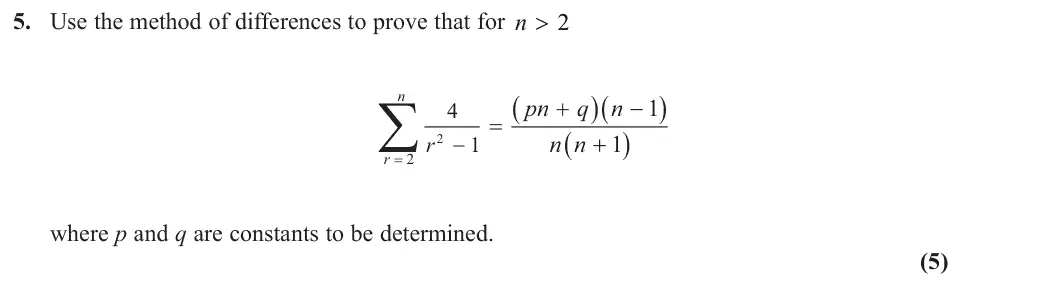
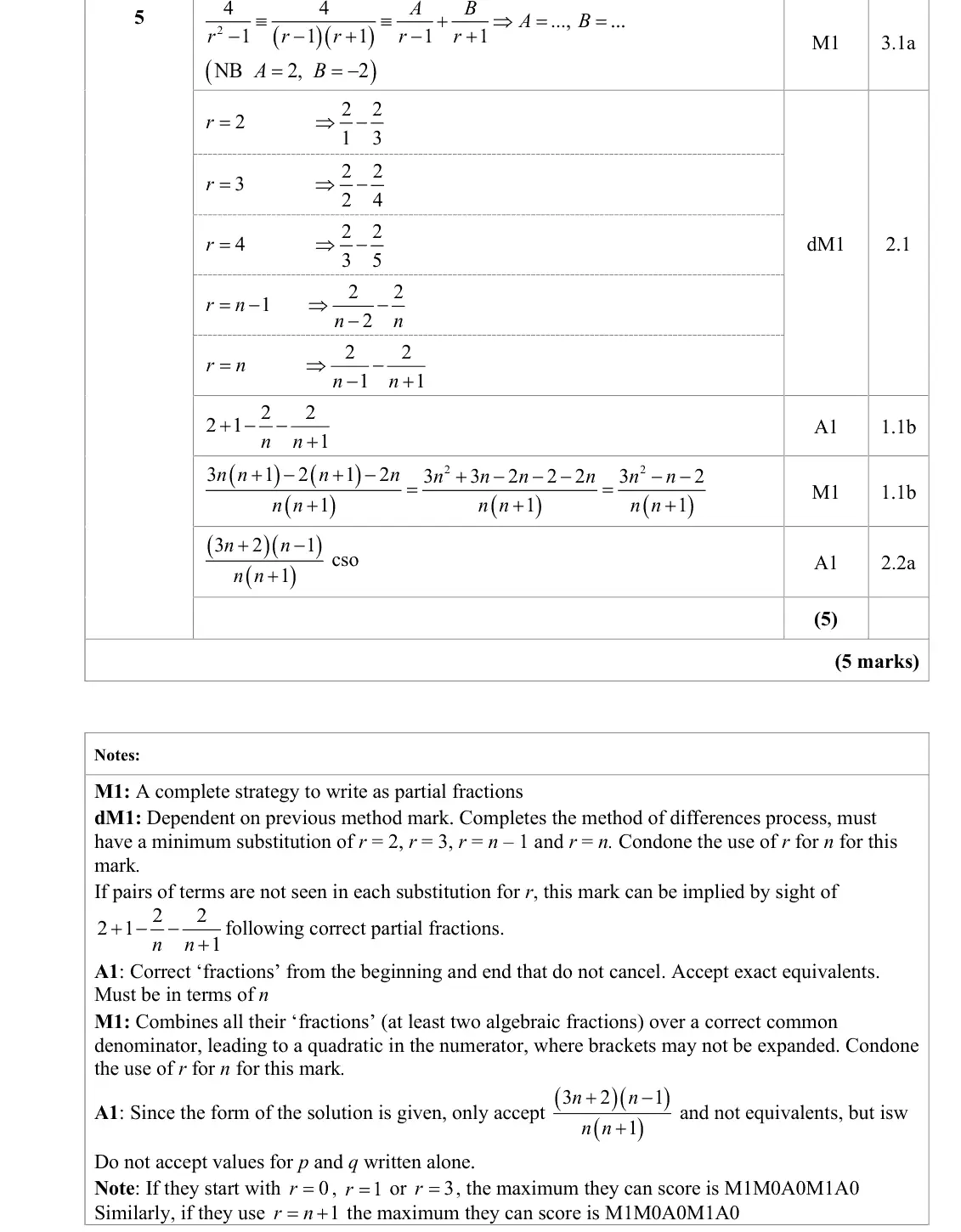
Mark scheme (whole question; this part is marked with the orange bar)
Examiner's comment
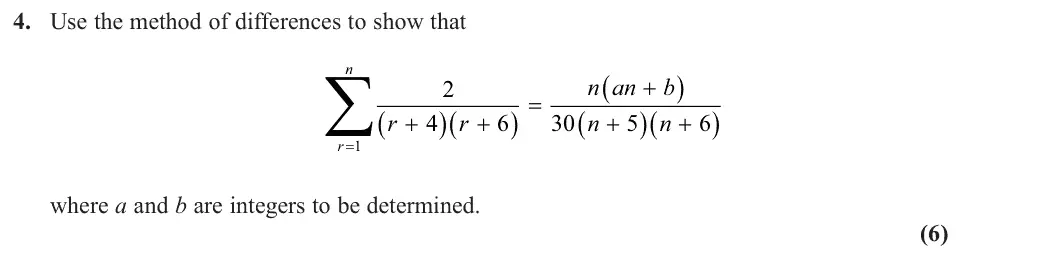
This questing required the use of the method of differences which was well understood by candidates. Many scored full marks on this question. Candidates understood the need to split the given fraction into two partial fractions first, and it was rare to see any error in this first step. The next step of listing the terms in the series was well understood although there were solutions seen where the initial term was found incorrectly using r =1 or r = 3 rather than the correct r = 2. Candidates usually wrote out enough terms of the expanded series to show convincingly the cancellation of terms. In this case, the minimum was the first two and last two terms. Some candidates gave the terms using the variable r rather than n thus losing a mark. Having identified the four remaining terms after cancellation, candidates knew how to combine the terms together into a single fraction and proceed to an answer of the required form. There were basic algebraic answers made which prevented reaching the correct answer of ( )( ) ( ) 3 2 1 1 n n n n + - + . The final mark was lost by those candidates who did not give the answer in the exact form specified.
Key points from the mark scheme and examiner's report
- 4/(r² − 1) = 2/(r − 1) − 2/(r + 1)
- start at r = 2 (not r = 1 or 3)
- non-cancelling terms 2 + 1 − 2/n − 2/(n + 1)
- combine to (3n + 2)(n − 1)/(n(n + 1)), so p = 3, q = 2