June 2019: AS Paper 01: Core Pure Mathematics

80 marks · 25 question parts · Question paper, mark scheme and examiner's report on Pearson's site

Question by question

QTopicMarksDifficulty
1(a) Matrices: multiplication, determinants and inverses 2 —
1(b) Matrices: multiplication, determinants and inverses 2 —
1(c) Linear transformations and invariant points and lines 2 —
2 Roots of polynomials 5 —
3 Proof by induction 6 —
4 Vectors: intersections, angles and shortest distances 5 —
5(a) Complex numbers: arithmetic, conjugates, roots of polynomials and Argand diagrams 2 —
5(b) Complex numbers: arithmetic, conjugates, roots of polynomials and Argand diagrams, Modulus-argument form 3 —
5(c) Modulus-argument form 2 —
5(d) Loci in the Argand diagram 2 —
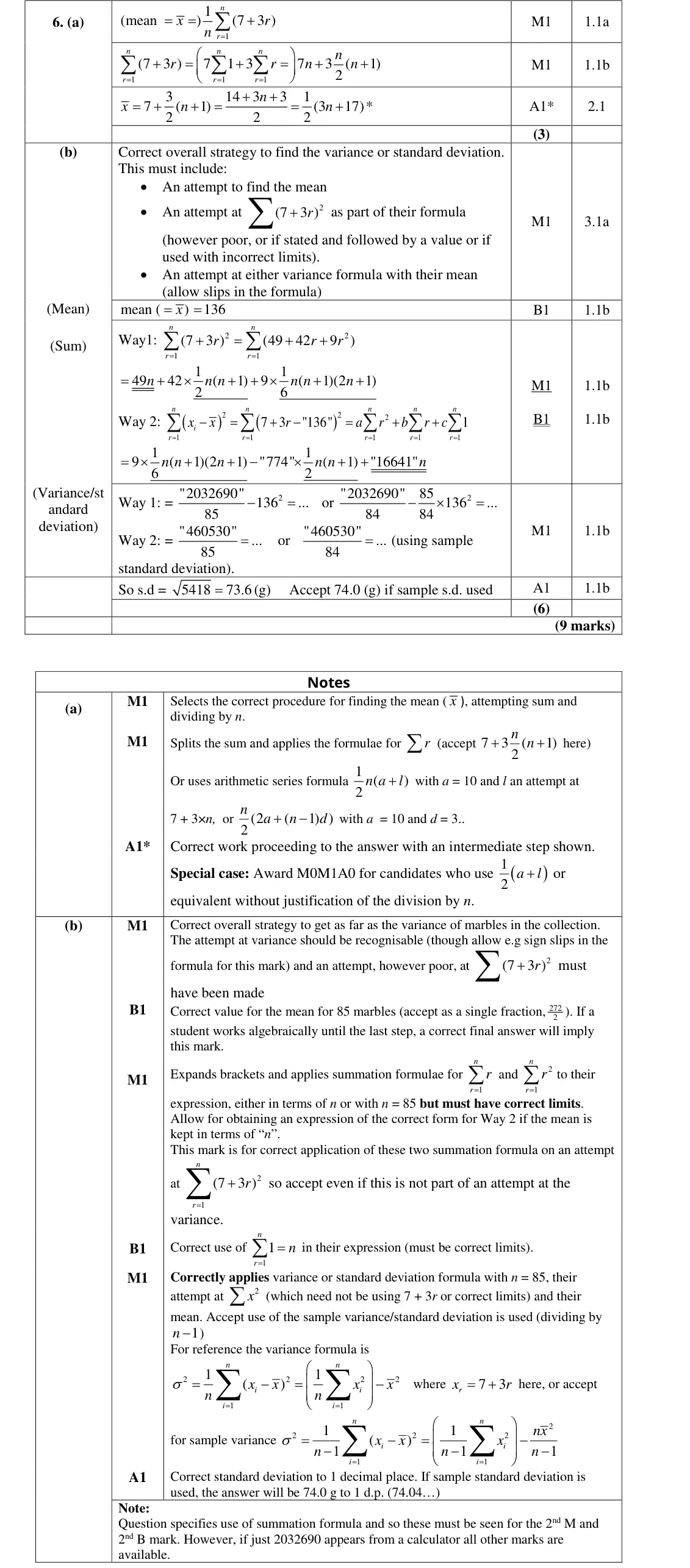
6(a) Series: standard sums and the method of differences 3 —
6(b) Series: standard sums and the method of differences 6 —
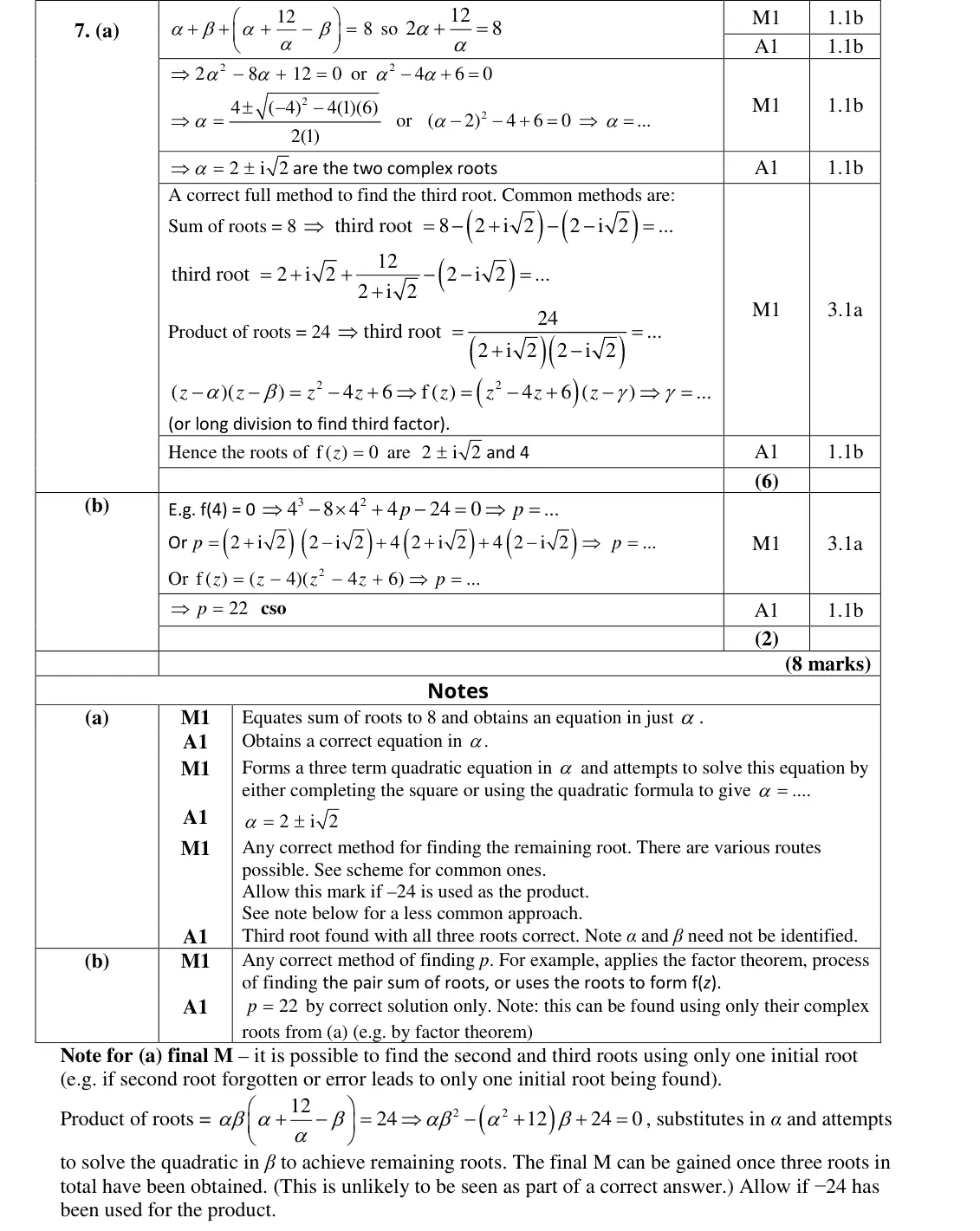
7(a) Roots of polynomials, Complex numbers: arithmetic, conjugates, roots of polynomials and Argand diagrams 6 —
7(b) Roots of polynomials 2 —
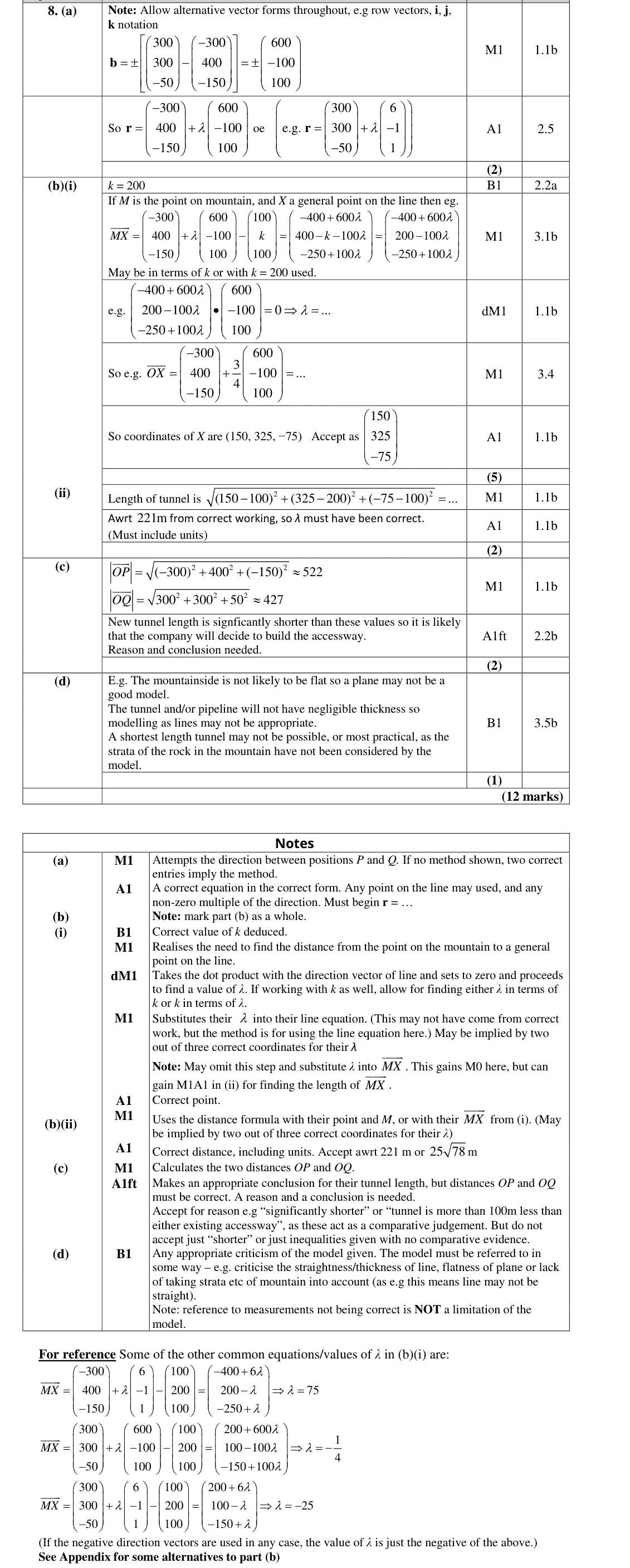
8(a) Vectors: equations of lines and planes, scalar product 2 —
8(b) Vectors: intersections, angles and shortest distances 7 —
8(c) Vectors: equations of lines and planes, scalar product 2 —
8(d) Vectors: equations of lines and planes, scalar product 1 —
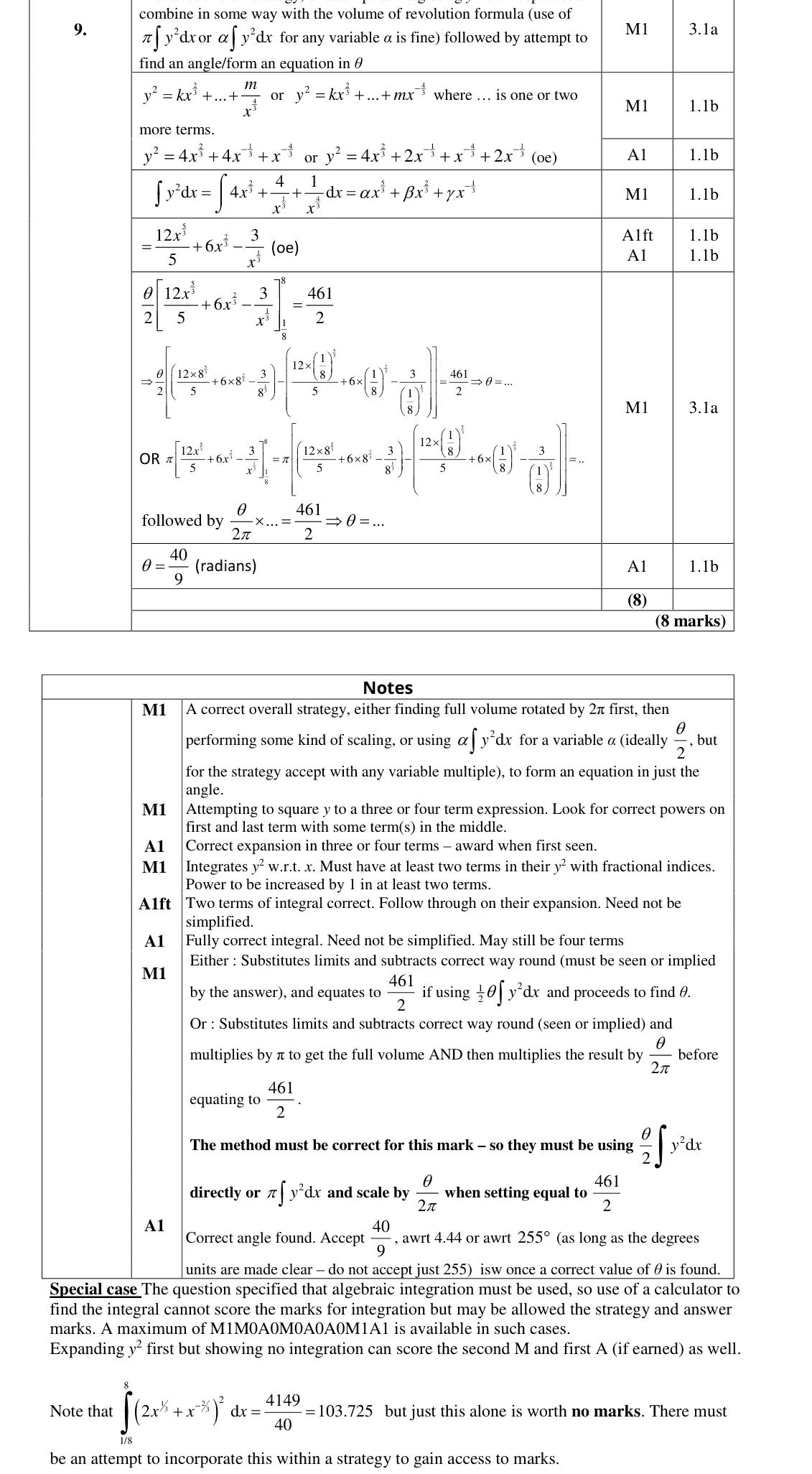
9 Volumes of revolution 8 —
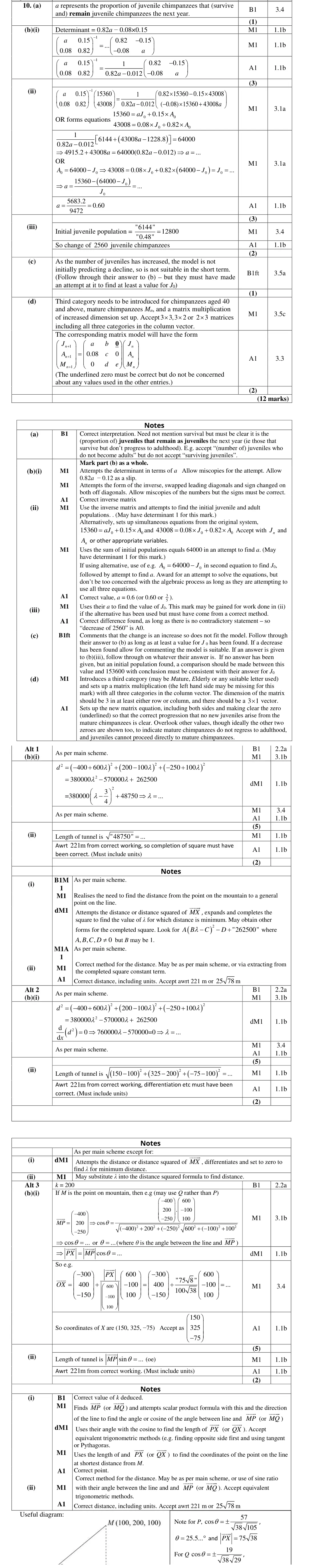
10(a) Matrices: multiplication, determinants and inverses 1 —
10(b)(i) Matrices: multiplication, determinants and inverses 3 —
10(b)(ii) Matrices: multiplication, determinants and inverses 3 —
10(b)(iii) Matrices: multiplication, determinants and inverses 2 —
10(c) Matrices: multiplication, determinants and inverses 1 —
10(d) Matrices: multiplication, determinants and inverses 2 —

The questions

1(a)1(b)1(c)2345(a)5(b)5(c)5(d)6(a)6(b)7(a)7(b)8(a)8(b)8(c)8(d)910(a)10(b)(i)10(b)(ii)10(b)(iii)10(c)10(d)
June 2019 · AS Paper 1 (Core Pure) · Q1(a) 2 marks matrices
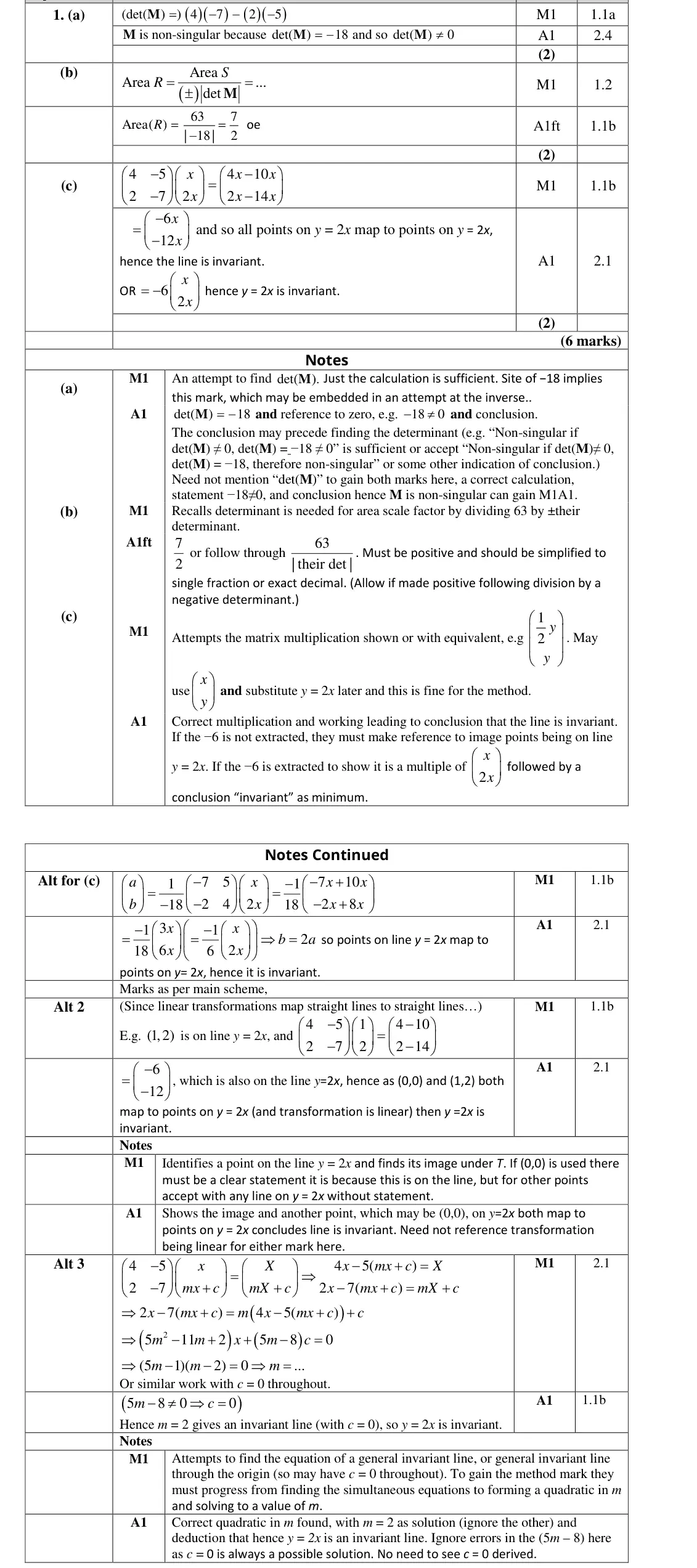
4 -5 we[ 3 (a) Show that the matrix M is non-singular.
June 2019 · AS Paper 1 (Core Pure) · Q1(b) 2 marks matrices
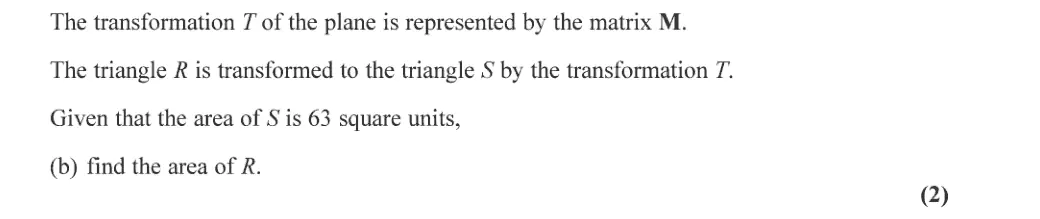
The transformation T ofthe plane is represented by the matrix M. The triangle R is transformed to the triangle S by the transformation 7. Given that the area ofS is 63 square units, (b) find the area ofR. (2) (c) Show that the line y = 2x is invariant under the transformation T.
June 2019 · AS Paper 1 (Core Pure) · Q1(c) 2 marks linear transformations
(c) Show that the line y = 2x is invariant under the transformation T. (2)
June 2019 · AS Paper 1 (Core Pure) · Q2 5 marks roots of polynomials
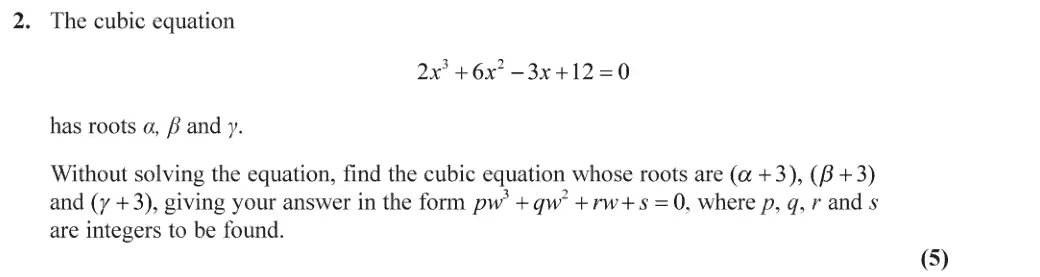
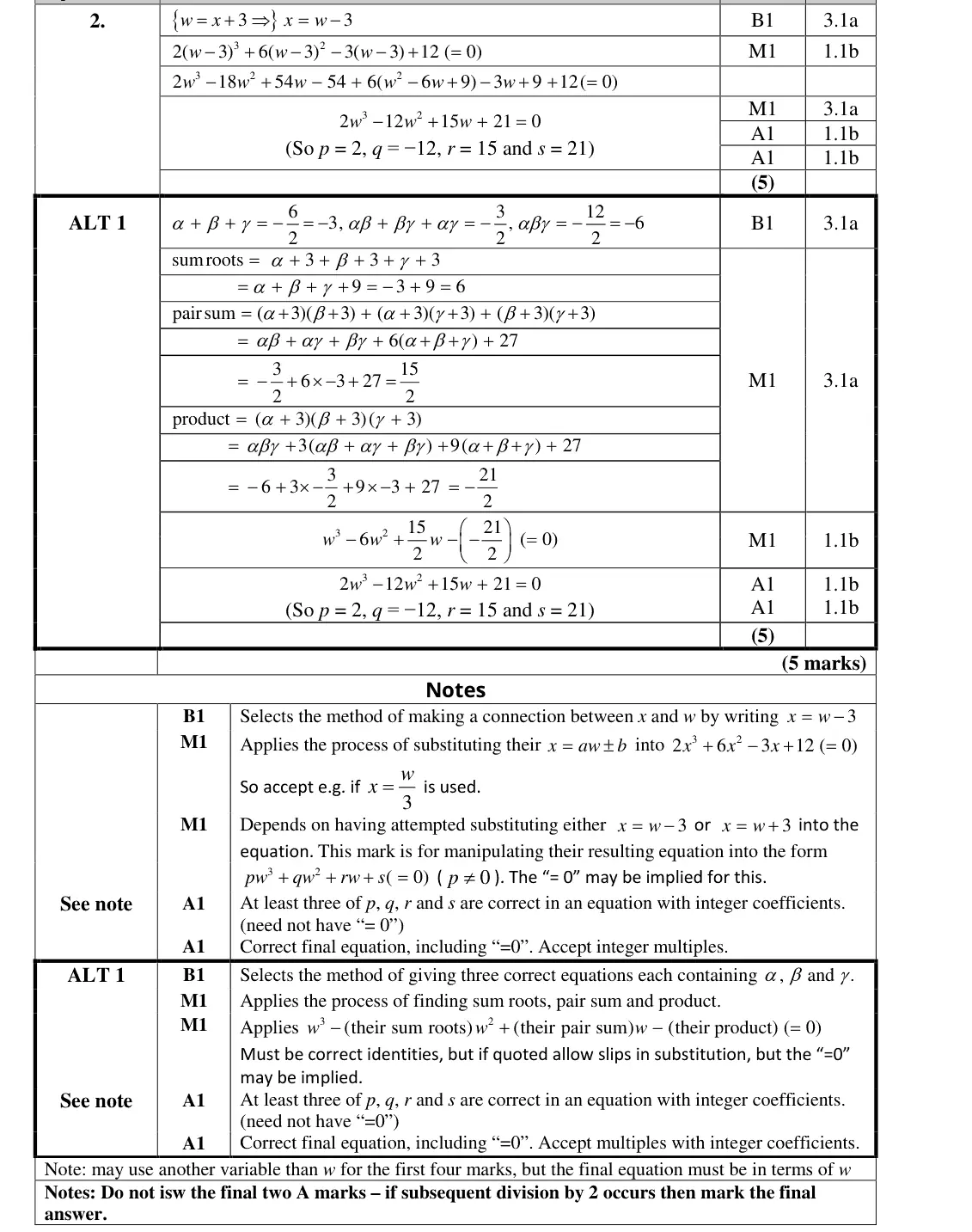
2. The cubic equation 2x° +6x? —3x+12=0 has roots a, 6 and y. Without solving the equation, find the cubic equation whose roots are (a +3), (8 +3) and (y +3), giving your answer in the form pw’ + gw’ +rw+s=0, where p, g, r and s are integers to be found. (5)
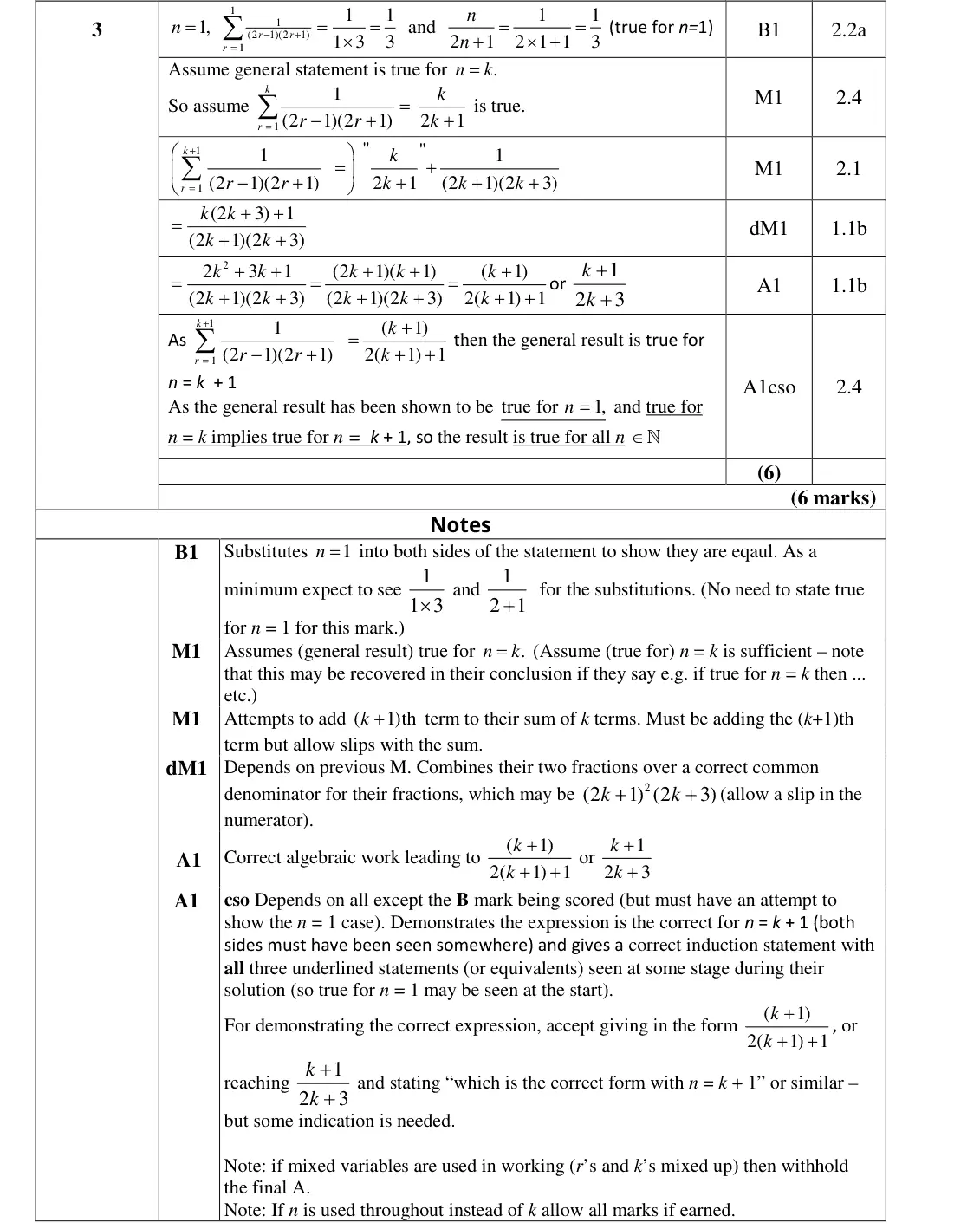
June 2019 · AS Paper 1 (Core Pure) · Q3 6 marks proof by induction
3. Prove by mathematical induction that, for ne N =I (2r-1)(2r+1) 2n+l1
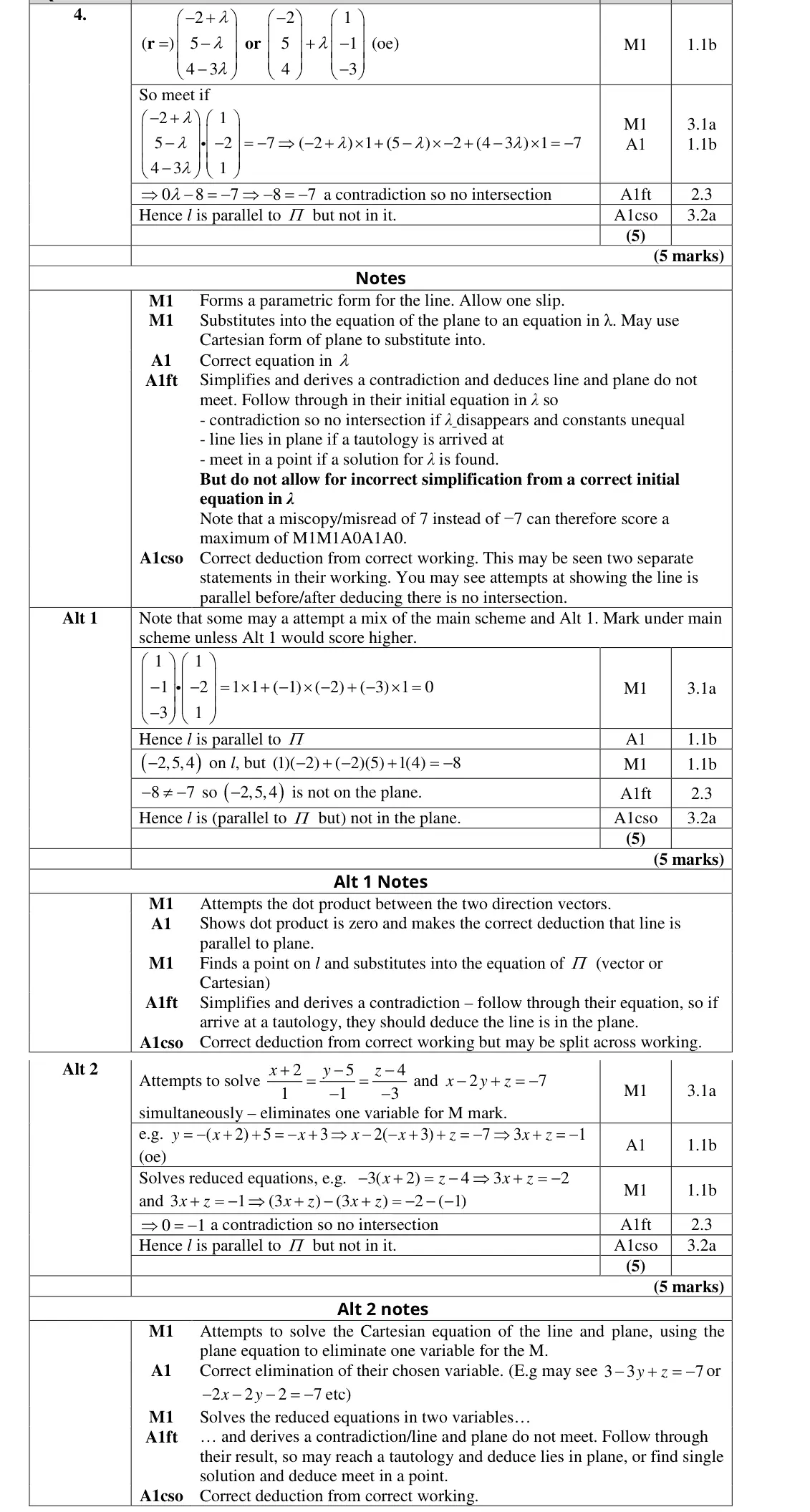
June 2019 · AS Paper 1 (Core Pure) · Q4 5 marks vectors intersections and distances
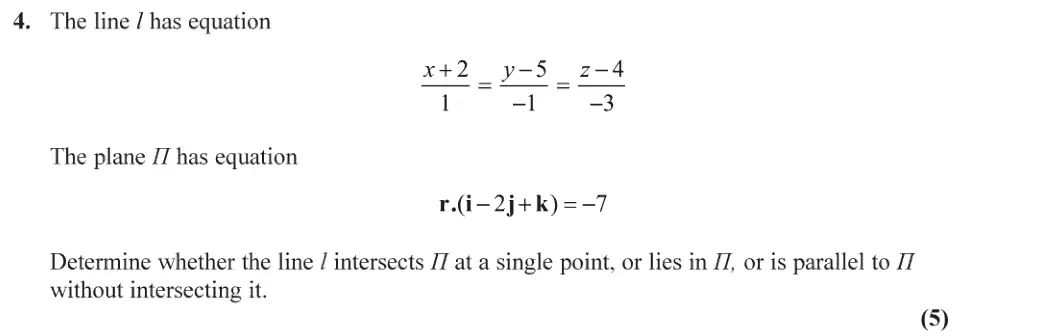
4. The line/ has equation The plane /7 has equation r.(i—2j+k) =—7 Determine whether the line / intersects /7 at a single point, or lies in /7, or is parallel to /7 without intersecting it. (5)
June 2019 · AS Paper 1 (Core Pure) · Q5(a) 2 marks complex numbers
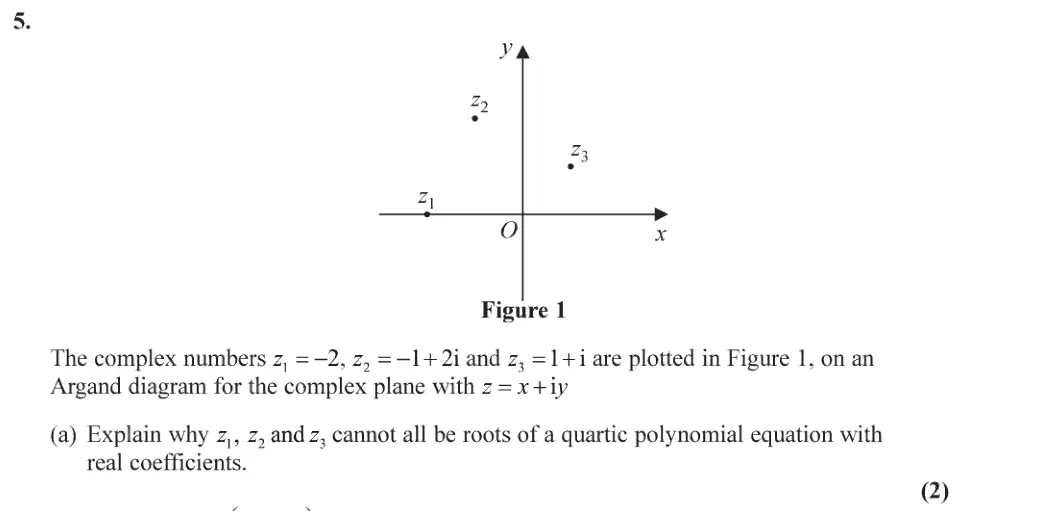
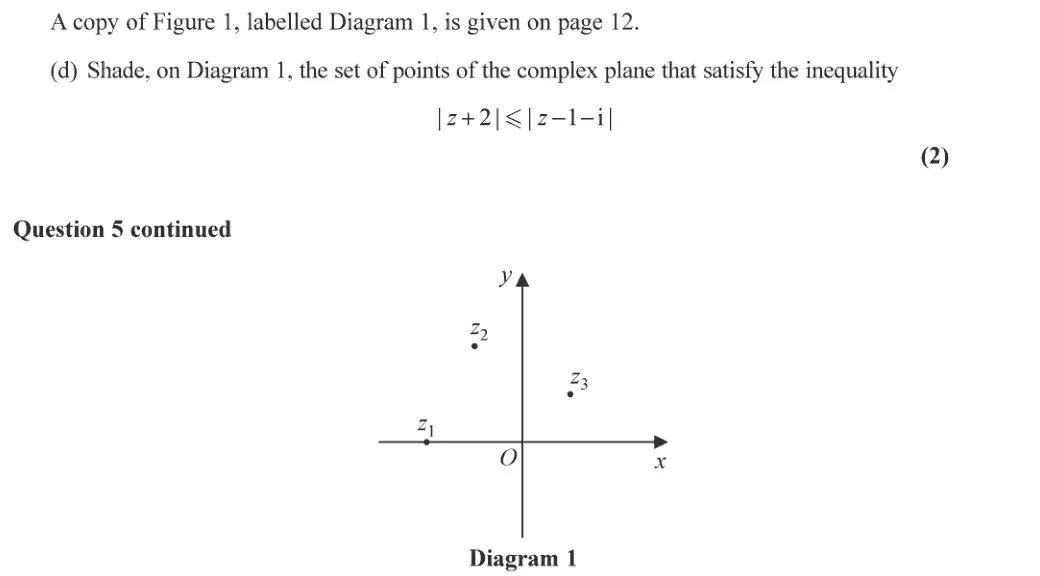
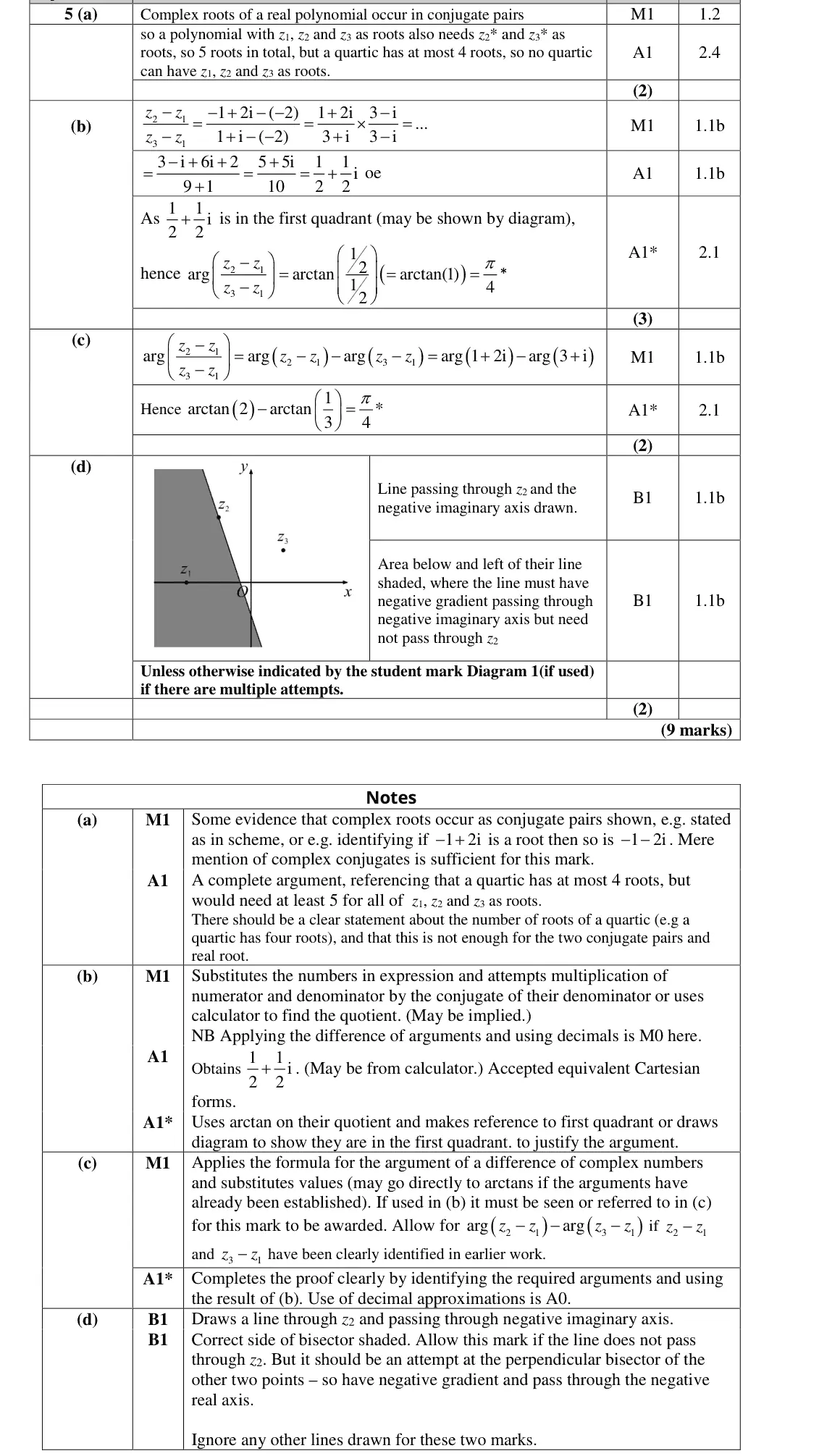
y 29 Z Figure 1 The complex numbers z, = —2, z, = —-1+21i and z, =1+1i are plotted in Figure 1, on an Argand diagram for the complex plane with z = x + iy (a) Explain why z,, z, and z, cannot all be roots of a quartic polynomial equation with real coefficients. (2) (b) Show that arg[2=4] =7 @)
June 2019 · AS Paper 1 (Core Pure) · Q5(b) 3 marks complex numbersmodulus argument form
(2) (b) Show that arg[2=4] =7 @) (c) Hence show that arctan(2) —arctan3)7
June 2019 · AS Paper 1 (Core Pure) · Q5(c) 2 marks modulus argument form
(b) Show that arg[2=4] =7 @) (c) Hence show that arctan(2) —arctan3)7 ay 4 (2) A copy of Figure 1, labelled Diagram 1, is given on page 12.
June 2019 · AS Paper 1 (Core Pure) · Q5(d) 2 marks loci in the argand diagram
ay 4 (2) A copy of Figure 1, labelled Diagram 1, is given on page 12. (d) Shade, on Diagram 1, the set ofpoints ofthe complex plane that satisfy the inequality |z+2|<|z-1-il (2)
June 2019 · AS Paper 1 (Core Pure) · Q6(a) 3 marks series and method of differences
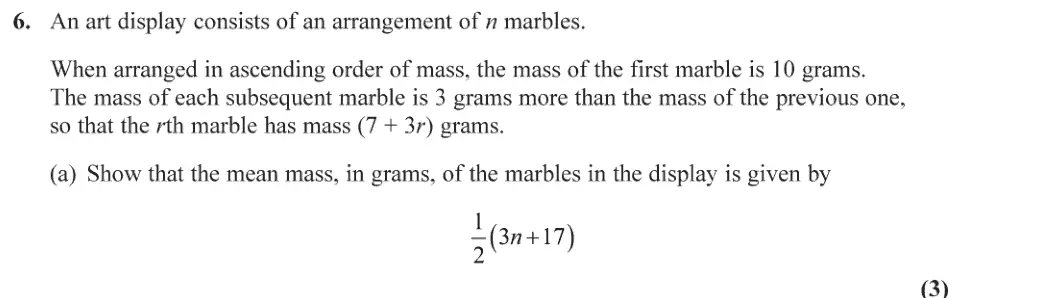
6. An art display consists of an arrangement of n marbles. When arranged in ascending order of mass, the mass of the first marble is 10 grams. The mass of each subsequent marble is 3 grams more than the mass ofthe previous one, so that the rth marble has mass (7 + 37) grams. (a) Show that the mean mass, in grams, of the marbles in the display is given by + (3n417) 2 6)
June 2019 · AS Paper 1 (Core Pure) · Q6(b) 6 marks series and method of differences
6) Given that there are 85 marbles in the display, (b) use the standard summation formulae to find the standard deviation ofthe mass of the marbles in the display, giving your answer, in grams, to one decimal place. (6)
June 2019 · AS Paper 1 (Core Pure) · Q7(a) 6 marks roots of polynomialscomplex numbers
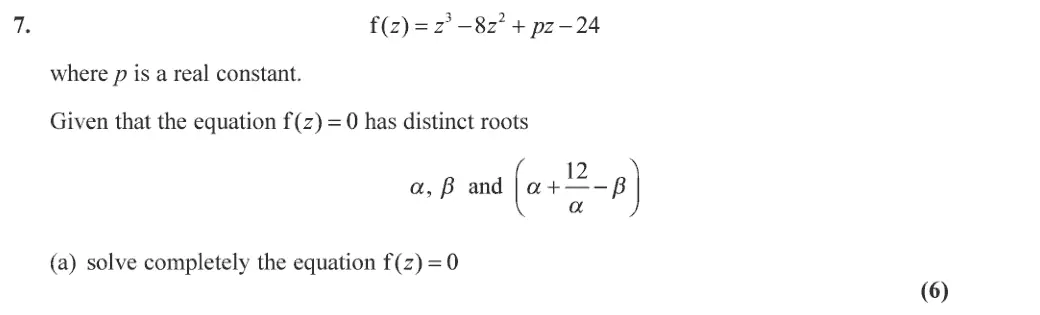
7. f(z) =z -82z° +pz—24 wherep is a real constant. Given that the equation f(z) = 0 has distinct roots a,B and [a2 -p (a) solve completely the equation f(z) =0 (6) (b) Hence find the value ofp.
June 2019 · AS Paper 1 (Core Pure) · Q7(b) 2 marks roots of polynomials
(6) (b) Hence find the value ofp. (2)
June 2019 · AS Paper 1 (Core Pure) · Q8(a) 2 marks vectors lines and planes
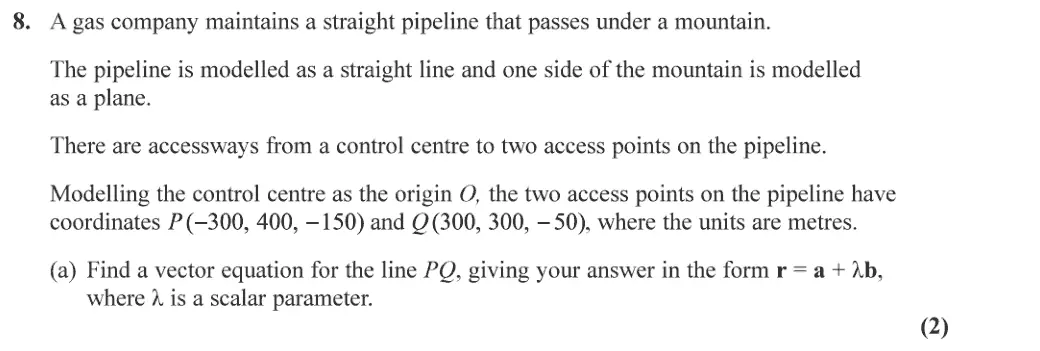
8. A gas company maintains a straight pipeline that passes under a mountain. The pipeline is modelled as a straight line and one side of the mountain is modelled as a plane. There are accessways from a control centre to two access points on the pipeline. Modelling the control centre as the origin O, the two access points on the pipeline have coordinates P (—300, 400, —150) and O(300, 300, —50), where the units are metres. (a) Find a vector equation for the line PQ, giving your answer in the form r = a + Ab, where A is a scalar parameter. (2)
June 2019 · AS Paper 1 (Core Pure) · Q8(b) 7 marks vectors intersections and distances
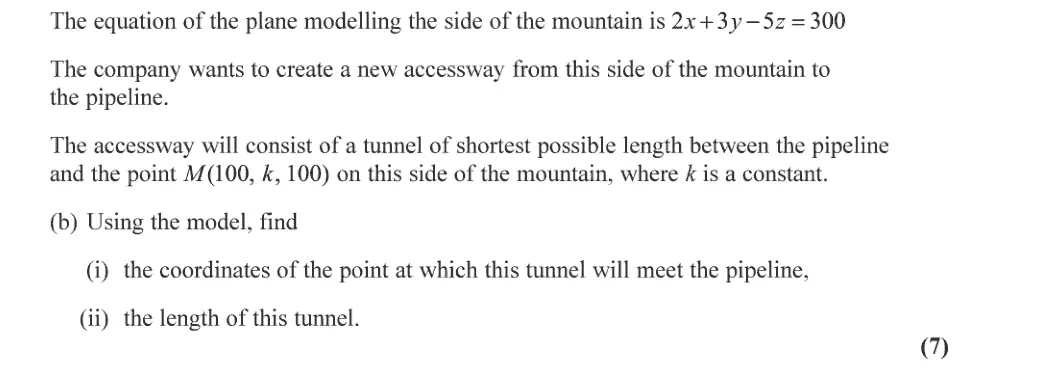
The equation of the plane modelling the side of the mountain is 2x +3y—5z =300 The company wants to create a new accessway from this side of the mountain to the pipeline. The accessway will consist of a tunnel of shortest possible length between the pipeline and the point M(100, k, 100) on this side of the mountain, where & is a constant. (b) Using the model, find (1) the coordinates of the point at which this tunnel will meet the pipeline, (ii) the length of this tunnel. (7)
June 2019 · AS Paper 1 (Core Pure) · Q8(c) 2 marks vectors lines and planes
It is only practical to construct the new accessway if it will be significantly shorter than both of the existing accessways, OP and OQ. (c) Determine whether the company should build the new accessway. (2)
June 2019 · AS Paper 1 (Core Pure) · Q8(d) 1 mark vectors lines and planes
(d) Suggest one limitation of the model. (1)
June 2019 · AS Paper 1 (Core Pure) · Q9 8 marks volumes of revolution
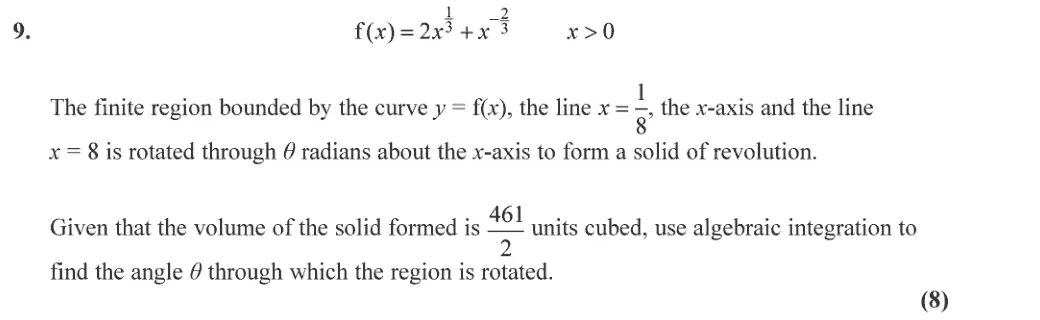
9. f(x) =2x3 +x 3 x>0 The finite region bounded by the curve y = f(x), the line x =. the x-axis and the line x = 8 is rotated through @ radians about the x-axis to form a solid of revolution. Given that the volume ofthe solid formed iss units cubed, use algebraic integration to find the angle @ through which the region is rotated. ®)
June 2019 · AS Paper 1 (Core Pure) · Q10(a) 1 mark matrices
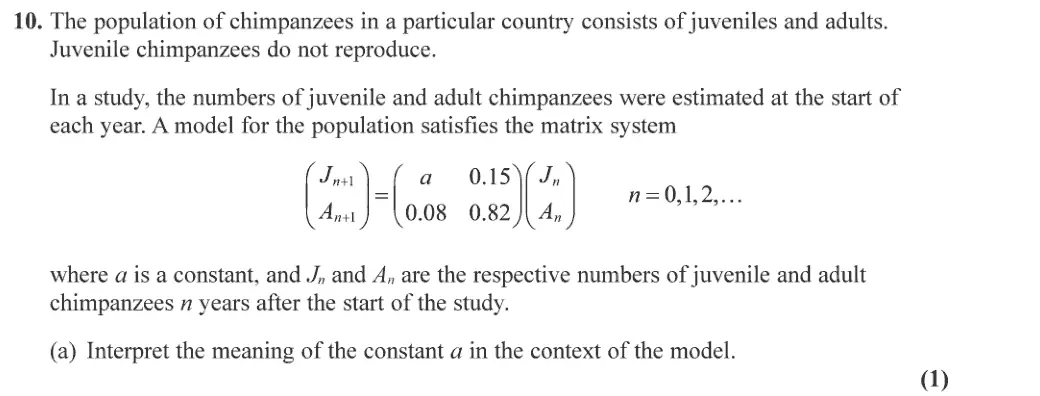
10. The population of chimpanzees in a particular country consists ofjuveniles and adults. Juvenile chimpanzees do not reproduce. In a study, the numbers ofjuvenile and adult chimpanzees were estimated at the start of each year. A model for the population satisfies the matrix system Tot a 0.15)\( Jn = n=0,1,2,... Ans 0.08 0.82 )\ An where a is a constant, and J, and A, are the respective numbers ofjuvenile and adult chimpanzees n years after the start of the study. (a) Interpret the meaning of the constant a in the context of the model. (1)
June 2019 · AS Paper 1 (Core Pure) · Q10(b)(i) 3 marks matrices
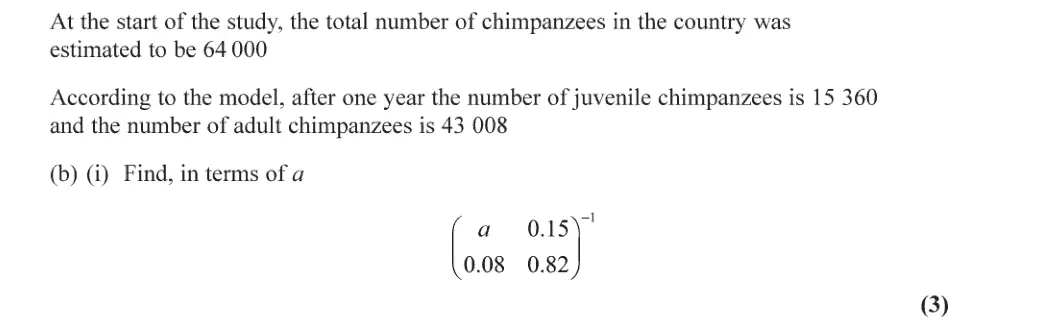
At the start of the study, the total number of chimpanzees in the country was estimated to be 64 000 According to the model, after one year the number ofjuvenile chimpanzees is 15 360 and the number of adult chimpanzees is 43 008 (b) (i) Find, in terms of a [ a a 0.08 0.82 (3)
June 2019 · AS Paper 1 (Core Pure) · Q10(b)(ii) 3 marks matrices
(ii) Hence, or otherwise, find the value of a. (3) (iii)
June 2019 · AS Paper 1 (Core Pure) · Q10(b)(iii) 2 marks matrices
(iii) Calculate the change in the number ofjuvenile chimpanzees in the first year of the study, according to this model. (2)
June 2019 · AS Paper 1 (Core Pure) · Q10(c) 1 mark matrices
Given that the number ofjuvenile chimpanzees is known to be in decline in the country, (c) comment on the short-term suitability of this model. (1)
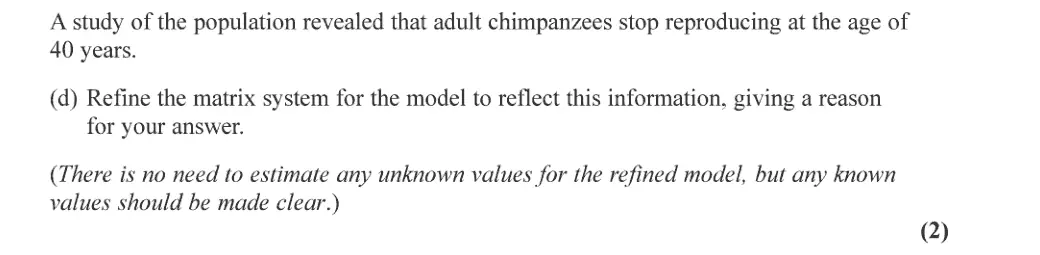
June 2019 · AS Paper 1 (Core Pure) · Q10(d) 2 marks matrices
A study of the population revealed that adult chimpanzees stop reproducing at the age of AO years. (d) Refine the matrix system for the model to reflect this information, giving a reason for your answer. (There is no need to estimate any unknown valuesfor the refined model, but any known values should be made clear.) (2)

Find an Edexcel Further Maths tutor

Want this paper marked and gone through with a Further Maths tutor? Message us.
Prefer email? Send an enquiry

If you are under 18, please include a parent's contact details. Enquiries go to enquiries@alevelfurthermathstutor.com and are deleted once handled.