Examiner's comment
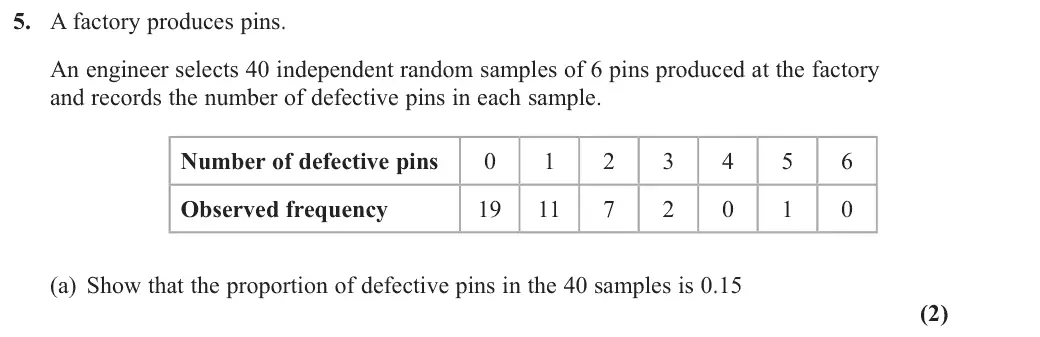
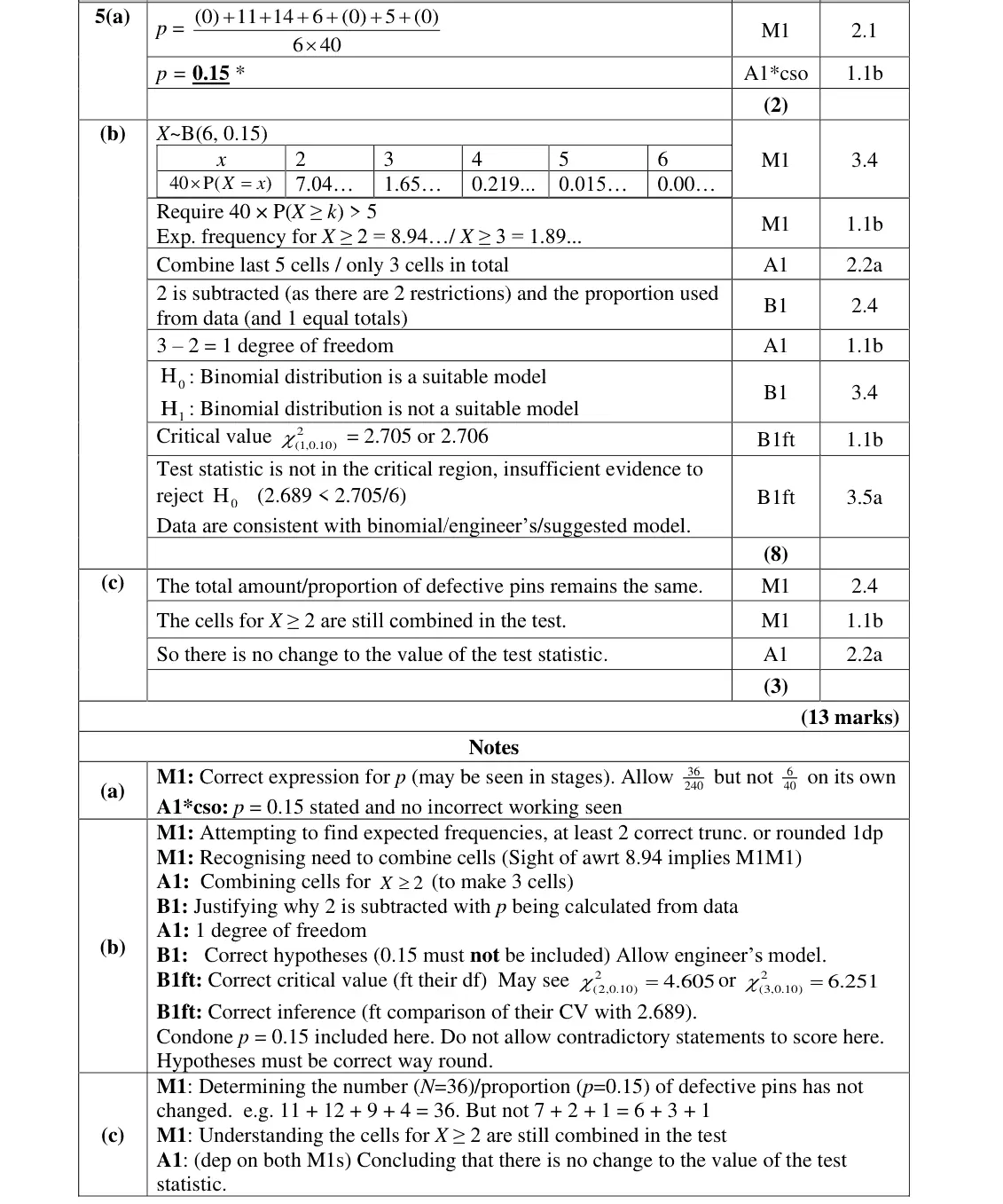
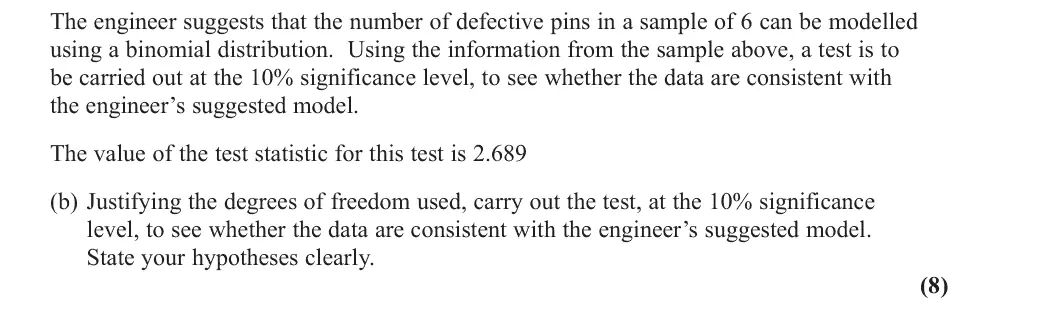
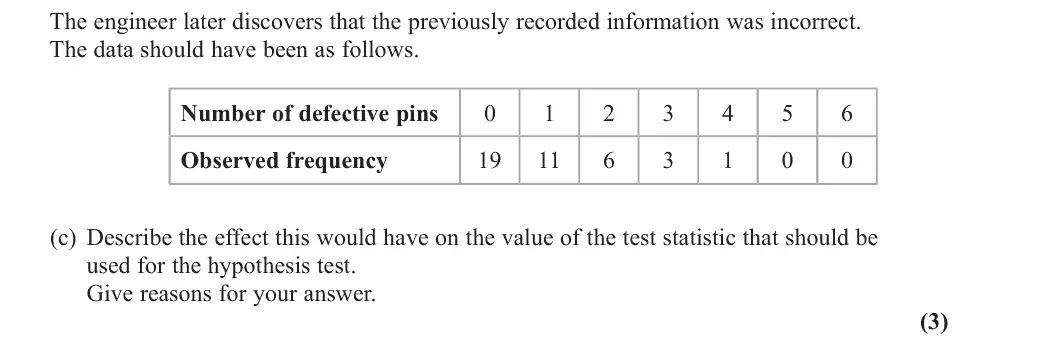
In part (b), hypotheses were usually stated first and often correct. A common error was to include p = 0.15 in the hypotheses which is not correct for this problem. (This was not penalised in the conclusion although should not have been there either.) Expected values were usually shown evaluated, and the need for pooling identified. Most pooled correctly and found one degree of freedom. (Some were not explicit that it is low expected frequencies that lead to the need for pooling rather than low observed frequencies.) A fair number missed the demand to explain their degrees of freedom calculation, but many did explain that the value of p was calculated from the data. A corresponding critical value was stated by most, even when the degrees of freedom was incorrect, and concluded correctly. A small number used the wrong column in the tables and some believed that the statistic being below the critical value meant a significant result. Surprisingly, a significant number of candidates evaluated a test statistic, despite being given the value, and worryingly some of these compared their value to the stated one as though it were the critical value.