Examiner's comment
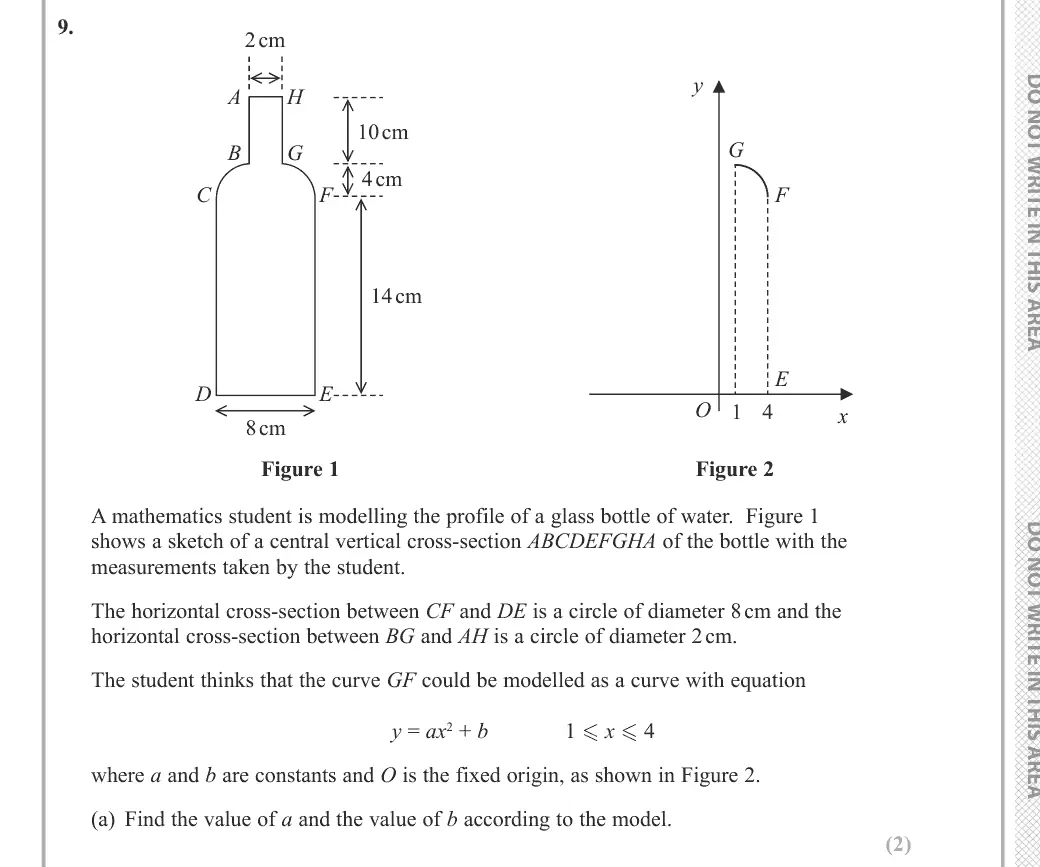
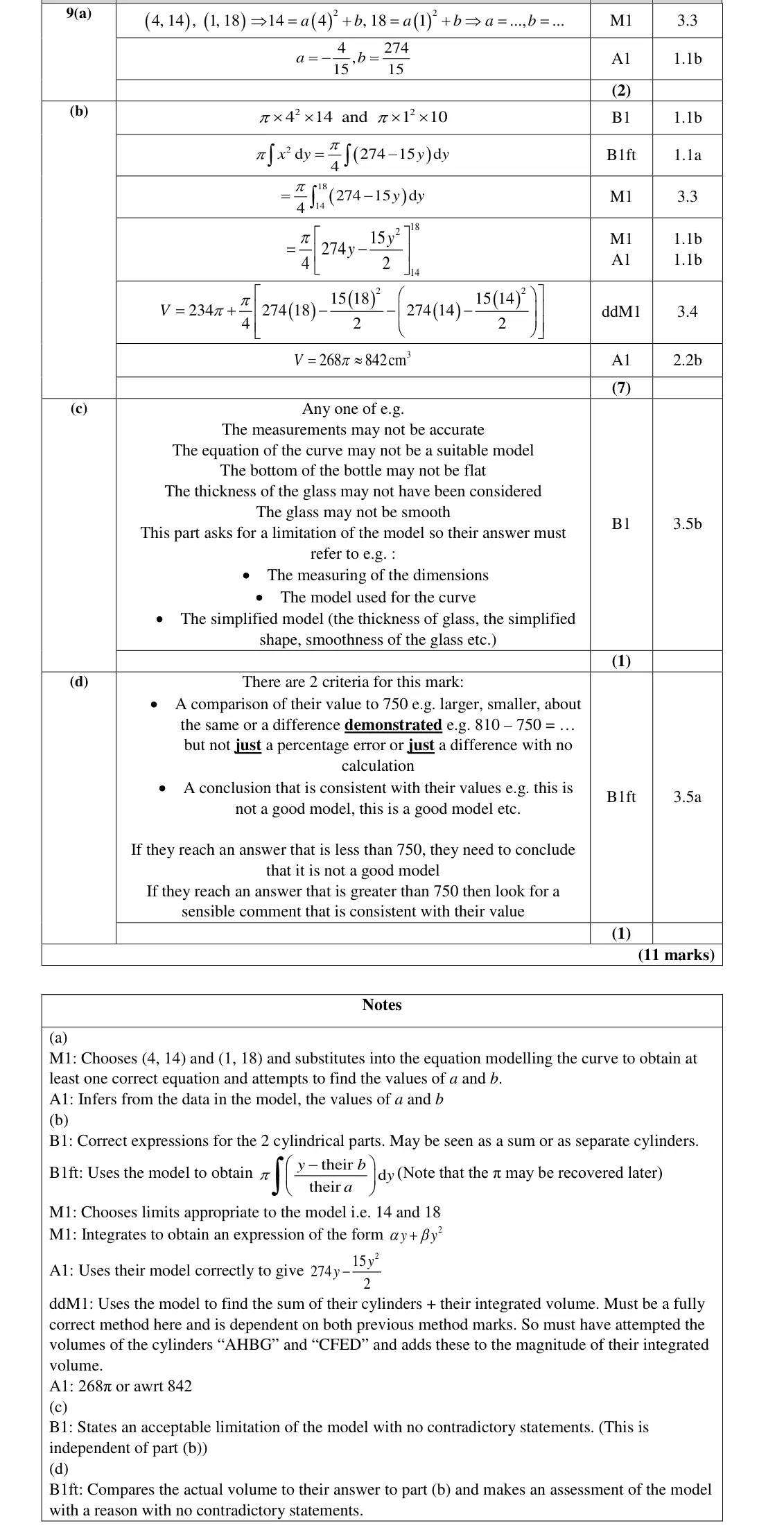
This proved to be a challenging end to the paper, with signs that some students were struggling to finish in time, although some blank responses may have been due to students simply not knowing where to start. Contextual questions are a necessity on the new specification, so students will have to get used to tackling them. Part (b) tested the understanding of volumes of revolution in context and many failed to correctly identify the cylindrical parts of the bottle that were needed to form the overall shape. Many omitted these altogether, while others attempted a single cylinder down the centre. Another popular error was to attempt to subtract a cylinder from the solid formed from the rotation of the curve. Most were able to form the correct follow through expression for their answers to (a), but many did not use the correct limits in the context of the question, with 0 and 4, or 1 and 4, being very common choices. There were also many who attempted a volume of revolution about the x-axis, who could gain no credit other than for the cylinders (if they found them). Even the integration proved somewhat problematic in that some students did not show their working. Presumably some students used their calculators to perform definite integration but it should be emphasised that in questions such as these, full working should be shown. Those who did show the working for the integration mostly did acquire the method mark, and those with correct a and b consequently gained the accuracy too. Putting the volumes together was successfully achieved by those who did work out the correct portions that were needed, though some students omitted the pi on the integral. For many, failure to correctly identify the two required cylinders lost the final two marks of this part.