June 2019: A level Paper 02: Core Pure Mathematics 2

75 marks · 19 question parts · Question paper, mark scheme and examiner's report on Pearson's site

Question by question

QTopicMarksDifficulty
1(a) Hyperbolic functions 5 —
1(b) Hyperbolic functions 5 —
2 Roots of polynomials 8 —
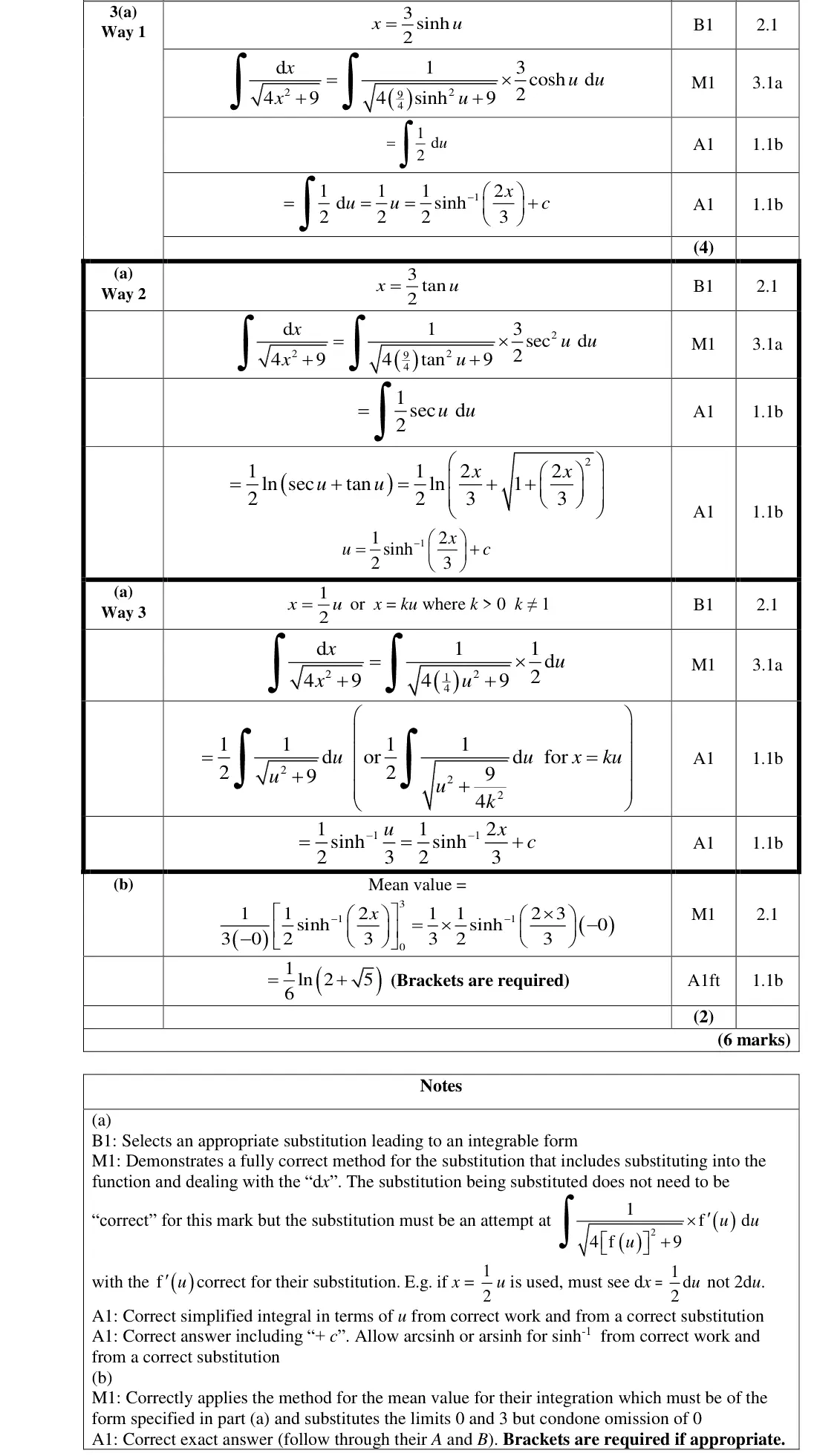
3(a) Hyperbolic functions 4 —
3(b) Improper integrals and the mean value of a function 2 —
4(a) De Moivre's theorem and exponential form 4 —
4(b) De Moivre's theorem and exponential form 4 —
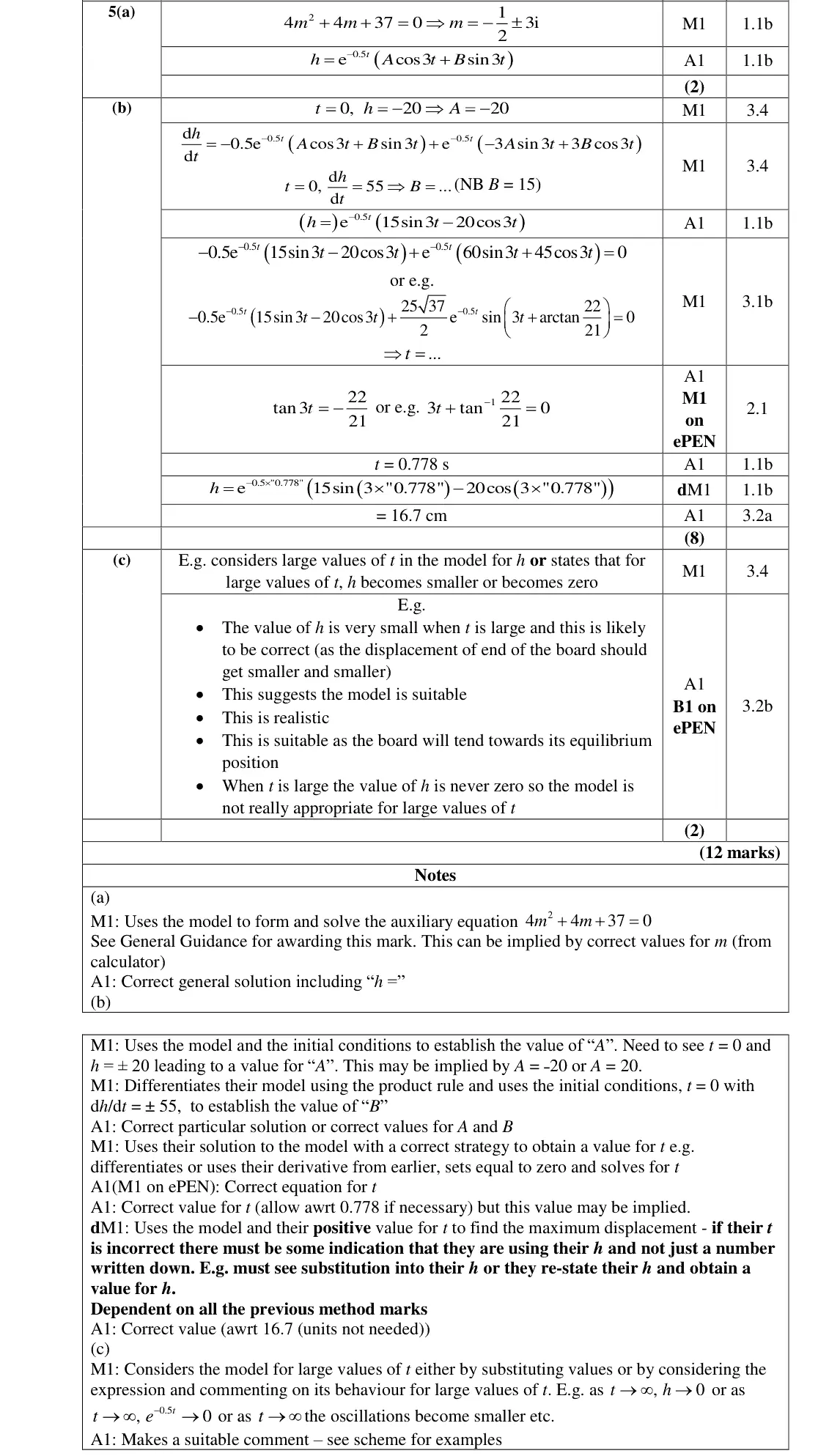
5(a) Second-order differential equations 2 —
5(b) Simple harmonic motion and damped oscillations, First-order differential equations: integrating factors and modelling 8 —
5(c) Simple harmonic motion and damped oscillations 2 —
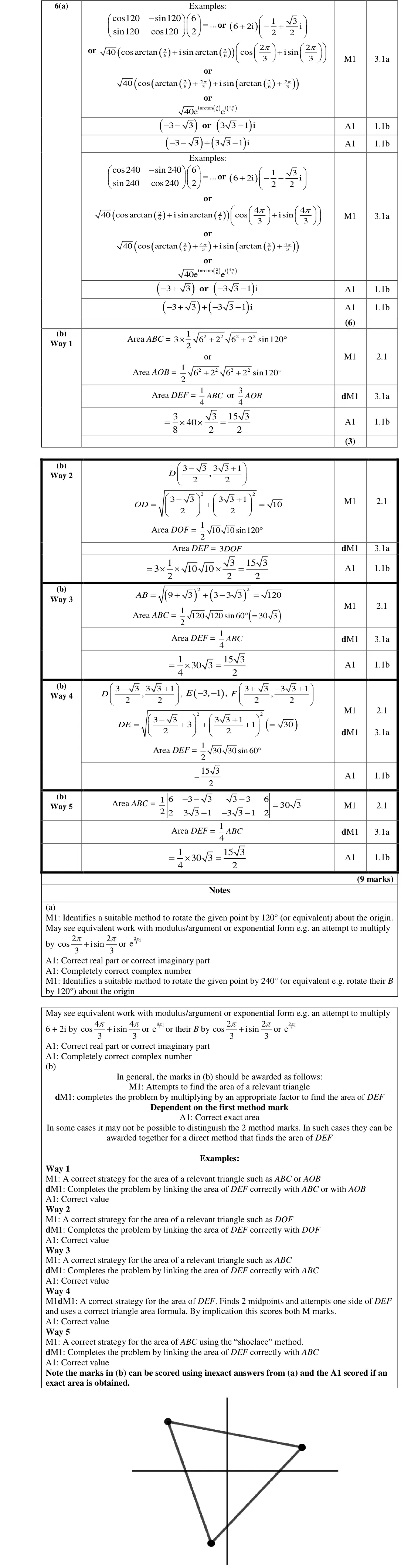
6(a) nth roots and roots of unity 6 —
6(b) nth roots and roots of unity 3 —
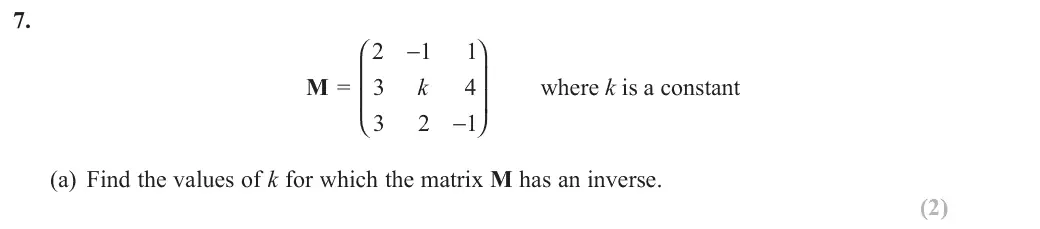
7(a) Matrices: multiplication, determinants and inverses 2 —
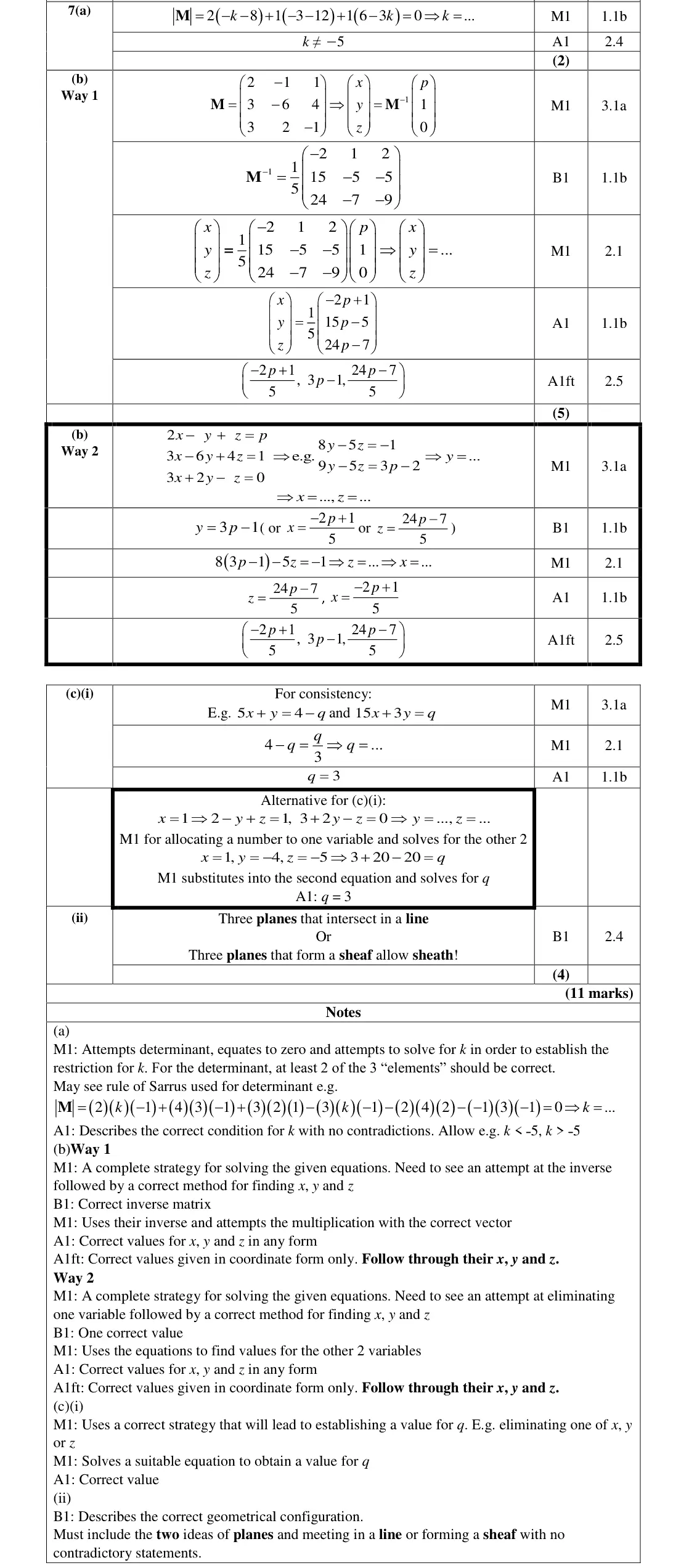
7(b) Three linear equations: solutions and planes, Matrices: multiplication, determinants and inverses 5 —
7(c) Three linear equations: solutions and planes 4 —
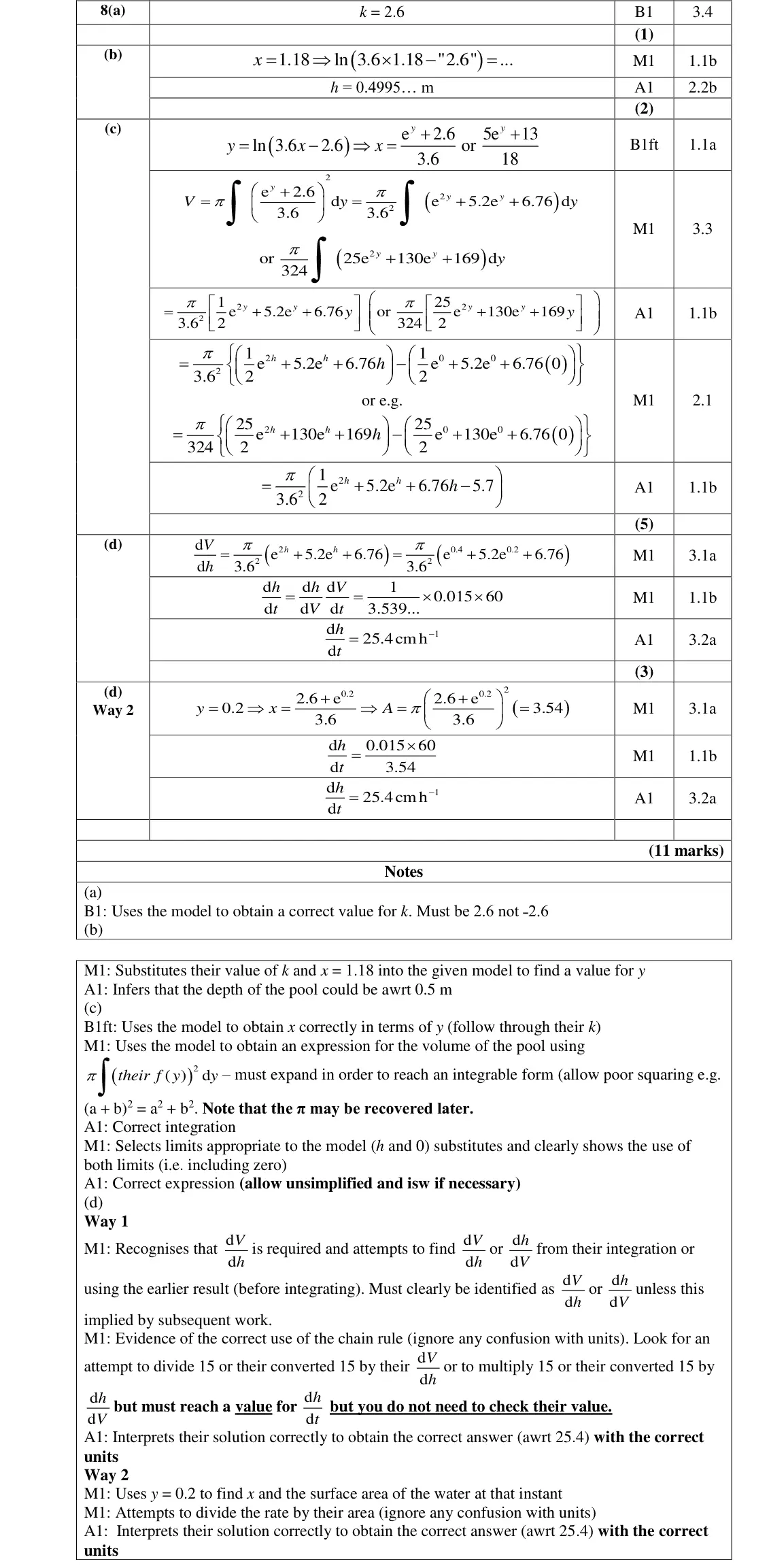
8(a) Volumes of revolution 1 —
8(b) Volumes of revolution 2 —
8(c) Volumes of revolution 5 —
8(d) Volumes of revolution 3 —

The questions

1(a)1(b)23(a)3(b)4(a)4(b)5(a)5(b)5(c)6(a)6(b)7(a)7(b)7(c)8(a)8(b)8(c)8(d)
June 2019 · Paper 2 (Core Pure 2) · Q1(a) 5 marks hyperbolic functions
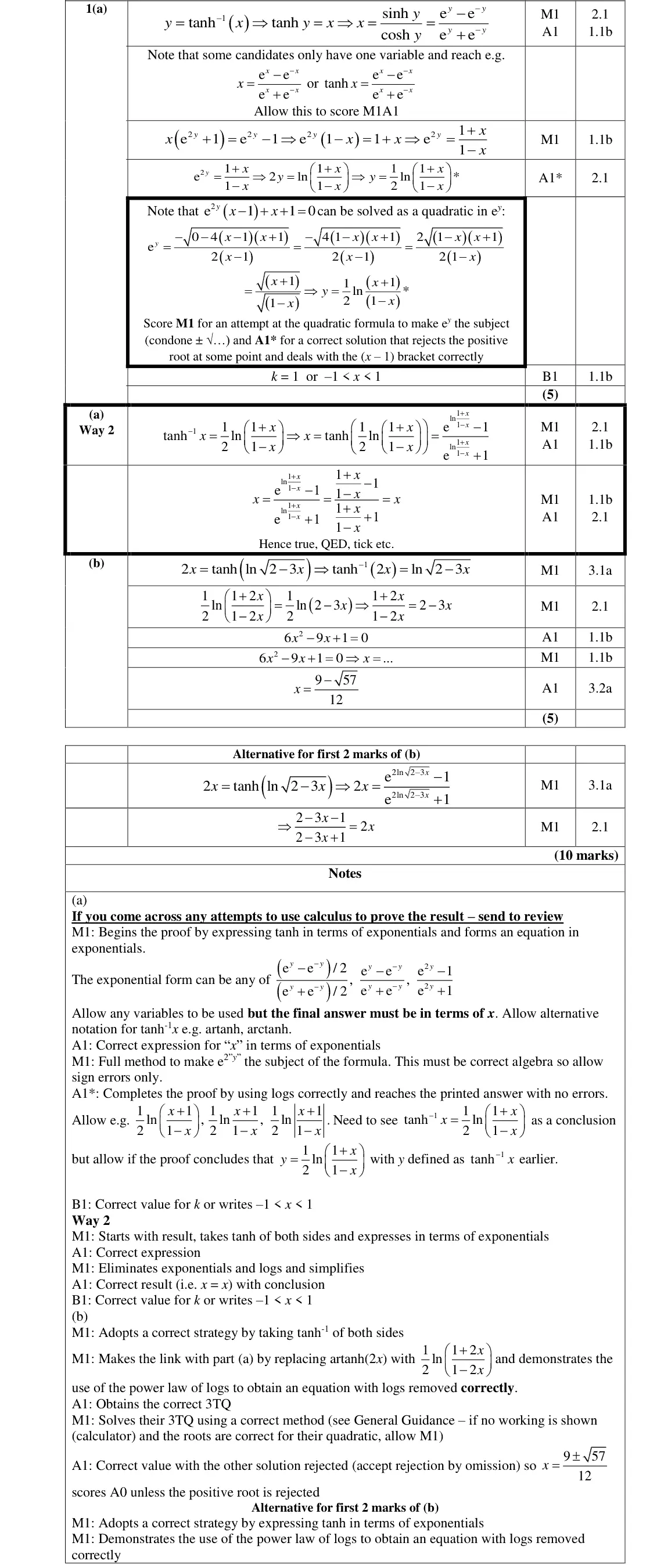
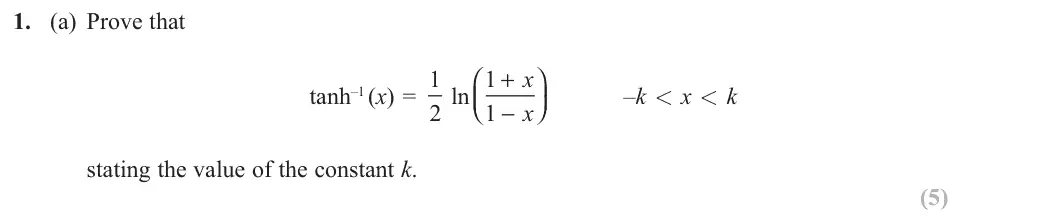
1. (a) Prove that tanh–1 (x) = 1 2 ln 1 x + ⎛ ⎞ x –k : x : k ⎝⎜ ⎠⎟ - stating the value of the constant k. (5)
June 2019 · Paper 2 (Core Pure 2) · Q1(b) 5 marks hyperbolic functions
(b) Hence, or otherwise, solve the equation ( ) 2x = tanh ln x - (5)
June 2019 · Paper 2 (Core Pure 2) · Q2 8 marks roots of polynomials
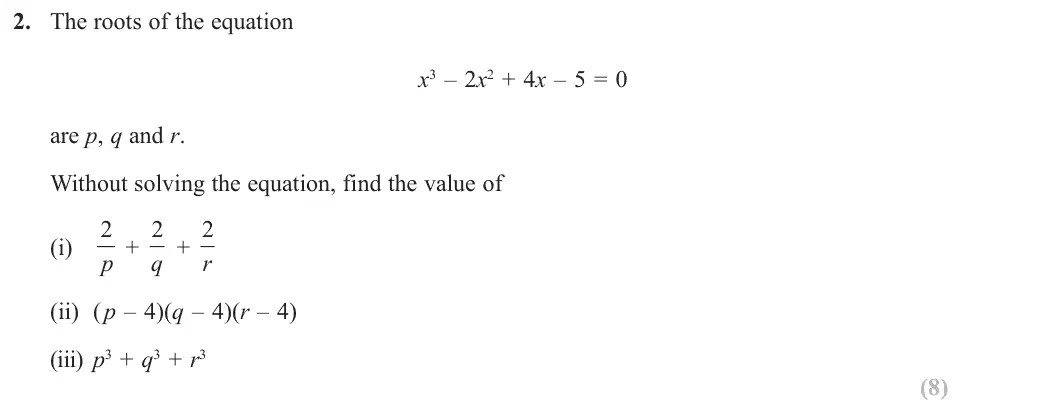
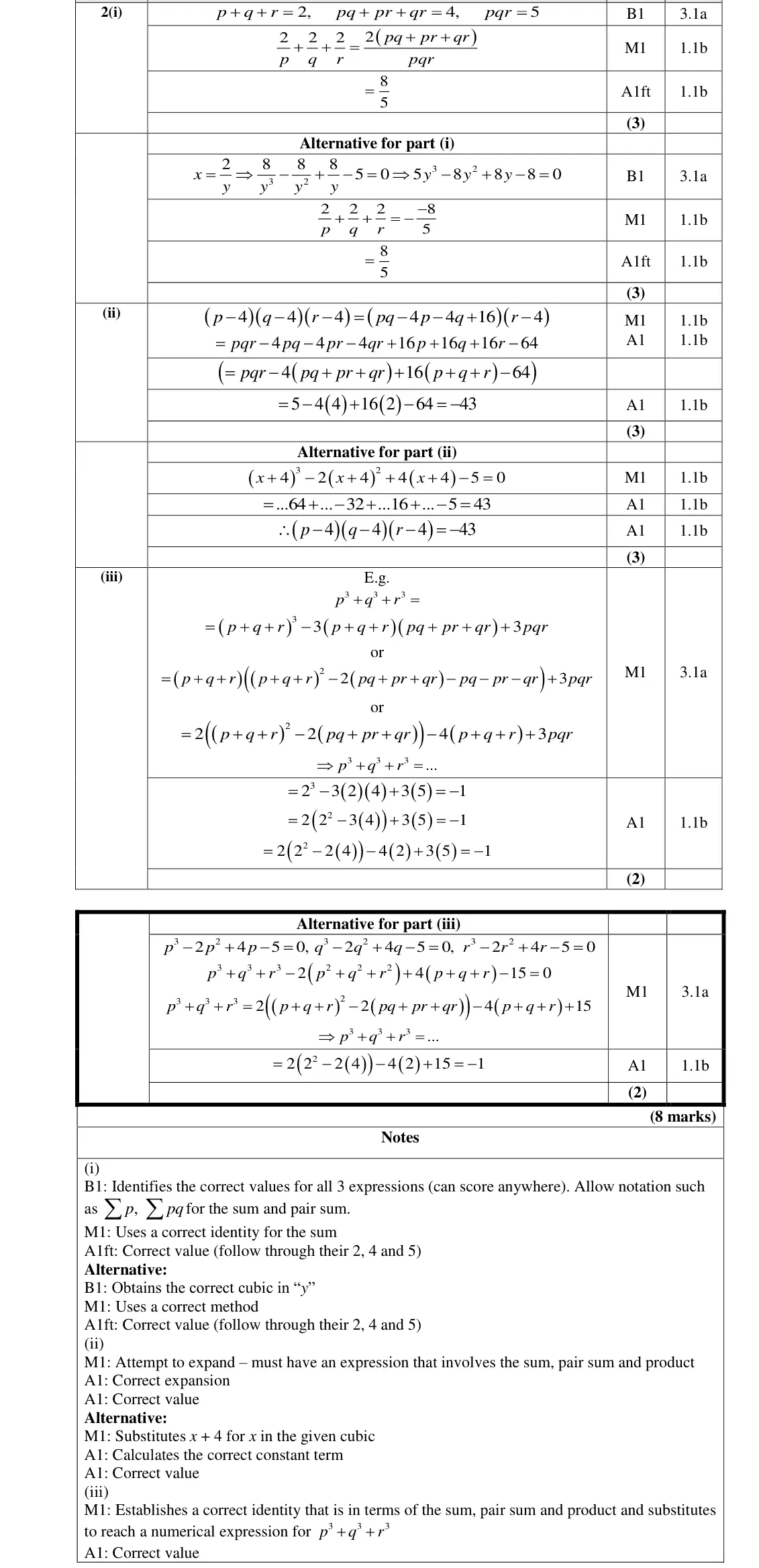
2. The roots of the equation x3 – 2x2 + 4x – 5 = 0 are p, q and r. Without solving the equation, find the value of p + 2 q + 2 (i) r (ii) ( p – 4)(q – 4)(r – 4) (iii) p3 + q3 + r3 (8)
June 2019 · Paper 2 (Core Pure 2) · Q3(a) 4 marks hyperbolic functions
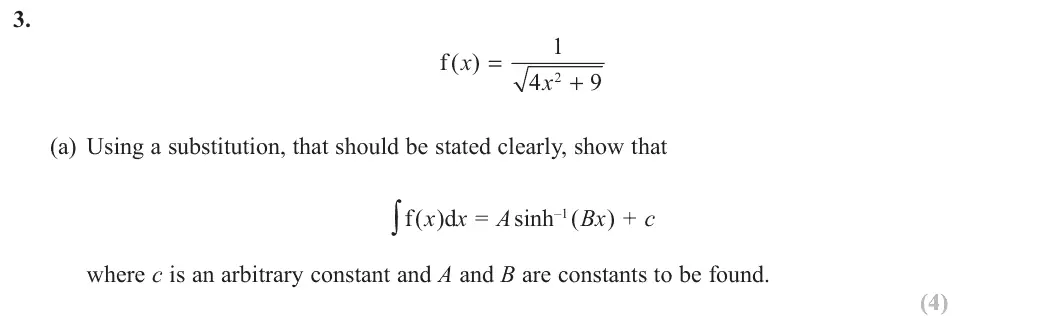
3. f ( ) x = x + (a) Using a substitution, that should be stated clearly, show that œ f (x)dx = A sinh–1 (Bx) + c where c is an arbitrary constant and A and B are constants to be found. (4)
June 2019 · Paper 2 (Core Pure 2) · Q3(b) 2 marks improper integrals and mean value
(b) Hence find, in exact form in terms of natural logarithms, the mean value of f (x) over the interval [0, 3]. (2)
June 2019 · Paper 2 (Core Pure 2) · Q4(a) 4 marks de moivres theorem
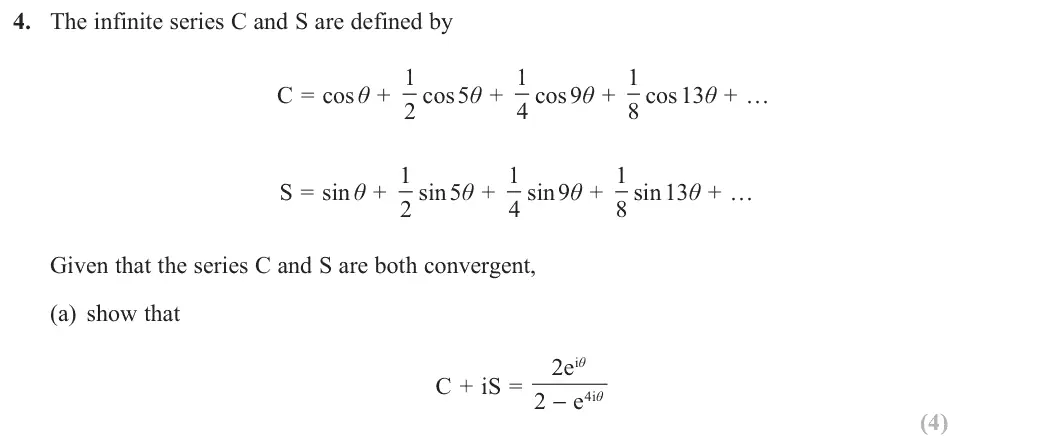
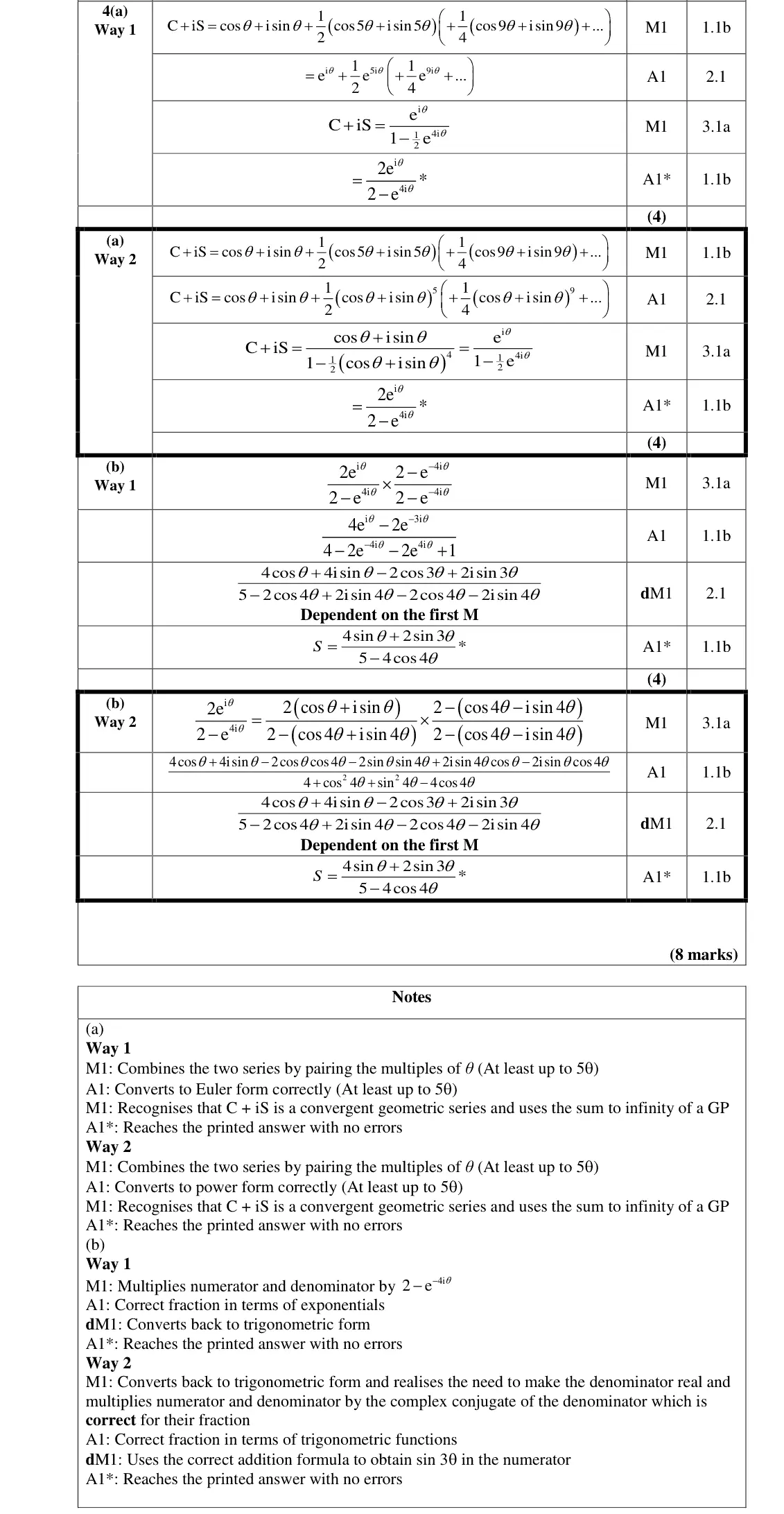
4. The infinite series C and S are defined by C = cos ș + 1 2 cos 5ș + 1 4 cos 9ș + 1 8 cos 13ș + … S = sin ș + 1 2 sin 5ș + 1 4 sin 9ș + 1 8 sin 13ș + … Given that the series C and S are both convergent, (a) show that 2e i theta C + iS = e 4i - theta (4)
June 2019 · Paper 2 (Core Pure 2) · Q4(b) 4 marks de moivres theorem
(b) Hence show that S = 4sin 2sin3 theta + theta 4cos4 - theta (4)
June 2019 · Paper 2 (Core Pure 2) · Q5(a) 2 marks second order differential equations
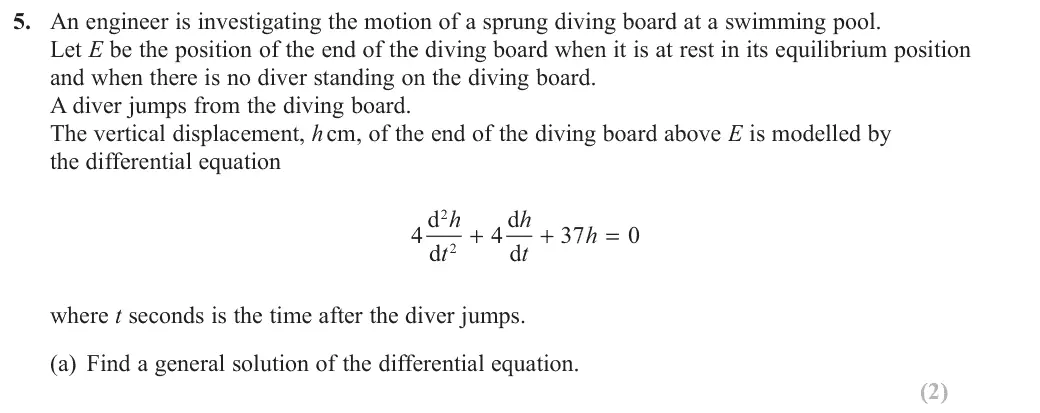
5. An engineer is investigating the motion of a sprung diving board at a swimming pool. Let E be the position of the end of the diving board when it is at rest in its equilibrium position and when there is no diver standing on the diving board. A diver jumps from the diving board. The vertical displacement, h cm, of the end of the diving board above E is modelled by the differential equation d d h h + + h = d d t t where t seconds is the time after the diver jumps. (a) Find a general solution of the differential equation. (2)
June 2019 · Paper 2 (Core Pure 2) · Q5(b) 8 marks simple harmonic motion and dampingfirst order differential equations
When t = 0, the end of the diving board is 20 cm below E and is moving upwards with a speed of 55 cm s–1. (b) Find, according to the model, the maximum vertical displacement of the end of the diving board above E. (8)
June 2019 · Paper 2 (Core Pure 2) · Q5(c) 2 marks simple harmonic motion and damping
(c) Comment on the suitability of the model for large values of t. (2)
June 2019 · Paper 2 (Core Pure 2) · Q6(a) 6 marks roots of unity
6. In an Argand diagram, the points A, B and C are the vertices of an equilateral triangle with its centre at the origin. The point A represents the complex number 6 + 2i. (a) Find the complex numbers represented by the points B and C, giving your answers in the form x + iy, where x and y are real and exact. (6)
June 2019 · Paper 2 (Core Pure 2) · Q6(b) 3 marks roots of unity
The points D, E and F are the midpoints of the sides of triangle ABC. (b) Find the exact area of triangle DEF. (3)
June 2019 · Paper 2 (Core Pure 2) · Q7(a) 2 marks matrices
7. - ⎛ ⎞ ⎜ ⎟ M = k where k is a constant ⎜ ⎟ - ⎝ ⎠ (a) Find the values of k for which the matrix M has an inverse. (2)
June 2019 · Paper 2 (Core Pure 2) · Q7(b) 5 marks three equations three unknownsmatrices
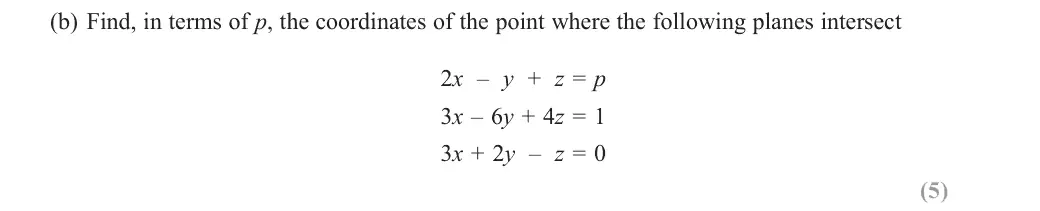
(b) Find, in terms of p, the coordinates of the point where the following planes intersect 2x – y + z = p 3x – 6y + 4z = 1 3x + 2y – z = 0 (5)
June 2019 · Paper 2 (Core Pure 2) · Q7(c) 4 marks three equations three unknowns
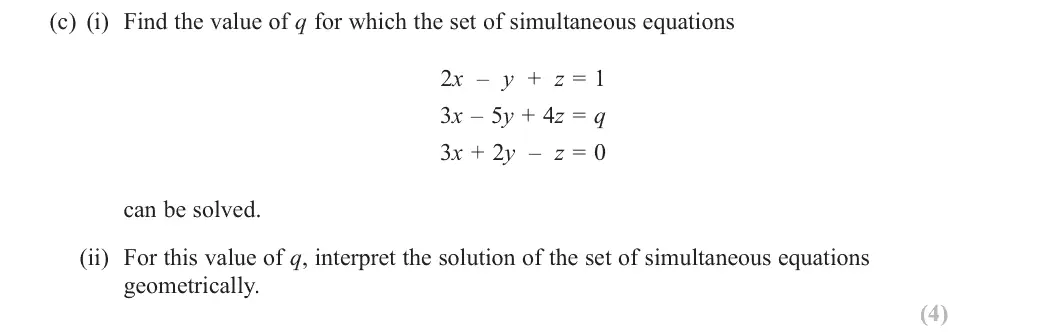
(c) (i) Find the value of q for which the set of simultaneous equations 2x – y + z = 1 3x – 5y + 4z = q 3x + 2y – z = 0 can be solved. (ii) For this value of q, interpret the solution of the set of simultaneous equations geometrically. (4)
June 2019 · Paper 2 (Core Pure 2) · Q8(a) 1 mark volumes of revolution
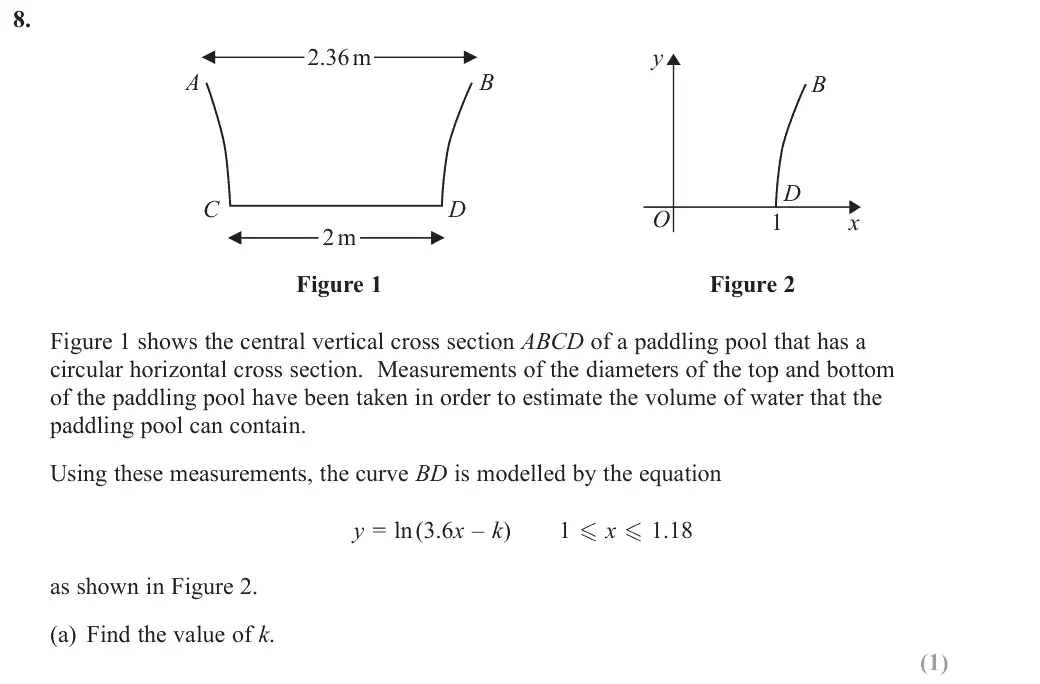
8. 2.36 m y A B B C x 2 m Figure 1 Figure 2 Figure 1 shows the central vertical cross section ABCD of a paddling pool that has a circular horizontal cross section. Measurements of the diameters of the top and bottom of the paddling pool have been taken in order to estimate the volume of water that the paddling pool can contain. Using these measurements, the curve BD is modelled by the equation y = ln (3.6x – k) 1 - x - 1.18 as shown in Figure 2. (a) Find the value of k. (1)
June 2019 · Paper 2 (Core Pure 2) · Q8(b) 2 marks volumes of revolution
(b) Find the depth of the paddling pool according to this model. (2)
June 2019 · Paper 2 (Core Pure 2) · Q8(c) 5 marks volumes of revolution
The pool is being filled with water from a tap. (c) Find, in terms of h, the volume of water in the pool when the pool is filled to a depth of h m. (5)
June 2019 · Paper 2 (Core Pure 2) · Q8(d) 3 marks volumes of revolution
Given that the pool is being filled at a constant rate of 15 litres every minute, (d) find, in cm h–1, the rate at which the water level is rising in the pool when the depth of the water is 0.2 m. (3)

Find an Edexcel Further Maths tutor

Want this paper marked and gone through with a Further Maths tutor? Message us.

Prefer email? Send an enquiry

If you are under 18, please include a parent's contact details. Enquiries go to enquiries@alevelfurthermathstutor.com and are deleted once handled.