June 2023: A level Paper 02: Core Pure Mathematics 2

75 marks · 25 question parts · Question paper, mark scheme and examiner's report on Pearson's site

Question by question

QTopicMarksDifficulty
1 Polar coordinates: curves and areas, Hyperbolic functions 4 —
2(a) Maclaurin series 1 —
2(b) Maclaurin series 5 —
3(a) Matrices: multiplication, determinants and inverses 3 —
3(b) Linear transformations and invariant points and lines 6 —
3(c) Linear transformations and invariant points and lines 1 —
4(a) Polar coordinates: curves and areas 2 —
4(b) Polar coordinates: curves and areas 4 —
4(c) Polar coordinates: curves and areas 1 —
5(a) Complex numbers: arithmetic, conjugates, roots of polynomials and Argand diagrams 2 —
5(b) Complex numbers: arithmetic, conjugates, roots of polynomials and Argand diagrams 2 —
5(c)(i) nth roots and roots of unity 1 —
5(c)(ii) nth roots and roots of unity 4 —
6 Proof by induction 6 —
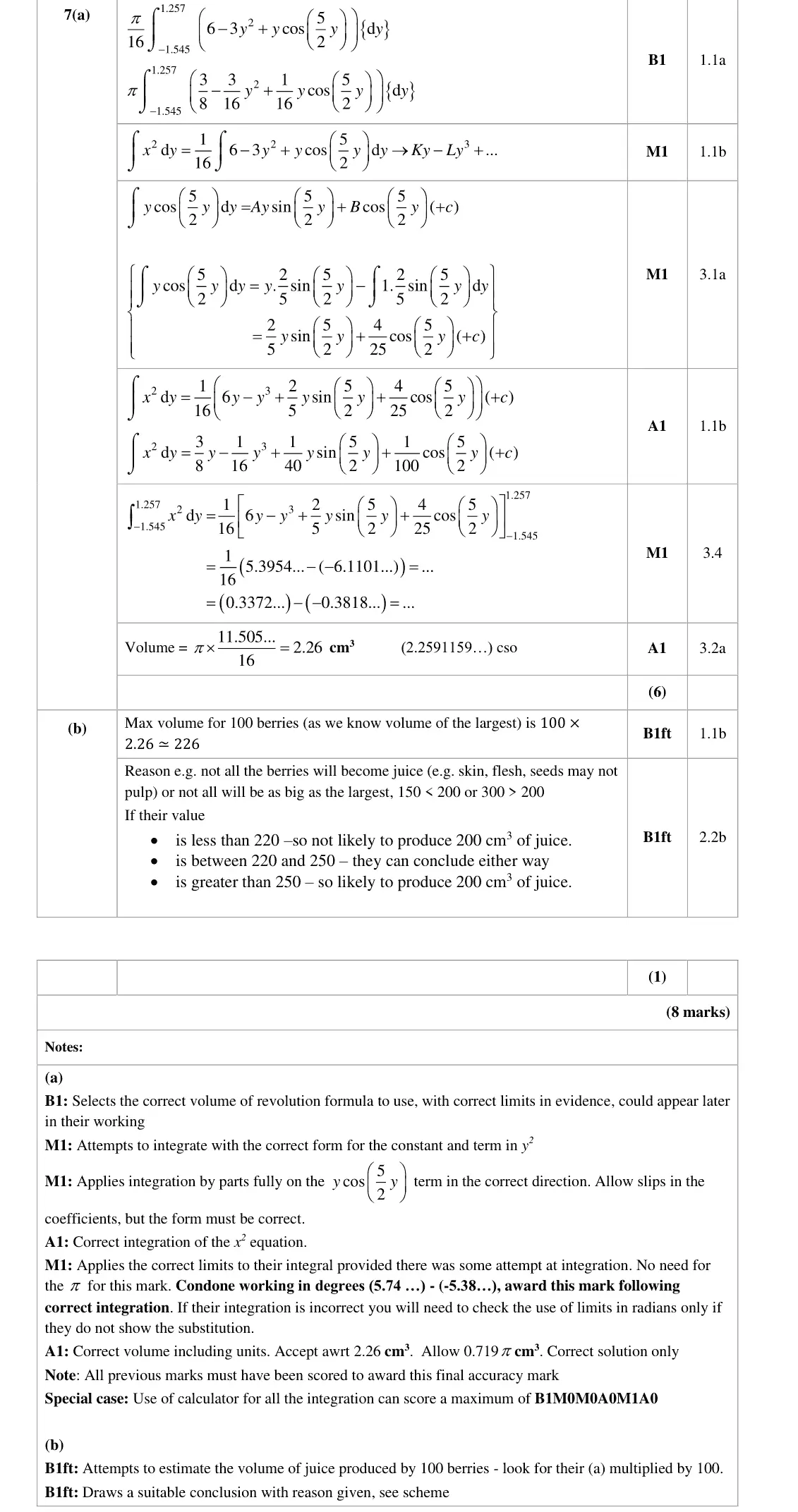
7(a) Volumes of revolution 6 —
7(b) Volumes of revolution 2 —
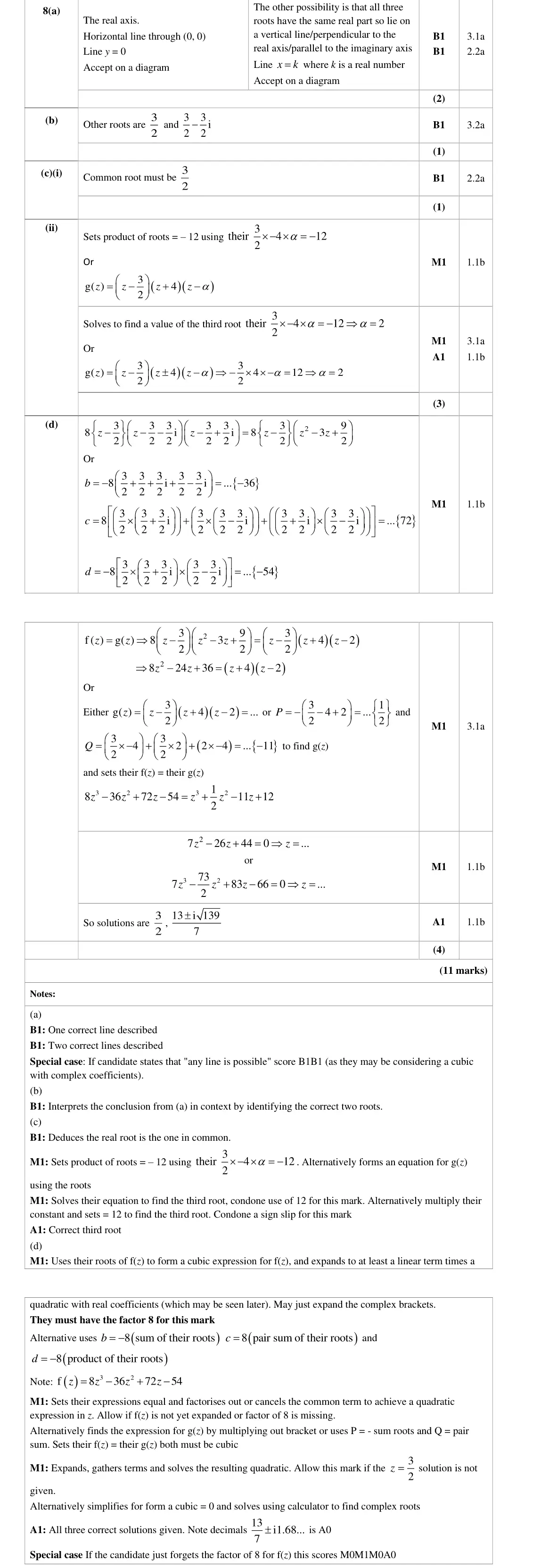
8(a) Complex numbers: arithmetic, conjugates, roots of polynomials and Argand diagrams 2 —
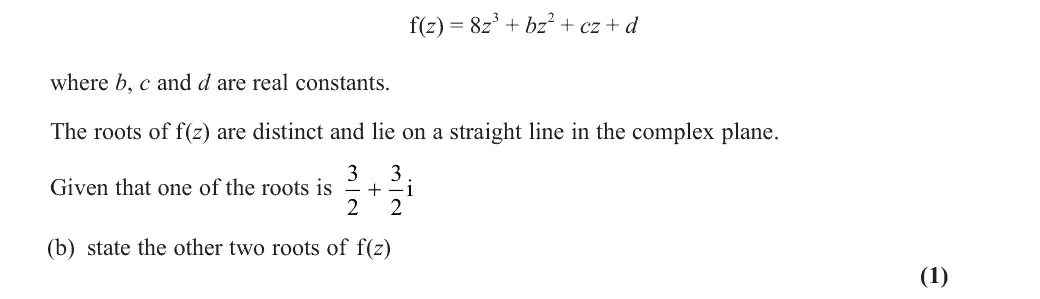
8(b) Complex numbers: arithmetic, conjugates, roots of polynomials and Argand diagrams 1 —
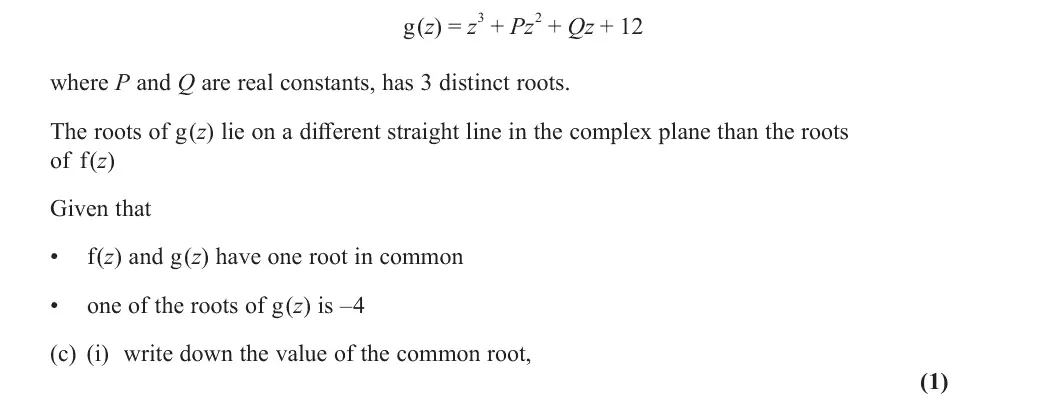
8(c)(i) Complex numbers: arithmetic, conjugates, roots of polynomials and Argand diagrams 1 —
8(c)(ii) Roots of polynomials 3 —
8(d) Complex numbers: arithmetic, conjugates, roots of polynomials and Argand diagrams, Roots of polynomials 4 —
9(a) Coupled first-order differential equations 3 —
9(b) Second-order differential equations 5 —
9(c) First-order differential equations: integrating factors and modelling, Coupled first-order differential equations 4 —
9(d) First-order differential equations: integrating factors and modelling 2 —

The questions

12(a)2(b)3(a)3(b)3(c)4(a)4(b)4(c)5(a)5(b)5(c)(i)5(c)(ii)67(a)7(b)8(a)8(b)8(c)(i)8(c)(ii)8(d)9(a)9(b)9(c)9(d)
June 2023 · Paper 2 (Core Pure 2) · Q1 4 marks polar coordinateshyperbolic functions
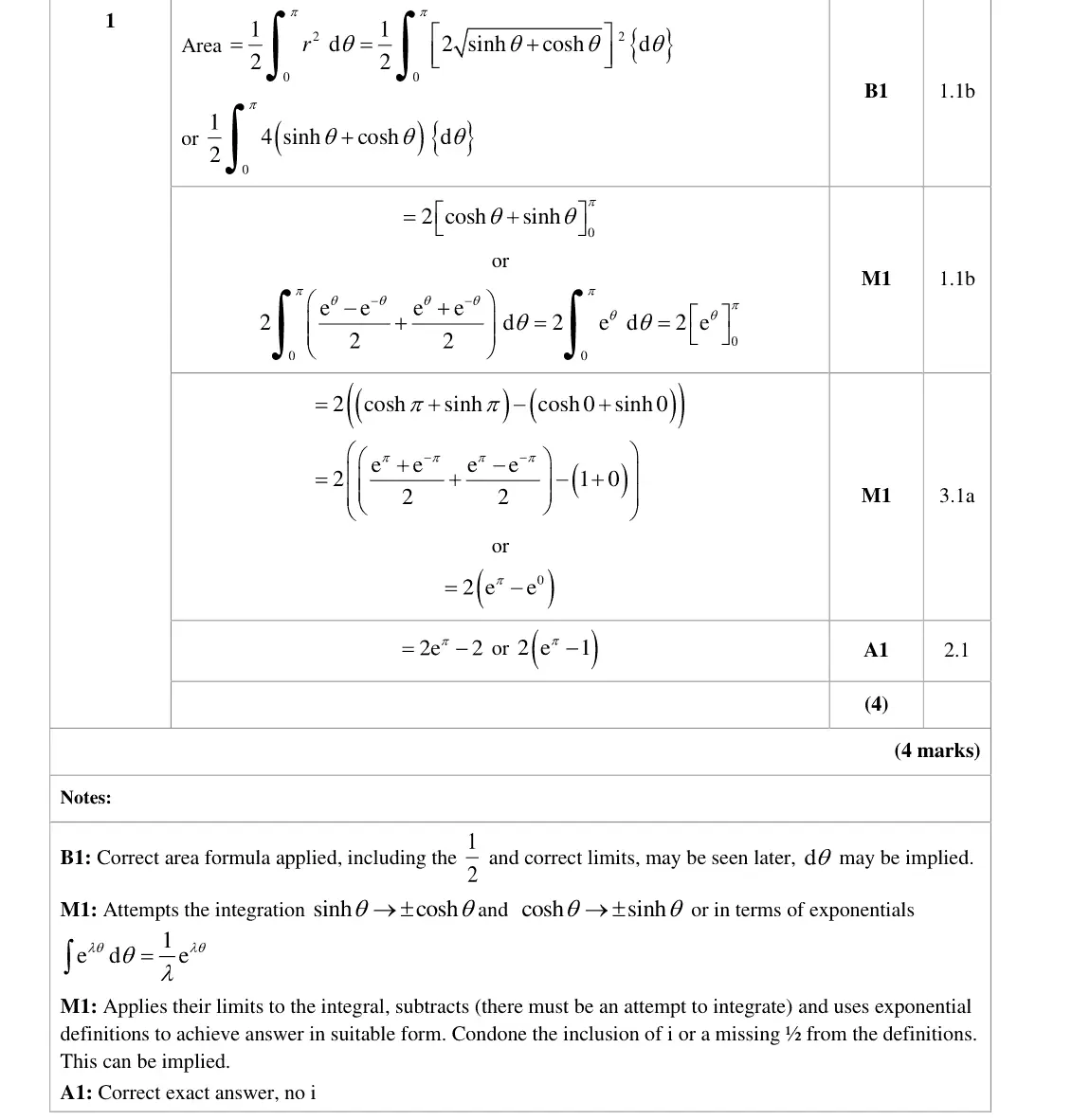
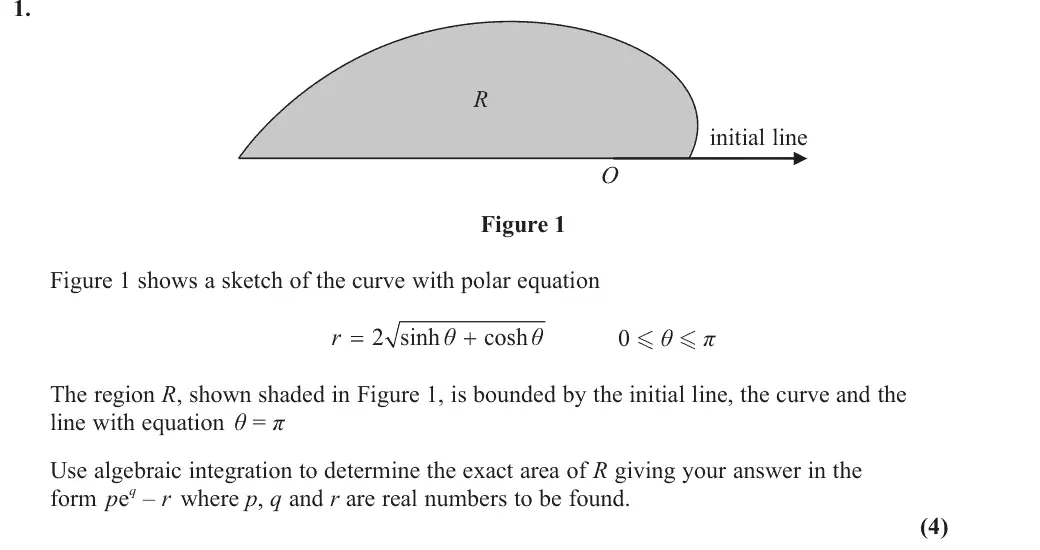
1. R initial line Figure 1 Figure 1 shows a sketch of the curve with polar equation 0 theta pi r 2 sinh theta cosh theta The region R, shown shaded in Figure 1, is bounded by the initial line, the curve and the line with equation theta = pi Use algebraic integration to determine the exact area of R giving your answer in the form pe q – r where p, q and r are real numbers to be found. (4)
June 2023 · Paper 2 (Core Pure 2) · Q2(a) 1 mark maclaurin series
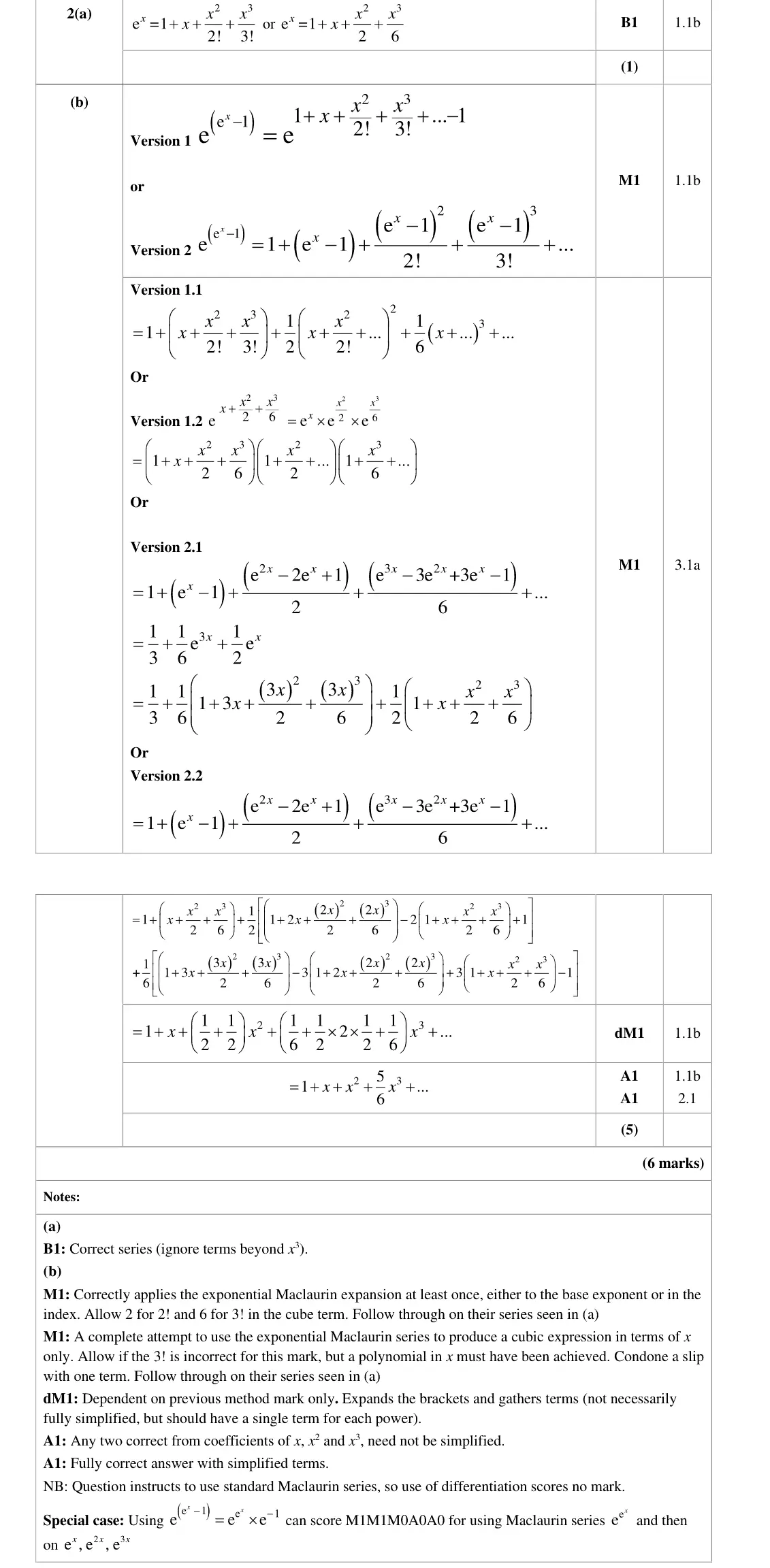
2. (a) Write down the Maclaurin series of e x, in ascending power of x, up to and including the term in x (1)
June 2023 · Paper 2 (Core Pure 2) · Q2(b) 5 marks maclaurin series
(b) Hence, without differentiating, determine the Maclaurin series of e(ex – 1) 3, giving each coefficient in ascending powers of x, up to and including the term in x in simplest form. (5)
June 2023 · Paper 2 (Core Pure 2) · Q3(a) 3 marks matrices
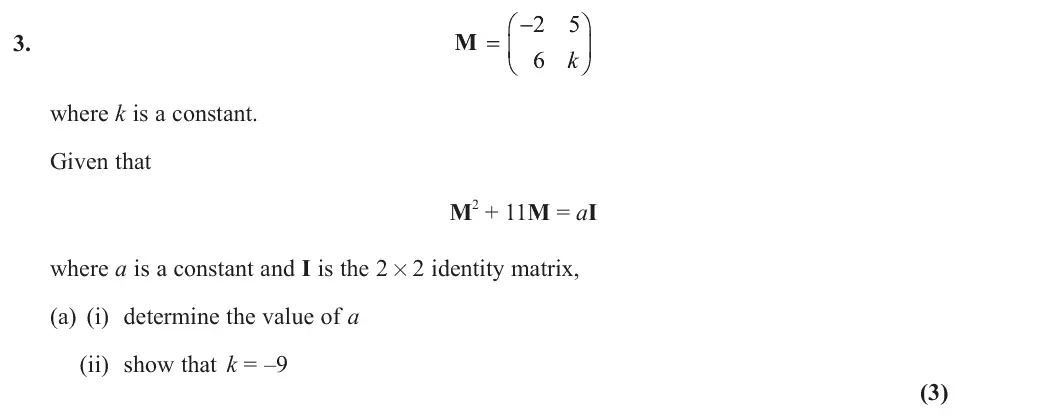
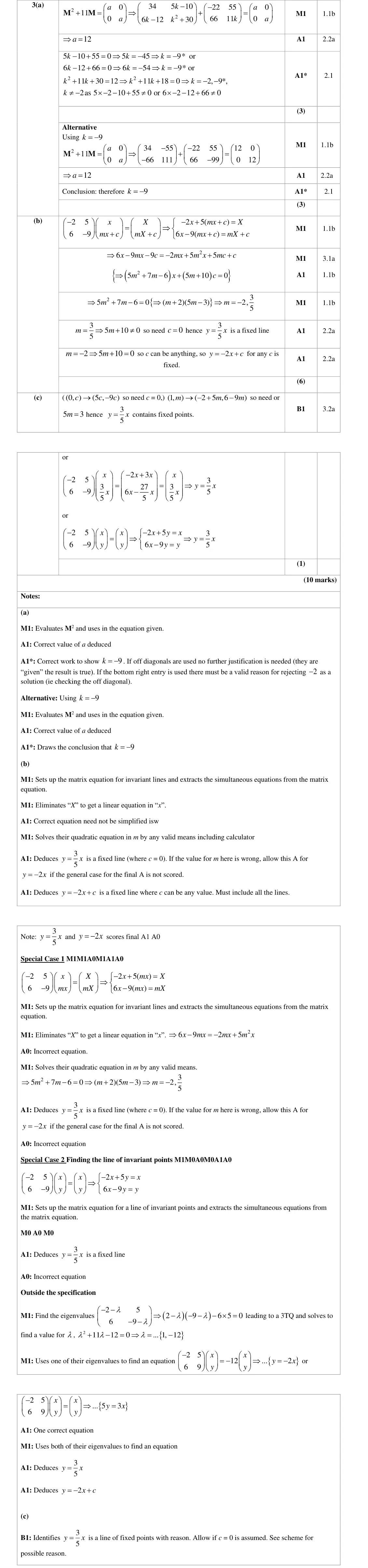
: 3. M O k where k is a constant. Given that M 2 + 11M = aI where a is a constant and I is the 2 x 2 identity matrix, (a) (i) determine the value of a (ii) show that k = –9 (3)
June 2023 · Paper 2 (Core Pure 2) · Q3(b) 6 marks linear transformations
(b) Determine the equations of the invariant lines of the transformation represented by M. (6)
June 2023 · Paper 2 (Core Pure 2) · Q3(c) 1 mark linear transformations
(c) State which, if any, of the lines identified in (b) consist of fixed points, giving a reason for your answer. (1)
June 2023 · Paper 2 (Core Pure 2) · Q4(a) 2 marks polar coordinates
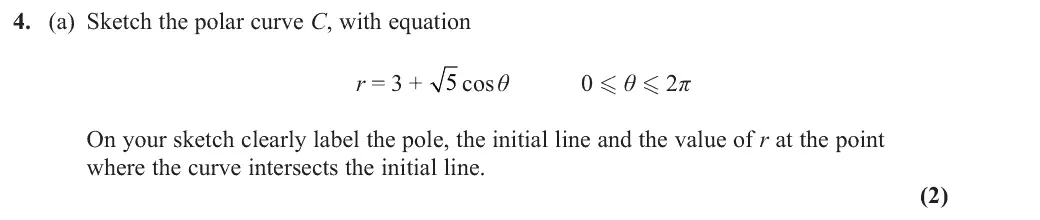
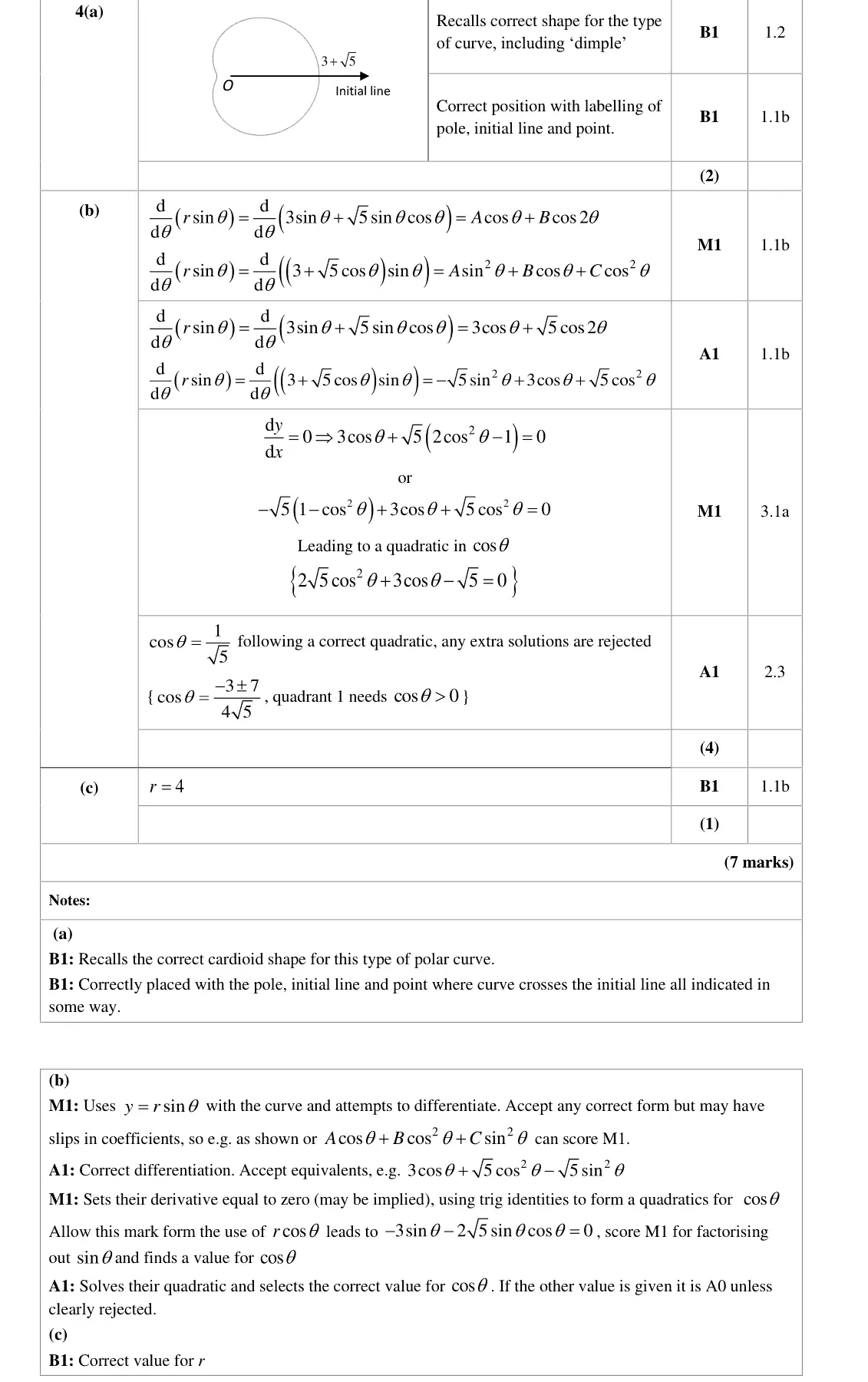
4. (a) Sketch the polar curve C, with equation r = 3 + 5 cos theta 0 theta 2 pi On your sketch clearly label the pole, the initial line and the value of r at the point where the curve intersects the initial line. (2)
June 2023 · Paper 2 (Core Pure 2) · Q4(b) 4 marks polar coordinates
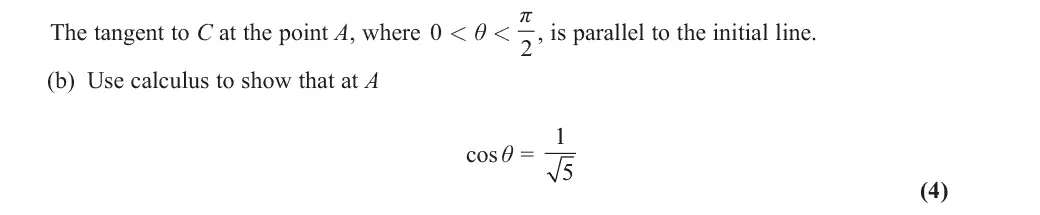
pi , is parallel to the initial line. The tangent to C at the point A, where 0 < theta < 2 (b) Use calculus to show that at A cos theta = 1 (4)
June 2023 · Paper 2 (Core Pure 2) · Q4(c) 1 mark polar coordinates
(c) Hence determine the value of r at A. (1)
June 2023 · Paper 2 (Core Pure 2) · Q5(a) 2 marks complex numbers
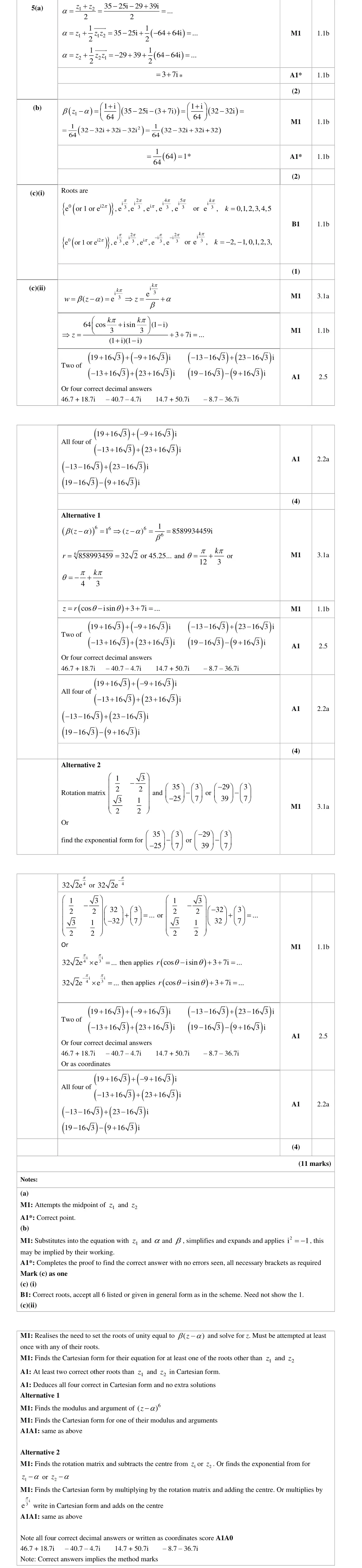
5. The points representing the complex numbers z1 = 35 – 25i and z2 = –29 + 39i are opposite vertices of a regular hexagon, H, in the complex plane. The centre of H represents the complex number alpha (a) Show that alpha = 3 + 7i (2)
June 2023 · Paper 2 (Core Pure 2) · Q5(b) 2 marks complex numbers
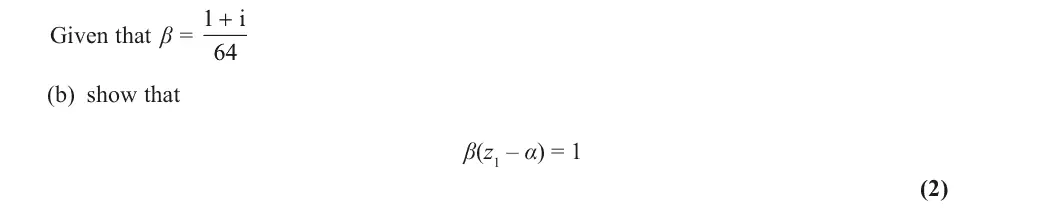
Given that beta = 1 + i (b) show that beta (z1 – alpha ) = 1 (2)
June 2023 · Paper 2 (Core Pure 2) · Q5(c)(i) 1 mark roots of unity
The vertices of H are given by the roots of the equation ( beta (z – alpha )) 6 = 1 (c) (i) Write down the roots of the equation w 6 = 1 in the form re i theta (1)
June 2023 · Paper 2 (Core Pure 2) · Q5(c)(ii) 4 marks roots of unity
(ii) Hence, or otherwise, determine the position of the other four vertices of H, giving your answers as complex numbers in Cartesian form. (4)
June 2023 · Paper 2 (Core Pure 2) · Q6 6 marks proof by induction
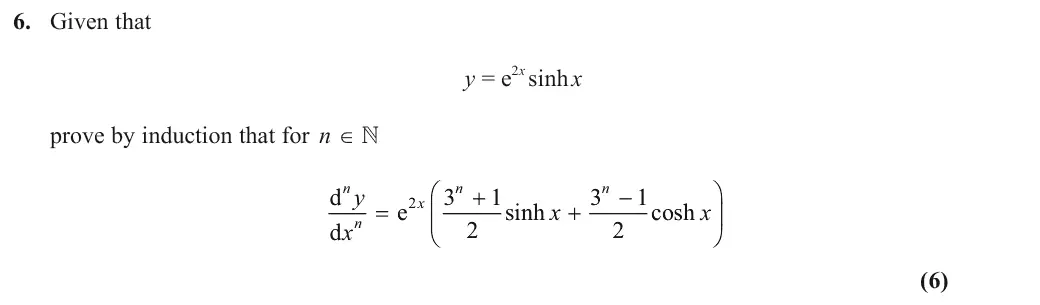
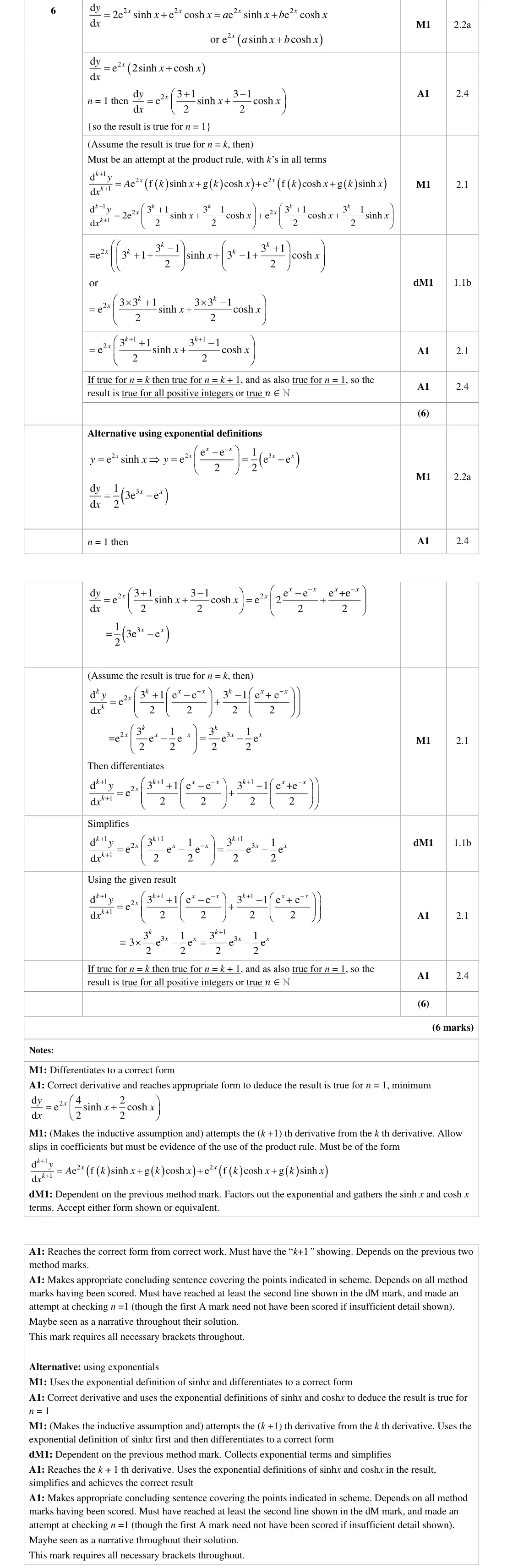
6. Given that 2x sinh x y = e prove by induction that for n ∈ n n n d y x e sinh x cosh x n d x (6)
June 2023 · Paper 2 (Core Pure 2) · Q7(a) 6 marks volumes of revolution
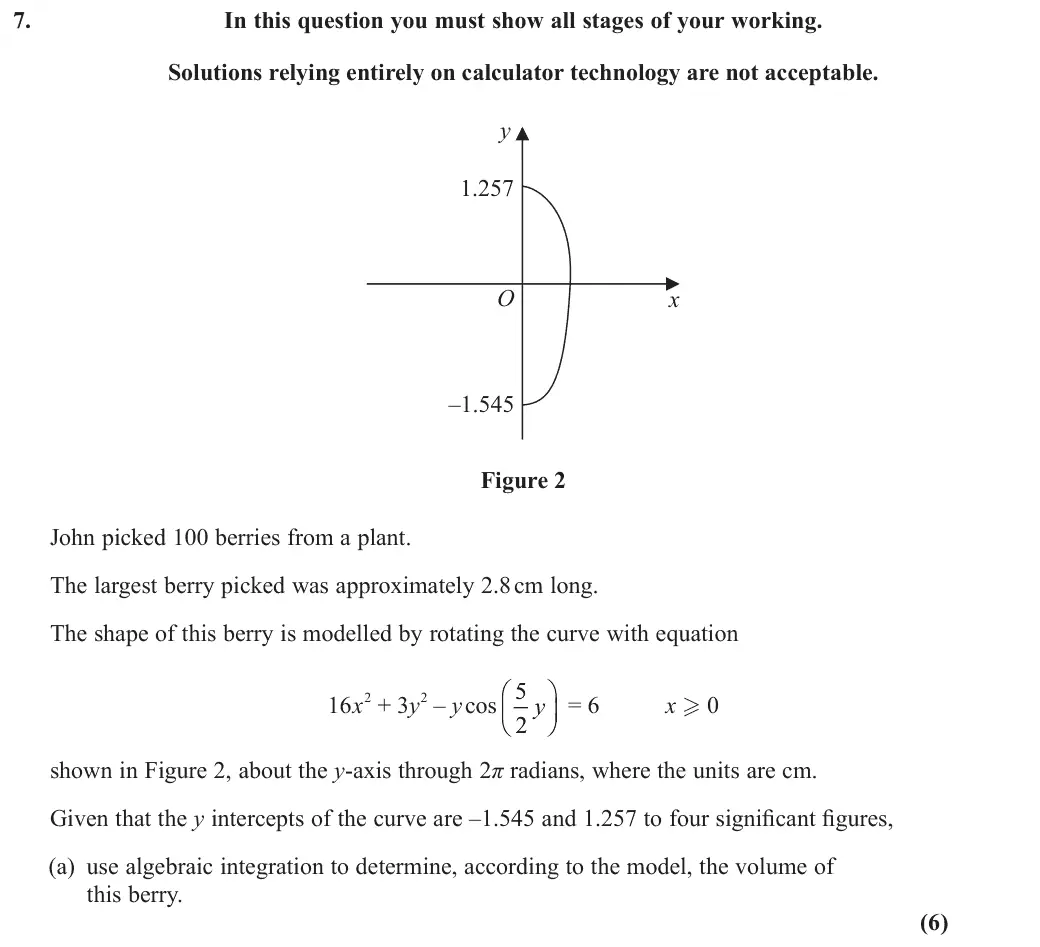
7. In this question you must show all stages of your working. Solutions relying entirely on calculator technology are not acceptable. y 1.257 x –1.545 Figure 2 John picked 100 berries from a plant. The largest berry picked was approximately 2.8 cm long. The shape of this berry is modelled by rotating the curve with equation 2 – y cos 5 < 2 + 3y 87 = 6 x 0 16x 2 y ;: shown in Figure 2, about the y-axis through 2 pi radians, where the units are cm. Given that the y intercepts of the curve are –1.545 and 1.257 to four significant figures, (a) use algebraic integration to determine, according to the model, the volume of this berry. (6)
June 2023 · Paper 2 (Core Pure 2) · Q7(b) 2 marks volumes of revolution
Given that the 100 berries John picked were then squeezed for juice, (b) use your answer to part (a) to decide whether, in reality, there is likely to be enough juice to fill a 200 cm 3 cup, giving a reason for your answer. (2)
June 2023 · Paper 2 (Core Pure 2) · Q8(a) 2 marks complex numbers
8. Given that a cubic equation has three distinct roots that all lie on the same straight line in the complex plane, (a) describe the possible lines the roots can lie on. (2)
June 2023 · Paper 2 (Core Pure 2) · Q8(b) 1 mark complex numbers
3 + bz 2 + cz + d f(z) = 8z where b, c and d are real constants. The roots of f(z) are distinct and lie on a straight line in the complex plane. Given that one of the roots is 3 + i (b) state the other two roots of f(z) (1)
June 2023 · Paper 2 (Core Pure 2) · Q8(c)(i) 1 mark complex numbers
g(z) = z 3 + Pz 2 + Qz + 12 where P and Q are real constants, has 3 distinct roots. The roots of g(z) lie on a different straight line in the complex plane than the roots of f(z) Given that • f(z) and g(z) have one root in common • one of the roots of g(z) is –4 (c) (i) write down the value of the common root, (1)
June 2023 · Paper 2 (Core Pure 2) · Q8(c)(ii) 3 marks roots of polynomials
(ii) determine the value of the other root of g(z) (3)
June 2023 · Paper 2 (Core Pure 2) · Q8(d) 4 marks complex numbersroots of polynomials
(d) Hence solve the equation f(z) = g(z) (4)
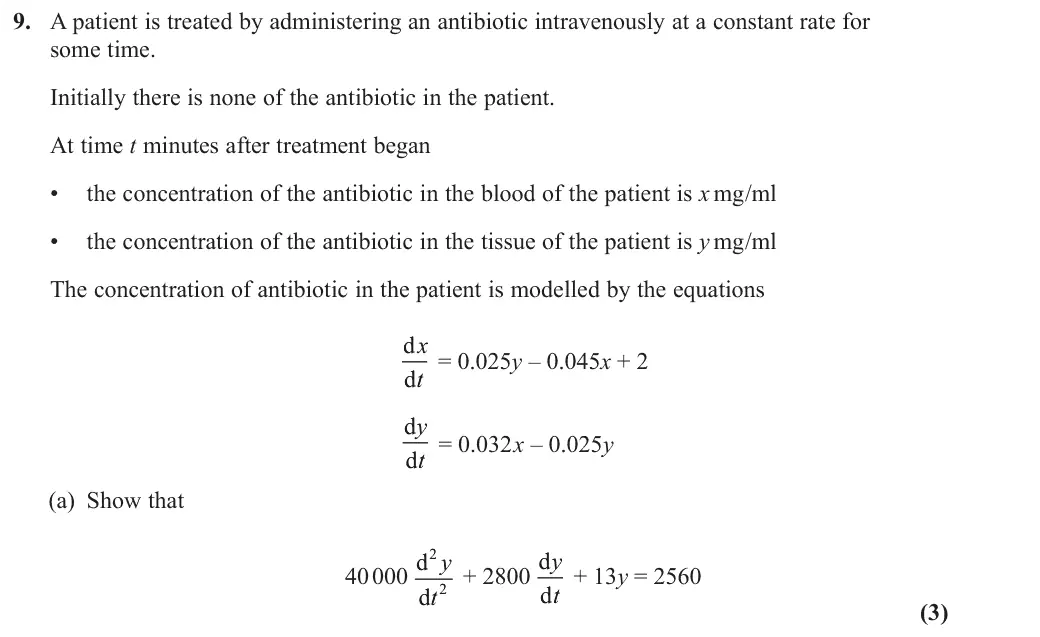
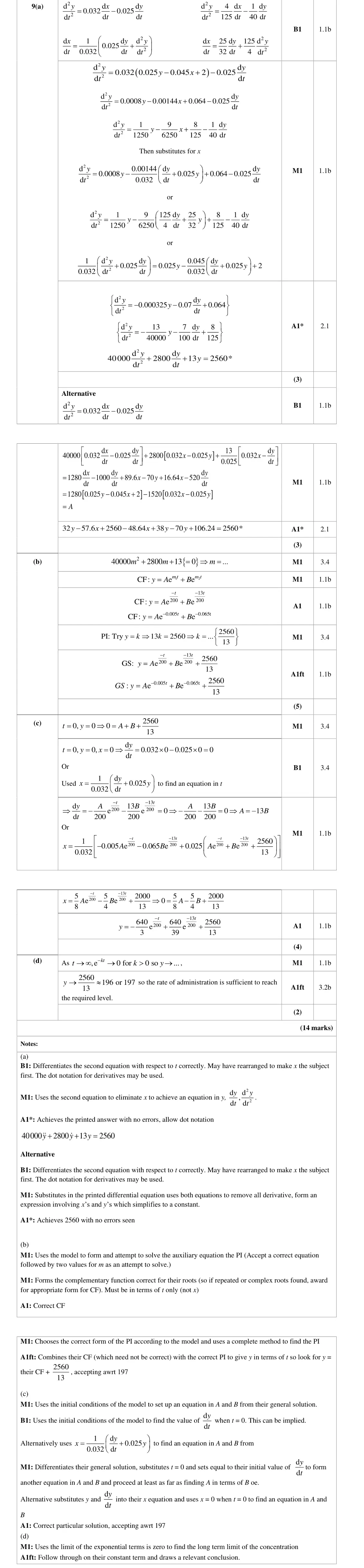
June 2023 · Paper 2 (Core Pure 2) · Q9(a) 3 marks coupled differential equations
9. A patient is treated by administering an antibiotic intravenously at a constant rate for some time. Initially there is none of the antibiotic in the patient. At time t minutes after treatment began • the concentration of the antibiotic in the blood of the patient is x mg/ml • the concentration of the antibiotic in the tissue of the patient is y mg/ml The concentration of antibiotic in the patient is modelled by the equations d x t = 0.025y – 0.045x + 2 d d y t = 0.032x – 0.025y d (a) Show that + 2800 d y 40 000 d y t + 13y = 2560 d t d (3)
June 2023 · Paper 2 (Core Pure 2) · Q9(b) 5 marks second order differential equations
(b) Determine, according to the model, a general solution for the concentration of the antibiotic in the patient’s tissue at time t minutes after treatment began. (5)
June 2023 · Paper 2 (Core Pure 2) · Q9(c) 4 marks first order differential equationscoupled differential equations
(c) Hence determine a particular solution for the concentration of the antibiotic in the tissue at time t minutes after treatment began. (4)
June 2023 · Paper 2 (Core Pure 2) · Q9(d) 2 marks first order differential equations
To be effective for the patient the concentration of antibiotic in the tissue must eventually reach a level between 185 mg/ml and 200 mg/ml. (d) Determine whether the rate of administration of the antibiotic is effective for the patient, giving a reason for your answer. (2)

Find an Edexcel Further Maths tutor

Want this paper marked and gone through with a Further Maths tutor? Message us.

Prefer email? Send an enquiry

If you are under 18, please include a parent's contact details. Enquiries go to enquiries@alevelfurthermathstutor.com and are deleted once handled.