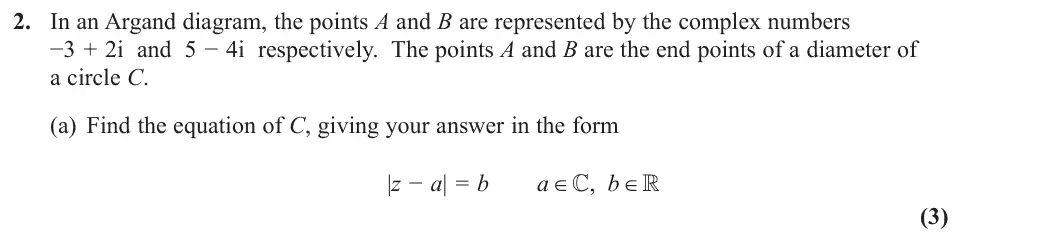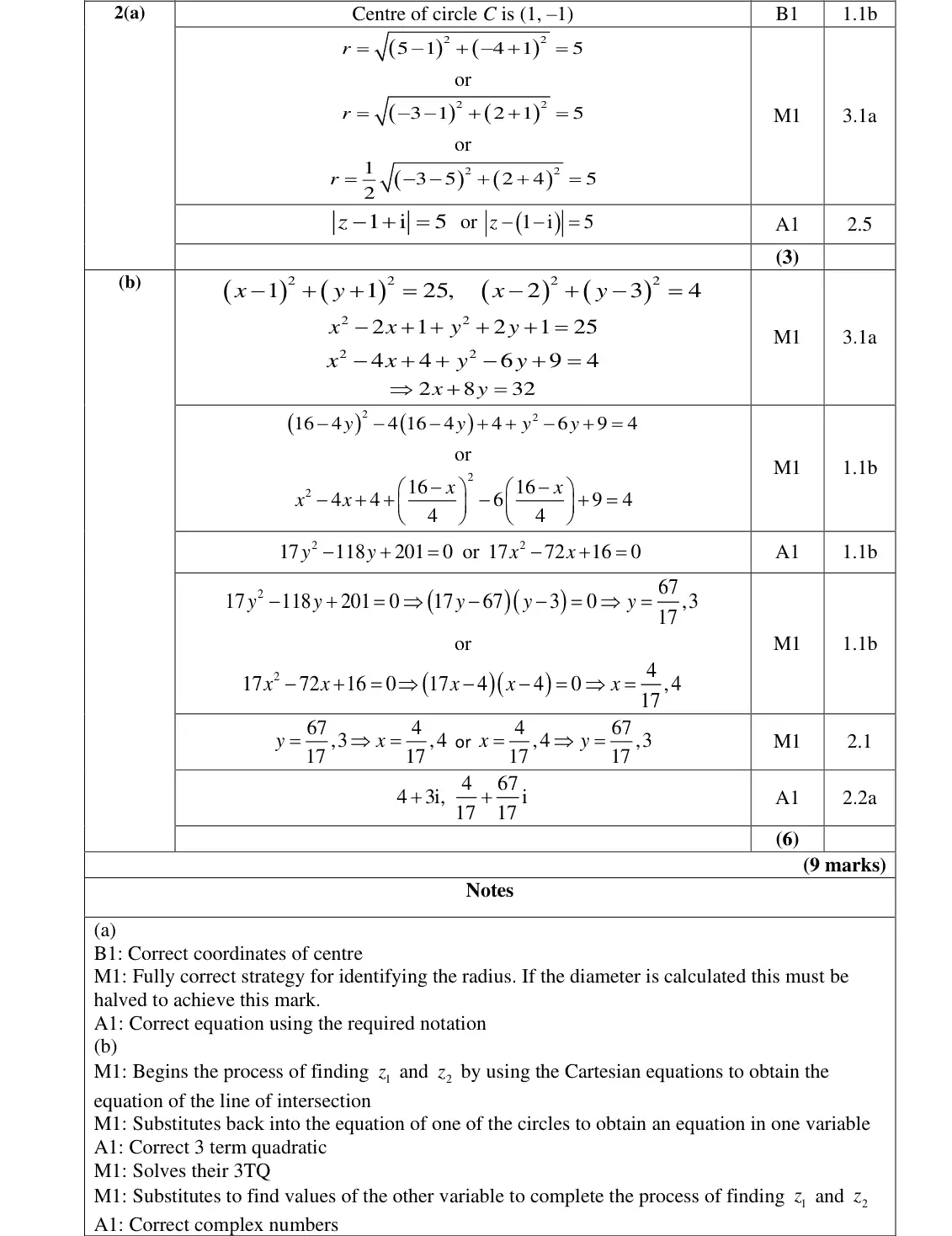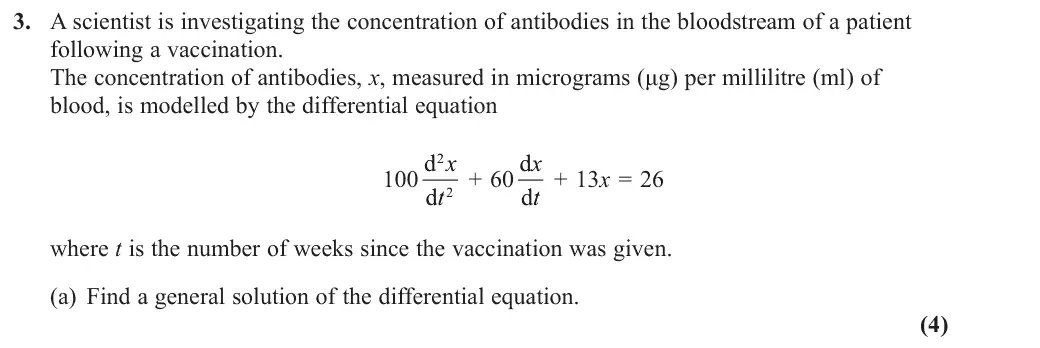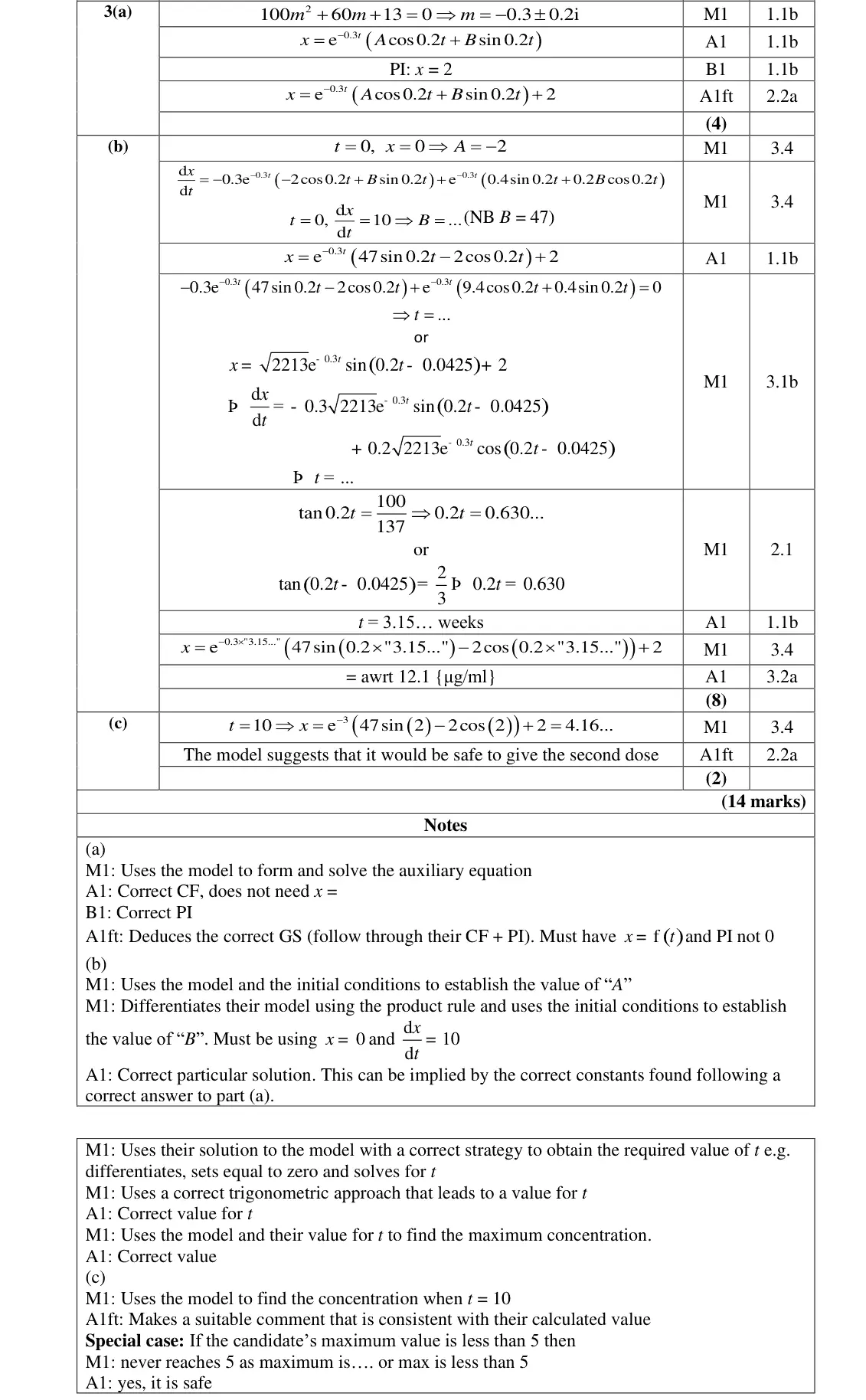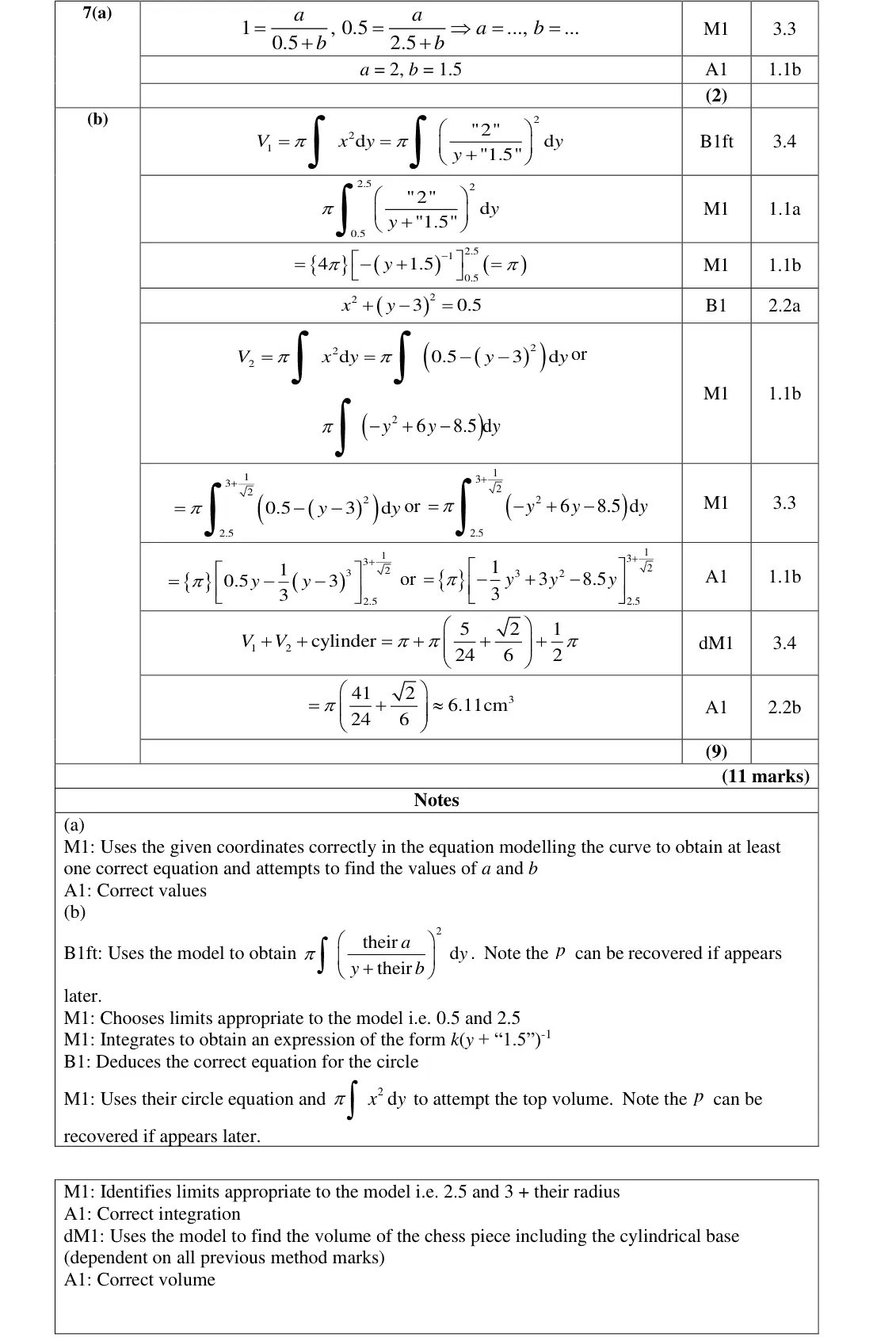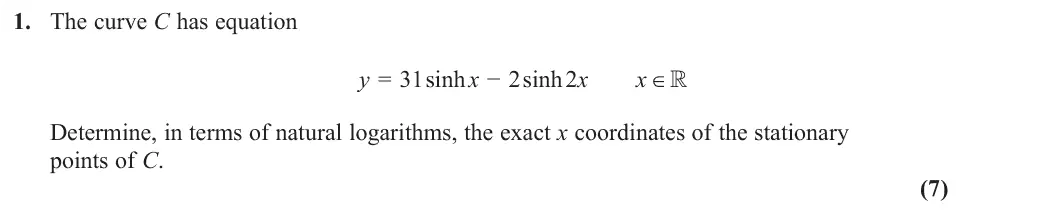
Mark scheme (whole question; this part is marked with the orange bar)
Examiner's comment
Two different routes were chosen by candidates in solving this problem. The more successful of these was to work with hyperbolic functions. Differentiation was usually correct and most spotted the necessary substitution in order to obtain a quadratic equation in cosh x. This was straightforward to solve but many candidates, probably after looking at the formula book, only found one solution for x – that being ( ) ln 4 15 + The alternative approach involving converting to exponential form was less successful. Quite a few candidates had hoped for an easier passage than to encounter a quartic equation and so became lost on the way. A large number did however arrive at the correct equation and were able to use their calculators to obtain the solutions. The main advantage of this approach was that if they completed it they would arrive at both of the possible values.
Key points from the mark scheme and examiner's report
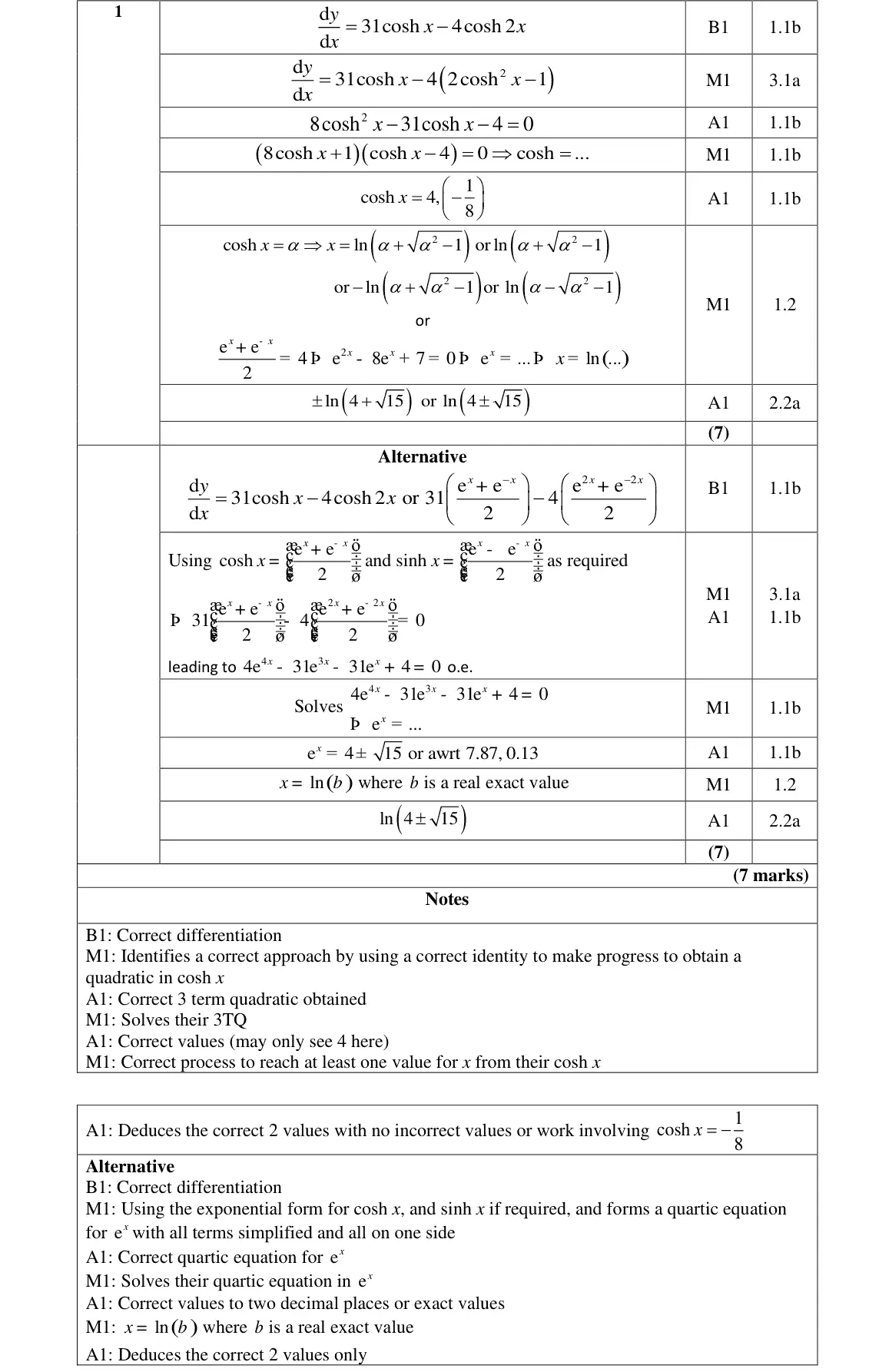
- dy/dx = 31cosh x − 4cosh 2x
- cosh 2x = 2cosh²x − 1 gives 8cosh²x − 31cosh x − 4 = 0, cosh x = 4 (reject −1/8)
- x = ± ln(4 + √15), i.e. ln(4 ± √15)
- many gave only the positive value from the formula book
- exponential route leads to a quartic in eˣ